

 Se i rommet
 Del som digitalt kort
 Del
Del
 Detaljer
 Studentguide

 Last ned
 Liknende objekter
 Røntgen
 Lysbildefremvisning
 Q&A
Q&A Besøksstatistikk
Polycrates


 Les mer
Få en utskriftsklar fil som går langt utover forhåndsvisningen på nett. Hvert digitale bilde vi selger er hentet fra en høyoppløselig master i vår database – vanligvis mellom 5 000 og 15 000 piksler bred – slik at du kan trykke stort, beskjære tett eller gjenskape fine detaljer med full trygghet.
Ingen filer forlater studioet vårt uten å bli bearbeidet. En digital ekspert kontrollerer fargene mot det originale maleriet og korrigerer dem ved behov, for deretter å forbedre klarhet og detaljrikdom med profesjonelle retusjeringsverktøy — alltid tro mot kunstnerens penselstrøk og stil. Resultatet er et bilde som ser ut som maleriet, ikke som en skann med filter.
Du godkjenner før ferdigstilling: vår ekspert sender bildet på e-post innen 72 timer til din vurdering. Ikke fornøyd? Be om forbedringer eller korrigeringer, eller be om refusjon dersom kvaliteten ikke svarer til forventningene.
Dette er kvaliteten som forlag, designstudioer, gallerier og trykkerier stoler på.
Digitalt bilde
Last ned en høyoppløselig fil til personlig bruk, utskrift og kreative prosjekter. ( Bytt til trykkversjon Bestill håndmalt reproduksjon)
Inkludert i alle bestillinger av digitale bilder
Profesjonell digital levering, garantert
Når du velger OriginalUniqueArt.com, får du ikke bare et bilde – du mottar et profesjonelt etterbehandlet digitalt kunstverk, skapt med presisjon og med en garantert tilfredshetsgaranti. Her er alt som automatisk følger med din bestilling:

Rask levering på e-post
Din høyoppløselige digitale bildefil sendes til din e-post innen 72 timer etter bestilling – klar til umiddelbar bruk.

KI-forbedret digital fil
Ditt kunstverk blir profesjonelt optimalisert ved hjelp av avanserte AI-verktøy og manuell redigering, noe som sikrer maksimal detaljrikdom, klarhet og fargegjengivelse.

Gratis livslang nybestilling
Har du ved et uhell slettet eller mistet filen din? Ingen bekymring – vi sender den på nytt når som helst, helt gratis.

Ingen importavgifter – noen gang
Nyt ditt kunstverk umiddelbart uten toll, avgifter eller leveringskostnader – digitale nedlastinger er alltid avgiftsfrie.

Garantert fargenøyaktighet
Vi sikrer at det digitale bildet gjenspeiler de originale fargene så nøyaktig som mulig ved hjelp av profesjonelle verktøy og fargehåndtering.

100 dagers tilfredshetsgaranti
Hvis du ikke er fornøyd med ditt digitale bilde, vil vi revidere det eller refundere 100% innen 100 dager – uten spørsmål.

100% Penggaranti
Ikke fornøyd? Få full refusjon innen 100 dager etter at du har mottatt din digitale fil – uten spørsmål.

Rabatt ved storkjøp
Kjøp 3 bilder, spar 10% - Kjøp 5, spar 15% - Kjøp 10+, spar 20%. Ideelt for kreative prosjekter, gallerier og byråer.
Polycrates: A Titan’s Struggle Embodied in Marble
Mikhail Ivanovich Kozlovsky's sculpture of Polycrates, created in 1790, stands as a testament to the Romantic spirit of its time—a dramatic portrayal of human resilience against overwhelming odds. Executed in alabaster (likely gypsum), this monumental piece captures the essence of Greek legend: King Polycrates of Samos, renowned for his wealth and ambition, faced imminent defeat by Xerxes I’s Persian army during the Greco-Persian Wars. Kozlovsky skillfully conveys this narrative tension through a powerfully dynamic pose—the figure leans forward with one arm outstretched towards the heavens, mirroring an upward thrust of defiance against impending doom, while simultaneously collapsing downwards, draped in fabric that emphasizes vulnerability and defeat.- Style: Neoclassical Sculpture – Kozlovsky’s work reflects the revival of classical ideals championed by artists like Jean Auguste Ingres and Antonio Canova, prioritizing idealized human form and restrained emotion over exuberant Baroque ornamentation.
- Material: Gypsum – The choice of gypsum allowed for impressive scale while maintaining a relatively manageable cost compared to marble, reflecting the artistic sensibilities of the era.
- Technique: Kozlovsky employed meticulous carving techniques—primarily subtractive sculpting—to achieve remarkable detail and textural nuance. He skillfully modeled the musculature and drapery, utilizing subtle shading to create an illusion of volume and depth that draws the viewer’s eye into the sculpture's core narrative.
A Symbol of Heroic Resistance
The sculpture’s composition is deliberately unsettling—the figure’s posture embodies both triumph and despair simultaneously. The upward reach symbolizes Polycrates’ unwavering determination to defend his kingdom against Persia, while the downward slump represents the inevitable consequences of confronting insurmountable power. This duality speaks to a broader philosophical preoccupation with human fate and the confrontation between ambition and mortality – themes prevalent in Romantic art.- Symbolism: The outstretched arm is interpreted as an aspiration for divine intervention—a plea for salvation amidst adversity.
- Narrative Context: Kozlovsky’s depiction aligns perfectly with the historical backdrop of the Greco-Persian Wars, capturing the psychological impact of facing defeat and highlighting the importance of courage and dignity in the face of overwhelming force.
Dramatic Lighting and Textured Surface
The sculpture's starkly directional lighting casts dramatic shadows that accentuate the contours of Polycrates’ body and drapery, intensifying the emotional impact of the scene. This technique underscores Kozlovsky’s mastery of sculptural form—creating a palpable sense of physicality and conveying the sculptor’s profound understanding of how light interacts with material to evoke emotion. The surface texture is equally significant; subtle polishing reveals delicate details of carving, demonstrating Kozlovsky's dedication to achieving an unparalleled level of realism.- Lighting: Dramatic chiaroscuro enhances the sculpture’s expressive power and contributes to its theatrical atmosphere.
- Texture: The polished surface reflects light beautifully, emphasizing the sculptor’s meticulous attention to detail and conveying a sense of timeless elegance.
The Legacy of Kozlovsky's Vision
Kozlovsky’s Polycrates remains an enduring emblem of Romantic idealism—a poignant reminder that even in defeat, nobility and unwavering resolve can endure. Its influence extends beyond the realm of sculpture itself, inspiring artists to explore themes of heroism, struggle, and existential contemplation. Today, a high-quality reproduction allows admirers worldwide to experience Kozlovsky’s masterful artistry and contemplate the profound questions posed by this iconic depiction of human resilience. State Russian MuseumSpørsmål og svar
Hva handler "Polycrates" om, og hvilken atmosfære formidler den?
"Polycrates" av Mikhail Ivanovich Kozlovsky skildrer classical sculpture, greek mythology, human anatomy, dynamic pose, marble material, roman influence, dramatic lighting i en Dramatisk intensitet stemning. Motiv og atmosfære beskriver verket sammen.
Hvordan harmonerer fargene i "Polycrates" med hverandre?
Fargene i "Polycrates" av Mikhail Ivanovich Kozlovsky viser en Sammenhengende palett harmoni. Harmoni beskriver hvordan fargene forholder seg til hverandre.
Hvilket museum har det originale verket "Polycrates"?
Originalen av "Polycrates" av Mikhail Ivanovich Kozlovsky oppbevares i State Russian Museum, Saint Petersburg, Russland. En reproduksjon gjør det mulig å stille ut verket i eget hjem.
Kunstnerbiografi
The Sculptor of Enlightenment Ideals
Mikhail Ivanovich Kozlovsky stands as a preeminent figure in the landscape of Russian Neoclassical sculpture, a master whose hands shaped the very essence of the Age of Enlightenment. Born in Saint Petersburg, Russia, his artistic journey began within the prestigious halls of the Imperial Academy of Arts. Under the tutelage of Anton Losenko, Kozlovsky embarked on a path that would eventually lead him far beyond the borders of his homeland, seeking inspiration in the great art capitals of Europe. His travels to Rome and Paris were not merely educational excursions but transformative odysseys that allowed him to absorb the burgeoning Neoclassical spirit sweeping through the continent.
The evolution of Kozlovsky’s style is a fascinating study in artistic maturation. His earliest endeavors retained a lingering connection to the dramatic, emotive sensibilities of the Baroque period. However, as he matured, his work underwent a profound metamorphosis, shedding ornamental excess in favor of Neoclassical monumentality and clarity. This transition saw him embracing the ideals of reason, order, and anatomical precision, mirroring the intellectual shifts of his era. By the time he returned to Paris in 1788 to supervise Russian students abroad, he had emerged as a sculptor capable of translating complex mythological narratives into enduring, dignified forms.
Mastery of Form and Mythological Narrative
Kozlovsky’s oeuvre is characterized by an extraordinary ability to breathe life into bronze and marble, capturing both the physical prowess of heroes and the ethereal grace of the divine. His works often serve as profound emblems of classical mythology, utilized to convey contemporary values of strength and wisdom. In pieces such as Hercules on Horseback, one observes a masterclass in realism; the meticulous rendering of equine and human musculature creates a sense of dynamic vitality that draws the viewer into the heart of the legend. His use of composition, often employing powerful diagonal thrusts, directs the eye through scenes of intense action and heroic struggle.
Beyond the depiction of raw power, Kozlovsky possessed a delicate touch for allegorical subjects. His sculpture Minerva and the Genius of the Arts, commissioned during the reign of Catherine II, exemplifies his ability to embody Enlightenment thought. Through the figures of the Roman goddess of wisdom and her artistic companion, he sculpted more than just myth; he captured the very aspiration of human intellect toward higher truth and order. His technical repertoire was equally diverse, ranging from the dramatic, gilded bronze of Samson Rending the Lion's Jaws—a centerpiece for the Grand Cascade at Peterhof Palace—to the expressive, martial character of the Suvorov Monument.
Legacy and Artistic Significance
The historical significance of Mikhail Kozlovsky lies in his role as a bridge between eras and a foundational pillar of Russian sculptural tradition. As a professor at the Academy of Arts, he played a crucial role in shaping the next generation of sculptors, ensuring that the principles of Neoclassicism would flourish in Saint Petersburg long after his passing. His contributions to the decorative splendor of imperial sites like Pavlovsk and Peterhof helped define the visual identity of the Russian Empire during a period of immense cultural growth.
His life's work remains a testament to the power of classical influence when wedded to technical mastery. Through his ability to adapt his manner from Baroque sensibility to Neoclassical grandeur, Kozlovsky achieved a level of permanence that transcends time. His sculptures continue to be celebrated for their:
- Anatomical Precision: A remarkable skill in rendering the complexities of human and animal forms with photographic realism.
- Symbolic Depth: The use of mythological figures to represent the enduring ideals of heroism, wisdom, and national triumph.
- Technical Versatility: An expert command over diverse media, including bronze casting and marble carving.
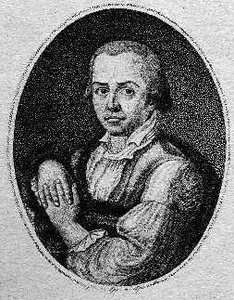
Mikhail Ivanovich Kozlovsky
1753 - 1802 , Russland