Meny
Text size

() ·

A painting made for you, by hand

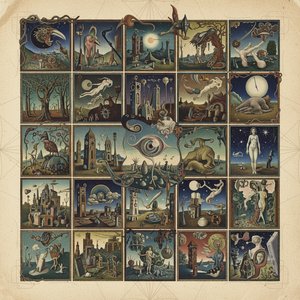
Homme aux bras croisés

Håndlaget oljereproduksjon

Håndmalt olje på lerret i din valgte størrelse og ramme, laget på bestilling av våre kunstnere. ( Bytt til trykk Bytt til digitalt bilde)

Beskrivelse av objektet

Explore 'Homme aux bras croisés' by Max Ernst – a striking, reflective sculpture embodying Surrealist themes of duality and human form. A captivating piece from the artist’s innovative repertoire.

Om kunstneren

Utforsk Max Ernsts surrealistiske verden! Oppdag frottage, collager og drømmende malerier med fugler, landskap & psykologisk dybde. #MaxErnst #Surrealisme #Dada

from ·

Chapter 1

How large should it be?

Slide to change the size; the picture on the left shows the frame at its real width. The proportions of the original are kept.

Standardformat
skreddersydd
CM
INCH

Velg mellom våre forhåndsdefinerte størrelser som bevarer kunstverkets opprinnelige proporsjoner.

bredde
høyde

Skriv inn ønsket bredde og høyde for å tilpasse bildet til din ramme eller vegg. Siden dette er håndmalt, kan kunstneren male litt mer rundt motivet eller beskjære det noe dersom du velger et annet format — valget er ditt. Vi sender deg en digital mockup til godkjenning før maleriet påbegynnes. Bildet som vises på denne siden representerer ikke det faktiske resultatet — kun mockuppen viser det endelige uttrykket.

Chapter 2

How should it arrive?

Choose the edges of the stretched canvas

Choose your frame

Corner sample of the WhiteWrap canvas edge finish, stretched on massivt tre bars
White Nkr1
Corner sample of the BlurSideWrap canvas edge finish, stretched on massivt tre bars
Blurside Nkr1
Corner sample of the ExtendedWrap canvas edge finish, stretched on massivt tre bars
Extended Nkr1
Corner sample of the P118B picture frame: støpt polystyren, 5 cm wide and 3 cm thick
P118B Nkr10
Corner sample of the P118H picture frame: støpt polystyren, 5 cm wide and 3 cm thick
P118H Nkr10
Corner sample of the P118W picture frame: støpt polystyren, 5 cm wide and 3 cm thick
P118W Nkr10
Corner sample of the P438Z picture frame: støpt polystyren, 5.5 cm wide and 3.5 cm thick
P438Z Nkr10
Corner sample of the P508JH picture frame: støpt polystyren, 7 cm wide and 3.5 cm thick
P508JH Nkr12
Corner sample of the P508YH picture frame: støpt polystyren, 7 cm wide and 3.5 cm thick
P508YH Nkr12
Corner sample of the P805H picture frame: støpt polystyren, 5 cm wide and 3.5 cm thick
P805H Nkr10
Corner sample of the P805Z picture frame: støpt polystyren, 5 cm wide and 3.5 cm thick
P805Z Nkr10
Corner sample of the P919BZ picture frame: støpt polystyren, 7 cm wide and 3.5 cm thick
P919BZ Nkr10
Corner sample of the P919G picture frame: støpt polystyren, 7 cm wide and 3.5 cm thick
P919G Nkr10
Corner sample of the P919XJ picture frame: støpt polystyren, 7 cm wide and 3.5 cm thick
P919XJ Nkr10
Corner sample of the P959ZH picture frame: støpt polystyren, 5 cm wide and 3 cm thick
P959ZH Nkr10
Corner sample of the P968JZ picture frame: støpt polystyren, 6 cm wide and 4 cm thick
P968JZ Nkr12
Corner sample of the W106C picture frame: massivt tre, 5 cm wide and 3 cm thick
W106C Nkr8
Corner sample of the W218G picture frame: massivt tre, 5 cm wide and 3 cm thick
W218G Nkr10
Corner sample of the W218JH picture frame: massivt tre, 5 cm wide and 3 cm thick
W218JH Nkr8
Corner sample of the W218Y picture frame: massivt tre, 5 cm wide and 3 cm thick
W218Y Nkr10
Corner sample of the W307PJ picture frame: massivt tre, 6 cm wide and 3 cm thick
W307PJ Nkr10
Corner sample of the W316G picture frame: massivt tre, 6 cm wide and 3 cm thick
W316G Nkr10
Corner sample of the W316PJ picture frame: massivt tre, 6 cm wide and 3 cm thick
W316PJ Nkr8
Corner sample of the W316Y picture frame: massivt tre, 6 cm wide and 3 cm thick
W316Y Nkr10
Corner sample of the W398PJ picture frame: massivt tre, 5 cm wide and 3 cm thick
W398PJ Nkr8
Corner sample of the W4111J picture frame: massivt tre, 6.5 cm wide and 3.5 cm thick
W4111J Nkr10
Corner sample of the W500HY picture frame: massivt tre, 7 cm wide and 5 cm thick
W500HY Nkr15
Corner sample of the W500JH picture frame: massivt tre, 7 cm wide and 5 cm thick
W500JH Nkr15
Corner sample of the W692G picture frame: massivt tre, 8 cm wide and 4 cm thick
W692G Nkr12
Corner sample of the W849H picture frame: massivt tre, 5 cm wide and 3 cm thick
W849H Nkr8
Corner sample of the W940BG picture frame: massivt tre, 7.5 cm wide and 4.5 cm thick
W940BG Nkr15
Corner sample of the W953PJ picture frame: massivt tre, 6 cm wide and 3.5 cm thick
W953PJ Nkr8
Corner sample of the H24-GOLD picture frame: utskåret tre med gesso, 10 cm wide and 6 cm thick
H24-GOLD Nkr30
Corner sample of the H24-SILVER picture frame: utskåret tre med gesso, 10 cm wide and 6 cm thick
H24-SILVER Nkr30
Corner sample of the H36-GOLD picture frame: utskåret tre med gesso, 15 cm wide and 6.5 cm thick
H36-GOLD Nkr45
Corner sample of the H36-SILVER picture frame: utskåret tre med gesso, 15 cm wide and 6.5 cm thick
H36-SILVER Nkr45

Moulding: . Overall size with the frame: .

Chapter 3

Who paints it, and should anything change?

Examples of what can be changed: Replace face with customer photo; Add pet (e.g., replace cat with dog); Include hidden message in background; Change background landscape or elements.
After order, OriginalUniqueArt.com team will email client for instructions and provide a mockup preview

Verdensomspennende levering () på 3–4 uker i stedet for standard 5 uker. (31 October). Ingen kompromisser med kvaliteten.

Chapter 4

The finishing touches

A nameplate, as in a museum?

Detaljer om gravert bronseplate

This elegant plaque features the artist's name and the title of the artwork, finely engraved for a timeless presentation.

It is made from bronze with a refined, elegant finish. The text is precisely laser-engraved for a sharp and permanent result. Measuring 9x2 cm, the plaque is compact yet easy to read. It's built to be durable and scratch-resistant, offering a professional, museum-quality look. Mounting is simple thanks to the included adhesive backing.

Detaljer om gjennomsiktig akrylplate

The plaque includes essential engraved details such as the artist's name, the title of the artwork, the date it was created, the type of media used-like oil on canvas or watercolor-a brief description of the piece, and a QR code that links to the complete artwork information.

It is crafted from clear acrylic, offering a sleek, modern appearance. The text is UV-engraved in black to ensure strong visual contrast. With a size of 10x15 cm, it ensures optimal readability. It comes equipped with two metal hooks for secure wall mounting. The plaque is designed to be weather-resistant, making it suitable for various environments, and it includes interactive features that work seamlessly with smartphone scanning.

Detaljer om plakett i svart akryl

This elegant plaque includes engraved information such as the artist's name, the title of the artwork, the date it was created, the type of media used (like oil on canvas or watercolor), a short description of the artwork, and a QR code for quick access to more information.

The plaque itself is made from refined black acrylic with a premium finish. The text is laser-engraved in white for high contrast and readability. Its size is 10x15 cm, designed to be easy to read. It comes with two metal hooks for professional mounting. The design is sleek and fits any interior style. It is also weather-resistant and durable, with built-in digital integration for mobile compatibility.

A protective varnish?

When do you need it?

Chapter 5

Your painting, as you ordered it

Homme aux bras croisés

Trykkmetode

Størrelse på reproduksjon

-

Utvalgte mesterkunstnere

Mer detaljrikdom, finesse og ekstra produksjonstid

-

Innramming av reproduksjon

-

-

For kunstverk eller reproduksjoner som er større enn 105 cm (ca. 41 tommer) på noen side, vil rammen bli sendt som et sett som må monteres. Denne metoden sikrer trygg levering og forhindrer skader under transport.

Krever profesjonell montering – dette er ikke et DIY-produkt.
Settet må monteres og lerretet strammes av en erfaren profesjonell rammelegger, ved bruk av trelim (følger ikke med), en lerretstang og klemmer for å holde rammelisten vinkelrett mens limet tørker. Feilaktig montering eller ujevn stramming av lerretet kan påføre kunstverket permanente skader og er ikke dekket av vår garanti.

  • Alle massive trelister er inkludert, presist tilpasset i størrelse.

  • Monteres med de medfølgende skruene, samt trelim til hjørnene, som ikke er inkludert og må anskaffes av din rammehandler.

  • Profesjonelt verktøy er nødvendig og er ikke inkludert: en lerretstang (strammer) og klemmer for å holde rammene vinkelrette mens limet tørker.

Viktig:
Hjørnene krever trelim, listene må holdes på plass med tvinger til limet er helt tørt, og stramming av lerretet på den ferdige rammen krever en lerretstang. Ingen av disse produktene er inkludert i settet. Vennligst sørg for tilgang til en erfaren profesjonell rammehandler før du bestiller denne størrelsen.

Navneskilt

-

-

Beskyttende ferniss

Blank lakk (forsterker farger, beskytter mot lys og fuktighet)

-

Tilpass mitt kunstverk

Eksempler på hva som kan endres: Erstatt ansikt med bilde av kunden; Legg til kjæledyr (f.eks. bytt ut katt med hund); Inkluder en skjult melding i bakgrunnen; Endre bakgrunnslandskap eller elementer.

-

Ekspresslevering

Verdensomspennende levering () på 3–4 uker i stedet for standard 5 uker. (31 October). Ingen kompromisser med kvaliteten.

-

Ekspresslevering

Verdensomspennende levering til innen 5 uker. (7 November).

Inkludert frakt

Totalpris for valgte alternativer

Nkr 2889

Totalpris Nkr 2889

Glassalternativet er kun tilgjengelig i størrelser under 110 cm

Included with every order

  • Gratis ekspressfrakt over hele verden
  • Lerretsduk av lin av høy kvalitet
  • Full transportforsikring
  • Garanti for refusjon av toll og importavgifter
  • Garantert fargegjengivelse
  • 100 dagers returrett ved fabrikasjonsfeil
  • 100% pengene tilbake-garanti
  • Rabatt ved flere kjøp

The Enigmatic Figure: Unveiling “Homme aux Bras Croisés”

Max Ernst’s “Homme aux Bras Croisés,” a strikingly minimalist sculpture crafted from polished aluminum, is more than just an object; it's a distilled embodiment of the artist’s core philosophies and a potent visual distillation of Surrealist principles. Completed in 1929, this piece immediately commands attention with its stark simplicity – a stylized human head perched atop a geometric block base. Yet, within this apparent austerity lies a complex web of symbolism and intellectual provocation, reflecting Ernst's lifelong fascination with the subconscious mind and his rejection of traditional artistic conventions.

The sculpture’s genesis is deeply intertwined with Ernst’s exploration of automatism – a technique he pioneered that sought to bypass conscious control and tap into the realm of pure, unbidden imagery. This method, combined with his interest in psychology and mythology, fueled his desire to create works that were both intellectually stimulating and emotionally resonant. The head itself, rendered with an almost mask-like quality, is deliberately devoid of specific features, transforming it into a universal symbol of humanity stripped bare. The deliberate reduction to essential forms speaks volumes about Ernst’s belief in the power of suggestion and the evocative potential of abstraction.

A Symphony of Geometric Forms and Metallic Texture

Beyond its symbolic weight, “Homme aux Bras Croisés” is a testament to Ernst's masterful manipulation of materials. The choice of polished aluminum – a material that reflects light with an almost unsettling intensity – immediately establishes a futuristic aesthetic while simultaneously grounding the sculpture in a sense of timelessness. The smooth, highly reflective surface creates a dynamic interplay of light and shadow, transforming the piece into a constantly shifting visual experience. The stark contrast between the solid, geometric base and the delicate, sculpted head further emphasizes this duality.

Ernst’s use of line and shape is equally deliberate. The precise angles of the rectangular base provide a sense of stability and order, while the curves of the head suggest fluidity and movement. The strategically placed cutouts – circles and ovals – introduce negative space, creating an intriguing visual rhythm and inviting the viewer to contemplate the relationship between form and void. This careful orchestration of geometric elements is characteristic of Ernst’s broader artistic practice, reflecting his interest in exploring the underlying structure of reality.

Symbolism and the Inner Landscape

The sculpture's symbolism is layered and open to interpretation, aligning perfectly with the Surrealist ethos. The crossed arms, a gesture of both protection and introspection, suggest a figure caught between worlds – perhaps representing humanity’s struggle to reconcile its rational and irrational impulses. The simplified face, devoid of individual characteristics, can be seen as an archetype of human experience, inviting viewers to project their own emotions and associations onto the form. The geometric base, reminiscent of ancient monoliths or even futuristic architecture, hints at a connection between the earthly realm and the cosmos.

Furthermore, considering Ernst’s personal life and artistic journey, “Homme aux Bras Croisés” can be viewed as an embodiment of his own internal conflicts – his struggles with identity, his fascination with mythology and psychology, and his ongoing quest for creative liberation. The bird-like quality of the head, a recurring motif in Ernst's work, subtly suggests a yearning for transcendence and a desire to escape the constraints of the material world.

A Timeless Reflection on Humanity

“Homme aux Bras Croisés” remains a powerfully evocative artwork, demonstrating Max Ernst’s genius as both an artist and a thinker. It is not merely a sculpture; it's a meditation on the human condition – a poignant reminder of our inherent contradictions, our capacity for both destruction and creation, and our enduring quest for meaning in a chaotic world. Its stark beauty and enigmatic symbolism continue to resonate with viewers today, solidifying its place as one of Ernst’s most significant and enduring achievements.

Spørsmål og svar

Kan jeg bruke utvidet virkelighet (AR) for å se "Homme aux bras croisés" av Max Ernst i mitt eget rom?

"Homme aux bras croisés" har en forhåndsvisning med utvidet virkelighet: Se i AR-siden til kunstverket viser det i ditt eget rom på en kompatibel enhet.

Hvilken størrelse anbefales for "Homme aux bras croisés" i et Living Room?

For et Living Room anbefales det å trykke "Homme aux bras croisés" i størrelsen Medium.

Hvilken kunstner og hvilken stil står bak "Homme aux bras croisés"?

Bak "Homme aux bras croisés" står Max Ernst og Surrealism-bevegelsen.

More about this painting

Bytt til trykk Bytt til digitalt bilde Send
Vis detaljer Utskriftsvennlig guide Legg til i favoritter Last ned bilde Liknende objekter Lysbildefremvisning Q&A Statistikk

In numbers

  • 29frames to choose from
  • standard sizes, in its own proportions
  • 5weeks to paint and deliver it

About the original

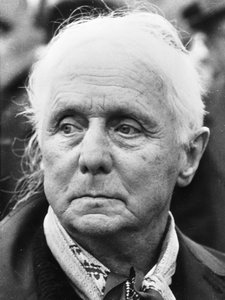
Max Ernst

Max Ernst

1891 - 1976, Tyskland

Quick facts about Max Ernst

  • Artistic Movement Or Style: Dada, Surrealisme
  • Artists Or Movements Influenced By This Artist:
    • Surrealisme
    • Dada
  • Artists Who Influenced This Artist:
    • Picasso
    • Van Gogh
    • Gauguin
  • Date Of Birth: 1. april 1891
  • Date Of Death: 1. april 1976
  • Full Name: Max Ernst
  • Nationality: Tysk-Amerikansk, Fransk
  • Notable Artworks:
    • Byen helhetlig
    • Euclides
    • Av denne skal ingen vite
  • Place Of Birth: Brühl, Tyskland

Om kunstneren

A Life Immersed in the Surreal

Max Ernst, born Maximilian Maria Ernst on April 1st, 1891, in Brühl, Germany, was a restless spirit destined to become one of the most pivotal figures in 20th-century art. His journey wasn’t one of conventional artistic training; rather, it was a self-directed exploration fueled by philosophical inquiry, psychological fascination, and a profound disillusionment with societal norms. Ernst's father, a teacher of the deaf and an amateur painter, instilled in him both a sensitivity to the world and a rebellious streak against established authority. This early duality would become a defining characteristic of his artistic vision.

Ernst’s academic pursuits at the University of Bonn – encompassing philosophy, art history, literature, psychology, and psychiatry – were not merely diversions but foundational elements that deeply informed his later work. He wasn’t simply interested in *how* to paint; he was grappling with *why*. This intellectual curiosity led him to encounter the groundbreaking works of Picasso, Van Gogh, and Gauguin at the Sonderbund exhibition in Cologne in 1912, a moment that irrevocably altered his artistic trajectory. The seeds of modernism had been sown.

Dada’s Disruption and the Birth of Surrealist Visions

The cataclysm of World War I proved to be a watershed moment for Ernst. His experiences as a soldier on both the Eastern and Western fronts left him profoundly shaken, fostering a deep skepticism towards established order and a yearning for new modes of expression. This disillusionment found fertile ground in the burgeoning Dada movement, which he embraced wholeheartedly after returning to Cologne in 1918. Alongside Hans Arp – a lifelong friend and collaborator – Ernst became a central figure in the Cologne Dada group, rejecting traditional artistic conventions and embracing absurdity, chance, and anti-rationality.

The Dadaists sought to dismantle bourgeois values and challenge accepted notions of beauty and logic. They employed techniques like collage, photomontage, and assemblage—often incorporating found objects—to create jarring juxtapositions that mocked the seriousness of the era. Ernst’s Dada output was marked by a preoccupation with disturbing imagery and a deliberate disregard for conventional artistic standards.

Pioneering Techniques: Frottage, Grattage, and Collage

Ernst's artistic innovation extended beyond subject matter; he was a relentless experimenter with technique. He didn’t simply adopt existing methods—he invented new ones. Perhaps his most famous contribution is frottage, a process of rubbing pencil or charcoal over textured surfaces to create unexpected and evocative images. This technique, born from a moment of boredom while observing wood grain, allowed Ernst to tap into the subconscious and generate forms that defied conscious control. It was a method he famously described as “a way of letting the unconscious speak.”

Closely related was grattage, where paint is scraped across canvas revealing underlying layers—often incorporating textures and patterns created by previous paintings. Ernst’s meticulous layering of colors and surfaces contributed to the dreamlike atmosphere characteristic of his work.

Surrealist Exploration: Dreams, Symbolism, and Psychological Depth

Ernst's engagement with Surrealism solidified his commitment to exploring the realm of dreams, the unconscious mind, and the irrational. Influenced by Sigmund Freud’s psychoanalytic theories—particularly his concept of “the Oedipus complex”—Ernst sought to unlock hidden desires and anxieties through his art. He wasn’t interested in depicting reality as it appeared but rather in revealing the underlying psychological forces that shaped perception.

His paintings frequently incorporate symbolic imagery: birds (often representing freedom and aspiration), desolate landscapes reflecting inner turmoil, unsettling juxtapositions designed to provoke thought and emotion—and recurring motifs like Loplop, Ernst’s alter ego, which embodies a blend of masculine and feminine energies. His artistic vision was driven by a profound desire to confront the darker aspects of human experience.

Major Achievements and Legacy

Throughout his prolific career, Ernst produced an astonishing array of paintings, sculptures, prints, and drawings—spanning genres from figurative landscapes to abstract compositions. Notable works include “Ofrenda funeraria,” “The Equivocal Woman,” and “L’Ange du foyer”—each demonstrating Ernst's mastery of technique and his ability to convey complex psychological states.

Max Ernst’s influence on subsequent generations of artists is undeniable. He championed innovative methods, challenged artistic conventions, and established himself as a cornerstone of Surrealist art—a movement that continues to resonate with audiences worldwide. His legacy resides not only in his stunning visual creations but also in his unwavering belief in the transformative power of imagination and the importance of confronting uncomfortable truths.

Kort om verket

  • Notable elements: Geometric abstraction
  • Movement: Surrealism
  • Dimensions: 20 cm (7.9 in)
  • Year: 1929
  • Artist: Max Ernst
  • Title: Homme aux bras croisés

Kunnequiz om kunst

Det er kun ett riktig svar på hvert spørsmål.

Spørsmål 1:
What is the primary artistic movement associated with Max Ernst’s ‘Homme aux bras croisés’?
Spørsmål 2:
The sculpture 'Homme aux bras croisés' primarily utilizes which material?
Spørsmål 3:
What is the significance of the geometric cutouts in the base of ‘Homme aux bras croisés’?
Spørsmål 4:
Based on the description, what is the overall aesthetic tone of ‘Homme aux bras croisés’?
Spørsmål 5:
Which of the following best describes Max Ernst's approach to art creation, as reflected in this sculpture?