

 Se i rommet
 Del som digitalt kort
 Del
Del
 Detaljer
 Studentguide

 Last ned
 Liknende objekter
 Røntgen
 Lysbildefremvisning
 Besøksstatistikk
After Us Motherhood
 Oil On Canvas
- WallArt
- Surrealist Symbolism
 1927
1927- Modern
 146.0 x 114.0 cm
 Les mer
Kunstverket som vises på denne siden er beskyttet av opphavsretten, noe som betyr at vi ikke har juridisk tillatelse til å lage eller selge identiske reproduksjoner. Denne beskyttelsen håndheves i henhold til internasjonale avtaler som for eksempel Bernerkonvensjonen og av nasjonale lover, inkludert de som er fastsatt i Amerikansk opphavsrettslov – Tittel 17.
Denne metoden er i fullt samsvar med opphavsrettslige regler, da den ikke innebærer kopiering eller duplisering av det beskyttede kunstverket. I stedet er det snakk om en kreativ nytolkning – et nytt maleri som er inspirert av originalen, men ikke identisk med den.
Giclée / Kunsttrykk
Giclée- eller lerretsprint av museumskvalitet med rask produksjon og fleksible valgmuligheter for etterbehandling. ( Bestill håndmalt reproduksjon Gå til digitalt bilde)




P118B Nkr10

P118H Nkr10

P118W Nkr10

P438Z Nkr10

P508JH Nkr12

P508YH Nkr12

P805H Nkr10

P805Z Nkr10

P919BZ Nkr10

P919G Nkr10

P919XJ Nkr10

P959ZH Nkr10

P968JZ Nkr12

W106C Nkr8

W218G Nkr10

W218JH Nkr8

W218Y Nkr10

W307PJ Nkr10

W316G Nkr10

W316PJ Nkr8

W316Y Nkr10

W398PJ Nkr8

W4111J Nkr10

W500HY Nkr15

W500JH Nkr15

W692G Nkr12

W849H Nkr8

W940BG Nkr15

W953PJ Nkr8




Velg mellom våre forhåndsdefinerte størrelser som bevarer kunstverkets opprinnelige proporsjoner.

Du kan oppgi egne mål for å tilpasse en spesifikk ramme eller et bestemt område. Dersom den valgte størrelsen ikke samsvarer med det originale bildets proporsjoner, vil vi enten beskjære kunstverket eller utvide bildet med en speilet eller ensfarget kant. En digital mockup vil bli sendt til din godkjenning før produksjonen starter.
Vennligst merk at forhåndsvisningen på skjermen ikke gjenspeiler den faktiske beskjæringen eller utvidelsen. Kun mockuppen vil vise den endelige komposisjonen nøyaktig.
Selv om tilpassede størrelser er tilgjengelige, anbefaler vi å velge et mål fra den forhåndsdefinerte listen for å bevare de originale proporsjonene.
Verdensomspennende levering () på 2 uker i stedet for standard 4/5 uker. (11 October)

Gratis ekspressfrakt over hele verden

Lerretsduk av høykvalitets lin

Full transportforsikring

Garanti for refusjon av toll og importavgifter

Garantert fargeekthet

100 dagers returrett ved fabrikasjonsfeil

100% pengene tilbake-garanti

Mengderabatt
 Glassalternativet er kun tilgjengelig i størrelser under 110 cm

After Us Motherhood
Giclée / Kunsttrykk
Format på reproduksjon
-


Totalpris
Nkr 743
A Dreamscape of Instinct: Decoding Max Ernst’s Surreal Vision
In the hauntingly beautiful canvas of “After Us Motherhood,” painted in 1927, Max Ernst invites us to abandon the safety of rational thought and surrender to the unsettling logic of the subconscious. This striking work is far more than a mere visual spectacle; it is a profound invitation into the realm of Surrealism, where the boundaries between the organic and the monstrous begin to dissolve. At first glance, the viewer is arrested by a dreamlike tableau: a baby perched atop a table, surrounded by a menagerie of animals and shadowed by the looming presence of a dragon. This paradoxical juxtaposition of extreme vulnerability and primal power creates an immediate emotional tension, pulling the observer into a psychological labyrinth where every element whispers of hidden truths.
The painting serves as a visceral reaction to the societal upheavals of the post-World War I era. Emerging from the trauma of global conflict, Ernst utilized the spirit of Dadaism—a movement defined by its rejection of logic and traditional aesthetics—to protest a world he perceived as broken. Through this lens, “After Us Motherhood” becomes a meditation on creation and destruction. The baby, representing innocence and the primal instinct for survival, sits elevated, perhaps signifying a resilient hope amidst chaos. Yet, the surrounding birds, often symbols of freedom and rebirth, are scattered in positions that suggest instability, while the dragon embodies the darker, more predatory aspects of human nature and the anxieties of mortality.
Mastery of Texture and the Language of the Unconscious
Technically, Ernst’s mastery of oil paint is central to the artwork's immersive impact. He achieved a remarkable textural depth through meticulous layering and blending, creating a surface that feels both tactile and emotionally resonant. His approach was deeply influenced by his interest in psychoanalytic theories, particularly those of Sigmund Freud. By employing techniques that allowed for a degree of automatism—letting unconscious impulses guide the brush—Ernst created textures that mirror the unpredictable nature of dreams. The swirling vortex of organic forms, rendered in a palette of evocative oranges, blues, and yellows against a stark, dark background, forces the eye to navigate a landscape where form is constantly shifting.
For the discerning collector or interior designer, this piece offers more than just aesthetic beauty; it provides a focal point of profound intellectual depth. The painting’s ability to provoke thought and challenge assumptions makes it an extraordinary addition to any curated space. Whether placed in a contemporary gallery setting or a sophisticated residential study, “After Us Motherhood” acts as a portal, stimulating conversation and reflection. It is a work that does not merely sit upon a wall but breathes with the restless energy of the human psyche, making it an enduring masterpiece for those who seek art that resonates with the complexities of the modern soul.
Spørsmål og svar
Hvem har skapt "After Us Motherhood"?
Kunstneren bak "After Us Motherhood" er Max Ernst. Verket er katalogisert under Max Ernst sitt navn.
Hvor gammel var Max Ernst da hen laget "After Us Motherhood"?
Da "After Us Motherhood" ble skapt i 1927, var Max Ernst – født i 1891 – 36 år gammel.
Hvilken atmosfære ville en reproduksjon av "After Us Motherhood" av Max Ernst tilføre et rom?
Med sin Mystical stemning, anbefales "After Us Motherhood" for et Living Room.
Når ble "After Us Motherhood" laget?
"After Us Motherhood" av Max Ernst ble skapt i 1927.
Hvem anbefales "After Us Motherhood" av Max Ernst som gave til?
Som gave anbefales "After Us Motherhood" av Max Ernst til Mother's Day. Den passer også godt til andre anledninger.
Hva er den overordnede stemningen i "After Us Motherhood" av Max Ernst?
"After Us Motherhood" av Max Ernst beskrives med en Mystical stemning. Denne klassifiseringen kan bidra til å matche verket med et passende miljø.
Er "After Us Motherhood" et kjent kunstverk innen Surrealist Symbolism?
"After Us Motherhood" av Max Ernst er klassifisert som Iconic og tilhører Surrealist Symbolism-retningen.
Kunstnerbiografi
A Life Immersed in the Surreal
Max Ernst, born Maximilian Maria Ernst on April 1st, 1891, in Brühl, Germany, was a restless spirit destined to become one of the most pivotal figures in 20th-century art. His journey wasn’t one of conventional artistic training; rather, it was a self-directed exploration fueled by philosophical inquiry, psychological fascination, and a profound disillusionment with societal norms. Ernst's father, a teacher of the deaf and an amateur painter, instilled in him both a sensitivity to the world and a rebellious streak against established authority. This early duality would become a defining characteristic of his artistic vision.
Ernst’s academic pursuits at the University of Bonn – encompassing philosophy, art history, literature, psychology, and psychiatry – were not merely diversions but foundational elements that deeply informed his later work. He wasn’t simply interested in *how* to paint; he was grappling with *why*. This intellectual curiosity led him to encounter the groundbreaking works of Picasso, Van Gogh, and Gauguin at the Sonderbund exhibition in Cologne in 1912, a moment that irrevocably altered his artistic trajectory. The seeds of modernism had been sown.
Dada’s Disruption and the Birth of Surrealist Visions
The cataclysm of World War I proved to be a watershed moment for Ernst. His experiences as a soldier on both the Eastern and Western fronts left him profoundly shaken, fostering a deep skepticism towards established order and a yearning for new modes of expression. This disillusionment found fertile ground in the burgeoning Dada movement, which he embraced wholeheartedly after returning to Cologne in 1918. Alongside Hans Arp – a lifelong friend and collaborator – Ernst became a central figure in the Cologne Dada group, rejecting traditional artistic conventions and embracing absurdity, chance, and anti-rationality.
The Dadaists sought to dismantle bourgeois values and challenge accepted notions of beauty and logic. They employed techniques like collage, photomontage, and assemblage—often incorporating found objects—to create jarring juxtapositions that mocked the seriousness of the era. Ernst’s Dada output was marked by a preoccupation with disturbing imagery and a deliberate disregard for conventional artistic standards.
Pioneering Techniques: Frottage, Grattage, and Collage
Ernst's artistic innovation extended beyond subject matter; he was a relentless experimenter with technique. He didn’t simply adopt existing methods—he invented new ones. Perhaps his most famous contribution is frottage, a process of rubbing pencil or charcoal over textured surfaces to create unexpected and evocative images. This technique, born from a moment of boredom while observing wood grain, allowed Ernst to tap into the subconscious and generate forms that defied conscious control. It was a method he famously described as “a way of letting the unconscious speak.”
Closely related was grattage, where paint is scraped across canvas revealing underlying layers—often incorporating textures and patterns created by previous paintings. Ernst’s meticulous layering of colors and surfaces contributed to the dreamlike atmosphere characteristic of his work.
Surrealist Exploration: Dreams, Symbolism, and Psychological Depth
Ernst's engagement with Surrealism solidified his commitment to exploring the realm of dreams, the unconscious mind, and the irrational. Influenced by Sigmund Freud’s psychoanalytic theories—particularly his concept of “the Oedipus complex”—Ernst sought to unlock hidden desires and anxieties through his art. He wasn’t interested in depicting reality as it appeared but rather in revealing the underlying psychological forces that shaped perception.
His paintings frequently incorporate symbolic imagery: birds (often representing freedom and aspiration), desolate landscapes reflecting inner turmoil, unsettling juxtapositions designed to provoke thought and emotion—and recurring motifs like Loplop, Ernst’s alter ego, which embodies a blend of masculine and feminine energies. His artistic vision was driven by a profound desire to confront the darker aspects of human experience.
Major Achievements and Legacy
Throughout his prolific career, Ernst produced an astonishing array of paintings, sculptures, prints, and drawings—spanning genres from figurative landscapes to abstract compositions. Notable works include “Ofrenda funeraria,” “The Equivocal Woman,” and “L’Ange du foyer”—each demonstrating Ernst's mastery of technique and his ability to convey complex psychological states.
Max Ernst’s influence on subsequent generations of artists is undeniable. He championed innovative methods, challenged artistic conventions, and established himself as a cornerstone of Surrealist art—a movement that continues to resonate with audiences worldwide. His legacy resides not only in his stunning visual creations but also in his unwavering belief in the transformative power of imagination and the importance of confronting uncomfortable truths.
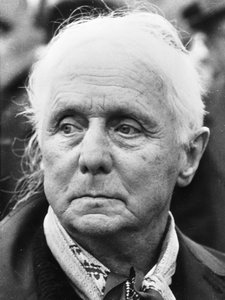
Max Ernst
1891 - 1976 , Tyskland
Kort om kunstneren
- Artistic Movement Or Style: Dada, Surrealisme
- Artists Or Movements Influenced By This Artist:
- Surrealisme
- Dada
- Artists Who Influenced This Artist:
- Picasso
- Van Gogh
- Gauguin
- Date Of Birth: 1. april 1891
- Date Of Death: 1. april 1976
- Full Name: Max Ernst
- Nationality: Tysk-Amerikansk, Fransk
- Notable Artworks:
- Byen helhetlig
- Euclides
- Av denne skal ingen vite
- Place Of Birth: Brühl, Tyskland
Relaterte artikler

Beyond Reality: A Definitive Guide to the Dreamlike World of Surrealism and Its Artistic Legacy
Embark on a journey through the subconscious with our expert guide to Surrealism. Discover the profound symbolism of masters like Dalí and Ernst, exploring how dreamlike imagery reshaped art history and continues to inspire collectors and enthusiasts worldwide.
Surrealismens 10 Mesterverk: Kunst som utfordrer virkeligheten – OriginalUniqueArt.no
Utforsk surrealismens 10 mest ikoniske malerier – Dalí, Magritte & mer! Oppdag historiene bak mesterverkene og finn kunsttrykk til ditt hjem. Eksklusive reproduksjoner på OriginalUniqueArt.no.

Max Ernsts 25 Mesterverk: Surrealisme, Kunst og Inspirasjon til Ditt Hjem
Utforsk Max Ernsts 25 mest ikoniske surrealistiske malerier! Oppdag historien bak hvert mesterverk, teknikken og den tidløse skjønnheten. Finn kunsttrykk av høy kvalitet til ditt hjem på OriginalUniqueArt.com – inspirert av drømmekunst og avantgarde.
Dreamscapes & Disrupted Realities: Exploring Surrealism's Enduring Influence
Explore the fascinating world of Surrealism! Discover its origins, key artists like Dalí & Magritte, and enduring influence on art & culture. Expert insights & high-quality reproductions at OriginalUniqueArt.
Feathered Visions: A Historical & Artistic Exploration of Birds in Painting
Explore the rich history of birds in painting! Discover symbolism, artistic movements & master artists like Audubon. High-quality reproductions available at OriginalUniqueArt.


