

 Forhåndsvisning
 Send
Send Del
Del
 Vis detaljer
 Utskriftsvennlig guide

 Last ned bilde
 Liknende objekter
 Røntgenundersøkelse
 Lysbildefremvisning
 Q&A
Q&A Statistikk
Cell #7
 Contemporary Minimalism
 300.0 x 200.0 cm
 Viafarini
 Vis hele teksten
Få en utskriftsklar fil som går langt utover forhåndsvisningen på nett. Hvert digitale bilde vi selger er hentet fra en høyoppløselig master i vår database – vanligvis mellom 5 000 og 15 000 piksler bred – slik at du kan trykke stort, beskjære tett eller gjenskape fine detaljer med full trygghet.
Ingen filer forlater studioet vårt uten å bli bearbeidet. En digital ekspert kontrollerer fargene mot det originale maleriet og korrigerer dem ved behov, for deretter å forbedre klarhet og detaljrikdom med profesjonelle retusjeringsverktøy — alltid tro mot kunstnerens penselstrøk og stil. Resultatet er et bilde som fremstår som selve maleriet, ikke som en skann med filter.
Du godkjenner før ferdigstilling: vår ekspert sender bildet på e-post til din vurdering innen 72 timer. Ikke fornøyd? Be om forbedringer eller korrigeringer, eller be om refusjon dersom kvaliteten ikke svarer til forventningene.
Dette er kvaliteten forlag, designstudioer, gallerier og trykkerier stoler på.
Digitalt bilde
Last ned en høyoppløselig fil til personlig bruk, utskrift og kreative prosjekter. ( Bytt til trykk Kjøp håndmalt maleri)
Inkludert i alle bestillinger av digitale bilder
Ekspert på digital levering, garantert
Når du velger OriginalUniqueArt.com, får du ikke bare et bilde – du mottar et profesjonelt etterbehandlet digitalt kunstverk, skapt med presisjon og med en garantert tilfredshetsgaranti. Her er alt som automatisk følger med din bestilling:

Rask levering på e-post
Din høyoppløselige digitale bildefil sendes til din e-post innen 72 timer etter bestilling – klar til umiddelbar bruk.

KI-forbedret digital fil
Ditt kunstverk blir profesjonelt optimalisert ved hjelp av avanserte AI-verktøy og manuell redigering, noe som sikrer maksimal detaljrikdom, klarhet og fargegjengivelse.

Gratis livslang nyutlevering
Har du ved et uhell slettet eller mistet filen din? Ingen bekymring – vi sender den på nytt når som helst, helt gratis.

Ingen importavgifter – noen gang
Nyt ditt kunstverk umiddelbart uten toll, avgifter eller leveringskostnader – digitale nedlastinger er alltid avgiftsfrie.

Garantert fargenøyaktighet
Vi sikrer at det digitale bildet gjenspeiler de originale fargene så nøyaktig som mulig ved hjelp av profesjonelle verktøy og fargehåndtering.

100 dagers fornøydhetsgaranti
Hvis du ikke er fornøyd med ditt digitale bilde, vil vi revidere det eller refundere 100% innen 100 dager – uten spørsmål.

100% Penggaranti
Ikke fornøyd? Få full refusjon innen 100 dager etter at du har mottatt din digitale fil – uten spørsmål.

Rabatt ved storkjøp
Kjøp 3 bilder, spar 10% - Kjøp 5, spar 15% - Kjøp 10+, spar 20%. Ideelt for kreative prosjekter, gallerier og byråer.
Spørsmål og svar
Hva er formatet og størrelsen på "Cell #7"?
Formatet på "Cell #7" er Landscape, og originalen måler 300 x 200 cm. Begge deler er nyttige når man planlegger en reproduksjon.
Hvordan er fargekomposisjonen i "Cell #7" av Massimo Kaufmann bygget opp?
Fargekomposisjonen i "Cell #7" av Massimo Kaufmann forener en Serene kontrast med en Discordant Palette harmoni.
Hvor stor er kontrasten i "Cell #7" av Massimo Kaufmann?
Lys-mørke-kontrasten i "Cell #7" er registrert som Serene. Kontrast beskriver hvor sterkt lyse og mørke områder skiller seg fra hverandre.
Om kunstneren
A Milanese Painter of Diverse Expressions
Massimo Kaufmann, born in Milan in 1963, embodies a fascinating trajectory within the landscape of contemporary Italian art. He is an artist who resists easy categorization, having consistently explored diverse mediums and approaches throughout his career. While he readily identifies as a painter, Kaufmann’s artistic journey has been marked by a willingness to embrace installation, photography, and video—a characteristic that places him firmly within the generation of artists who emerged after 1960, those who consciously moved beyond the established ideologies of Arte Povera and Transavantgarde. His work is not defined by adherence to a single style but rather by an ongoing investigation into form, color, and the very act of creation itself.Early Influences and Artistic Development
Kaufmann’s formative years in Milan were crucial in shaping his artistic sensibility. The city's vibrant cultural scene, steeped in both historical tradition and avant-garde experimentation, provided a fertile ground for his developing aesthetic. He attended classical studies and the Faculty of Philosophy, suggesting an early inclination towards intellectual inquiry that would later inform his work. Active since the late 1980s, Kaufmann quickly established himself as a prominent voice within the “Emerging Scene,” as documented by the Museo Pecci in Prato in 1990. This period saw a new wave of Italian artists rejecting rigid classifications and embracing a plurality of mediums—a spirit that resonated deeply with Kaufmann’s own artistic inclinations. His early exhibitions, held in influential galleries such as Giò Marconi and Massimo Minini, signaled his arrival on the national art stage.A Multifaceted Practice: Painting as Performance
While Kaufmann has consistently returned to painting, it is crucial to understand this practice not as a static pursuit but as an evolving process deeply intertwined with other forms of expression. In recent years, his work has become increasingly focused on abstract painting, where the performative aspect takes center stage. He approaches painting less as a means of representation and more as a musical score—a dynamic interplay of color, gesture, and emotion. This emphasis on the act of painting itself is evident in his canvases, which often bear witness to the energy and immediacy of their creation. The color becomes an emotional vehicle, conveying a sense of both intensity and vulnerability.Exhibitions, Collections, and Lasting Legacy
Kaufmann’s work has been widely exhibited in prestigious institutions across Italy and internationally. Notable shows include solo exhibitions at the MACRO in Rome (2011), the Museo Pecci in Prato (both 1990 and 2011), and the Arnaldo Pomodoro Foundation in Milan (2010). His pieces have also graced the halls of renowned museums such as the Fondation Cartier in Paris, the Martin Gropius Bau in Berlin, and the Museum Moderner Ludwig in Vienna. This extensive exhibition history underscores his significance within the contemporary art world. Furthermore, Kaufmann’s work is held in numerous public collections, including those of the Fondation Cartier, the Bronx Museum, and the National Gallery of Modern Art in Rome—a testament to its enduring artistic value. His influence can be seen in a new generation of artists who embrace experimentation and challenge traditional boundaries.Historical Significance and Contemporary Relevance
Massimo Kaufmann’s contribution lies not in adhering to a specific movement but in his ability to synthesize diverse influences and create a uniquely personal visual language. He represents a pivotal moment in Italian art history—a transition from the ideological concerns of previous generations to a more open-ended exploration of form, color, and emotion. His work continues to resonate with audiences today because it speaks to universal themes of isolation, order, and the search for meaning in an increasingly complex world. Kaufmann’s paintings are not merely objects to be observed but experiences to be felt—a testament to his enduring artistic vision. His art is a powerful reminder that painting can be both a deeply personal act and a profound form of communication.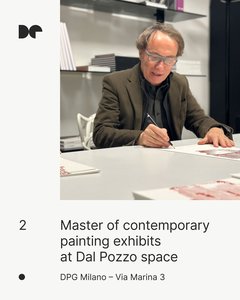
Massimo Kaufmann
1963 - , Italy
Kort om kunstneren
- Full Name: Massimo Kaufmann
- Nationality: Italian
- Date Of Birth: 1963
- Place Of Birth: Milan, Italy
- Notable Artworks: ['Cell #7']
- Artistic Movement Or Style: Abstract Expressionism