Forhåndsvisning
 Send
Send Del
Del
 Vis detaljer
 Utskriftsvennlig guide

 Last ned bilde
 Liknende objekter
 Røntgenundersøkelse
 Lysbildefremvisning
 Q&A
Q&A Statistikk
The Fourth Wise Virgin

- 122.0 x 84.0 cm


 Vis hele teksten
Giclée / Kunsttrykk
Giclée- eller lerretsprint av museumskvalitet med rask produksjon og fleksible valgmuligheter for etterbehandling. ( Kjøp håndmalt maleri Bytt til digitalt bilde)




P118B Nkr10

P118H Nkr10

P118W Nkr10

P438Z Nkr10

P508JH Nkr12

P508YH Nkr12

P805H Nkr10

P805Z Nkr10

P919BZ Nkr10

P919G Nkr10

P919XJ Nkr10

P959ZH Nkr10

P968JZ Nkr12

W106C Nkr8

W218G Nkr10

W218JH Nkr8

W218Y Nkr10

W307PJ Nkr10

W316G Nkr10

W316PJ Nkr8

W316Y Nkr10

W398PJ Nkr8

W4111J Nkr10

W500HY Nkr15

W500JH Nkr15

W692G Nkr12

W849H Nkr8

W940BG Nkr15

W953PJ Nkr8




Velg mellom våre forhåndsdefinerte størrelser som bevarer kunstverkets opprinnelige proporsjoner.

Skriv inn ønsket bredde og høyde for å tilpasse trykket til din ramme eller vegg. Et trykk kan kun beskjæres, aldri skaleres opp utover motivets opprinnelige størrelse, noe som betyr at et format med andre proporsjoner vil føre til tap av deler av bildet. Vi sender deg en digital mockup for godkjenning før vi starter trykkeprosessen. Bildet som vises på denne siden viser ikke den faktiske beskjæringen — det er kun mockuppen som viser dette.
Verdensomspennende levering () på 2 uker i stedet for standard 4/5 uker. (2 November)

Gratis ekspressfrakt over hele verden

Lerretsduk av lin av høy kvalitet

Full transportforsikring

Garanti for refusjon av toll og importavgifter

Garantert fargegjengivelse

100 dagers returrett ved fabrikasjonsfeil

100% pengene tilbake-garanti

Rabatt ved flere kjøp
 Glassalternativet er kun tilgjengelig i størrelser under 110 cm

The Fourth Wise Virgin
Giclée / Kunsttrykk
Størrelse på reproduksjon
-


Totalpris for valgte alternativer
Nkr 769
The Fourth Wise Virgin: A Glimpse into Northern Renaissance Mystery
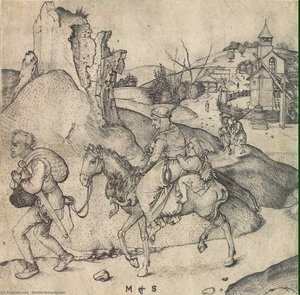
Martin Schongauer’s “The Fourth Wise Virgin,” created around 1490, is more than just an engraving; it's a meticulously crafted window into the spiritual and artistic currents of late medieval Germany. This captivating image, housed within the National Gallery of Art in Washington D.C., draws upon both established iconography – referencing the biblical tale of the Wise Virgins – and Schongauer’s own distinctive style, blending meticulous detail with an almost haunting sense of introspection. The work immediately commands attention not through grand scale or overt drama, but through a profound quietude and a subtle layering of symbolism that invites prolonged contemplation.
Schongauer's artistic lineage is deeply rooted in the traditions of goldsmithing, a craft he likely learned from his father. This background profoundly shaped his approach to engraving – an art demanding unparalleled precision and control over line. The image’s remarkable clarity stems from Schongauer’s mastery of hatching and cross-hatching techniques, creating a sophisticated illusion of form and texture. He doesn't simply depict the figure; he sculpts her presence with carefully placed lines, imbuing the composition with an almost palpable sense of weight and volume. The use of negative space is equally crucial, drawing attention to the central subject while subtly suggesting the vastness of the surrounding world – a world both familiar and potentially perilous.
A Biblical Narrative Illuminated
The scene itself draws upon the well-known parable of the Wise and Foolish Virgins. Ten young women are preparing for the wedding of the king, each carrying a lamp filled with oil. The foolish ones neglect their duty, leaving their lamps unlit, and are subsequently barred from entering the celebration. The Fourth Virgin, depicted here in profile, embodies a serene yet subtly melancholic acceptance of her fate. Her posture is dignified, suggesting not despair but a quiet understanding of divine judgment. The candle she holds – a potent symbol of faith, enlightenment, and guidance – casts a gentle glow upon her face, illuminating her expression with an ethereal light.
Schongauer’s choice to focus on this particular virgin is intriguing. Unlike the more overtly dramatic depictions found in other prints from the series, Schongauer's rendering emphasizes introspection rather than external action. The background is deliberately sparse, devoid of elaborate details or distracting elements. This minimalist approach directs the viewer’s attention entirely onto the figure herself, amplifying her internal state and inviting us to contemplate the moral implications of the story. The composition subtly suggests a sense of isolation – a solitary figure contemplating a universal truth.
Technique and Historical Context
“The Fourth Wise Virgin” is a prime example of Northern Renaissance engraving, characterized by its meticulous detail, refined draftsmanship, and a deep engagement with both religious iconography and contemporary fashion. Schongauer’s work reflects the influence of Early Netherlandish painting, particularly the realism and attention to texture evident in the drapery and facial features. The print's creation coincided with a period of significant artistic innovation, as engravers began to explore new techniques for achieving greater tonal range and simulating the effects of paint. The use of a copper or iron plate, meticulously etched with lines using specialized tools like burins, is itself a testament to Schongauer’s technical skill.
Furthermore, the print's creation occurred during a time of intense religious fervor and social upheaval in Europe. The Reformation was gaining momentum, challenging traditional beliefs and practices. Schongauer’s work can be interpreted as a meditation on themes of faith, judgment, and redemption – timeless concerns that resonated deeply with audiences throughout the Renaissance.
A Timeless Symbol of Reflection
“The Fourth Wise Virgin” endures not merely as a beautiful engraving but as a poignant reflection on human nature. Schongauer’s masterful use of line, light, and shadow creates an image that is both visually arresting and emotionally resonant. It's a work that invites viewers to contemplate their own choices, their own faith, and their place within the larger narrative of life and death. The engraving’s quiet dignity and subtle symbolism continue to captivate audiences centuries after its creation, solidifying Schongauer’s legacy as one of the most important printmakers of the Northern Renaissance.
Spørsmål og svar
Hvor intens er fargebruken i "The Fourth Wise Virgin" av Martin Schongauer?
Fargene i "The Fourth Wise Virgin" av Martin Schongauer har en Monochromatic intensitet.
Er "The Fourth Wise Virgin" av Martin Schongauer et portrett, landskap eller en kvadratisk komposisjon?
"The Fourth Wise Virgin" av Martin Schongauer er en Portrait komposisjon. Det er lurt å sjekke proporsjonene før du velger trykkstørrelse.
Hvilken teknikk er brukt i "The Fourth Wise Virgin" av Martin Schongauer?
"The Fourth Wise Virgin" er utført i Engraving.
Om kunstneren
Martin Schongauer: Liv og ettermæle
Tidlig liv og opplæring
Martin Schongauer, født rundt 1450 i Colmar i Alsace (nå Frankrike), var en skjellsettende skikkelse i utviklingen av grafikk under den nordlige renessansen. Han sprang ut av en familie av kunsthåndverkere; hans far, Caspar Schongauer, var en gullsmed som hadde flyttet til Colmar fra Augsburg i Tyskland rundt 1440. Denne familiære bakgrunnen preget Martins tidlige kunstneriske opplæring i stor grad, ettersom gullsmedkunsten ga et solid fundament i presis detaljrikdom og metallarbeidsteknikker – ferdigheter som var direkte overførbare til kobberstikkets kunst.
Utdanning og kunstnerisk utvikling
I 1465 studerte Schongauer kortvarig ved universitetet i Leipzig, men han forlot snart akademiske sysler for å vie seg fullt ut til kunsten. Han ble først utdannet som maler under Caspar Isenmann, en lokal mester påvirket av nederlandsk malerkunst fra tidlig fase, og særlig verkene til Rogier van der Weyden. Denne tidlige eksponeringen for nederlandsk realisme og det nitidige fokuset på detaljer skulle senere bli selve kjennetegnet på Schongauers egen stil.
Kunstnerisk stil og innflytelse
Schongauers kunstneriske uttrykk er preget av en klar, organisert gotisk estetikk som smelter sammen med de fremvoksende impulsene fra den nordlige renessansen. Han manglet merkbart direkte italiensk påvirkning, og hentet i stedet inspirasjon fra tyske og nederlandske tradisjoner. Hans arbeid utviser en møysommelig detaljrikdom, ekspressive figurer og en sofistikert forståelse for komposisjon.
- Sentrale kjennetegn: Presise kobberstikk, realistiske fremstillinger, dramatiske fortellinger, gotisk struktur
- Innflytelse: Rogier van der Weyden, Caspar Isenmann, tyske gotiske tradisjoner
Store bragder og verk
Schongauer er best kjent for sine 116 kobberstikk, hvor hvert enkelt er identifisert med hans monogram. Disse trykkene ble spredt vidt over hele Europa og hadde en betydelig innvirkning på utviklingen av grafiske teknikker og kunstneriske stiler. Hans graveringer fremstilte ofte religiøse scener, portretter og allegoriske motiver.
- Madonna i rosenhagen (1473): Et betydningsfullt maleri som viser hans evne til å skildre delikate detaljer og emosjonell dybde.
- Kobberstikk: Inkludert *Sankt Antonius' fristelse*, *Hyrdenes tilbedelse* og mange andre, som alle demonstrerer hans mesterskap innen graveringsteknikk.
Historisk betydning og ettermæle
Martin Schôngauers innvirkning på kunstverdenen var omfattende. Han var en av de første tyske kunstnerne som oppnådde internasjonal anerkjennelse som grafiker. Hans trykk var ettertraktede og ble kopiert i stor skala, noe som spredte hans kunstneriske stil over hele Europa. Det er til og med dokumentert at Michelangelo selv studerte og kopierte et av Schongauers kobberstikk – *Sankt Antonius' prøvelse* – noe som vitner om den høye aktelsen Schongauer nøt blant senere mestre.
Schongauers arbeid fungerte som en bro mellom gotisk kunst og renessansen, og beredte vei for kunstnere som Albrecht Dürer. Hans innovative bruk av graveringsteknikker og hans hengivenhet til kunstnerisk detaljrikdom etterlot seg en varig arv i historien om grafikk og nordeuropeisk kunst.
Død
Martin Schongauer døde i Breisach den 2. februar 1491, og etterlot seg et bemerkelsesverdig livsverk som fortsatt feires for sin kunstneriske verdi og historiske betydning.

Martin Schongauer
1450 - 1491 , Frankrike
Kort om kunstneren
- Artistic Movement Or Style: Gothic kunst
- Artists Or Movements Influenced By This Artist: ['Albrecht Dürer']
- Artists Who Influenced This Artist:
- Rogier van der Weyden
- Caspar Isenmann
- Date Of Birth: Omkring 1450
- Date Of Death: Februar 2, 1491
- Full Name: Martin Schongauer
- Nationality: Tysk
- Notable Artworks:
- Madonna im Rosenhag
- Die Versuchung des Heiligen Antonius
- Place Of Birth: Colmar, Alsace (nå Frankrike)
Relaterte artikler
Tidløse Grafiske Mesterverk: 10 Verk som Endret Kunsthistorien – OriginalUniqueArt.no
Oppdag 10 legendariske grafiske mesterverk som revolusjonerte kunsthistorien! Fra Rembrandt til Goya – lær om etsningens kunst og ikoniske verk. Finn museumskvalitets reproduksjoner for ditt hjem på OriginalUniqueArt.com.

Hendrick Goltzius: Master Engraver & the Flourishing of Dutch Mannerism
Explore the life & art of Hendrick Goltzius, a master engraver of Dutch Mannerism. Discover his innovative techniques, iconic engravings like 'Jahel', and lasting influence on Baroque art. Learn about collecting Goltzius today.

The Art of Engraving: Mastering Precision and Detail in the Intaglio Tradition
Explore the profound mastery of engraving and intaglio printmaking. Delve into the rich history, technical precision of the burin, and the enduring legacy of fine art techniques that shaped the world's most iconic masterpieces.

The Intricate World of Engraving: A Historical Survey of Technique, Artistic Expression & Enduring Legacy
Explore the rich history of engraving with OriginalUniqueArt. Discover techniques, iconic artists like Dürer & Callot, collecting tips, and expert guidance for preserving your art investment. Learn about intaglio printing & more!

Engraving: A Historical Survey of Technique, Artistic Expression & Enduring Legacy
Explore the rich history of engraving with OriginalUniqueArt. Discover techniques, iconic artists like Dürer & Callot, collecting tips, and expert guidance for preserving your art investment. Learn about intaglio printing & more!