
 Forhåndsvisning
 Send
Send Del med andre
 Vis detaljer

 Last ned bildet
 Liknende objekter
 Røntgenundersøkelse
 Lysbildefremvisning
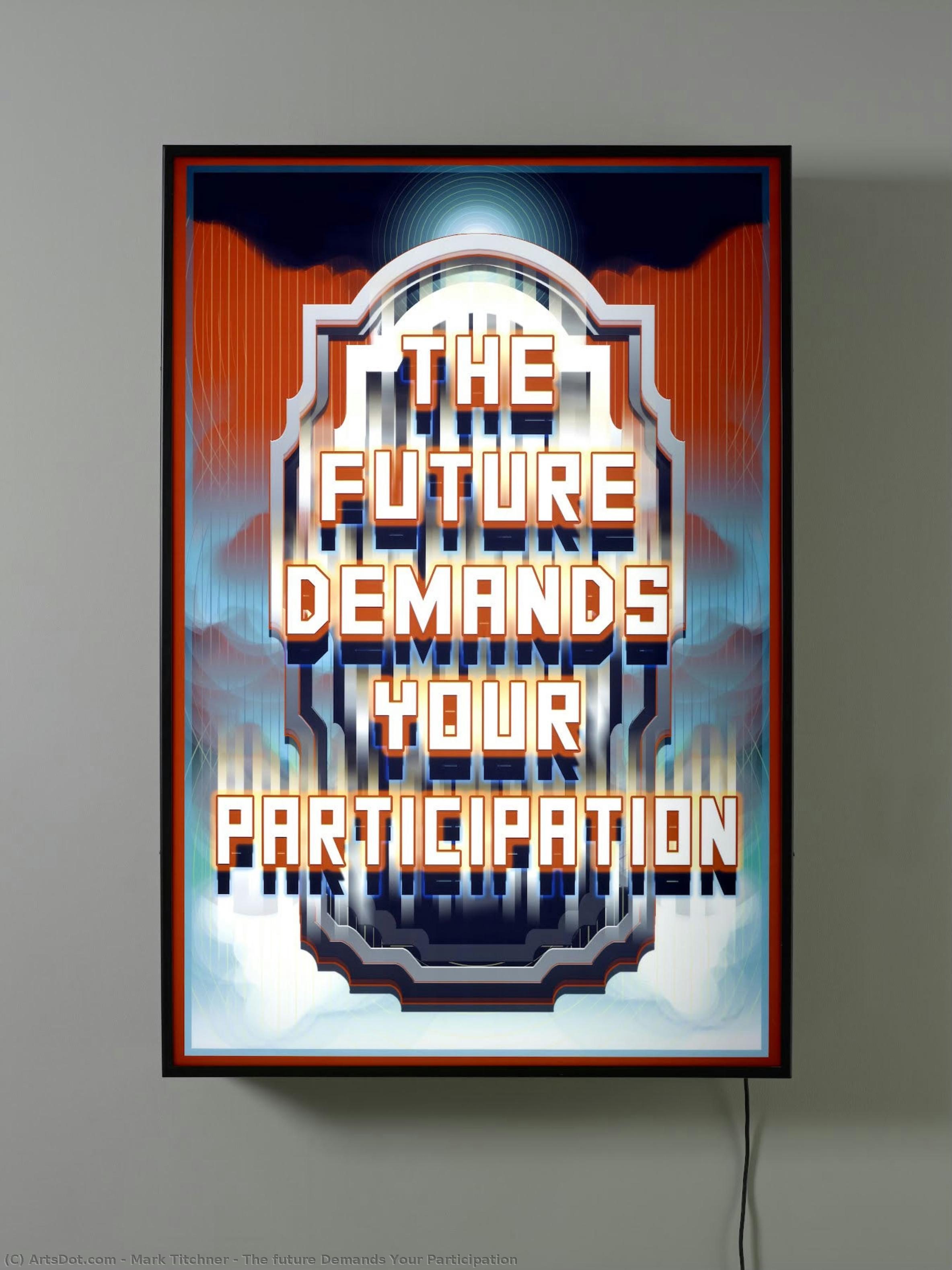
The future Demands Your Participation
 Acrylic On Canvas
- WallArt
- Conceptual Contemporary
Contemporary Conceptual
 2006
2006- Contemporary
 500.0 x 150.0 cm
 British Council
 Vis hele teksten
Håndlaget oljereproduksjon
Håndmalt olje på lerret i din valgte størrelse og ramme, laget på bestilling av våre kunstnere. ( Kjøp trykk Kjøp bilde)




P118B $10

P118H $10

P118W $10

P438Z $10

P508JH $12

P508YH $12

P805H $10

P805Z $10

P919BZ $10

P919G $10

P919XJ $10

P959ZH $10

P968JZ $12

W106C $8

W218G $10

W218JH $8

W218Y $10

W307PJ $10

W316G $10

W316PJ $8

W316Y $10

W398PJ $8

W4111J $10

W500HY $15

W500JH $15

W692G $12

W849H $8

W940BG $15

W953PJ $8




Velg mellom våre forhåndsdefinerte størrelser som bevarer kunstverkets opprinnelige proporsjoner.

Du kan angi egne mål for å tilpasse en spesifikk ramme eller plass. Dersom den valgte størrelsen ikke samsvarer med originalbildets proporsjoner, vil vi enten beskjære kunstverket eller utvide maleriet med ytterligere håndmalte elementer. En digital mockup vil bli sendt til din godkjenning før produksjonen starter.
Vennligst merk at forhåndsvisningen på skjermen ikke gjenspeiler den faktiske beskjæringen eller utvidelsen. Kun mockuppen vil vise den endelige komposisjonen nøyaktig.
Selv om tilpassede størrelser er tilgjengelige, anbefaler vi å velge et mål fra den forhåndsdefinerte listen for å bevare de originale proporsjonene.
Etter bestilling vil OriginalUniqueArt.com-teamet sende e-post til kunden for instruksjoner og sende et utkast (mockup) som forhåndsvisning.
Verdensomspennende levering () på 3–4 uker i stedet for standard 5 uker. (20 August). Ingen kompromisser med kvaliteten.

Gratis ekspressfrakt over hele verden

Lerretsduk av høykvalitets lin

Full forsikring under transport

Garanti for refusjon av toll og importavgifter

Garantert korrekt fargegjengivelse

60 dagers returrett (kun ved feil)

100% pengene tilbake-garanti

Rabatt ved flere kjøp
 Glassalternativet er kun tilgjengelig i størrelser under 110 cm

The future Demands Your Participation
Teknikk for reproduksjon
Størrelse på reproduksjon
-


Endelig pris
$ 300
Beskrivelse av kunstverket
Mark Titchner’s Urgent Inquiry: “The Future Demands Your Participation”
Mark Titchner's 2006 work, "The Future Demands Your Participation," is more than just a striking image; it’s an unsettling provocation. Born in Luton in 1973, Titchner has established himself as a key figure in contemporary art, known for his meticulous manipulation of found text and his exploration of the often-hidden ideologies that shape our world. This particular piece, rendered on a canvas measuring 500 x 150 cm, exemplifies this approach with a potent blend of graphic design and conceptual questioning.
- The Text as Catalyst: The core of the artwork is the stark declaration itself – “The Future Demands Your Participation.” Lifted from an unknown source, likely corporate or promotional material, the phrase exists now in a vacuum, stripped of its original context.
- Hallucinatory Typography: Titchner’s signature style—characterized by a hypnotic quality—is immediately apparent. The bold orange lettering against a cool blue background creates a visual effect reminiscent of advertising signage, particularly those found at bus stops or public spaces. This deliberate association elevates the work beyond simple advertisement, suggesting a manipulation of perception.
- A Demand for Engagement: The piece’s power lies in its unsettling ambiguity. Without knowing the source of the text, the viewer is compelled to confront the statement directly. It's an invitation – or perhaps a directive – to consider one’s role in shaping the future, though the ‘why’ and ‘what’ remain frustratingly elusive.
Exploring Belief Systems Through Found Text
Titchner’s artistic practice is fundamentally rooted in the investigation of belief systems—a theme that permeates his entire oeuvre. He doesn't offer answers; instead, he presents unsettling questions through the strategic deployment of appropriated text. This technique reflects a broader contemporary concern with the ways in which ideologies are constructed and disseminated, often subtly influencing our thoughts and behaviors. His work speaks to the anxieties surrounding technological advancement, corporate influence, and the potential for manipulation within seemingly benign systems.
- The Role of Context: Titchner’s deliberate removal of the text from its original context is crucial to his strategy. The viewer is left adrift, forced to grapple with the statement's inherent power without the benefit of pre-existing assumptions or biases.
- A Dialogue with the Viewer: The artwork functions as a dialogue—a persistent question posed directly to the audience. It’s an invitation to critical engagement and self-reflection, prompting viewers to consider their own complicity in shaping the future.
Technique and Style – A Hypnotic Visual Language
The execution of “The Future Demands Your Participation” is as deliberate as its conceptual framework. The use of a light box during production further enhances the work’s impact, intensifying the colors and creating an almost hallucinatory effect. This technique, frequently employed by Titchner, builds upon the aesthetic of advertising—a medium designed to capture attention and elicit immediate response. The smooth application of paint, combined with the bold typography, creates a surface that is both visually arresting and intellectually stimulating.
- Graphic Design as Art: Titchner elevates graphic design principles to the level of fine art, demonstrating how visual communication can be used to provoke thought and challenge assumptions.
- Illumination’s Impact: The choice to illuminate the artwork with a light box is not accidental; it amplifies the hypnotic quality of the piece, mirroring the way advertisements are designed to grab attention in public spaces.
Historical Context and Significance
Created in 2006, “The Future Demands Your Participation” reflects a period of significant social and technological change. The rise of globalization, the increasing influence of corporations, and the rapid advancement of digital technologies all contributed to a sense of uncertainty and anxiety about the future. Titchner’s work captures this zeitgeist, offering a critical commentary on the forces shaping our world.
- Post-Industrial Critique: Rooted in the realities of post-industrial Britain, Titchner's work engages with themes of societal structures and unspoken beliefs.
- Contemporary Relevance: The artwork’s questions about participation and responsibility remain remarkably relevant today, particularly in an era defined by social media, political polarization, and environmental concerns.
Om kunstneren
Early Life and Artistic Foundations
Mark Titchner, born in Luton, United Kingdom, in 1973, emerged from a landscape steeped in post-industrial realities and the burgeoning cultural currents of the late 20th century. His formative years in Dunstable, adjacent to his birthplace, instilled within him an early awareness of societal structures and the often-unspoken beliefs that underpin them. This foundational understanding would become central to his artistic practice. Titchner’s academic journey began with a foundation course before he pursued formal training at Central Saint Martins College of Art & Design in London, graduating in 1995. It was during these pivotal years that he began to articulate a unique visual language—one deeply rooted in the exploration of words and their power to shape perception.
The Language of Belief: A Developing Practice
Titchner’s artistic development is characterized by an ongoing interrogation of belief systems, encompassing religion, science, philosophy, and even popular culture. He doesn't seek to champion a particular ideology but rather to expose the inherent tensions and contradictions within them all. Early works often involved reinterpreting obscure or marginalized theories, presenting them in semi-functional forms that invited contemplation on ritual and devotion. This fascination with language extended beyond mere textual representation; he began experimenting with light boxes, hand-carved contraptions, and increasingly, public installations as a means of disseminating his ideas to wider audiences. The artist’s approach is not didactic but suggestive, prompting viewers to question their own assumptions and the narratives they have internalized.
Recognition and Major Achievements
The year 2006 marked a significant turning point in Titchner's career with his nomination for the prestigious Turner Prize. His solo show at the Arnolfini in Bristol, featuring the sculptural installation “How To Change Behaviour (Tiny Masters Of The World Come Out),” garnered critical acclaim and solidified his position as a leading contemporary artist. This work, like much of his oeuvre, demonstrated his ability to synthesize diverse references—from heavy metal lyrics to complex philosophical concepts—into compelling visual statements. Further recognition came in 2007 with inclusion in the 52nd Venice Biennale, where he exhibited within Ukraine’s Pavilion. His book, *WHY AND WHY NOT*, published by Bookworks in 2004, further showcased his intellectual depth and commitment to exploring the nuances of human thought.
Expanding into the Public Realm
A defining characteristic of Titchner's work is its increasing presence in public spaces. He recognized the potential for art to engage directly with communities, moving beyond the confines of traditional gallery settings. Projects like “Run, Black River, Run” at BALTIC, Gateshead (2008), and subsequent commissions in Blackpool (2016), Manchester (2017), Royal Bethlem Hospital London (2019) and Colchester (2020) demonstrate his commitment to creating site-specific works that respond to the unique context of each location. These installations are often born from extended group activities, fostering collaboration and a sense of collective ownership. “Me. Here. Now.” at London Bridge Station is a particularly striking example, transforming a bustling transit hub into a space for reflection.
Historical Significance and Enduring Themes
Mark Titchner’s contribution to contemporary art lies in his ability to articulate the complexities of belief in an increasingly fragmented world. He doesn't offer easy answers but instead encourages critical thinking and self-awareness. His work resonates with a generation grappling with questions of identity, meaning, and the search for truth. The artist’s exploration of language as a tool for both communication and control is particularly relevant in the age of misinformation and social polarization. Participation, imagination, and a willingness to engage with diverse perspectives are central themes that continue to inform his practice, ensuring his enduring significance within the broader landscape of contemporary art. His works are held in prominent collections including The Arts Council, British Council, South London Gallery, and Tate Gallery, cementing his legacy as an artist who challenges conventions and provokes meaningful dialogue.
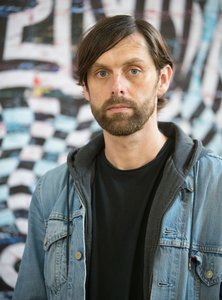
Mark Titchner
1973 - , United Kingdom
Kort om kunstneren
- Artistic Movement Or Style:
- Cubism
- Surrealism
- Neoclassicism
- Expressionism
- Artists Or Movements Influenced By This Artist:
- Modern Art
- Contemporary Art
- Artists Who Influenced This Artist:
- Cézanne
- El Greco
- African art
- Date Of Birth: 25 October 1881
- Date Of Death: 8 April 1973
- Full Name: Pablo Diego José Francisco de Paula Juan Nepomuceno María de los Remedios Cipriano de la Santísima Trinidad Ruiz y Picasso
- Nationality: Spanish
- Notable Artworks:
- Guernica
- Les Demoiselles d’Avignon
- The Weeping Woman
- Place Of Birth: Málaga, Spain
Relaterte artikler

De 10 mest ikoniske malerier dominert av slåttegrå – Kunsthistorie og interiørinspirasjon
Oppdag de 10 mest ikoniske malerier dominert av slåttegrå – fra Monet til Van Gogh. Lær om kunsthistorien, fargetoner og teknikker bak disse mesterverkene. Finn din perfekte veggkunst og interiørinspirasjon på OriginalUniqueArt.com! Utforsk samlingen online.
Giclée Prints: Archival Quality & Aesthetic Nuances for the Discerning Collector
Explore the world of giclée prints with OriginalUniqueArt. Learn about archival quality, aesthetic nuances & investment potential. Expert guidance for discerning art collectors seeking museum-quality reproductions and lasting value.

The Allure of Azure: Exploring the Symbolic & Aesthetic Depths of Blue in Art History
Explore the rich history of blue in art! Discover its symbolism, from ancient pigments to modern masterpieces by Kandinsky & Seurat. Uncover the psychological impact and cultural meanings behind this captivating hue.

The Enduring Legacy of Fine Art Prints: Technique, History & Aesthetic Impact
Explore the rich history & techniques of fine art prints. Discover investment potential, assess authenticity, and learn how to preserve your collection with expert guidance. Trusted insights for discerning collectors.

Echoes of Time: Exploring the Enduring Appeal & Historical Context of Vintage Art Prints
Explore the captivating world of vintage art prints! Discover their history, collecting tips & enduring appeal. Expert insights on chromolithography and building a legacy collection with OriginalUniqueArt.

