Mark Rothko · 1948
Untitled (Mark Rothko, 1948)
Mark Rothko (1903–1970) har laget Untitled. Den er fra 1948. Det tilhører Mark Rothko-bevegelsen. Den er laget i Acrylic On Canvas. Mål: 108 × 111 cm
- 1948
- Acrylic On Canvas
- 108 × 111 cm

 Forhåndsvisning

 Håndmalt oljemaleri
 Send
 Del
 Faktablad


 Last ned bilde
 Liknende objekter
 Røntgenundersøkelse
 Lysbildefremvisning
 Spørsmål og svar

 Statistikk
Untitled, kort fortalt
- Tittel
- Untitled
- Kunstner
- Mark Rothko (1903–1970)
- Kunstner født i
- Daugavpils, Latvia
- Dato
- 1948
- Medium
- Acrylic On Canvas
- Dimensjoner
- 108 × 111 cm
- Bevegelse
- Mark Rothko
- Periode
- Modern
- Motiv
- abstract, color field, expressionism, rectangular forms, emotional depth, modern art
Hva forestiller Untitled?
A Threshold of Feeling: Exploring Mark Rothko’s Untitled (1948)
Mark Rothko's Untitled from 1948 is not merely a painting; it is an invitation—a silent beckoning into the realm of pure emotional resonance. Measuring 108 x 111 cm, this work exists at a pivotal moment in the artist’s trajectory, marking a decisive shift away from figurative representation and towards the immersive color field paintings that would define his legacy. Born Marcus Yakovlevich Rothkowitz in Latvia in 1903, Rothko carried with him a sense of displacement and searching, experiences deeply interwoven into the very fabric of his artistic vision. His family’s emigration to America in 1913, coupled with his father's intellectual leanings and exposure to Marxist thought, instilled within him a profound sensitivity to the human condition—a sensibility that would ultimately find its most potent expression not through depiction, but through abstraction.
The Birth of a New Language
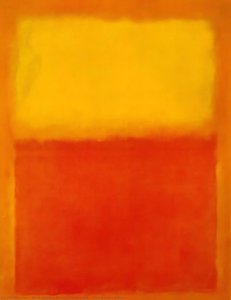
By 1948, Rothko had begun to dismantle the traditional elements of painting. He was moving beyond the mythological and Surrealist explorations of the early 1940s—works born from the anxieties of wartime—and towards an increasingly reductive vocabulary. Untitled exemplifies this transition beautifully. Rather than presenting a defined subject, Rothko offers us layered planes of color – predominantly pinks, oranges, reds, and subtle purples – that seem to float and breathe upon the canvas. These aren’t simply colors *applied* but rather emanations of feeling, carefully modulated in tone and intensity. The technique itself is crucial: thin washes of oil paint are delicately applied, allowing underlying layers to peek through, creating a luminous depth that draws the viewer into the painting's core. The composition isn’t rigidly structured; instead, forms emerge organically, suggesting boundaries without fully defining them. This deliberate ambiguity invites contemplation and allows for a deeply personal interpretation.
Echoes of Experience: Symbolism and Emotional Impact
To attempt to assign concrete symbolism to Rothko's work is often misleading. He resisted prescriptive interpretations, believing that the emotional impact should be direct and unmediated. However, understanding his biography offers valuable context. The hazy, atmospheric quality of Untitled can be seen as reflecting a sense of longing or memory—perhaps echoing the displacement he felt as an immigrant, or the broader anxieties of a post-war world. The warmth of the pinks and oranges isn’t simply aesthetic; it evokes feelings of comfort and vulnerability, while the darker purples hint at underlying melancholy. The painting's scale is also significant. It’s large enough to envelop the viewer, creating an immersive experience that transcends mere observation. Standing before Untitled is not about *looking* at a picture; it’s about *being* within a space of feeling.
A Lasting Legacy: Rothko and Abstract Expressionism
Mark Rothko's contribution to the development of Abstract Expressionism, and specifically Color Field painting, is immeasurable. He, along with artists like Barnett Newman and Clyfford Still, sought to strip away all representational elements, focusing instead on the expressive power of color and form. His work profoundly influenced generations of artists and continues to resonate deeply with audiences today. The Rothko Chapel in Houston stands as a testament to his enduring vision—a sacred space designed to facilitate contemplation and spiritual experience through the immersive power of his paintings. Untitled (1948) serves as an early, compelling example of this ambition, offering a glimpse into the artist’s evolving language and foreshadowing the profound emotional landscapes he would create in the years to come.
Høyoppløselige bilder av Untitled
Protected by copyright: these files are for personal reference, not a licence to republish.
Mark Rothko, Untitled (1948).
Spørsmål om Untitled, besvart
I hvilket år ble "Untitled" av Mark Rothko skapt?
"Untitled" av Mark Rothko ble skapt i 1948.
Hvilket medium er "Untitled" av Mark Rothko utført i?
Mark Rothko brukte Acrylic On Canvas-teknikken i "Untitled". Teknikken definerer det materielle uttrykket til det originale verket.
Hva er målene på det originale verket "Untitled" av Mark Rothko?
De registrerte målene for "Untitled" av Mark Rothko er 108 x 111 cm. Reproduksjoner kan bestilles i andre størrelser med de samme proporsjonene.
Hva forestiller "Untitled"?
Temaene i "Untitled" av Mark Rothko inkluderer abstract, color field, expressionism, rectangular forms, emotional depth, modern art, painting, rothko. Sammen oppsummerer de verkets motiv.
Er "Untitled" fri for opphavsrett?
Når det gjelder opphavsrett, er "Untitled" fortsatt beskyttet av opphavsretten.
Hvem har skapt "Untitled"?
Kunstneren bak "Untitled" er Mark Rothko. Verket er katalogisert under Mark Rothko sitt navn.
Hvilken stilart tilhører "Untitled"?
"Untitled" av Mark Rothko tilhører Mark Rothko-retningen. Denne retningen gir det stilistiske kontekstet til verket.
Hvilken periode i Mark Rothko sin karriere tilhører "Untitled"?
"Untitled" representerer Mark Rothko sin Transitional/Multiform Period.
Hvor gammel var Mark Rothko da hen laget "Untitled"?
Da "Untitled" ble skapt i 1948, var Mark Rothko – født i 1903 – 45 år gammel.
Om kunstneren, Mark Rothko

1903–1970, Latvia
Mark Rothko
Mark Rothkos tidlige liv Mark Rothko ble født som Markus Yakovlevich Rothkowitz i 1903. Han ble født i Dvinsk, Russland, i et område som i dag er kjent som Daugavpils i Latvia. Familien hans levde innenfor bosetningsområdet for jøder, en region preget av politisk uro og den konstante skyggen av pogromer. Denne atmosfæren av ustabilitet fulgte familien da de emigrerte til USA i 1913.
Også av Mark Rothko
 Hvit Senter1950
 Ingen.1
 Nr. 61 (Rust og blå)1953
 Oransje og gul1956
Essays om Untitled
 Spontaneity and Matter: Distinguishing CoBrA from Art InformelMaster the differences between CoBrA and Art Informel with our expert guide. Learn to identify these post-war movements today.
 The Soul of Color: Exploring the Emotional Depth and Existential Resonance of Mark Rothko's MasterpiecesImmerse yourself in the profound emotional landscapes of Mark Rothko. Explore how his revolutionary Color Field paintings use pure pigment …
 Color & Emotion: The 25 Most Iconic Masterpieces by Mark RothkoImmerse yourself in the profound emotion of Abstract Expressionism. Explore 25 iconic Mark Rothko masterpieces, from his signature color fi…