

 Send
Send Del
Del
 Vis detaljer
 Utskriftsvennlig guide

 Last ned bilde
 Liknende objekter
 Lysbildefremvisning
 Q&A
Q&A Statistikk
Dress


 Vis hele teksten
Giclée / Kunsttrykk
Giclée- eller lerretsprint av museumskvalitet med rask produksjon og fleksible valgmuligheter for etterbehandling. ( Kjøp håndmalt maleri Bytt til digitalt bilde)




































Velg mellom våre forhåndsdefinerte størrelser som bevarer kunstverkets opprinnelige proporsjoner.

Skriv inn ønsket bredde og høyde for å tilpasse trykket til din ramme eller vegg. Et trykk kan kun beskjæres, aldri skaleres opp utover motivets opprinnelige størrelse, noe som betyr at et format med andre proporsjoner vil føre til tap av deler av bildet. Vi sender deg en digital mockup for godkjenning før vi starter trykkeprosessen. Bildet som vises på denne siden viser ikke den faktiske beskjæringen — det er kun mockuppen som viser dette.
Verdensomspennende levering () på 2 uker i stedet for standard 4/5 uker. (30 October)

Gratis ekspressfrakt over hele verden

Lerretsduk av lin av høy kvalitet

Full transportforsikring

Garanti for refusjon av toll og importavgifter

Garantert fargegjengivelse

100 dagers returrett ved fabrikasjonsfeil

100% pengene tilbake-garanti

Rabatt ved flere kjøp
 Glassalternativet er kun tilgjengelig i størrelser under 110 cm

Dress
Giclée / Kunsttrykk
Størrelse på reproduksjon
-


Totalpris for valgte alternativer
Nkr 769
A Glimpse of Parisian Elegance: Mariano Fortuny’s “Dress”
Mariano Fortuny y Marsal's "Dress," a captivating black and white photograph capturing a mannequin adorned in an opulent gown, offers more than just a visual representation; it’s a portal into the innovative world of a Spanish designer who revolutionized theatrical lighting and textile artistry at the turn of the 20th century. The image, dated 1925, presents a study in controlled elegance – a testament to Fortuny's meticulous approach and his ability to evoke a sense of timeless sophistication through carefully orchestrated detail. The mannequin, posed against a simple wall, becomes a stage for the dress itself, highlighting its intricate design and commanding presence.
Fortuny’s genius lay not just in creating beautiful garments but in fundamentally altering how they were presented. Born in 1871 in Granada, Spain, his early life was shaped by the untimely death of his father, a genre painter, which led to a move to Paris and an immersion into the world of textiles – a passion that would define his entire career. He wasn’t merely a fashion designer; he was a visionary inventor, driven by a desire to mimic the soft, diffused light of the East in theatrical productions. This pursuit led him to develop the “fortuny cyclorama,” a revolutionary dome system that utilized reflecting surfaces to create seamless transitions between scenes and bathe performers in an ethereal glow – a technique directly informing his approach to garment design.
The Delphos Dress: A Masterclass in Orientalist Design
“Dress” is intimately connected to Fortuny’s most celebrated creation, the “Delphos” gown. Inspired by the opulence of the Alhambra palace in Granada and drawing heavily on his travels through the Middle East, the Delphos dress embodies a distinctly Orientalist aesthetic. The photograph captures elements of this influence – the flowing lines, the intricate patterns reminiscent of mosaics and textiles, and the overall sense of luxurious comfort. The dress itself is constructed from layers of silk, cording, and delicate beads, creating a textured surface that catches the light beautifully. It’s a garment designed to be worn with grace and confidence, projecting an aura of refined mystery.
Fortuny's meticulous attention to detail extended beyond mere aesthetics; he was obsessed with achieving a specific *feeling* through his designs. He believed in creating garments that told stories – narratives of exotic lands, ancient civilizations, and the beauty of the natural world. The “Dress” photograph subtly hints at this narrative, inviting the viewer to imagine the wearer gliding through grand halls or strolling along sun-drenched streets.
Technique and Innovation: Fortuny’s Legacy
The photograph's stark black and white palette emphasizes the textures and forms of the dress, highlighting Fortuny’s masterful use of fabric manipulation. The layering of silk creates a sense of depth and movement, while the beads add subtle shimmer and sparkle. His innovative approach to lighting, pioneered in his theatrical work, is also evident in the way the photograph captures the play of light on the garment's surface. This wasn’t simply about creating beautiful clothes; it was about controlling and shaping light itself.
Fortuny’s impact extended far beyond fashion. He established a workshop that produced not only clothing but also stage sets, tapestries, and decorative fabrics – all united by his distinctive artistic vision. His work continues to inspire designers today, demonstrating the enduring power of combining artistry, innovation, and a deep appreciation for cultural heritage. The “Dress” photograph serves as a poignant reminder of Fortuny’s legacy—a testament to a singular talent who transformed the world of design in the early 20th century.
Collecting the Spirit of Fortuny
Reproductions of Fortuny's designs, like this "Dress," offer a remarkable opportunity to bring his visionary aesthetic into your home. Whether you’re drawn to the romantic allure of the Delphos gown or simply appreciate the elegance and sophistication of his textile artistry, a Fortuny reproduction is more than just a decorative object; it’s a window into a bygone era—a celebration of creativity, innovation, and timeless beauty.
Spørsmål og svar
Tillater opphavsretten til "Dress" av Mariano Fortuny reproduksjoner?
"Dress" av Mariano Fortuny, som er en del av samlingen til Palazzo Fortuny, er fritt tilgjengelig – opphavsretten har utløpt. Denne statusen avgjør om det er tillatt å lage reproduksjoner av bildet.
Hvor gammel var Mariano Fortuny da "Dress" ble skapt?
Mariano Fortuny laget "Dress" i en alder av 54. Kunstneren ble født i 1871, og verket er datert 1925.
Hvor kan jeg laste ned "Dress" av Mariano Fortuny?
Bildet av "Dress" av Mariano Fortuny kan lastes ned fra verkets Last ned digitalt bilde-side: nedlasting av et digitalt bilde i høy oppløsning.
Om kunstneren
Early Life and Inspiration
Mariano Fortuny, a name synonymous with theatrical innovation and exquisite textiles, was born in Granada, Spain, on May 11, 1871. His early life was marked by profound loss – his father, Mariano Fortuny y Marsal, a celebrated genre painter, tragically passed away when the young boy was just three years old. This event profoundly shaped his family’s trajectory, leading them to relocate to Paris, France, where his mother, Cecilia de Madrazo, fostered his artistic development and introduced him to the world of luxurious fabrics and textiles. From a tender age, Mariano displayed an extraordinary talent for various art forms: painting, photography, sculpting, architecture, etching, and even theatrical stage lighting—a diverse range that foreshadowed his future as a polymath. The family’s exposure to these materials, particularly during their time in Paris, would become a cornerstone of his creative vision. His mother's background as an artist herself instilled in him a deep appreciation for artistic heritage and technique.Artistic Talents and Revolutionary Inventions
Mariano Fortuny quickly established himself as a prodigious talent, demonstrating skills across multiple disciplines with remarkable speed. He wasn’t merely a painter; he was an inventor, a designer, and a visionary. His early work showcased a keen eye for detail and a fascination with capturing the essence of movement and light—qualities that would later define his theatrical innovations. Crucially, Fortuny's artistic journey was intertwined with a relentless pursuit of technological advancement. Between 1901 and 1934, he patented over twenty groundbreaking inventions, fundamentally altering the landscape of theater design. His most celebrated creation is undoubtedly the *fortuny cyclorama dome*, a quarter-dome structure constructed from plaster or cloth, ingeniously designed to create seamless transitions between scenes through the strategic use of indirect lighting. His treatise, “Eclairage Scenique” (1904), meticulously documented his revolutionary approach to reflecting light off various surfaces, manipulating its color, intensity, and overall effect—a scientific method applied to artistic expression. This wasn’t simply about illumination; it was about crafting an immersive experience for the audience.Collaborations and Recognition
Fortuny's work gained significant recognition in the 1920s, catapulting him into the international spotlight. His collaborations with prominent figures cemented his place in art history. He worked closely with Richard Wagner, the German composer, whose operas deeply influenced his artistic sensibilities, inspiring scenes filled with dramatic intensity and evocative atmosphere. His installation of the cyclorama dome at La Scala opera house in Milan was a monumental undertaking—a testament to his engineering prowess and artistic vision. Adapting the dome for the larger theater space presented significant challenges, which he masterfully overcame by inventing a sophisticated suction fan system to maintain its taut structure. Fortuny’s influence extended beyond music; he collaborated with stage designers and performers, shaping the very fabric of theatrical spectacle.Legacy and Lasting Influence
Mariano Fortuny passed away on May 3, 1949, in Venice, Italy, leaving behind a legacy that continues to resonate today. His work profoundly impacted French novelist Marcel Proust, who drew inspiration from Fortuny’s artistic world for his epic novel *In Search of Lost Time*. Fortuny's life and achievements were also depicted in Pere Gimferrer’s novel *Fortuny*, further solidifying his place in literary history. Beyond the immediate impact on theatrical design, Fortuny’s innovations—particularly in textile printing and lighting technology—laid the groundwork for future developments in both fields. His dedication to blending art, science, and engineering established him as a true pioneer, whose influence can still be felt across multiple creative disciplines. Explore more about Mariano Fortuny's inventions and designs at OriginalUniqueArt’s collection. Discover the impact of his work on theatrical lighting in the museum destroyed by fire (united states), a story of an unfortunate event that shaped american art history, available at OriginalUniqueArt’s blog.
Mariano Fortuny
1871 - 1949 , Spania
Kort om kunstneren
- Artistic Movement Or Style: Orientalism kunst
- Artists Or Movements Influenced By This Artist: ['Marcel Proust']
- Artists Who Influenced This Artist: ['Richard Wagner']
- Date Of Birth: 11 mai 1871
- Date Of Death: 3 mai 1949
- Full Name: Mariano Fortuny y Marsal
- Nationality: Spansk
- Notable Artworks:
- Teagown
- Portrett av Henriette Fortuny
- Place Of Birth: Granada, Spania
Relaterte artikler
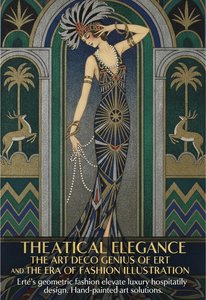
Theatrical Elegance: The Art Deco Genius of Erté and the Era of Fashion Illustration
Explore the theatrical elegance of Erté and the Art Deco era. Discover how his mastery of geometric line and fashion illustration can elevate luxury hospitality design through premium, hand-painted reproductions and bespoke architectural art solutions.

The Gilded Age Reimagined: Exploring the Aesthetic Principles & Enduring Legacy of Art Deco
Explore the captivating world of Art Deco! Discover its origins, defining features, cultural impact & enduring legacy. Expert insights for collectors and design enthusiasts. Shop handmade reproductions at OriginalUniqueArt.

The Theatrical Elegance of Art Deco: The Line Work and Fashion Genius of Erté
Discover the unparalleled elegance of Art Deco through the lens of Erté. Explore a masterclass in linear precision, theatrical costume design, and high-fashion illustration that continues to define modern luxury and sophisticated interior aesthetics.

Mariano Fortuny: A Fusion of Art, Fashion & Design – Exploring a Venetian Innovator's Legacy
Explore the captivating world of Mariano Fortuny – artist, designer & innovator. Discover his revolutionary textiles, iconic Delphos gown, and lasting influence on art, fashion & interiors. A collector's guide to a Venetian master.
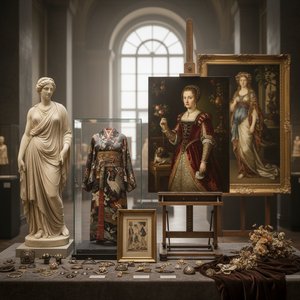
Draped Narratives: Fashion as Symbol & Subject in Historical Art
Explore the fascinating history of fashion as a symbol of power & status in art! Discover masterpieces from Gainsborough to Tissot and learn how clothing shaped societal narratives. Find museum-quality reproductions at OriginalUniqueArt.
