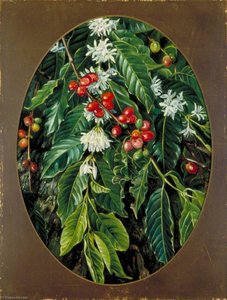
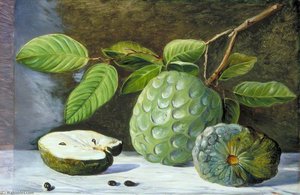
Se i rommet
 Del som digitalt kort
 Del
Del
 Detaljer
 Studentguide

 Last ned
 Liknende objekter
 Røntgen
 Lysbildefremvisning
 Besøksstatistikk
Idols and Temples at Brambanang, Java
 Acrylic On Canvas
- WallArt
- Botanical Realism
 1876
1876 25.0 x 35.0 cm
 Marianne North Gallery
 Les mer
Håndlaget oljereproduksjon
Håndmalt olje på lerret i din valgte størrelse og ramme, laget på bestilling av våre kunstnere. ( Bytt til trykkversjon Gå til digitalt bilde)




P118B Nkr10

P118H Nkr10

P118W Nkr10

P438Z Nkr10

P508JH Nkr12

P508YH Nkr12

P805H Nkr10

P805Z Nkr10

P919BZ Nkr10

P919G Nkr10

P919XJ Nkr10

P959ZH Nkr10

P968JZ Nkr12

W106C Nkr8

W218G Nkr10

W218JH Nkr8

W218Y Nkr10

W307PJ Nkr10

W316G Nkr10

W316PJ Nkr8

W316Y Nkr10

W398PJ Nkr8

W4111J Nkr10

W500HY Nkr15

W500JH Nkr15

W692G Nkr12

W849H Nkr8

W940BG Nkr15

W953PJ Nkr8




Velg mellom våre forhåndsdefinerte størrelser som bevarer kunstverkets opprinnelige proporsjoner.

Skriv inn bredden og høyden du trenger, slik at den passer til din ramme eller vegg. Dette er håndmalt, så for en størrelse med en annen form kan kunstneren male litt mer rundt bildet, eller beskjære det noe — du velger selv. Vi sender deg en digital mockup for godkjenning før maleriet påbegynnes. Bildet som vises på denne siden viser ikke det faktiske resultatet — kun mockuppen gjør det.
Etter bestilling vil OriginalUniqueArt.com-teamet sende e-post til kunden for instruksjoner og sende et utkast (mockup) som forhåndsvisning.
Verdensomspennende levering () på 3–4 uker i stedet for standard 5 uker. (27 October). Ingen kompromisser med kvaliteten.

Gratis ekspressfrakt over hele verden

Lerretsduk av høykvalitets lin

Full transportforsikring

Garanti for refusjon av toll og importavgifter

Garantert fargeekthet

100 dagers returrett ved fabrikasjonsfeil

100% pengene tilbake-garanti

Mengderabatt
 Glassalternativet er kun tilgjengelig i størrelser under 110 cm

Idols and Temples at Brambanang, Java
Reproduksjonsmetode
Format på reproduksjon
-


Totalpris
Nkr 2858
A Journey Through Ancient Echoes: Marianne North’s “Idols and Temples at Brambanang”
Marianne North's "Idols and Temples at Brambanang, Java," painted in 1876, is more than just a depiction of an ancient ruin; it’s a portal to a vanished world, a testament to Victorian exploration, and a poignant meditation on the enduring power of faith and time. This captivating artwork transports us to the heart of Java, specifically the remnants of a Hindu temple complex nestled amidst lush jungle landscapes – a place steeped in legend and shrouded in the mists of centuries past.
The scene unfolds with remarkable detail, showcasing two imposing stone statues seated upon weathered pedestals within the crumbling walls. These figures, likely representing deities or revered ancestors, command attention despite their eroded state, hinting at the grandeur they once possessed. Surrounding them are a collection of other smaller sculptures – fragments of a lost civilization scattered across the scene like forgotten memories. Beyond the immediate focus of the statues, North masterfully incorporates elements of the natural world: towering trees with gnarled roots reaching towards the sky, and distant mountains rising majestically in the background, creating a sense of both scale and serenity.
A Victorian Explorer’s Vision
Marianne North (1830-1890) was an extraordinary figure – a pioneering artist, botanist, and intrepid explorer who defied the conventions of her era. Driven by a relentless curiosity and a deep love for the natural world, she embarked on a series of ambitious expeditions throughout Asia, Africa, and South America, documenting flora and fauna with meticulous detail and capturing their beauty through vibrant watercolor paintings. Unlike many artists of her time who relied on studio work, North actively sought out remote locations, often traveling alone and enduring challenging conditions to bring back her artistic visions.
Her journey to Java was part of a larger effort to document the region’s rich cultural heritage. North meticulously researched local folklore and religious practices, seeking to understand the significance of the temples she encountered. “Idols and Temples at Brambanang” is not simply a record of a physical site; it's infused with her observations and interpretations of the spiritual atmosphere surrounding these ancient ruins.
Technique and Artistic Style
North’s distinctive style is immediately recognizable in this work. She employed a loose, expressive watercolor technique, prioritizing capturing the essence of light and shadow over precise detail. The colors are rich and luminous, particularly the deep greens of the jungle foliage contrasting with the weathered tones of the stone structures. Notice how she uses broken brushstrokes to create a sense of texture and movement – the rough surface of the statues, the tangled roots of the trees, and the hazy atmosphere of the distant mountains all contribute to a dynamic and immersive visual experience.
Her approach was revolutionary for her time; she deliberately avoided academic precision, favoring instead an intuitive and emotionally driven style. This allowed her to convey not just what she *saw*, but also what she *felt* about the place – a sense of reverence, mystery, and the passage of time.
Symbolism and Emotional Resonance
The crumbling temples themselves are potent symbols of impermanence and the cyclical nature of history. They stand as reminders of civilizations that have risen and fallen, leaving behind only fragments of their former glory. The statues, though weathered and incomplete, retain an aura of dignity and power, suggesting a continuity of faith and tradition despite the ravages of time.
"Idols and Temples at Brambanang" evokes a profound sense of melancholy and contemplation. It’s a poignant reminder of our own mortality and the enduring legacy of human endeavor. The painting's beauty lies not only in its technical skill but also in its ability to transport us to another time and place, inviting us to reflect on the mysteries of the past and the timelessness of the human spirit. It is a powerful piece that speaks volumes about exploration, faith, and the enduring allure of ancient civilizations.
Spørsmål og svar
Hvordan forenes medium og bevegelse i "Idols and Temples at Brambanang, Java"?
I "Idols and Temples at Brambanang, Java" møter Acrylic On Canvas-teknikken Botanical Realism-retningen.
Hvordan finner jeg kunstverk som ligner på "Idols and Temples at Brambanang, Java" av Marianne North?
Siden Lignende verk for "Idols and Temples at Brambanang, Java" av Marianne North viser relaterte kunstverk.
Hvordan knytter "Idols and Temples at Brambanang, Java" av Marianne North Botanical Realism til kunstnerens hjemland?
"Idols and Temples at Brambanang, Java" ble skapt av Marianne North, født i Storbritannia, innenfor Botanical Realism-bevegelsen. Kunstnerens opprinnelse knytter verket til Botanical Realism slik det praktiseres av kunstnere fra Storbritannia.
Kunstnerbiografi
A Victorian Adventurer in Bloom
Marianne North var en åndsløs, en kvinne som byttet de forventede komfortene i viktoriansk hjemlighet mot et liv fylt med eventyrlyst og kunstnerisk dedikasjon. Hun ble født i 1830 inn i en privilegert familie i Hastings, England, og hennes tidlige vei virket bestemt for musikalske bestrebelser. Likevel, på grunn av helseproblemer, ble hennes lidenskaper forsiktig omdirigerte mot den delikate kunsten å male blomster – en overgang som ikke bare viste seg å være en trøst, men som ble utspringet til et ekstraordinært liv levd helt på sine egne premisser. Mens mange kvinner i hennes æra var begrenset til stuer og sosiale forventninger, seilte North avsted på en bemerkelsesverdig reise som skulle bære henne over kontinenter, og forvandlet henne både til en anerkjent kunstner og en selvlært botaniker. Historien hennes er et vitnesbyrd om motstandskraft, uavhengighet og en dyp forbindelse med den naturlige verden – et bevis på en ånd fri fra konvensjoner.Fra Botanisk Observasjon til Global Ekspedisjon
Årene etter morens død i 1855 var formative, fylt med omfattende reiser gjennom Europa sammen med sin far. Disse turene skarpet hennes observasjonsferdigheter og dyrket et skarp øye for landskap, og la en lengsel etter mer inn i henne som snart blomstret ut i noe langt mer ambisiøst. Etter farens død i 1869, bestemde North seg for å dedikere livet fullt og helt til å male floraen fra fjerne land – en beslutning som markerte et avgjørende øyeblikk i hennes liv. Dette var ikke bare om å fange skjønnhet; det var en handling av vitenskapelig dokumentasjon, drevet av et ønske om å registrere den botaniske mangfoldigheten til en verden som raskt forandret seg under påvirkning av kolonialisme og industrialisering. I 1871 begynte North en rekke ekspedisjoner som spennte over nesten femten år, og tok ferd gjennom områder så forskjellige som Canada, Jamaica, Brasil, Japan, Borneo, India, Australia og New Zealand. Hun reiste ikke med vitenskapelige team eller offisiell støtte, men finansierte sine eventyr selv, og stolte på sin families formue for å oppnå sine mål. Hennes metode var nøye: hun fordypte seg i hvert miljø, observerte og skisserte plantene omhyggelig før hun overførte dem til lerretet med en bemerkelsesverdig nøyaktighet og livlige farger. Hun var ikke bare en besøkende; hun ble en del av landskapene hun portretterte, absorberte deres essens og formidlet den gjennom sin kunst. Skalaen på hennes reiser, utført uavhengig av en kvinne i en æra som strengt begrenset kvinnelig autonomi, er i seg selv et bevis på hennes ekstraordinære karakter.En Unik Kunstnerisk Stil og Arv ved Kew
Norths kunstneriske stil er umiddelbart gjenkjennelig for sin detaljerte realisme og strålende palett. Hun arbeidet hovedsakelig med olje, noe som var et uvanlig valg for botanisk illustrasjon på den tiden – men det ga henne muligheten til å oppnå en dybde av farge og tekstur som ga hennes motiver liv. Hennes malerier er ikke sterile vitenskapelige representasjoner; de er fylt med en følelse av atmosfære og sted, og fanger ikke bare plantenes form, men også deres miljø og følelsen av å være fordypet i dem. Hun var ikke bare en besøkende; hun ble en del av landskapene hun portretterte, absorberte deres essens og formidlet den gjennom sin kunst. Hennes mest vedvarende arv er galleriet dedikert til hennes arbeid på Kew Gardens i London. Anerkjennende betydningen av sin samling – over 800 malerier som dokumenterer planter fra hele verden – donerte North dem generøst til Royal Botanic Gardens i 1882, sammen med midler til å bygge et dedikert utstillingsrom. Marianne North Gallery, åpnet samme år, er det eneste permanente solo-utstillingen av en kvinne på Kew og fortsetter å inspirere besøkende i dag. Den står som et kraftig symbol på hennes kunstneriske prestasjoner og hennes forpliktelse til å dele sine oppdagelser med verden – et levende vitnesbyrd om et liv ledet av lidenskap og kunnskap. Malerier som “Tegoro, Sarawak” illustrerer dette, og transporterer seerne til frodige regnskoger fylt med liv, mens arbeider som “On the Way from Tibet near Nagkunda, North India” fanger det dramatiske majesteten i Himalaya-landskapene.Utfordrende Konvensjoner og Vedvarende Innflytelse
Marianne North var mer enn bare en kunstner; hun var en pioner som utfordret sosiale normer og utvidet grensene for hva som ble ansett som akseptabelt for kvinner i viktoriansk tid. Hennes uavhengige reiser, profesjonelle karriere og dedikasjon til vitenskapelig observasjon var alle bemerkelsesverdige prestasjoner for sin tid. Hun nektet å gifte seg og valgte heller å forme sitt eget liv, drevet av intellektuell nysgjerrighet og kunstnerisk lidenskap. Hennes malerier tjener som uvurderlige historiske registre, dokumenterer planteliv på et kritisk øyeblikk i historien – en periode med rask miljøendring og kolonial ekspansjon. De gir innsikt i den botaniske mangfoldigheten til 1800-tallet og gir et visuelt bevis på arter som kanskje ikke lenger eksisterer. Hennes historie resonerer fortsatt i dag, inspirerer kunstnere, forskere og eventyrere til å forfølge sine lidenskaper med mot og besluttsomhet – et ekte vitnesbyrd om kraften i en uavhengig ånd og en livslang kjærlighet til den naturlige verden.Notable Works
- Foliage, Flowers and Fruit of the Cashew, Tanjore, India: A vibrant depiction showcasing the intricate details of this tropical plant.
- Elephants, Exotic Fish, and Leaf Insect: Demonstrates North’s ability to capture not only flora but also fauna within their natural habitat.
- Tegoro, Sarawak: A lush rainforest scene that exemplifies her detailed realism and atmospheric beauty.
- On the Way from Tibet near Nagkunda, North India: Captures the dramatic Himalayan landscapes with romantic realism.
- Lake of Ajmere, North West India: A watercolor landscape showcasing Indian mountains and a serene sunset.

Marianne North
1830 - 1890 , Storbritannia
Kort om kunstneren
- Artistic Movement Or Style: Vict. naturalisme
- Artists Or Movements Influenced By This Artist: ['Vict. kunstnere']
- Artists Who Influenced This Artist: ['Hooker']
- Date Of Birth: 1830
- Date Of Death: 1890
- Full Name: Marianne North
- Nationality: Britisk
- Notable Artworks:
- Tegoro, Sarawak
- På vei fra Tibet
- Lake av Ajmere
- Place Of Birth: Hastings, Storbritannia
Relaterte artikler

Timeless Echoes: Capturing the Majesty of Ancient Ruins through the Lens of Fine Art History
Explore the profound beauty of ancient ruins through fine art history. Discover how masters like Pannini captured Roman grandeur, and learn how to bring this timeless architectural majesty into your home with museum-quality, hand-painted oil reproductions.
Victorian Botanical Art: How Bold, High-Impact Florals are Reclaiming Modern Interior Design
Discover how Victorian botanical art is transforming modern spaces. Explore high-impact floral aesthetics, from Marianne North's tropical drama to bold, hand-painted reproductions that bring vintage scientific beauty into contemporary urban design.
The Timeless Elegance of Victorian Botanical Painting: A Journey Through Nature's Intricate Detail and Scientific Artistry
Discover the exquisite world of Victorian botanical painting, where scientific precision meets profound aesthetic grace. Explore a journey through nature's intricate details, from legendary illustrators to the untamed beauty of Marianne North’s vibrant floral masterpieces.
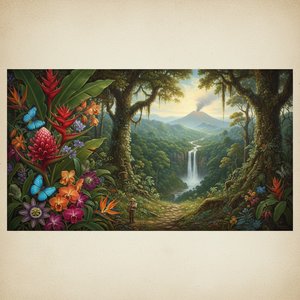
Exploring the Vibrant World of Marianne North: A Journey Through Botanical and Exotic Landscapes
Discover the breathtaking botanical world of Marianne North. Explore her vibrant Victorian oil paintings of exotic landscapes, from Brazil to Jamaica, through an expert art-historical lens. Perfect for classic art enthusiasts and collectors of fine natural history art.
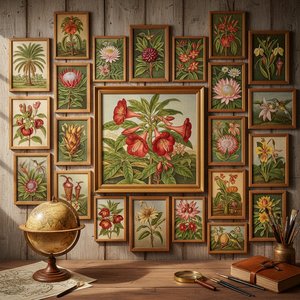
Marianne Norths 25 Mesterverk: Botanisk Kunst og Eventyrlige Reiser | OriginalUniqueArt
Oppdag Marianne Norths 25 mest ikoniske verk! Fordyp deg i hennes fargerike botaniske malerier fra eksotiske reiser. Eksklusivt utvalg av kunsttrykk og lerretstrykk på OriginalUniqueArt.com – forvandle hjemmet ditt med tidløs skjønnhet. Utforsk samlingen online!