

 Se i rommet
 Del som digitalt kort
 Del
Del
 Detaljer
 Studentguide

 Last ned
 Liknende objekter
 Røntgen
 Lysbildefremvisning
 Besøksstatistikk
Se ruega tocar


 Les mer
Kjøp et høyoppløselig, forbedret digitalt bilde med langt høyere kvalitet enn forhåndsvisningen på nettet.
Hver fil er omhyggelig klargjort av våre egne spesialister ved hjelp av avanserte verktøy og profesjonell manuell retusjering. Vi sørger for at hvert bilde har eksepsjonell klarhet, presis fargegjengivelse og fine detaljer.
Den endelige filen leveres via e-post innen 72 timer, optimalisert for umiddelbar bruk i profesjonelle, redaksjonelle og trykte miljøer. Dette er den samme kvaliteten som benyttes av ledende designstudioer, utgivere og gallerier.
Digitalt bilde
Last ned en høyoppløselig fil til personlig bruk, utskrift og kreative prosjekter. ( Bytt til trykkversjon Bestill håndmalt reproduksjon)
Inkludert i alle bestillinger av digitale bilder
Profesjonell digital levering, garantert
Når du velger OriginalUniqueArt.com, får du ikke bare et bilde – du mottar et profesjonelt etterbehandlet digitalt kunstverk, skapt med presisjon og med en garantert tilfredshetsgaranti. Her er alt som automatisk følger med din bestilling:

Rask levering på e-post
Din høyoppløselige digitale bildefil sendes til din e-post innen 72 timer etter bestilling – klar til umiddelbar bruk.

KI-forbedret digital fil
Ditt kunstverk blir profesjonelt optimalisert ved hjelp av avanserte AI-verktøy og manuell redigering, noe som sikrer maksimal detaljrikdom, klarhet og fargegjengivelse.

Gratis livslang nybestilling
Har du ved et uhell slettet eller mistet filen din? Ingen bekymring – vi sender den på nytt når som helst, helt gratis.

Ingen importavgifter – noen gang
Nyt ditt kunstverk umiddelbart uten toll, avgifter eller leveringskostnader – digitale nedlastinger er alltid avgiftsfrie.

Garantert fargenøyaktighet
Vi sikrer at det digitale bildet gjenspeiler de originale fargene så nøyaktig som mulig ved hjelp av profesjonelle verktøy og fargehåndtering.

100 dagers tilfredshetsgaranti
Hvis du ikke er fornøyd med ditt digitale bilde, vil vi revidere det eller refundere 100% innen 100 dager – uten spørsmål.

100% Penggaranti
Ikke fornøyd? Få full refusjon innen 100 dager etter at du har mottatt din digitale fil – uten spørsmål.

Rabatt ved storkjøp
Kjøp 3 bilder, spar 10% - Kjøp 5, spar 15% - Kjøp 10+, spar 20%. Ideelt for kreative prosjekter, gallerier og byråer.
Marcel Duchamp: Se ruega tocar – Un viaje al corazón del Dadaísmo
Marcel Duchamp fue una figura artística excepcional cuyo trabajo revolucionó el panorama artístico del siglo XX y sigue inspirando artistas contemporáneos. Más que un pintor convencional, Duchamp fue un filósofo provocador cuya visión desafió las normas establecidas sobre lo que constituye arte verdadero, convirtiéndose en uno de los padres del concepto artístico moderno. Su legado perdura gracias a obras maestras como *Se ruega tocar*, una pieza clave del movimiento Dadaísta nacido de la desesperación ante los horrores de la Primera Guerra Mundial y cuyo impacto sigue siendo palpable hoy en día. Este artículo explorará la vida, obra y pensamiento de Duchamp, ofreciendo una comprensión profunda de su influencia en el arte occidental.El nacimiento de un artista rebelde: Primeros años y formación
Henri-Robert-Marcel Duchamp nació en Blainville-Crevon, Normandía, Francia, en 1887, hijo de Eugène Duchamp y Lucie Duchamp (née Lucie Nicolle). Su familia apreciaba las actividades culturales, con varios hermanos siguiendo carreras artísticas exitosas. Desde temprana edad, Duchamp mostró un espíritu inquisitivo y una sensibilidad artística que lo acompañarían toda su vida. Aunque no destacaba académicamente, demostró un talento excepcional en matemáticas y ganó dos premios por excelencia matemática en el Lycée Pierre-Corneille de Rouen. Además, obtuvo un premio especial por dibujo en 1903, consolidando así su decisión de dedicarse profesionalmente al arte. Su formación artística inicial fue influenciada por artistas como Odilon Redon, cuyo estilo simbolista buscaba una expresión individual y profunda, alejándose de las convenciones académicas dominantes en ese momento. Esta búsqueda constante de nuevas perspectivas sería un sello distintivo de toda su trayectoria artística.El descubrimiento del lenguaje artístico: Dadaísmo y la ruptura con la tradición
La Primera Guerra Mundial marcó un punto de inflexión en la historia europea y tuvo un profundo impacto en el pensamiento artístico de la época. Marcel Duchamp, junto con otros artistas vanguardistas como Francis Picabia, rechazaron los principios tradicionales del arte occidental, cuestionando su función social y estética. Este rechazo impulsó el nacimiento del movimiento Dadaísta, una corriente artística que abrazaba la irracionalidad, el absurdo y la provocación como herramientas para expresar la angustia existencial de la época. Duchamp fue uno de los principales impulsores de este movimiento revolucionario, cuyo objetivo era destruir las normas establecidas y liberar la creatividad humana de cualquier restricción intelectual o estética. Esta actitud desafiante hacia las convenciones artísticas reflejó el espíritu crítico y rebelde que caracterizó toda su obra posterior.“Se ruega tocar”: Una invitación al pensamiento crítico
*Se ruega tocar*, creada en 1947, es una pieza emblemática del legado artístico de Duchamp y un ejemplo perfecto de los principios fundamentales del Dadaísmo. Esta obra consiste en una reproducción fotográfica de un objeto cotidiano –un urinario invertido– que Duchamp había presentado al concurso inaugural de la Sociedad de Artistas Independientes en Nueva York en 1917. Este acto provocador cuestionó la definición misma de arte, afirmando que cualquier objeto podía elevarse a categoría artística si el artista lo seleccionaba con voluntad consciente. Esta declaración marcó un punto de inflexión en la historia del arte occidental y abrió un diálogo crítico sobre las relaciones entre arte y sociedad. La obra invita al espectador a reflexionar sobre cuestiones fundamentales como la naturaleza de la creatividad, el papel del artista y la función del objeto artístico en el mundo contemporáneo.El impacto emocional y las consideraciones para el diseño interior
Una reproducción de *Se ruega tocar* puede servir como un punto focal sorprendente en espacios interiores modernos o vanguardistas, aportando una dimensión intelectual y estética que va más allá de lo puramente ornamental. Su paleta cromática suave y sus formas geométricas evocan una sensación de misterio y contemplación, invitando al observador a cuestionar las normas establecidas y a abrazar nuevas perspectivas sobre el mundo del arte. Esta obra maestra del Dadaísmo sigue siendo relevante hoy en día como testimonio del espíritu innovador de Marcel Duchamp y su capacidad para transformar la percepción estética humana.Spørsmål og svar
Hvilke pseudonymer eller andre navn er Marcel Duchamp kjent under?
Andre navn registrert for Marcel Duchamp, skaperen av "Se ruega tocar", inkluderer Henri-Robert-Marcel Duchamp.
Hvilken kunstretning er "Se ruega tocar" av Marcel Duchamp en del av?
"Se ruega tocar" er et verk innenfor Dada. Retningen angir den kunstneriske tradisjonen verket er en del av.
Hvilket medium er "Se ruega tocar" av Marcel Duchamp utført i?
Marcel Duchamp brukte Kollasje-teknikken i "Se ruega tocar". Teknikken definerer det materielle uttrykket til det originale verket.
Kunstnerbiografi
A Revolutionary Spirit: The Life and Art of Marcel Duchamp
Marcel Duchamp, born Henri-Robert-Marcel Duchamp in 1887 in Blainville-Crevon, Normandy, was more than an artist; he was a philosophical provocateur who fundamentally altered the course of modern art. His early life, though seemingly conventional – nurtured within a family that appreciated artistic expression with both brothers pursuing successful careers as artists – hinted at the iconoclasm to come. Duchamp initially pursued formal training, mastering traditional techniques and experimenting with post-impressionist styles. However, this academic foundation served not as an end in itself, but as a springboard for questioning the very nature of art, its purpose, and its definition. He wasn’t content merely to depict the world; he sought to challenge how we perceive it, and what constitutes artistic value. This restless intellectual curiosity would become the defining characteristic of his prolific career.Early Artistic Explorations: Cubism and Impressionism
Duchamp's initial foray into art began with a grounding in traditional techniques—primarily painting—influenced by Impressionist masters like Claude Monet and Pierre-Auguste Renoir. He honed his skills diligently, capturing fleeting moments of light and color with remarkable precision. Yet, even within these aesthetically pleasing compositions, Duchamp harbored doubts about the role of representation itself. Recognizing that art could transcend mere visual imitation, he turned his attention to Cubism, spearheaded by Pablo Picasso and Georges Braque. This movement embraced fragmented forms and multiple perspectives—a radical departure from the single viewpoint demanded by Renaissance painting—and Duchamp skillfully incorporated these principles into works like *Portrait of Chess Players* (1911). The fractured planes and overlapping viewpoints mirrored his own intellectual preoccupation with dismantling established conventions.The Dadaist Rebellion: Challenging Artistic Norms
The horrors of World War I profoundly impacted Duchamp’s worldview, fueling a deep disillusionment with the values of reason and logic that underpinned Western civilization. This discontent propelled him into the embrace of Dadaism—a movement born out of utter rejection of artistic dogma and societal complacency. Dadaists like Tristan Tzara and Hugo Ball sought to dismantle traditional notions of art through absurdity, chance, and anti-rational gestures. Duchamp wholeheartedly embraced this rebellious spirit, producing provocative pieces that defied categorization and challenged viewers’ expectations. His Dadaist output included collages incorporating found objects—such as newspaper clippings and photographs—and performances designed to disrupt artistic rituals. The infamous *Fontaine* (1917)—a porcelain urinal signed “R. Mutt”—became the emblem of Dada’s radical critique of art, sparking controversy and cementing Duchamp's reputation as a revolutionary iconoclast.The Birth of Conceptual Art: Beyond Representation
Duchamp’s most enduring contribution to art history was arguably his pioneering role in establishing Conceptual Art—a movement that prioritized idea over execution. Rejecting the visual arts altogether, Conceptual Artists questioned whether an artwork could exist without tangible form. Duchamp famously declared, “The idea precedes the object,” encapsulating this fundamental shift in artistic thinking. He continued to explore this concept through various mediums, including assemblage and photography. *L.H.O.O.Q.* (1919)—a postcard reproduction of Leonardo da Vinci’s Mona Lisa overlaid with a mustache and goatee—served as a deliberate parody of art history and a commentary on the veneration of artistic genius. Duchamp's intention wasn’t to create a beautiful image; it was to provoke reflection on notions of authorship, originality, and the very definition of art itself.Legacy and Enduring Influence
Marcel Duchamp’s influence extends far beyond his own lifetime, shaping the trajectory of countless artists who followed him. His unwavering commitment to conceptual thought—the primacy of idea over form—established a paradigm that continues to resonate within contemporary artistic practice. Artists across disciplines—from sculpture to performance art to video installation—have drawn inspiration from Duchamp’s challenge to conventional aesthetic standards and his insistence on questioning accepted truths. He remains a central figure in discussions about the role of art in society, prompting us to consider whether beauty is truly paramount or if intellectual engagement—the pursuit of ideas—is equally valuable. His legacy endures as a testament to the transformative power of artistic innovation and the enduring relevance of Duchamp’s revolutionary vision.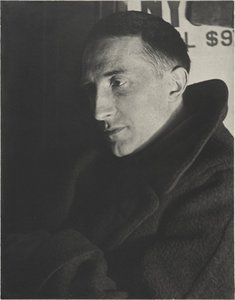
Marcel Duchamp
1887 - 1968 , Frankrike
Kort om kunstneren
- Artistic Movement Or Style:
- Kubisme
- Dadaisme
- Konseptuell kunst
- Artists Or Movements Influenced By This Artist:
- Kubisme
- Popkunst
- Minimalisme
- Date Of Birth: 28 juli 1887
- Date Of Death: 2 oktober 1968
- Full Name: Marcel Duchamp Henri-Robert-Marcel
- Nationality: Fransk-Amerikansk
- Notable Artworks:
- Fontane
- L.H.O.O.Q.
- Det Store Glas
- Boîte-en-valise
- Place Of Birth: Blainville, Frankrike