

 Se i rommet
 Del som digitalt kort
 Del
Del
 Detaljer
 Studentguide

 Last ned
 Liknende objekter
 Røntgen
 Lysbildefremvisning
 Besøksstatistikk
Chocolate grinder No 2, Oil paint, thread and


 Les mer
Giclée / Kunsttrykk
Giclée- eller lerretsprint av museumskvalitet med rask produksjon og fleksible valgmuligheter for etterbehandling. ( Bestill håndmalt reproduksjon Gå til digitalt bilde)




P118B $10

P118H $10

P118W $10

P438Z $10

P508JH $12

P508YH $12

P805H $10

P805Z $10

P919BZ $10

P919G $10

P919XJ $10

P959ZH $10

P968JZ $12

W106C $8

W218G $10

W218JH $8

W218Y $10

W307PJ $10

W316G $10

W316PJ $8

W316Y $10

W398PJ $8

W4111J $10

W500HY $15

W500JH $15

W692G $12

W849H $8

W940BG $15

W953PJ $8




Velg mellom våre forhåndsdefinerte størrelser som bevarer kunstverkets opprinnelige proporsjoner.

Du kan oppgi egne mål for å tilpasse en spesifikk ramme eller et bestemt område. Dersom den valgte størrelsen ikke samsvarer med det originale bildets proporsjoner, vil vi enten beskjære kunstverket eller utvide bildet med en speilet eller ensfarget kant. En digital mockup vil bli sendt til din godkjenning før produksjonen starter.
Vennligst merk at forhåndsvisningen på skjermen ikke gjenspeiler den faktiske beskjæringen eller utvidelsen. Kun mockuppen vil vise den endelige komposisjonen nøyaktig.
Selv om tilpassede størrelser er tilgjengelige, anbefaler vi å velge et mål fra den forhåndsdefinerte listen for å bevare de originale proporsjonene.
Verdensomspennende levering () på 2 uker i stedet for standard 4/5 uker. (27 September)

Gratis ekspressfrakt over hele verden

Lerretsduk av høykvalitets lin

Full transportforsikring

Garanti for refusjon av toll og importavgifter

Garantert fargeekthet

100 dagers returrett ved fabrikasjonsfeil

100% pengene tilbake-garanti

Mengderabatt
 Glassalternativet er kun tilgjengelig i størrelser under 110 cm

Chocolate grinder No 2, Oil paint, thread and
Giclée / Kunsttrykk
Format på reproduksjon
-


Totalpris
$ 80
A Paradoxical Vision: Reimagining the Everyday
In the vast landscape of early twentieth-century modernism, few works possess the quiet, unsettling magnetism of Marcel Duchamp’s Chocolate Grinder No 2. Painted in 1914, this piece serves as a profound threshold between the structured geometric explorations of Cubism and the radical, intellectual provocations of Dadaism. At first glance, the viewer is presented with a scene that feels deceptively domestic: a yellow chair with a wooden frame, possessing a singular, circular design featuring a central hole. Yet, beneath this seemingly mundane depiction of furniture lies a deliberate disruption of reality. The painting does not merely capture an object; it captures a concept, inviting the observer to look through the physical form and into the void of artistic intention.
The composition is masterfully arranged to evoke a sense of surreal stillness. As the eye wanders across the canvas, one notices the presence of other chairs and a dining table, all sharing an unusual, circular geometry that mirrors the central motif of the primary subject. The inclusion of a figure seated at the table adds a layer of narrative ambiguity, suggesting a moment of quietude that is simultaneously interrupted by the strange, mechanical-like design of the objects. For the collector or interior designer, this work offers a sophisticated tension—a way to introduce a conversation piece into a space that challenges the boundaries between functional decor and high-concept fine art.
Technical Precision and the Language of Form
While Duchamp is often celebrated for his "readymades"—the act of selecting ordinary objects and declaring them art—Chocolate Grinder No 2 reveals a much more traditional, yet equally subversive, technical mastery. Utilizing oil paint to achieve a smooth, luminous surface finish, the artist employs a level of precision that recalls the meticulousness of the Post-Impressionists. The wooden textures of the chair are rendered with such care that one can almost feel the grain beneath the pigment, creating a tactile reality that grounds the more abstract elements of the composition.
The technique serves a dual purpose: it provides a sense of hyper-reality that makes the absurd design of the "grinder" even more jarring. By using the light and shadow characteristic of classical oil painting to define these strange, perforated shapes, Duchamp forces the viewer to confront the object as something tangible and present. This juxtaposition of calculated accuracy with conceptual disruption is where the true magic of the piece resides. It is a technical triumph that uses the tools of tradition to dismantle the very idea of traditional representation.
A Legacy of Intellectual Provocation
To understand the emotional weight of this painting, one must consider the historical turbulence of 1914. As Europe stood on the precipice of World War I, Duchamp was already beginning to reject the aesthetic dogmas that prioritized beauty and craftsmanship over intellectual inquiry. This work embodies the genesis of conceptual art, where the "idea" becomes the primary driver of the creative act. The circular hole in the chair is not merely a design choice; it is a symbolic aperture, a way for Duchamp to puncture the illusion of the canvas and invite the viewer to question what is real and what is constructed.
For those seeking to adorn a contemporary space with art that inspires deep thought, a high-quality reproduction of this masterpiece offers more than just visual appeal. It brings into a room a piece of history—a fragment of the revolutionary spirit that redefined the twentieth century. Whether placed in a minimalist gallery setting or as a focal point in a richly textured study, Chocolate Grinder No 2 remains an enduring symbol of the power of the imagination to transform the ordinary into the extraordinary.
Kunstnerbiografi
A Revolutionary Spirit: The Life and Art of Marcel Duchamp
Marcel Duchamp, born Henri-Robert-Marcel Duchamp in 1887 in Blainville-Crevon, Normandy, was more than an artist; he was a philosophical provocateur who fundamentally altered the course of modern art. His early life, though seemingly conventional – nurtured within a family that appreciated artistic expression with both brothers pursuing successful careers as artists – hinted at the iconoclasm to come. Duchamp initially pursued formal training, mastering traditional techniques and experimenting with post-impressionist styles. However, this academic foundation served not as an end in itself, but as a springboard for questioning the very nature of art, its purpose, and its definition. He wasn’t content merely to depict the world; he sought to challenge how we perceive it, and what constitutes artistic value. This restless intellectual curiosity would become the defining characteristic of his prolific career.Early Artistic Explorations: Cubism and Impressionism
Duchamp's initial foray into art began with a grounding in traditional techniques—primarily painting—influenced by Impressionist masters like Claude Monet and Pierre-Auguste Renoir. He honed his skills diligently, capturing fleeting moments of light and color with remarkable precision. Yet, even within these aesthetically pleasing compositions, Duchamp harbored doubts about the role of representation itself. Recognizing that art could transcend mere visual imitation, he turned his attention to Cubism, spearheaded by Pablo Picasso and Georges Braque. This movement embraced fragmented forms and multiple perspectives—a radical departure from the single viewpoint demanded by Renaissance painting—and Duchamp skillfully incorporated these principles into works like *Portrait of Chess Players* (1911). The fractured planes and overlapping viewpoints mirrored his own intellectual preoccupation with dismantling established conventions.The Dadaist Rebellion: Challenging Artistic Norms
The horrors of World War I profoundly impacted Duchamp’s worldview, fueling a deep disillusionment with the values of reason and logic that underpinned Western civilization. This discontent propelled him into the embrace of Dadaism—a movement born out of utter rejection of artistic dogma and societal complacency. Dadaists like Tristan Tzara and Hugo Ball sought to dismantle traditional notions of art through absurdity, chance, and anti-rational gestures. Duchamp wholeheartedly embraced this rebellious spirit, producing provocative pieces that defied categorization and challenged viewers’ expectations. His Dadaist output included collages incorporating found objects—such as newspaper clippings and photographs—and performances designed to disrupt artistic rituals. The infamous *Fontaine* (1917)—a porcelain urinal signed “R. Mutt”—became the emblem of Dada’s radical critique of art, sparking controversy and cementing Duchamp's reputation as a revolutionary iconoclast.The Birth of Conceptual Art: Beyond Representation
Duchamp’s most enduring contribution to art history was arguably his pioneering role in establishing Conceptual Art—a movement that prioritized idea over execution. Rejecting the visual arts altogether, Conceptual Artists questioned whether an artwork could exist without tangible form. Duchamp famously declared, “The idea precedes the object,” encapsulating this fundamental shift in artistic thinking. He continued to explore this concept through various mediums, including assemblage and photography. *L.H.O.O.Q.* (1919)—a postcard reproduction of Leonardo da Vinci’s Mona Lisa overlaid with a mustache and goatee—served as a deliberate parody of art history and a commentary on the veneration of artistic genius. Duchamp's intention wasn’t to create a beautiful image; it was to provoke reflection on notions of authorship, originality, and the very definition of art itself.Legacy and Enduring Influence
Marcel Duchamp’s influence extends far beyond his own lifetime, shaping the trajectory of countless artists who followed him. His unwavering commitment to conceptual thought—the primacy of idea over form—established a paradigm that continues to resonate within contemporary artistic practice. Artists across disciplines—from sculpture to performance art to video installation—have drawn inspiration from Duchamp’s challenge to conventional aesthetic standards and his insistence on questioning accepted truths. He remains a central figure in discussions about the role of art in society, prompting us to consider whether beauty is truly paramount or if intellectual engagement—the pursuit of ideas—is equally valuable. His legacy endures as a testament to the transformative power of artistic innovation and the enduring relevance of Duchamp’s revolutionary vision.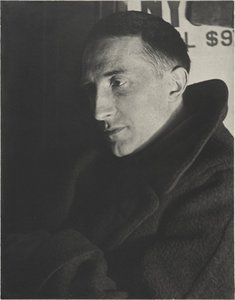
Marcel Duchamp
1887 - 1968 , Frankrike
Kort om kunstneren
- Artistic Movement Or Style:
- Kubisme
- Dadaisme
- Konseptuell kunst
- Artists Or Movements Influenced By This Artist:
- Kubisme
- Popkunst
- Minimalisme
- Date Of Birth: 28 juli 1887
- Date Of Death: 2 oktober 1968
- Full Name: Marcel Duchamp Henri-Robert-Marcel
- Nationality: Fransk-Amerikansk
- Notable Artworks:
- Fontane
- L.H.O.O.Q.
- Det Store Glas
- Boîte-en-valise
- Place Of Birth: Blainville, Frankrike
Relaterte artikler

The Enduring Form: Exploring Themes & Techniques in Sculpture Across Historical Periods
Explore the rich history of sculpture from ancient masterpieces to contemporary innovations. Discover key techniques, influential artists & investment potential for discerning art collectors.

Bronzens Mesterverk: 10 Skulpturer Som Forandret Kunsthistorien | OriginalUniqueArt
Oppdag 10 legendariske bronse skulpturer som revolusjonerte kunsthistorien! Fra Michelangelo til Rodin – lær om teknikker, historier og tidløs skjønnhet. Finn museumskvalitets reproduksjoner & interiørinspirasjon på OriginalUniqueArt.com.

Cubism Unveiled: How Picasso and Braque Redefined Reality Through Geometric Abstraction
Explore the revolutionary world of Cubism. Discover how masters Pablo Picasso and Georges Braque dismantled reality through geometric abstraction to redefine modern art history.

The Enduring Form: Sculpture Across History, Technique & Emotional Resonance
Explore the rich history of sculpture with OriginalUniqueArt. Discover key techniques, influential artists & investment potential for discerning collectors. Expert insights into valuing and collecting timeless masterpieces.

Bronseklassikere: 10 skulpturer som revolusjonerte kunsten | OriginalUniqueArt
Utforsk 10 legendariske bronseskulpturer som formet kunsthistorien! Fra Rodin til Michelangelo – oppdag historiene, teknikkene og skjønnheten bak tidløse mesterverk. Finn din perfekte veggkunst eller interiørdekor på OriginalUniqueArt.com.


