Surrealism · 1938
Pisces (Man Ray, 1938)
Man Ray (1890–1976) har skapt Pisces. Den er fra 1938. Det tilhører Surrealism-bevegelsen. Laget i Oil.
- 1938
- Oil

 Forhåndsvisning

 Håndmalt oljemaleri
 Send
 Del
 Faktablad for elever


 Last ned bilde
 Liknende objekter
 Røntgenundersøkelse
 Lysbildefremvisning
 Spørsmål og svar

 Statistikk
Pisces, kort fortalt
- Tittel
- Pisces
- Kunstner
- Man Ray (1890–1976)
- Kunstner født i
- Philadelphia, USA
- Dato
- 1938
- Materiale
- Oil
- Bevegelse
- Surrealism
- Tidsperiode
- Modern
- Motiv
- nudes, woman
Hva forestiller Pisces?
Introduction to Man Ray and Surrealism
Man Ray, born Emmanuel Radnitzky in 1890, was an American visual artist who spent most of his career in France. He was a significant contributor to the Dada and Surrealist movements, although his ties to each were informal. Man Ray produced major works in a variety of media but considered himself a painter above all. Surrealism is an art movement that emerged in the early 20th century, characterized by its exploration of the unconscious mind and dreamlike imagery. The movement was influenced by Sigmund Freud's psychoanalytic theories and sought to break away from traditional notions of art, culture, and society.Man Ray's 'Pisces': A Surrealist Masterpiece
Man Ray: Pisces (Surrealism) is a painting that exemplifies the Surrealist movement's emphasis on the irrational and the unconscious. Created in 1938, this work features two fish, one male and one female, intertwined in a suggestive pose. The fish are depicted with human faces, adding to the dreamlike quality of the painting. The use of fish as a symbol is significant in Surrealism. Fish are often associated with the unconscious mind, as they live in the depths of the ocean and are not easily accessible to humans. In this painting, the fish represent the duality of human nature, with the male fish embodying logic and reason and the female fish representing emotion and intuition. Man Ray: Pisces (Surrealism) is also notable for its use of color. The painting features a muted palette, with the fish depicted in shades of blue and green. This color scheme adds to the dreamlike quality of the painting and creates a sense of calm and tranquility.Man Ray's Legacy
Man Ray's contributions to Surrealism cannot be overstated. His work challenged traditional notions of art and pushed the boundaries of what was considered possible in the medium. Today, his paintings are highly sought after by collectors and institutions around the world. If you're interested in learning more about Man Ray and Surrealism, be sure to check out Top 5 Famous Surrealism Paintings of All Time and Top 5 Famous Surrealism Artists of All Time on OriginalUniqueArt.com. These resources provide a comprehensive overview of the movement and its most notable artists and works. Man Ray: Pisces (Surrealism) is just one example of the many masterpieces that can be found in the Surrealist movement. Its dreamlike quality, use of symbolism, and innovative use of color make it a standout work that continues to inspire artists and collectors today.Høyoppløselige bilder av Pisces

Beskyttet av opphavsrett: disse filene er kun til personlig bruk og utgjør ikke en lisens for gjenopptrykk.
Man Ray, Pisces (1938).
Spørsmål om Pisces, besvart
Hvilken teknikk er brukt i "Pisces" av Man Ray?
Hva forestiller "Pisces"?
Er "Pisces" fri for opphavsrett?
Hvem har skapt "Pisces"?
Hvilken kunstretning tilhører "Pisces" av Man Ray?
"Pisces" er et verk innenfor Surrealism. Retningen angir den kunstneriske tradisjonen verket er en del av.
Hvor gammel var Man Ray da hen laget "Pisces"?
Om kunstneren, Man Ray

1890–1976, USA
Man Ray
A Life Illuminated by Shadows Emmanuel Radnitzky, a name forever intertwined with the enigmatic “Man Ray,” was born in Philadelphia in 1890 to Russian Jewish immigrant parents. His early life, steeped in the vibrant energy of New York City, proved formative, exposing him to both the raw realism of the Ashcan School and the revolutionary currents of European modernism – a potent blend that would subtly shape his artistic vision. From a young age, he displayed an innate talent for drawing and design, skills honed during his studies at the Ferrer Centre, where anarchist ideals fostered a spirit of experimentation and radical self-expression. This environment instilled in him a lifelong commitment to challenging conventional norms and pushing the boundaries of artistic possibility.
Andre verk av Man Ray
 La Galerie Surréaliste, rue Jacques Callot
 Rayograph (The Kiss)1922
 Solarisation1931
 The Pavillion of Elegance
Essays om Pisces
 Katsushika Hokusais 25 Mesterverk: Japansk Kunst for Ditt Hjem | OriginalUniqueArt.noUtforsk Katsushika Hokusais 25 mest ikoniske kunstverk! Oppdag historiene bak The Great Wave, ukiyo-e tresnitt og japansk estetikk. Finn mu…
 What is Surrealism? Understanding the Movement of Dreams and RealityMaster the history of Surrealism from Dali to Magritte. Explore our catalog of museum-quality reproductions today.
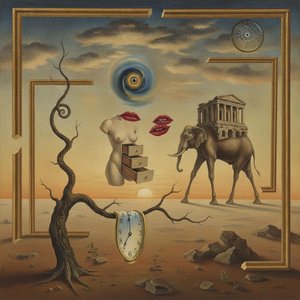 Unlocking the Subconscious: The Top 25 Masterpieces by Salvador DalíStep into the dreamscape of Salvador Dalí. Explore our curated guide to 25 iconic Surrealist masterpieces, from melting clocks to surreal l…