

 Se i rommet
 Del som digitalt kort
 Del
Del
 Detaljer
 Studentguide

 Last ned
 Liknende objekter
 Røntgen
 Lysbildefremvisning
 Besøksstatistikk
Side Panels of the Drapers


 Les mer
Giclée / Kunsttrykk
Giclée- eller lerretsprint av museumskvalitet med rask produksjon og fleksible valgmuligheter for etterbehandling. ( Bestill håndmalt reproduksjon Gå til digitalt bilde)




P118B $10

P118H $10

P118W $10

P438Z $10

P508JH $12

P508YH $12

P805H $10

P805Z $10

P919BZ $10

P919G $10

P919XJ $10

P959ZH $10

P968JZ $12

W106C $8

W218G $10

W218JH $8

W218Y $10

W307PJ $10

W316G $10

W316PJ $8

W316Y $10

W398PJ $8

W4111J $10

W500HY $15

W500JH $15

W692G $12

W849H $8

W940BG $15

W953PJ $8




Velg mellom våre forhåndsdefinerte størrelser som bevarer kunstverkets opprinnelige proporsjoner.

Du kan oppgi egne mål for å tilpasse en spesifikk ramme eller et bestemt område. Dersom den valgte størrelsen ikke samsvarer med det originale bildets proporsjoner, vil vi enten beskjære kunstverket eller utvide bildet med en speilet eller ensfarget kant. En digital mockup vil bli sendt til din godkjenning før produksjonen starter.
Vennligst merk at forhåndsvisningen på skjermen ikke gjenspeiler den faktiske beskjæringen eller utvidelsen. Kun mockuppen vil vise den endelige komposisjonen nøyaktig.
Selv om tilpassede størrelser er tilgjengelige, anbefaler vi å velge et mål fra den forhåndsdefinerte listen for å bevare de originale proporsjonene.
Verdensomspennende levering () på 2 uker i stedet for standard 4/5 uker. (25 September)

Gratis ekspressfrakt over hele verden

Lerretsduk av høykvalitets lin

Full transportforsikring

Garanti for refusjon av toll og importavgifter

Garantert fargeekthet

100 dagers returrett ved fabrikasjonsfeil

100% pengene tilbake-garanti

Mengderabatt
 Glassalternativet er kun tilgjengelig i størrelser under 110 cm

Side Panels of the Drapers
Giclée / Kunsttrykk
Format på reproduksjon
-


Totalpris
$ 80
A Window into Haarlem Life: The Side Panels of the Drapers
Maerten van Heemskerck’s “Side Panels of the Drapers,” created around 1547, offer a remarkably intimate glimpse into the daily rhythms and social dynamics of 16th-century Haarlem. More than mere decorative elements for the Guild of Drapers’ altar in St Bavo Church, these panels—each measuring nearly two and a half feet tall—are vibrant snapshots of ordinary life, rendered with an unprecedented level of realism and psychological depth for their time. They represent a pivotal shift in Dutch art, moving away from purely religious iconography towards depictions of secular subjects that reflected the burgeoning merchant class and their growing influence.
The panels themselves are constructed as diptychs, each side presenting a distinct scene. The left panel depicts an Annunciation, showcasing Mary kneeling in prayer before a Bible open to reveal scripture. Her serene expression and modest attire speak of piety and humility. Above her, the Archangel Gabriel delivers the momentous news of Christ’s birth, his gesture conveying both urgency and reverence. The dove descending from heaven symbolizes the Holy Spirit, completing this sacred narrative. However, it's the right panel that truly captivates – an Adoration scene brimming with human interaction.
The Drama of the Magi
The central focus of the right panel is a gathering of Magi—wise men from the East—adoring the infant Jesus. But Heemskerck doesn’t simply present them as static figures; he imbues each Magus with distinct personality and emotion. To the right, a prominent figure, identified by scholars as Maerten van Heemskerck himself, stands amongst the group, his beard flowing, his gaze directed towards the scene. This inclusion is significant – it suggests that the artist wasn’t merely documenting an event but actively participating in it, elevating the panel to a level of personal engagement and storytelling.
The composition is masterfully balanced, with the figures arranged in a dynamic pyramid shape. Each Magus carries gifts—gold, frankincense, and myrrh—reflecting their status and devotion. The details are exquisite: the folds of their robes, the expressions on their faces, the textures of their garments – all rendered with meticulous precision using oil paint on panel. Heemskerck’s use of smalt, a vibrant blue pigment derived from cobalt glass, is particularly noteworthy, especially in Mary's robe, though centuries of fading have dulled its original brilliance.
A Renaissance Innovation
“Side Panels of the Drapers” are considered groundbreaking for their time. Prior to Heemskerck, depictions of everyday life were rare in Northern European art. His ability to capture not just the physical appearance but also the emotional nuances of his subjects—their gestures, expressions, and interactions—marked a significant departure from traditional religious iconography. This focus on human psychology and social interaction anticipated the rise of portraiture and genre painting that would characterize the Dutch Golden Age.
The panel’s acquisition by the city of Haarlem in 1581 underscores its importance as a symbol of civic pride and artistic achievement. It speaks to the guild's commitment to supporting the arts and celebrating their own heritage. The commission for a new centre panel, depicting the Massacre of the Innocents, further highlights the panel’s significance within the Guild’s visual narrative.
Collecting the Essence of Haarlem
Today, “Side Panels of the Drapers” offer a tangible connection to 16th-century Haarlem. They are not just beautiful paintings; they are windows into a bygone era, revealing the values, beliefs, and social dynamics of a thriving merchant city. Reproductions capture much of the original’s charm, but nothing truly replicates the depth of emotion and the meticulous detail that make this work so compelling. Consider a high-quality reproduction to bring this remarkable piece of Dutch art into your home – a testament to Heemskerck's innovative spirit and his profound understanding of the human condition.
Kunstnerbiografi
tidlig liv og utdanning
maerten van heemskerck, en fremtredende nederlandsk portrett- og religiøs maler, ble født 1. juni 1498 i landsbyen Heemskerk i Nord-Holland. Hans kunstneriske reise begynte under veiledning av Cornelius Willemsz i Haarlem, etterfulgt av et kort opphold i Delft hos Jan Lucasz. Til slutt ble han elev av jan van scorel, og adopterte sin lærers italiensk-påvirkede stil.høydepunkter i karrieren
- maerten van heemskerck sitt arbeid er karakterisert av sin innovative blanding av nederlandske og italienske influenser, slik man ser i hans berømte familieportrett, som regnes som det første i sin art i en lang rekke nederlandske familieportretter.
- Hans samarbeid med antonio da sangallo den yngre, battista franco og francesco de' rossi (il salviati) ved omdekoreringsarbeidet av porta san sebastiano i Roma, en triumfbue til ære for Karl V, viser hans raske utførelse som scenemaler.
- Heemskercks tegninger av klassisk skulptur og arkitektur, som nå er bevart i to skissebøker ved kupferstichkabinett berlin, demonstrerer hans ferdighet i å fange essensen av italiensk kunst.
bemmerkelsesverdige verk og ettermæle
- donoren og den hellige Maria Magdalena (se på OriginalUniqueArt)
- jomfruen og den hellige Johannes Evangelisten (se på OriginalUniqueArt)
- Samson som knuser tempelets søyler, maarten van heemskerck (se på OriginalUniqueArt)
konklusjon
maerten van heemskerck sin dype innvirkning på kunstverdenen er ubestridelig. Hans verk, som nå er en del av ulike museumsamlinger, inkludert Rijksmuseum, fortsetter å inspirere både kunstnere og kunstentusiaster. For å utforske flere av hans mesterverk, besøk maerten van heemskercks side på OriginalUniqueArt. For en dypere forståelse av hans liv og virke, se hans biografi på Wikipedia.
Maerten Van Heemskerck
1498 - 1574 , Nederland
Kort om kunstneren
- Artistic Movement Or Style: Manierisme
- Artists Who Influenced This Artist:
- Jan van Scorel
- Antonio da Sangallo den yngre
- Date Of Birth: 1. juni 1498
- Date Of Death: 1. oktober 1574
- Full Name: Maerten Jacobsz van Heemskerck
- Nationality: Nederlandsk
- Notable Artworks:
- Sørgingen over den døde Kristus
- Pieter Jan Foppeszoon og hans familie
- Kristus som smertens mann
- Place Of Birth: Heemskerk, Nederland
Relaterte artikler

Jan van Goyen: Master of Dutch Landscape & Atmospheric Perspective
Discover Jan van Goyen, the master of Dutch landscape painting. Explore his subtle technique, atmospheric realism & lasting influence on art history. Learn about this 17th-century pioneer at OriginalUniqueArt.

Rembrandts Mesterverk: Topp 25 Kunstverk for Din Vegg | OriginalUniqueArt.no
Utforsk Rembrandts 25 mest ikoniske kunstverk! Oppdag historiene bak mestermalerier, portretter og bibelske scener fra den nederlandske barokken. Finn museumskvalitets reproduksjoner & interiørinspirasjon på OriginalUniqueArt.com.

Willem van de Velde the Elder: Master of Maritime Painting & Chronicler of the Dutch Golden Age
Discover the captivating maritime paintings of Willem van de Velde the Elder, a master chronicler of the Dutch Golden Age. Explore his unparalleled realism and lasting influence on naval art history.

Maerten van Heemskerck: Bridging Mannerism & Renaissance Ideals
Explore the captivating world of Maerten van Heemskerck, a pivotal Dutch Renaissance painter bridging Mannerism & Italian influence. Discover his masterpieces and legacy with OriginalUniqueArt.
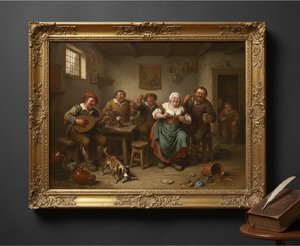
Adriaen van Ostade: A Master of Dutch Genre Painting & Social Commentary
Explore the life & work of Adriaen van Ostade, a leading Dutch Golden Age painter. Discover his realistic genre scenes, social commentary, and lasting influence on art history. Learn more at OriginalUniqueArt.
