
 Forhåndsvisning
 Send
Send Del med andre
 Vis detaljer

 Last ned bildet
 Liknende objekter
 Røntgenundersøkelse
 Lysbildefremvisning
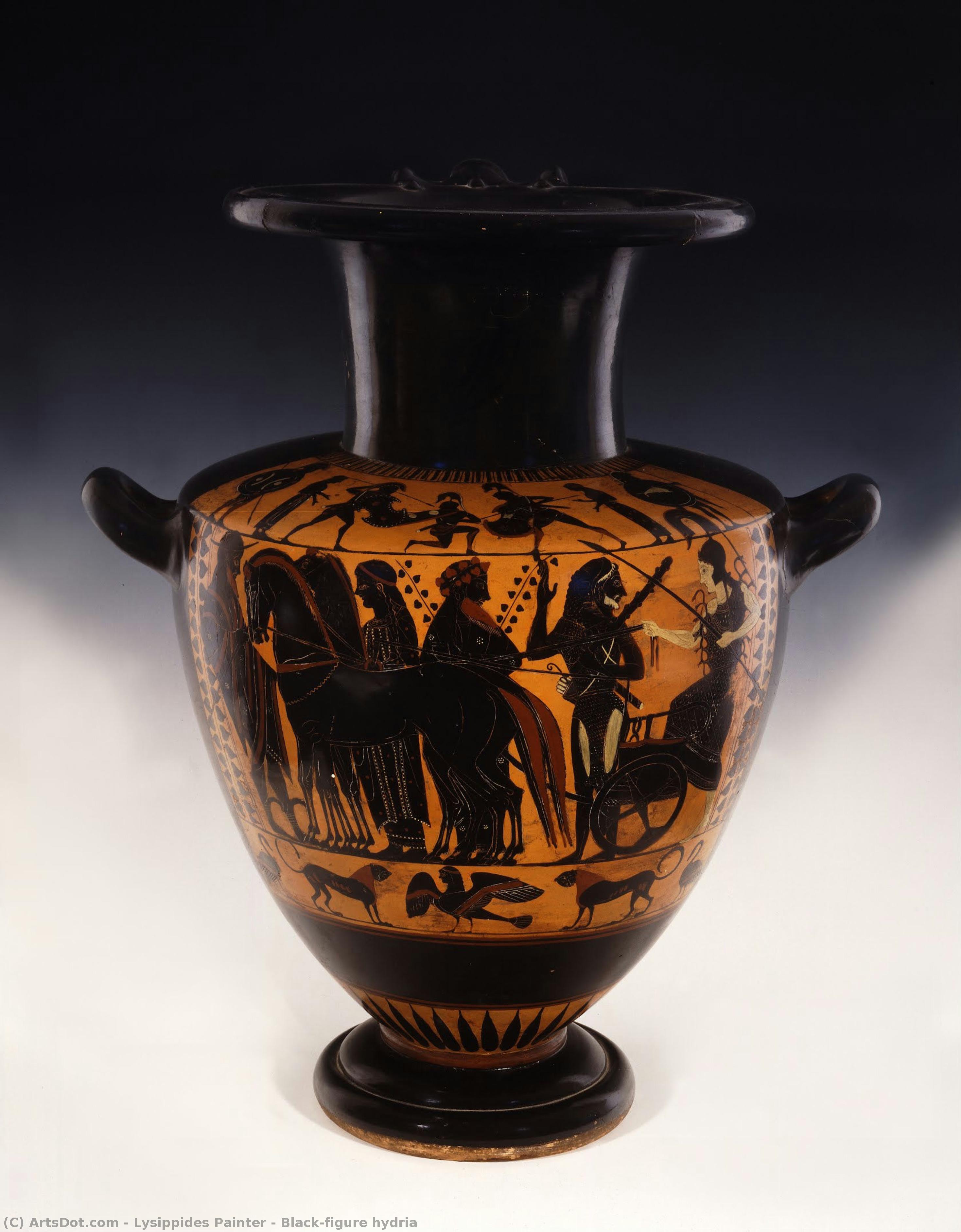
Black-figure hydria

 Vis hele teksten
Giclée / Kunsttrykk
Giclée- eller lerretsprint av museumskvalitet med rask produksjon og fleksible valgmuligheter for etterbehandling. ( Kjøp håndlaget maleri Kjøp bilde)




































Velg mellom våre forhåndsdefinerte størrelser som bevarer kunstverkets opprinnelige proporsjoner.

Du kan oppgi egne mål for å tilpasse en spesifikk ramme eller et bestemt område. Dersom den valgte størrelsen ikke samsvarer med det originale bildets proporsjoner, vil vi enten beskjære kunstverket eller utvide bildet med en speilet eller ensfarget kant. En digital mockup vil bli sendt til din godkjenning før produksjonen starter.
Vennligst merk at forhåndsvisningen på skjermen ikke gjenspeiler den faktiske beskjæringen eller utvidelsen. Kun mockuppen vil vise den endelige komposisjonen nøyaktig.
Selv om tilpassede størrelser er tilgjengelige, anbefaler vi å velge et mål fra den forhåndsdefinerte listen for å bevare de originale proporsjonene.
Verdensomspennende levering () på 2 uker i stedet for standard 4/5 uker. (16 August)

Gratis ekspressfrakt over hele verden

Lerretsduk av høykvalitets lin

Full forsikring under transport

Garanti for refusjon av toll og importavgifter

Garantert korrekt fargegjengivelse

60 dagers returrett (kun ved feil)

100% pengene tilbake-garanti

Rabatt ved flere kjøp
 Glassalternativet er kun tilgjengelig i størrelser under 110 cm

Black-figure hydria
Giclée / Kunsttrykk
Størrelse på reproduksjon
-


Endelig pris
$ 80
Beskrivelse av samleobjektet
Om kunstneren
Lysippides Painter: The Silent Genius of Archaic Greece
The Lysippides Painter remains one of the most enigmatic figures in ancient Greek art history, shrouded in mystery due to the lack of biographical information beyond his name – derived from a kalos inscription on a vase found in Palermo. Despite this paucity of documentation, scholars have painstakingly reconstructed his artistic life and oeuvre through stylistic analysis of approximately 30 vases attributed to him, establishing him as arguably the most influential pupil of Exekias, the undisputed master of black-figure pottery. His work embodies the pinnacle of Archaic Greek art, reflecting a profound understanding of human anatomy and narrative storytelling that continues to fascinate historians and artists alike.Early Life and Artistic Training
Little is known about Lysippides’s origins or personal life. He emerged onto the Athenian artistic scene around 530 BC, coinciding with Exekias's ascendancy as a sculptor and painter. Evidence suggests he was apprenticed to Exekias, absorbing not only his distinctive painting technique but also key compositional motifs—particularly scenes depicting heroic figures engaged in combat, notably Ajax and Achilles playing dice. This mentorship profoundly shaped Lysippides’s artistic vision, prioritizing anatomical accuracy and dramatic tension – characteristics that would define his entire oeuvre. The influence of Exekias extended beyond mere stylistic imitation; it instilled a belief in the power of art to convey complex narratives and evoke emotional responses.Style and Technique: Anatomical Precision and Narrative Depth
Lysippides’s artistic style is characterized by remarkable anatomical realism, surpassing even that achieved by his teacher Exekias. He meticulously rendered musculature, skeletal structure, and facial expressions with unparalleled precision, demonstrating a mastery of observation and anatomical knowledge uncommon for the period. This dedication to anatomical accuracy wasn't merely decorative; it served as a cornerstone of Lysippides’s storytelling approach. His scenes frequently depict mythological narratives—primarily featuring Herakles—where heroic figures are portrayed in dynamic poses conveying movement and emotion. The artist skillfully utilized foreshortening and perspective techniques, pushing the boundaries of artistic convention and establishing him as a pioneer of spatial representation.Notable Works and Artistic Legacy
Lysippides’s surviving vases represent a stunning testament to his artistic prowess and contribute significantly to our understanding of Archaic Greek art. Approximately 30 vases bearing his signature—primarily neck amphorae—depict scenes from mythology, including battles between heroes and monsters, depictions of divine figures interacting with mortals, and narratives exploring themes of honor and glory. The vase Munich 2301, featuring Herakles wrestling a lion, exemplifies Lysippides’s stylistic hallmark: the hero is portrayed in a heroic stance, meticulously rendered with anatomical detail—the musculature of his torso and arms are depicted with remarkable accuracy—reflecting the influence of Exekias's artistic vision. Furthermore, Lysippides collaborated with Andokides Painter on several bilingual vases, where he executed the red-figure side while Andokides handled the black-figure depiction. This collaboration underscores Lysippides’s role as a leading innovator in vase painting and cemented his reputation as one of the most influential artists of his time.Historical Significance and Enduring Influence
Lysippides Painter stands as an icon of Archaic Greek art, representing the apex of sculptural and painterly achievement during this formative period. His meticulous anatomical rendering and dramatic storytelling techniques profoundly impacted subsequent generations of artists, establishing him as a foundational figure in Western artistic tradition. The Lysippides Painter’s legacy continues to inspire contemporary artists who strive for realism and expressive narrative—a testament to his enduring influence on the history of art and his indelible contribution to our understanding of ancient Greek culture. His work serves as a reminder that beauty can be found not only in form but also in profound insight into human experience.
lysippides painter
Greece
Kort om kunstneren
- Artistic Movement Or Style: Black-figure pottery
- Artists Or Movements Influenced By This Artist: ['Geometric art']
- Artists Who Influenced This Artist: ['Exekias']
- Full Name: Lysippides Painter
- Nationality: Greek
- Notable Artworks: ['Fight Andokides']
- Place Of Birth: Greece

