Expressionism
Carnival (Lyonel Feininger)
Lyonel Feininger (1871–1956) har laget Carnival. Det tilhører Expressionism-bevegelsen. Den er laget i Oil On Canvas.
- Oil On Canvas

 Forhåndsvisning

 Håndmalt oljemaleri
 Send
 Del
 Faktablad


 Last ned bilde
 Liknende objekter
 Røntgenundersøkelse
 Lysbildefremvisning
 Spørsmål og svar

 Statistikk
Carnival, kort fortalt
- Tittel
- Carnival
- Kunstner
- Lyonel Feininger (1871–1956)
- Kunstner født i
- New York, USA
- Medium
- Oil On Canvas
- Bevegelse
- Expressionism
- Periode
- Early Modern
- Motiv
- people, figures, street scene, building, clock tower, umbrella
Hva forestiller Carnival?
Identification of Carnival by Lyonel Feininger
The street comes alive in Carnival, a spirited oil on canvas work by Lyonel Feininger. Created in 1911, this piece captures a moment of public celebration. The scene unfolds with a sense of movement, as if the viewer has just stepped into the middle of a bustling procession. People move through the space, their presence adding a layer of human energy to the urban setting.
Lyonel Feininger brings this specific vision to life through his unique handling of the medium. The oil paint carries the weight of the figures and the architecture, grounding the festive atmosphere in a tangible reality. Every brushstroke contributes to the feeling of a city in motion, caught in the middle of a joyful, crowded event. It is a window into a specific time and place, preserved through the artist's hand.
Composition and Visual Elements
A lively street scene unfolds before the eyes, filled with the restless energy of a crowd in motion. At least nine individuals populate the thoroughfare, each caught in a private moment of transit. One figure carries an umbrella against the sky, while another relies on a cane to navigate the pavement. Some travelers shoulder handbags or backpacks, their bodies angled as they move through the urban space. The figures appear to drift past one another, creating a sense of constant, rhythmic movement through the heart of the city.
In the background, the architecture looms with a sense of permanence. A building with a prominent clock tower watches over the pedestrians, its structure anchoring the bustling activity below. The composition draws the eye through the layers of the street, where the interplay of people and buildings creates a complex, layered perspective. The arrangement of the crowd suggests a spontaneous gathering, a slice of daily life where every person contributes to the collective pulse of the scene.
Technique and Artistic Style
The oil on canvas pulses with a restless energy, capturing a moment of movement through a lens of Expressionism. Colors collide and dance across the surface, refusing to settle into quietude. There is a palpable sense of rhythm in the way the pigments are applied, mirroring the lively street scene unfolding before us. The brushwork feels alive, driven by a desire to translate the emotional heat of a public celebration into visible, tactile strokes.
A subtle tension exists between the emotional intensity of Expressionism and the structural discipline of Cubist influence. While the colors scream with life, the underlying forms suggest a more calculated, geometric arrangement. This intersection of styles creates a visual language where the chaos of a crowd meets the organized logic of modernism. The figures move through a space that feels both spontaneous and carefully constructed, as if the artist is balancing the raw feeling of the moment with a precise, architectural eye.
Where to See This Artwork Today
The lively energy of this scene remains preserved within the walls of the Art Institute of Chicago. Visitors traveling to Chicago, IL, US, find this piece held within the institution's permanent collection. It resides there as a part of the Joseph Winterbotham Collection, waiting for those who wander through the museum's galleries to encounter its movement.
The painting stays housed in the Art Institute of Chicago, Chicago. It exists in this specific space, allowing the colors and the figures to remain part of the city's cultural landscape. One can find it among the many works that populate the museum's halls, where the spirit of the carnival continues to exist in its physical form.
Høyoppløselige bilder av Carnival

Fritlig eiendom: kunstneren døde i 1956.
Andre størrelser, beskjæringer og sitering →Lyonel Feininger, Carnival. Felleseie
Spørsmål om Carnival, besvart
Hvilken teknikk er "Carnival" laget med?
"Carnival" av Lyonel Feininger er utført i Oil On Canvas. Reproduksjonene har som mål å gjengi utseendet til denne teknikken.
Hva forestiller "Carnival" av Lyonel Feininger?
"Carnival" av Lyonel Feininger avbilder: people, figures, street scene, building, clock tower, umbrella, cane, handbags.
Er "Carnival" fri for opphavsrett?
Når det gjelder opphavsrett, er "Carnival" fritt tilgjengelig – opphavsretten har utløpt.
Hvilken kunstner kan "Carnival" tilskrives?
"Carnival" ble skapt av Lyonel Feininger. Informasjonen på denne siden beskriver Lyonel Feininger sitt originale verk.
Hvilken kunstretning tilhører "Carnival" av Lyonel Feininger?
"Carnival" er et verk innenfor Expressionism. Retningen angir den kunstneriske tradisjonen verket er en del av.
Hvilken periode i Lyonel Feininger sin karriere tilhører "Carnival"?
"Carnival" representerer Lyonel Feininger sin Early Period.
Hvorfor er den opphavsrettslige statusen til "Carnival" slik den er?
"Carnival" av Lyonel Feininger er fritt tilgjengelig – opphavsretten har utløpt. Opphavsretten løper fra kunstnerens dødsår, som var i 1956.
Hva har "Carnival" til felles med resten av Lyonel Feininger sin produksjon?
I Lyonel Feininger sitt kunstnerskap befinner "Carnival" seg innenfor Expressionism-stilen, sammen med temaene expressionism and cubism influence, urban life exploration, pivotal early career work, transition to fine art.
Hvordan relaterer motivet i "Carnival" seg til Lyonel Feininger sine vanlige temaer?
Blant Lyonel Feininger sine dokumenterte temaer – expressionism and cubism influence, urban life exploration, pivotal early career work, transition to fine art – retter "Carnival" sitt eget fokus mot people, figures, street scene, building, clock tower, umbrella, cane, handbags.
Om kunstneren, Lyonel Feininger

1871–1956, USA
Lyonel Feininger
Lyonel Feininger: A Pioneer of Expressionism and Bauhaus Lyonel Charles Adrian Feininger (født 17. juli 1871 i New York, død 13. januar 1956 i New York) var en tysk-amerikansk ekspresjonistisk maler og Bauhaus-lærer som også arbeidet som karikaturtegner og illustratør. Han ble født inn i et kunstnerisk miljø; hans far, Karl Feininger, var en allemandsk violinist og komponist, og hans mor, Elizabeth Feininger, var en amerikansk sanger.
Også av Lyonel Feininger
 The honeymooners
 Boats1917
 Blue Coast
 Sailing Boats

Essays om Carnival
 Lyonel Feininger: Bridging Expressionism & Cubism – A Study of Spiritual GeometryExplore the captivating world of Lyonel Feininger, a pivotal figure bridging Expressionism & Cubism. Discover his architectural visions, Ba…
 The Architecture of the Crowd: Examining Human Presence in Urban CompositionsExplore the evolution of urban art from Caillebotte to modern street murals. Discover the pulse of the city through masterworks.
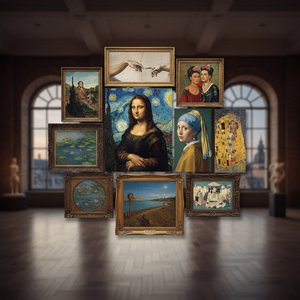 De 10 mest ikoniske oljemalerier som forandret kunsthistorien – OriginalUniqueArt.comOppdag de 10 mest innflytelsesrike oljemaleriene gjennom tidene! Fra Mona Lisa til Van Goghs mesterverk – lær historien bak ikoniske kunstv…