

 Se i rommet
 Del som digitalt kort
 Del
Del
 Detaljer
 Studentguide

 Last ned
 Liknende objekter
 Røntgen
 Lysbildefremvisning
 Besøksstatistikk
Card Players
 Oil On Panel
- Renaissance Humanism
 1525
1525 40.0 x 50.0 cm
 Thyssen-Bornemisza Museet
 Les mer
Håndlaget oljereproduksjon
Håndmalt olje på lerret i din valgte størrelse og ramme, laget på bestilling av våre kunstnere. ( Bytt til trykkversjon Gå til digitalt bilde)




P118B Nkr10

P118H Nkr10

P118W Nkr10

P438Z Nkr10

P508JH Nkr12

P508YH Nkr12

P805H Nkr10

P805Z Nkr10

P919BZ Nkr10

P919G Nkr10

P919XJ Nkr10

P959ZH Nkr10

P968JZ Nkr12

W106C Nkr8

W218G Nkr10

W218JH Nkr8

W218Y Nkr10

W307PJ Nkr10

W316G Nkr10

W316PJ Nkr8

W316Y Nkr10

W398PJ Nkr8

W4111J Nkr10

W500HY Nkr15

W500JH Nkr15

W692G Nkr12

W849H Nkr8

W940BG Nkr15

W953PJ Nkr8




Velg mellom våre forhåndsdefinerte størrelser som bevarer kunstverkets opprinnelige proporsjoner.

Skriv inn bredden og høyden du trenger, slik at den passer til din ramme eller vegg. Dette er håndmalt, så for en størrelse med en annen form kan kunstneren male litt mer rundt bildet, eller beskjære det noe — du velger selv. Vi sender deg en digital mockup for godkjenning før maleriet påbegynnes. Bildet som vises på denne siden viser ikke det faktiske resultatet — kun mockuppen gjør det.
Etter bestilling vil OriginalUniqueArt.com-teamet sende e-post til kunden for instruksjoner og sende et utkast (mockup) som forhåndsvisning.
Verdensomspennende levering () på 3–4 uker i stedet for standard 5 uker. (25 October). Ingen kompromisser med kvaliteten.

Gratis ekspressfrakt over hele verden

Lerretsduk av høykvalitets lin

Full transportforsikring

Garanti for refusjon av toll og importavgifter

Garantert fargeekthet

100 dagers returrett ved fabrikasjonsfeil

100% pengene tilbake-garanti

Mengderabatt
 Glassalternativet er kun tilgjengelig i størrelser under 110 cm

Card Players
Reproduksjonsmetode
Format på reproduksjon
-


Totalpris
Nkr 2852
The Quiet Intensity of “Card Players” by Lucas van Leyden
Lucas van Leyden’s “Card Players,” painted in 1525, is more than just a depiction of a game; it's a meticulously crafted snapshot of a burgeoning social world. Often referred to as the "Genesis of a Game," this oil-on-panel work offers a rare glimpse into the lives and leisure activities of the early 16th century Netherlands – a period marked by both artistic innovation and profound societal shifts. Van Leyden, a master painter and engraver deeply influenced by both Italian Renaissance ideals and his native Flemish traditions, has created an image that resonates with quiet intensity and unspoken narratives, inviting viewers to contemplate the complexities of human interaction.
The painting’s origins are rooted in the evolving social landscape of Europe. As urban centers flourished, new forms of social engagement emerged, and card games – previously largely confined to aristocratic circles – began to gain popularity among merchants, artisans, and a rising middle class. Van Leyden brilliantly captures this transformation by presenting not a grand tournament or formal competition, but a private gathering—a moment of shared camaraderie amidst the everyday realities of life. The composition itself is carefully orchestrated; the three figures are arranged in a dynamic triangular formation, drawing the eye to each individual while simultaneously suggesting an interplay between them – a silent conversation unfolding beneath the surface.
A Study in Detail: Technique and Composition
Van Leyden’s technical mastery is immediately evident. Every detail, from the folds of the clothing to the glint of light on the cards, is rendered with painstaking precision. The artist employs a masterful use of chiaroscuro – the dramatic contrast between light and shadow – to sculpt the figures, creating a sense of depth and volume that draws the viewer into the scene. Notice how the dark background serves to isolate the players, intensifying their presence and emphasizing their engagement with the game. The meticulous rendering of textures—the rough weave of the robes, the smooth surface of the cards—adds a remarkable level of realism, while the subtle variations in color contribute to the overall sense of atmosphere.
Furthermore, Van Leyden’s compositional choices are deliberate and sophisticated. The triangular arrangement of figures creates visual stability and directs the viewer's eye across the canvas. The placement of the women, particularly the central figure with her elaborate headdress, subtly asserts a position of authority within the group—a reflection of the changing roles of women in society during this period. The use of perspective, though not entirely linear, contributes to the illusion of depth and space, further immersing the viewer in the scene.
Symbolism and Context: A Window into Renaissance Life
Beyond its technical brilliance, “Card Players” is rich in symbolic meaning. The game itself represents more than just a pastime; it symbolizes social status, wealth, and intellectual engagement. The piles of gold coins scattered on the table are a clear indication of prosperity and success—a key aspiration for many merchants and artisans during this era. The cards themselves can be interpreted as metaphors for chance, fortune, and the unpredictable nature of life. The quiet expressions on the faces of the players suggest a blend of concentration, anticipation, and perhaps even a touch of rivalry.
Moreover, the painting reflects the humanist ideals that were gaining prominence during the Renaissance. Van Leyden’s focus on human interaction and everyday life—rather than grand historical events or religious narratives—aligns with this broader cultural shift. The scene is not idealized; it's grounded in reality, offering a nuanced portrayal of social dynamics and the complexities of human relationships. The painting serves as a testament to the Renaissance fascination with observing and representing the world around us.
Emotional Resonance: A Moment Frozen in Time
“Card Players” possesses a remarkable emotional resonance that transcends its historical context. Despite the lack of overt drama, the painting evokes a sense of quiet intensity—a feeling of being privy to a private moment of connection and shared experience. The subtle expressions on the faces of the players invite viewers to speculate about their thoughts and feelings, creating a powerful sense of empathy. The scene is both familiar and enigmatic, capturing the timeless appeal of human interaction and the enduring fascination with games of chance.
Whether viewed as a historical document, an artistic masterpiece, or simply a captivating image, “Card Players” continues to resonate with audiences today—a testament to Lucas van Leyden’s skill as a painter and his profound understanding of the human condition.
Spørsmål og svar
Hvordan ble "Card Players" laget, og hvor stor er den?
Teknikken i "Card Players" av Lucas Van Leyden er Oil On Panel, og de oppgitte målene er 40 x 50 cm.
Hva er målene på det originale verket "Card Players" av Lucas Van Leyden?
Det originale verket "Card Players" av Lucas Van Leyden måler 40 x 50 cm.
Er Lucas Van Leyden, skaperen av "Card Players", kjent under andre navn?
Andre navn registrert for Lucas Van Leyden, skaperen av "Card Players", inkluderer Lucas Hugensz Van Leyden, Lucas Jacobszoon Van Leiden.
Kunstnerbiografi
Tidlig liv og kunstnerisk opplæring
Lucas van Leyden, født i Leiden i Nederland i 1494, representerte en ny generasjon nederlandske malere og grafiske kunstnere. Som sønn av den lokale maleren Huygh Jacobsz fikk Lucas sin første kunstneriske veiledning hjemme, et uvurderlig grunnlag som la grunnlaget for hans senere utvikling. I 1508 ble han tatt inn i verkstedet til Cornelis Engelbrechtsz, hvor han finpusset sine ferdigheter og begynte å utforske de mange mulighetene innenfor maleri og trykkekunst. Denne perioden var avgjørende for hans kunstneriske modning, og bidro til å forme den unike stilen som skulle kjennetegne hans arbeid.En pioner innen sjangerbilder og grafikk
Lucas van Leyden regnes som en av de første nederlandske malerne som virkelig viet seg til sjangerbildene – hverdagsscener og portretter av vanlige mennesker. Han var ikke bare tidlig ute, men også usedvanlig dyktig i sin utførelse. Hans tidlige arbeider, preget av halvlange figurer fra rundt 1506-1512, vitner om en bemerkelsesverdig originalitet og et skarpt blikk for detaljer. Samtidig utviklet han seg raskt som grafiker, og viste en imponerende teknisk mestring allerede i ung alder. Hans tidligste kjente trykk, Mohammed og den myrdede munken (1508), er et slående eksempel på hans evner innenfor dette feltet – en dristig komposisjon som demonstrerer både hans tekniske ferdigheter og hans interesse for komplekse narrativer.Stilistisk utvikling og mesterverk
Etter hvert som Lucas van Leyden modnet, ble landskapene i hans malerier mer fremtredende, og han viste en økende evne til å skape dybde og atmosfære. Hans stil kjennetegnes av friske farger og en subtil bruk av *aérien perspektiv* – en teknikk som gir bildene en følelse av rom og luftighet. Denne teknikken var allerede høyt verdsatt av Albrecht Dürer, og det er tydelig at Lucas van Leyden ble inspirert av den tyske mesterens arbeid. Blant de sytten maleriene som med sikkerhet tilskrives ham, finner vi perler som Helbredelsen av den blinde mannen fra Jeriko, et imponerende verk fylt med figurer mot en frodig skogbakgrunn, og Saint Paul, som viser hans dyktighet innenfor grafisk kunst. Melkerinnen (trykk, 1510) er også et fremragende eksempel på hans tidlige talent for trykkekunst.Et varig arv og moderne tilgjengelighet
Lucas van Leydens bidrag til nederlandsk sjangerbildekunst og grafikk er uomtvistelig. Hans innovative stil, kombinert med en imponerende teknisk dyktighet, har sikret ham en plass blant de mest anerkjente kunstnerne fra renessansen. Som en pioner innenfor nederlandsk kunst fortsetter hans arv å inspirere kunstnere og kunstelskere den dag i dag. Hans verk kan beundres i museer over hele verden, inkludert Van Gogh Museum i Nederland, som huser en omfattende samling av hans trykk og malerier. I tillegg gjør online plattformer som OriginalUniqueArt.com det mulig for et bredere publikum å utforske hans oeuvre i detalj, og bringe hans kunst nærmere folk over hele verden.- Utforsk Lucas van Leydens kunstverk på OriginalUniqueArt.com
- Oppdag samlingen ved Van Gogh Museum (Nederland) på nett.
- Lær mer om nederlandsk kunst og dens pionerer på OriginalUniqueArt.coms blogg

Lucas Van Leyden
1494 - 1533 , Nederland
Kort om kunstneren
- Artistic Movement Or Style: Tidlig nederlandsk renessanse
- Artists Or Movements Influenced By This Artist: ['Tysk renessanse']
- Artists Who Influenced This Artist: ['Albrecht Dürer']
- Date Of Birth: Leiden, Nederland (1494)
- Date Of Death: 1533
- Full Name: Lucas Hugensz van Leyden
- Nationality: Nederlandsk
- Notable Artworks:
- Helbredelsen av den blinde mannen
- Saint Paul
- Melkejenta
- Place Of Birth: Leiden, Nederland
Relaterte artikler

Jan van Goyen: Master of Dutch Landscape & Atmospheric Perspective
Discover Jan van Goyen, the master of Dutch landscape painting. Explore his subtle technique, atmospheric realism & lasting influence on art history. Learn about this 17th-century pioneer at OriginalUniqueArt.

Golden Light & Dutch Skies: The Timeless Magic of Dutch Golden Age Landscapes
Discover the breathtaking beauty of Dutch Golden Age landscapes. Explore the mastery of light, chiaroscuro, and 17th-century realism through an expert art history lens, celebrating the enduring legacy of the Dutch Masters for discerning collectors and art lovers.

Rembrandts Mesterverk: Topp 25 Kunstverk for Din Vegg | OriginalUniqueArt.no
Utforsk Rembrandts 25 mest ikoniske kunstverk! Oppdag historiene bak mestermalerier, portretter og bibelske scener fra den nederlandske barokken. Finn museumskvalitets reproduksjoner & interiørinspirasjon på OriginalUniqueArt.com.

Lucas van Leyden: Innovation & Intimacy in Early Netherlandish Printmaking
Explore the groundbreaking prints of Lucas van Leyden, a Dutch master bridging Gothic detail & Renaissance innovation. Discover his rare works, investment potential, and legacy for discerning collectors.
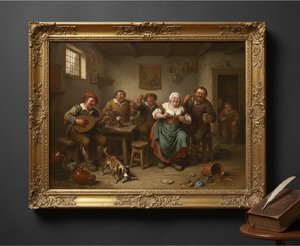
Adriaen van Ostade: A Master of Dutch Genre Painting & Social Commentary
Explore the life & work of Adriaen van Ostade, a leading Dutch Golden Age painter. Discover his realistic genre scenes, social commentary, and lasting influence on art history. Learn more at OriginalUniqueArt.
