
 Forhåndsvisning
 Send
Send Del
Del
 Vis detaljer
 Utskriftsvennlig guide

 Last ned bilde
 Liknende objekter
 Røntgenundersøkelse
 Lysbildefremvisning
 Q&A
Q&A Statistikk
James Anthony Froude

- 76.0 x 64.0 cm


 Vis hele teksten
Få en utskriftsklar fil som går langt utover forhåndsvisningen på nett. Hvert digitale bilde vi selger er hentet fra en høyoppløselig master i vår database – vanligvis mellom 5 000 og 15 000 piksler bred – slik at du kan trykke stort, beskjære tett eller gjenskape fine detaljer med full trygghet.
Ingen filer forlater studioet vårt uten å bli bearbeidet. En digital ekspert kontrollerer fargene mot det originale maleriet og korrigerer dem ved behov, for deretter å forbedre klarhet og detaljrikdom med profesjonelle retusjeringsverktøy — alltid tro mot kunstnerens penselstrøk og stil. Resultatet er et bilde som fremstår som selve maleriet, ikke som en skann med filter.
Du godkjenner før ferdigstilling: vår ekspert sender bildet på e-post til din vurdering innen 72 timer. Ikke fornøyd? Be om forbedringer eller korrigeringer, eller be om refusjon dersom kvaliteten ikke svarer til forventningene.
Dette er kvaliteten forlag, designstudioer, gallerier og trykkerier stoler på.
Digitalt bilde
Last ned en høyoppløselig fil til personlig bruk, utskrift og kreative prosjekter. ( Bytt til trykk Kjøp håndmalt maleri)
Inkludert i alle bestillinger av digitale bilder
Ekspert på digital levering, garantert
Når du velger OriginalUniqueArt.com, får du ikke bare et bilde – du mottar et profesjonelt etterbehandlet digitalt kunstverk, skapt med presisjon og med en garantert tilfredshetsgaranti. Her er alt som automatisk følger med din bestilling:

Rask levering på e-post
Din høyoppløselige digitale bildefil sendes til din e-post innen 72 timer etter bestilling – klar til umiddelbar bruk.

KI-forbedret digital fil
Ditt kunstverk blir profesjonelt optimalisert ved hjelp av avanserte AI-verktøy og manuell redigering, noe som sikrer maksimal detaljrikdom, klarhet og fargegjengivelse.

Gratis livslang nyutlevering
Har du ved et uhell slettet eller mistet filen din? Ingen bekymring – vi sender den på nytt når som helst, helt gratis.

Ingen importavgifter – noen gang
Nyt ditt kunstverk umiddelbart uten toll, avgifter eller leveringskostnader – digitale nedlastinger er alltid avgiftsfrie.

Garantert fargenøyaktighet
Vi sikrer at det digitale bildet gjenspeiler de originale fargene så nøyaktig som mulig ved hjelp av profesjonelle verktøy og fargehåndtering.

100 dagers fornøydhetsgaranti
Hvis du ikke er fornøyd med ditt digitale bilde, vil vi revidere det eller refundere 100% innen 100 dager – uten spørsmål.

100% Penggaranti
Ikke fornøyd? Få full refusjon innen 100 dager etter at du har mottatt din digitale fil – uten spørsmål.

Rabatt ved storkjøp
Kjøp 3 bilder, spar 10% - Kjøp 5, spar 15% - Kjøp 10+, spar 20%. Ideelt for kreative prosjekter, gallerier og byråer.
A Portrait of Reflection: James Anthony Froude by Lowes Cato Dickinson
Lowes Cato Dickinson’s 1890 portrait of James Anthony Froude is more than a simple likeness; it's a carefully constructed tableau of Victorian intellect and understated melancholy. The painting, housed within the hallowed halls of the University of Oxford, immediately draws the viewer in with its formal composition and rich palette – a testament to Dickinson’s mastery of oil paint and his ability to capture both physical presence and inner character.
Dickinson, a prominent figure in Victorian portraiture and a committed Christian socialist, was deeply embedded within the artistic and social currents of his time. His work often reflected these influences, as seen here in Froude’s dignified bearing and the subtle suggestion of contemplative thought. The painting wasn't merely commissioned; it felt like an attempt to immortalize a significant public figure, reflecting the esteem held for Froude’s historical writings and intellectual contributions.
The Anatomy of Form: Technique and Style
Dickinson’s technique is characterized by a meticulous attention to detail and a skillful manipulation of light and shadow. The portrait utilizes a one-point perspective, directing the viewer's gaze directly onto Froude’s face – an element that immediately establishes intimacy despite the formal setting. Notice how Dickinson builds up layers of paint to create texture in the fabric of Froude’s suit, subtly suggesting its weight and quality. The use of directional lighting, originating from the upper left, casts dramatic shadows across his features, emphasizing the lines of age and wisdom while simultaneously lending a sense of depth and volume.
The brushstrokes themselves are remarkably controlled, creating a smooth surface that reflects light beautifully. Dickinson’s choice of muted browns for the background provides a grounding element, preventing the focus from being solely on Froude himself. The overall effect is one of quiet dignity and restrained emotion – hallmarks of Dickinson's style.
Symbolism and Context: A Victorian Mind
Froude’s posture—slightly turned away, a hand resting loosely in his pocket—suggests a man lost in thought. He embodies the intellectual rigor of the late 19th century, grappling with complex historical questions and philosophical inquiries. The painting speaks to the era's fascination with history, morality, and the role of the individual within society – themes that were central to Froude’s own work.
Furthermore, the portrait is situated within a broader context of Victorian social reform movements. Dickinson was a staunch supporter of Christian socialism, advocating for improved working conditions and greater opportunities for the less fortunate. His decision to paint Froude, a prominent historian and public figure, could be interpreted as an attempt to elevate these ideals through artistic representation.
Emotional Resonance: A Glimpse into the Soul
Despite its formal presentation, “James Anthony Froude” possesses a profound emotional resonance. There’s a subtle melancholy in the subject's gaze, hinting at the weight of years and the complexities of human experience. The painting isn’t simply a record of appearance; it’s an invitation to contemplate the inner life of a man who shaped the intellectual landscape of his time. It is a poignant reminder of the enduring power of portraiture to capture not just likeness, but also spirit.
Spørsmål og svar
Kan "James Anthony Froude" forhåndsvises i utvidet virkelighet (AR)?
"James Anthony Froude" av Lowes Cato Dickinson kan forhåndsvises på din egen vegg via kunstverkets Se i AR-side ved bruk av utvidet virkelighet (AR) på en kompatibel enhet.
Hvilken teknikk ble brukt for "James Anthony Froude", og når ble den laget?
"James Anthony Froude" av Lowes Cato Dickinson er utført i Oil On Canvas og er datert 1890.
Er fargene i "James Anthony Froude" av Lowes Cato Dickinson mettede eller dempede?
"James Anthony Froude" av Lowes Cato Dickinson er gjengitt med en Subtle Color metning.
Om kunstneren
A Life Etched in Portraits: The World of Lowes Cato Dickinson
Lowes Cato Dickinson, born in Kilburn, London, in 1819, was a figure deeply embedded within the artistic and social currents of Victorian England. Coming from a family intimately connected to the art world—his father, Joseph Dickinson, being a respected lithographer and publisher on Bond Street—Dickinson’s path seemed preordained. Yet, his journey wasn't merely one of inheritance but of active engagement with the evolving aesthetic sensibilities and progressive social movements of his time. One of eleven siblings, he received his early education at Topsham School and Dr Lord's School in Tooting, grounding him in a solid foundation before fully immersing himself within the family business following his father’s death in 1849. He then joined forces with his brothers, Gilbert Bell Dickinson and William Robert Dickinson, to continue the legacy of Dickinson Brothers on Bond Street, a firm that quickly became synonymous with quality art publishing and photography. This early exposure wasn't simply about commerce; it was an apprenticeship in visual culture, shaping his eye for detail and composition—qualities that would define his later work as a portraitist.The Pre-Raphaelite Circle and the Call of Social Reform
Dickinson’s artistic development took a significant turn with a three-year sojourn in Italy around 1850. This period proved formative, exposing him to the masterpieces of the Renaissance and influencing his evolving style. He absorbed the stylistic principles championed by Dante Gabriel Rossetti and John Ruskin—a fervent desire for truth to nature combined with an emotional intensity that would characterize his oeuvre. The Pre-Raphaelite Brotherhood’s emphasis on rejecting academic conventions and celebrating medieval art profoundly impacted Dickinson's artistic vision. His correspondence with fellow artists reveals a shared belief in elevating art beyond mere decoration, aiming instead for profound psychological insight. He lectured alongside Ruskin and Rossetti, solidifying his position within this influential artistic milieu—a group dedicated to reforming Victorian society through the transformative power of beauty. This engagement extended beyond aesthetics; Dickinson actively participated in the burgeoning Christian socialist movement, advocating for social justice rooted in moral principles. The establishment of the Working Men's College in London stands as a testament to this conviction – he served as one of its founding tutors alongside luminaries like Ruskin and Kingsley, fostering artistic education and promoting intellectual discourse amongst aspiring working-class students.A Portraitist of Victorian Society
Dickinson’s talent lay not in grand historical narratives or dramatic allegories but in capturing the essence of his sitters—the prominent figures who shaped British society. He possessed an extraordinary ability to convey personality and character through subtle shading and nuanced facial expressions, prioritizing psychological realism over stylistic grandeur. His meticulous technique involved painstakingly recreating likenesses from photographs or detailed descriptions – a remarkable feat considering the limitations of photographic technology at the time. Among his prolific subjects were Queen Victoria herself, members of Parliament, leading scientists like Arthur Cayley and James Clerk Maxwell, and influential Christian socialists such as Charles Kingsley and Thomas Hughes. He skillfully rendered portraits of Gladstone’s Cabinet in 1872 – a piece that captures the solemnity and importance of British governance. His enduring legacy resides not only in his impressive collection of artworks but also in his unwavering dedication to fostering intellectual enlightenment and promoting social reform—values that continue to resonate today.Notable Works and Recognition
Dickinson’s artistic output spanned decades, producing over 300 portraits that adorn galleries across Britain and beyond. His meticulous attention to detail ensured that each canvas conveyed not merely physical likeness but also the inner spirit of his subjects. Particularly noteworthy is *General Gordon at Khartoum*, a haunting depiction of heroism and resilience—a masterpiece recognized for its expressive power and technical brilliance. Many of Dickinson’s portraits reside in prestigious institutions like Cambridge University and the National Portrait Gallery, cementing his place as one of Victorian England's foremost portrait painters. His posthumous crayon drawings – notably *Gladstone* – continue to captivate audiences with their remarkable fidelity to life and profound psychological depth.Legacy and Enduring Influence
Lowes Cato Dickinson’s contribution to British art extends far beyond the canvases he completed; his influence can be seen in the establishment of institutions dedicated to artistic education and social reform—most notably, the Lowes Dickinson Award at the Working Men's College. This prize recognizes student excellence and embodies Dickinson’s belief in empowering individuals through knowledge – a legacy that persists into the 21st century. His papers, meticulously preserved at Princeton, Oxford, and Cambridge Universities, provide invaluable insights into Victorian art history and social thought—a testament to his enduring intellectual curiosity and artistic vision. Dickinson's life exemplifies a harmonious blend of artistic talent, moral conviction, and scholarly pursuit – an inspiration for artists and thinkers alike who strive to capture the complexities of human experience and contribute meaningfully to society.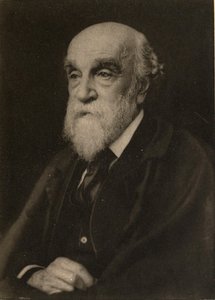
Lowes Cato Dickinson
1819 - 1908 , Storbritannia
Kort om kunstneren
- Artistic Movement Or Style: Pre-Raphaelite
- Artists Or Movements Influenced By This Artist: ['Christian Socialism']
- Artists Who Influenced This Artist:
- John Ruskin
- Dante Gabriel Rossetti
- Date Of Birth: November 27, 1819
- Date Of Death: 1908
- Full Name: Lowes Cato Dickinson
- Nationality: Britisk
- Notable Artworks:
- Gladstone's Cabinet (1868)
- Gordon Portrait
- Place Of Birth: Kilburn, United Kingdom