Berlin Secession · 1900
Salome, Second Version (Lovis Corinth, 1900)
Lovis Corinth (1858–1925) har skapt Salome, Second Version. Den er fra 1900. Det tilhører Berlin Secession-bevegelsen. Laget i Acrylic On Canvas. Verket er bevart ved Museum der bildenden Künste i Leipzig, Tyskland. Mål: 127 × 148 cm
- 1900
- Acrylic On Canvas
- 127 × 148 cm
- Museum der bildenden Künste, Leipzig

 Forhåndsvisning

 Håndmalt oljemaleri
 Send
 Del
 Faktablad for elever


 Last ned bilde
 Liknende objekter
 Røntgenundersøkelse
 Lysbildefremvisning
 Spørsmål og svar

 Statistikk
Salome, Second Version, kort fortalt
- Tittel
- Salome, Second Version
- Kunstner
- Lovis Corinth (1858–1925)
- Kunstner født i
- Gvardejsk, Russland
- Dato
- 1900
- Materiale
- Acrylic On Canvas
- Mål
- 127 × 148 cm
- Utstillingssted
- Museum der bildenden Künste, Leipzig, Tyskland
- Bevegelse
- Berlin Secession
- Tidsperiode
- 19th Century
- Motiv
- salome, herodias, dance, tragedy, execution, biblical
Hva forestiller Salome, Second Version?
A Descent into Shadow and Desire: Lovis Corinth’s ‘Salome, Second Version’
Lovis Corinth's “Salome, Second Version,” painted in 1900, isn’t merely a depiction of the biblical tale; it’s a visceral exploration of power, betrayal, and the unsettling allure of darkness. This arresting canvas, currently residing within the Museum der Bildenden Künste in Leipzig, immediately commands attention with its dramatic composition and intensely expressive palette. Corinth, a pivotal figure bridging Impressionism and Expressionism, masterfully eschews traditional romanticism, instead presenting a Salome far removed from the idealized figures of earlier portrayals. Instead of a passive object of desire, she emerges as a complex, almost defiant presence – a woman caught in the throes of her own ambition and haunted by the consequences of her actions.
The painting’s genesis lies within the turbulent artistic landscape of early 20th-century Berlin. Corinth, having moved there from Munich, found himself at the heart of a vibrant, often contentious, art scene. The Secession group, with its emphasis on freedom and innovation, provided a fertile ground for his evolving style. “Salome” reflects this period’s fascination with psychological depth and emotional intensity – a departure from the polished surfaces of academic painting. Corinth deliberately chose to revisit the legend, not as a straightforward narrative illustration, but as an opportunity to delve into the character's inner turmoil and the moral ambiguity at the heart of the story.
The Dance and its Discontents: Technique and Composition
Corinth’s technique is immediately striking. He employs a bold, almost frenetic brushstroke – thick impasto applied with visible energy – that imbues the canvas with a sense of movement and urgency. The colors are rich and saturated, dominated by deep reds, purples, and blacks, creating an atmosphere of dramatic intensity. The composition itself is carefully constructed to draw the viewer into the scene. Salome, positioned centrally, dominates the foreground, her body tilted forward in a pose that suggests both vulnerability and calculated seduction. The figures surrounding her – the servant bearing the head, the watchful woman with the fan, and the shadowy men – are rendered with varying degrees of detail, contributing to the painting’s overall sense of unease and disorientation.
- Brushwork: Thick, expressive strokes create a dynamic and unsettling effect.
- Color Palette: Dominated by deep reds, purples, and blacks, evoking drama and shadow.
- Composition: Salome is centrally positioned, drawing the viewer's eye and emphasizing her role as the focal point of the scene.
Symbolism and Interpretation: A Portrait of Moral Ambiguity
Beyond the literal depiction of the biblical story, “Salome” is laden with symbolic meaning. The dance itself represents a dangerous allure – a seductive invitation to transgression. The severed head on the platter isn’t simply a gruesome trophy; it's a potent symbol of ambition and the destructive consequences of unchecked desire. Corinth deliberately avoids offering a clear moral judgment, instead presenting a complex portrait of a woman driven by both her own desires and the manipulative influence of her mother. The inclusion of the fan-bearing woman, often interpreted as Herodias, adds another layer of intrigue, suggesting a conspiracy at play – a deliberate orchestration of events that leads to John the Baptist’s demise.
Furthermore, the painting can be viewed through the lens of the burgeoning feminist movement of the time. Salome's defiant gaze and her unapologetic embrace of her sexuality challenged traditional notions of female virtue and presented a powerful image of female agency – albeit one ultimately consumed by tragedy. Corinth’s decision to portray her as a figure of both beauty and menace reflects the complex and often contradictory attitudes towards women in early 20th-century society.
Emotional Resonance: A Timeless Exploration of Human Darkness
“Salome, Second Version” continues to resonate with viewers today because it taps into fundamental human emotions – desire, betrayal, guilt, and the haunting awareness of our own mortality. Corinth’s masterful use of color, composition, and symbolism creates a painting that is both visually arresting and psychologically profound. It's not a comfortable image; it confronts us with the darker aspects of human nature and reminds us that even in moments of apparent beauty and pleasure, there can be a lurking sense of unease and impending doom. Reproductions of this powerful work offer a glimpse into Corinth’s artistic genius and provide an opportunity to contemplate the timeless themes explored within its shadowed depths.
Hvilket museum har Salome, Second Version?
Museum der bildenden Künste
Leipzig, Tyskland
En arv smidd i tid: Sjelen i Leipzigs kunstneriske hjerte I det levende kulturlandskapet i Sachsen, Tyskland, står en institusjon som fungerer som langt mer enn bare et depot for mesterverk; den er et levende vitnesbyrd om menneskelig motstandskraft og kreativitetens vedvarende kraft. Museum der bildenden Künste (MdbK) i Leipzig rommer syv århundrer med kunstnerisk streben, og vever sammen en fortelling som strekker seg fra senmiddelalderen til det ypperste innen samtidskunst. Museets reise, grunnlagt i 1837 som Leipzig Kunstforening, har vært preget av dype transformasjoner, merket av ødeleggelsens skygger og gjenfødelsens glans.


Høyoppløselige bilder av Salome, Second Version
Fritlig eiendom: kunstneren døde i 1925.
Lovis Corinth, Salome, Second Version (1900), Museum der bildenden Künste. Fri tilgjengelighet
Spørsmål om Salome, Second Version, besvart
Hvor kan "Salome, Second Version" av Lovis Corinth sees utstilt i dag?
Du kan se originalen av "Salome, Second Version" på Museum der bildenden Künste, Leipzig, Tyskland.
I hvilket år ble "Salome, Second Version" av Lovis Corinth skapt?
"Salome, Second Version" av Lovis Corinth ble skapt i 1900.
Hvilken teknikk er "Salome, Second Version" laget med?
Lovis Corinth brukte Acrylic On Canvas-teknikken i "Salome, Second Version". Teknikken definerer det materielle uttrykket til det originale verket.
Hva er målene på det originale verket "Salome, Second Version"?
Det originale verket "Salome, Second Version" av Lovis Corinth måler 127 x 148 cm.
Hva forestiller "Salome, Second Version" av Lovis Corinth?
Temaene i "Salome, Second Version" av Lovis Corinth inkluderer salome, herodias, dance, tragedy, execution, biblical, figures. Sammen oppsummerer de verkets motiv.
Er "Salome, Second Version" fri for opphavsrett?
"Salome, Second Version" av Lovis Corinth er fritt tilgjengelig – opphavsretten har utløpt. Denne statusen avgjør hvordan bildet av verket kan reproduseres.
Hvem er kunstneren bak "Salome, Second Version"?
"Salome, Second Version" tilskrives Lovis Corinth.
Hvilken kunstretning tilhører "Salome, Second Version" av Lovis Corinth?
Kunstretningen knyttet til "Salome, Second Version" av Lovis Corinth er Berlin Secession. Denne klassifiseringen plasserer verket sammen med relaterte kunstnere og kunstverk.
Hvilken periode i Lovis Corinth sin karriere tilhører "Salome, Second Version"?
I Lovis Corinth sin karriere tilhører "Salome, Second Version" Berlin Secession Era. Denne perioden gjør det mulig å sammenligne verket med kunstnerens øvrige arbeider.
Om kunstneren, Lovis Corinth

1858–1925, Russland
Lovis Corinth
A Life Forged in Paint: The World of Lovis Corinth Lovis Corinth, født Franz Heinrich Louis, seilte inn i kunstens verden med en energi og et engasjement som ville definere hans karriere og etterlate et varig avtrykk på den tyske kunstscenen. Han ble født 21. juli 1858 i Tapiau, en liten landsby i det nåværende Øst-Preussen, et sted preget av sin fars tannverkstad – en tidlig eksponering for fysisk arbeid og den rå skjønnheten i naturen som ville forme hans kunstneriske syn. I begynnelsen drømte han om å bli historiemaler, men det var raskt klart at akademisk tradisjon alene ikke kunne tilfredsstille hans ambisjoner.
Andre verk av Lovis Corinth
 Slakterhuset1893
 Wilhelmine med Ball1915
 Portrait of the Painter Paul Eugène Gorge1908
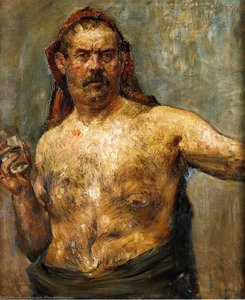 Self Portrait with a Glass1907
Essays om Salome, Second Version
 Lovis Corinth: Bridging Impressionism & Expressionism – A Study of Artistic EvolutionExplore the fascinating artistic journey of Lovis Corinth, a pivotal figure bridging Impressionism & Expressionism. Discover his evolution,…
 The Soul of the Brushstroke: Why Textured Impasto Defines the Magic of Impressionist MasterpiecesDiscover the tactile magic of Impressionism. Explore how the impasto technique breathes life into masterpieces through texture and light. E…
 Unveiling the Dreamer: The 25 Most Iconic Masterpieces by Gustave MoreauStep into the dreamlike world of Gustave Moreau. Explore 25 iconic Symbolist masterpieces, from mythic legends to opulent textures. Find in…