
 Forhåndsvisning
 Send
Send Del
Del
 Vis detaljer
 Utskriftsvennlig guide

 Last ned bilde
 Liknende objekter
 Røntgenundersøkelse
 Lysbildefremvisning
 Spørsmål og svar
 Statistikk
The Annunciation

- 52.0 x 45.0 cm


 Vis hele teksten
Få en utskriftsklar fil som går langt utover forhåndsvisningen på nett. Hvert digitale bilde vi selger er hentet fra en høyoppløselig master i vår database – vanligvis mellom 5 000 og 15 000 piksler bred – slik at du kan trykke stort, beskjære tett eller gjenskape fine detaljer med full trygghet.
Ingen filer forlater studioet vårt uten å bli bearbeidet. En digital ekspert kontrollerer fargene mot det originale maleriet og korrigerer dem ved behov, for deretter å forbedre klarhet og detaljrikdom med profesjonelle retusjeringsverktøy — alltid tro mot kunstnerens penselstrøk og stil. Resultatet er et bilde som fremstår som selve maleriet, ikke som en skann med filter.
Du godkjenner før ferdigstilling: vår ekspert sender bildet på e-post til din vurdering innen 72 timer. Ikke fornøyd? Be om forbedringer eller korrigeringer, eller be om refusjon dersom kvaliteten ikke svarer til forventningene.
Dette er kvaliteten forlag, designstudioer, gallerier og trykkerier stoler på.
Digitalt bilde
Last ned en høyoppløselig fil til personlig bruk, utskrift og kreative prosjekter. ( Bytt til trykk Kjøp håndmalt maleri)
Inkludert i alle bestillinger av digitale bilder
Ekspert på digital levering, garantert
Når du velger OriginalUniqueArt.com, får du ikke bare et bilde – du mottar et profesjonelt etterbehandlet digitalt kunstverk, skapt med presisjon og med en garantert tilfredshetsgaranti. Her er alt som automatisk følger med din bestilling:

Rask levering på e-post
Din høyoppløselige digitale bildefil sendes til din e-post innen 72 timer etter bestilling – klar til umiddelbar bruk.

KI-forbedret digital fil
Ditt kunstverk blir profesjonelt optimalisert ved hjelp av avanserte AI-verktøy og manuell redigering, noe som sikrer maksimal detaljrikdom, klarhet og fargegjengivelse.

Gratis livslang nyutlevering
Har du ved et uhell slettet eller mistet filen din? Ingen bekymring – vi sender den på nytt når som helst, helt gratis.

Ingen importavgifter – noen gang
Nyt ditt kunstverk umiddelbart uten toll, avgifter eller leveringskostnader – digitale nedlastinger er alltid avgiftsfrie.

Garantert fargenøyaktighet
Vi sikrer at det digitale bildet gjenspeiler de originale fargene så nøyaktig som mulig ved hjelp av profesjonelle verktøy og fargehåndtering.

100 dagers fornøydhetsgaranti
Hvis du ikke er fornøyd med ditt digitale bilde, vil vi revidere det eller refundere 100% innen 100 dager – uten spørsmål.

100% Penggaranti
Ikke fornøyd? Få full refusjon innen 100 dager etter at du har mottatt din digitale fil – uten spørsmål.

Rabatt ved storkjøp
Kjøp 3 bilder, spar 10% - Kjøp 5, spar 15% - Kjøp 10+, spar 20%. Ideelt for kreative prosjekter, gallerier og byråer.
Lorenzo Ghiberti’s Divine Revelation
Lorenzo di Bartolo Ghirlandaio, better known as Lorenzo Ghiberti, stands as a monumental figure in the history of Florentine sculpture. Born in Florence around 1378 and passing away in 1455, his life was inextricably linked to the artistic flourishing of the Early Renaissance. Ghiberti’s genius wasn't confined to a single style; instead, he masterfully blended Gothic influences with emerging humanist ideals, creating works that resonate with both spiritual depth and technical brilliance. His early training in goldsmithing instilled an unparalleled understanding of metalworking – a skill he would later translate into the breathtaking detail and luminosity of his bronze sculptures. However, it was his appointment to work on the Baptistery doors in Florence that cemented his legacy, culminating in the iconic “Gates of Paradise,” which redefined the possibilities of relief sculpture.

(Image of The Annunciation, first panel of the North Doors of the Baptistery in Florence)
A Moment of Grace: Depicting the Annunciation
The subject matter – the Annunciation – itself is rich with theological significance. This pivotal scene from Luke’s Gospel recounts the moment when the Archangel Gabriel appears to Mary, informing her that she will conceive and bear a son, Jesus Christ. Ghiberti's interpretation captures this profound revelation with exquisite sensitivity. The composition immediately draws the eye to Mary, depicted in a pose of gentle surprise and contemplative grace. Her hands are raised modestly, reflecting humility before the divine messenger. The angel, rendered with an almost ethereal quality, extends his hand towards her, presenting the news of salvation. The architectural setting – a simple doorway framed by a receding perspective – serves not as mere backdrop but as a symbolic representation of Mary’s entrance into God's plan.
Notice the meticulous detail in Ghiberti’s rendering: the folds of Mary’s robe, the delicate features of the angel, and the subtle play of light on the bronze surface. The use of *chiaroscuro* – the contrast between light and shadow – adds depth and volume to the figures, bringing them to life with remarkable realism. The overall effect is one of serene beauty and spiritual intensity.
Renaissance Symbolism and Technique
Ghiberti’s mastery extends beyond mere representation; he was deeply attuned to the symbolic language of his time. The dove descending from heaven, a traditional symbol of the Holy Spirit, hovers above the scene, signifying God's presence and divine intervention. The lilies adorning Mary’s robes represent purity and virginity – virtues essential to her role as the Mother of God. Furthermore, Ghiberti employed innovative techniques for his era, particularly in his use of *bassorilievo*—low-relief sculpture—which allowed him to create incredibly detailed figures within a limited space. The polished bronze surface reflects light beautifully, enhancing the luminosity and vibrancy of the artwork.
The North Doors of the Baptistery, where this panel resides, were commissioned as part of a larger project intended to adorn the exterior of Florence’s iconic Baptistery. Ghiberti's work here represents a pivotal moment in Renaissance art, showcasing the burgeoning interest in classical forms and humanist ideals while retaining a deep sense of religious devotion.
A Timeless Testament to Faith
“The Annunciation” by Lorenzo Ghiberti is more than just a beautiful sculpture; it’s a profound meditation on faith, grace, and the mystery of divine revelation. Its enduring appeal lies in its ability to evoke a sense of wonder and spiritual contemplation. Reproductions of this masterpiece offer an opportunity to bring this iconic image into any setting, serving as a constant reminder of humanity's connection to something greater than itself. Consider commissioning a hand-painted reproduction from OriginalUniqueArt.com – a faithful recreation that captures the essence of Ghiberti’s genius and allows you to experience this timeless testament to faith in your own home.
Spørsmål og svar
Hvilken kunstretning tilhører "The Annunciation" av Lorenzo Ghiberti?
"The Annunciation" av Lorenzo Ghiberti tilhører Renaissance-retningen. Denne retningen gir det stilistiske kontekstet til verket.
Når ble "The Annunciation" skapt, og hvilken kunstretning tilhører den?
"The Annunciation" ble skapt i 1403 som et verk innenfor Renaissance-retningen. Datoen og kunstretningen forankrer verket i kunsthistorien.
Hva slags kunstverk er "The Annunciation" av Lorenzo Ghiberti?
"The Annunciation" av Lorenzo Ghiberti er klassifisert som WallArt. Kategorien beskriver hvilken type kunstverk originalen er.
Om kunstneren
A Florentine Renaissance Forged in Bronze: The Life and Legacy of Lorenzo Ghiberti
Lorenzo di Bartolo – a name that would forever be intertwined with artistic innovation as Lorenzo Ghiberti – was born near Florence, Italy, in 1378. His early life wasn’t one of grand privilege, but rather steeped in the practical artistry of goldsmithing, nurtured under the watchful eye of his stepfather, Bartolo di Michele. This foundational training, a deep understanding of metalwork and its possibilities, would become the bedrock upon which he built an extraordinary career, ultimately redefining the boundaries of sculpture. Ghiberti’s ambitions, however, stretched far beyond the confines of the workshop; formal painting lessons from Gherardo Starnina broadened his artistic horizons, laying the groundwork for a multifaceted talent that would soon captivate Florence and leave an indelible mark on Western art history. A brief period spent assisting Carlo I Malatesta in Rimini during the devastating plague of 1400 further honed his sensibilities, exposing him to diverse artistic currents and shaping his evolving vision. Little did he realize as he embarked on this journey that these formative experiences were meticulously preparing him for a competition – a contest that would catapult him into immortality.The Baptistery Doors: A Triumph of Skill and Vision
In 1401, Florence held a momentous competition: to select an artist to create new bronze doors for the city’s Baptistery – a commission considered the most prestigious in the entire region. It was a chance to immortalize a significant event in Florentine history, the rebirth of the city after the plague. Ghiberti, driven by ambition and a burgeoning talent, entered this arena alongside some of the era's brightest minds, including the formidable Filippo Brunelleschi. The challenge: to depict the *Sacrifice of Isaac* in relief – a biblical narrative rich with symbolism and theological significance. Ghiberti’s panel wasn’t merely a demonstration of technical skill; it was a revelation. His innovative approach, characterized by graceful figures, a profound understanding of perspective, and an almost palpable sense of movement, secured his victory. This triumph wasn't simply about winning a commission; it was a declaration of a new artistic sensibility – a shift away from the rigid conventions of the past towards a more dynamic and humanistic style. He began work on the North Doors immediately, a project that would consume over two decades and fundamentally transform the Baptistery into a showcase of Renaissance artistry. The scale of the undertaking was immense, requiring not only exceptional technical skill but also meticulous planning and organizational prowess.The “Gates of Paradise”: A Masterpiece Unveiled
Following the resounding success of the North Doors – which were admired for their elegance and refined detail – Ghiberti was entrusted with an even more ambitious undertaking: the creation of a second set of doors for the Baptistery’s east entrance. These doors, completed in 1452, would become his magnum opus – and earn him a nickname bestowed by none other than Michelangelo himself: the “Gates of Paradise.” Each panel depicts scenes from the Old Testament with an unprecedented level of realism, detail, and emotional depth. Ghiberti’s mastery of bronze casting and relief sculpture reached its zenith in these works. The panels aren't merely representations of biblical stories; they are immersive narratives brought to life through meticulous attention to anatomy, drapery, and spatial relationships. He pioneered the use of perspective – a revolutionary technique at the time – to create a sense of depth and realism that was truly groundbreaking. The sheer scale and complexity of the “Gates of Paradise” demanded not only exceptional artistic skill but also a sophisticated understanding of engineering and construction.Style, Influences, and Lasting Impact
Ghiberti’s artistic style represents a beautiful synthesis of Gothic elegance and the emerging principles of Renaissance humanism. While rooted in the traditions of medieval craftsmanship – his early training instilled within him a deep respect for established techniques – he embraced classical antiquity, incorporating elements of Roman art and sculpture into his work. This fusion created a unique aesthetic that was both refined and emotionally resonant. He wasn’t simply imitating the past; he was reinterpreting it through a distinctly Renaissance lens. His figures possess a remarkable sense of naturalism, capturing not just physical likeness but also subtle expressions of emotion. Ghiberti's use of light and shadow adds to the dramatic effect of his sculptures, creating a sense of depth and volume that draws the viewer in. Beyond his artistic achievements, Ghiberti left behind a valuable intellectual legacy in the form of *Commentarii*, three treatises on art history, theory, and technique – one of the earliest examples of its kind by an artist. He wasn't merely a sculptor; he was a keen observer of the world around him, constantly seeking to understand the principles that governed beauty and harmony.A Legacy Cast in Bronze
The historical significance of Lorenzo Ghiberti extends far beyond his technical brilliance. He embodied the spirit of the Early Renaissance – a period marked by intellectual curiosity, artistic innovation, and a renewed appreciation for classical learning. His work not only transformed the aesthetic landscape of Florence but also helped to define the humanist ideals that would shape Western culture for centuries to come. Ghiberti’s meticulous attention to detail, his mastery of perspective, and his ability to imbue his sculptures with emotional depth set a new standard for artistic excellence. *His legacy continues to inspire artists and art lovers alike,* reminding us of the power of human creativity and the enduring beauty of Renaissance artistry.- Major Works: North Doors & East Doors (Gates of Paradise) – Florence Baptistery, Bronze Statues for Orsanmichele.
- Key Influences: Gothic Art, Classical Antiquity, Renaissance Humanism.
- Artistic Style: Blending Gothic elegance with emerging Renaissance principles; naturalistic depictions, innovative use of perspective.
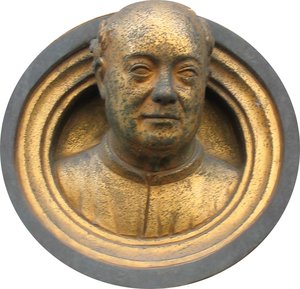
Lorenzo Ghiberti
1378 - 1455 , Italia
Kort om kunstneren
- Artistic Movement Or Style: Renaissance tidlig
- Artists Or Movements Influenced By This Artist:
- Donatello
- Masolino
- Artists Who Influenced This Artist:
- Bartolo di Michele
- Gherardo Starnina
- Date Of Birth: 1378
- Date Of Death: 1455
- Full Name: Lorenzo Ghiberti
- Nationality: Italiensk
- Notable Artworks:
- Porta del Paradiso
- Døde menn
- Abraham og Isak
- Place Of Birth: Florence, Italia