
 Forhåndsvisning
 Send
Send Del
Del
 Vis detaljer
 Utskriftsvennlig guide

 Last ned bilde
 Liknende objekter
 Røntgenundersøkelse
 Lysbildefremvisning
 Spørsmål og svar
 Statistikk
Cain and Abel

- 79.0 x 79.0 cm


 Vis hele teksten
Giclée / Kunsttrykk
Giclée- eller lerretsprint av museumskvalitet med rask produksjon og fleksible valgmuligheter for etterbehandling. ( Kjøp håndmalt maleri Bytt til digitalt bilde)




P118B Nkr10

P118H Nkr10

P118W Nkr10

P438Z Nkr10

P508JH Nkr12

P508YH Nkr12

P805H Nkr10

P805Z Nkr10

P919BZ Nkr10

P919G Nkr10

P919XJ Nkr10

P959ZH Nkr10

P968JZ Nkr12

W106C Nkr8

W218G Nkr10

W218JH Nkr8

W218Y Nkr10

W307PJ Nkr10

W316G Nkr10

W316PJ Nkr8

W316Y Nkr10

W398PJ Nkr8

W4111J Nkr10

W500HY Nkr15

W500JH Nkr15

W692G Nkr12

W849H Nkr8

W940BG Nkr15

W953PJ Nkr8




Velg mellom våre forhåndsdefinerte størrelser som bevarer kunstverkets opprinnelige proporsjoner.

Skriv inn ønsket bredde og høyde for å tilpasse trykket til din ramme eller vegg. Et trykk kan kun beskjæres, aldri skaleres opp utover motivets opprinnelige størrelse, noe som betyr at et format med andre proporsjoner vil føre til tap av deler av bildet. Vi sender deg en digital mockup for godkjenning før vi starter trykkeprosessen. Bildet som vises på denne siden viser ikke den faktiske beskjæringen — det er kun mockuppen som viser dette.
Verdensomspennende levering () på 2 uker i stedet for standard 4/5 uker. (4 November)

Gratis ekspressfrakt over hele verden

Lerretsduk av lin av høy kvalitet

Full transportforsikring

Garanti for refusjon av toll og importavgifter

Garantert fargegjengivelse

100 dagers returrett ved fabrikasjonsfeil

100% pengene tilbake-garanti

Rabatt ved flere kjøp
 Glassalternativet er kun tilgjengelig i størrelser under 110 cm

Cain and Abel
Giclée / Kunsttrykk
Størrelse på reproduksjon
-


Totalpris for valgte alternativer
Nkr 774
Lorenzo Ghiberti’s Gates of Paradise: A Symphony in Bronze
The Florence Baptistery’s Gates of Paradise—officially known as Porta Nuova—stand as an unparalleled testament to Renaissance artistic genius, spearheaded by Lorenzo Ghiberti. Completed between 1425 and 1452, these monumental bronze doors represent more than just architectural embellishment; they embody the humanist ideals that defined Florence during its golden age and continue to inspire awe centuries later. Commissioned by Archbishop Giovanni Pier Paolo Carafa, Cardinal Domenico Giuliano della Pergola, and Pope Nicholas V, Ghiberti’s undertaking was ambitious in scope—a collaborative effort involving numerous artisans—yet he alone conceived and executed the overarching vision for this iconic masterpiece.- Style: The Gates exemplify Early Renaissance sculpture, characterized by a renewed interest in classical ideals of proportion and harmony. However, Ghiberti’s approach transcends mere imitation; he infused his work with profound psychological depth and emotional resonance—a hallmark of humanist art.
- Technique: Ghiberti pioneered innovative casting methods utilizing the lost wax technique, pushing the boundaries of metallurgical craftsmanship. This meticulous process ensured exceptional detail and surface finish, capturing the textures and nuances of human anatomy and drapery with breathtaking accuracy.
- Historical Context: Constructed during a period of fervent artistic patronage—fueled by papal ambition and civic pride—the Gates stand as a symbol of Florence’s cultural ascendancy. They reflect the humanist spirit prevalent at the time, emphasizing human dignity and intellectual curiosity alongside religious piety.
Panel No. 2: Cain and Abel – A Narrative of Jealousy and Divine Justice
The second panel depicting Cain and Abel is arguably the most emotionally charged segment of the Gates’ narrative cycle. Ghiberti skillfully captures the pivotal moment of fratricide—the brutal slaying of Abel by his brother Cain—transforming it into a powerful visual allegory. The composition emphasizes the stark contrast between the righteous Abel, depicted in serene repose with his flock, and Cain, consumed by rage and driven to violence.- Symbolism: Ghiberti’s depiction utilizes symbolic gestures and facial expressions to convey profound psychological states—jealousy, remorse, and despair. The knife held aloft by Cain represents the destructive impulse of envy, while Abel's gaze conveys unwavering faith and moral integrity.
- Composition: The artist employs a pyramidal structure to create visual stability and heighten dramatic tension. Careful attention to detail—particularly in rendering Abel’s face—underscores Ghiberti’s mastery of anatomical realism and expressive portraiture.
Beyond Imitation: Ghiberti's Innovation and Legacy
While deeply rooted in classical tradition, Ghiberti’s Gates transcend mere stylistic homage. He achieved a breakthrough in perspective—a technique previously unexplored in sculpture—creating an illusion of depth that dramatically enhances the visual impact of the panels. This pioneering innovation demonstrates Ghiberti’s intellectual curiosity and his commitment to advancing artistic boundaries.- Influence: The Gates of Paradise profoundly influenced subsequent generations of sculptors, establishing a new standard for realism and expressive power. Michelangelo himself famously declared that Ghiberti had “made the stone speak.”
- Enduring Relevance: Today, reproductions of Ghiberti’s masterpiece continue to captivate audiences worldwide—serving as reminders of Florence's artistic heritage and inspiring contemplation on themes of morality, justice, and human vulnerability.
Exploring the Emotional Landscape
The Gates of Paradise are not merely aesthetically impressive; they evoke a visceral response in viewers—a confrontation with fundamental questions about human nature and divine providence. Ghiberti’s masterful portrayal of Cain and Abel compels us to grapple with the destructive consequences of envy and the importance of unwavering moral conviction. As you gaze upon this enduring symbol of Renaissance artistry, allow yourself to be transported back to Florence's vibrant cultural milieu—a testament to the transformative power of art and its ability to illuminate the human condition.Spørsmål og svar
Hvordan kan jeg kjøpe et trykk av "Cain and Abel" av Lorenzo Ghiberti?
For å bestille et trykk av "Cain and Abel" av Lorenzo Ghiberti, kan du enkelt gjøre det på siden for Kunsttrykk i høy kvalitet: et kunsttrykk på bomullslerret eller arkivbestandig lerretspapir.
Hvem har skapt "Cain and Abel"?
Kunstneren bak "Cain and Abel" er Lorenzo Ghiberti. Verket er katalogisert under Lorenzo Ghiberti sitt navn.
Er det mulig å laste ned "Cain and Abel"?
Bildet av "Cain and Abel" av Lorenzo Ghiberti kan lastes ned fra verkets Last ned digitalt bilde-side: nedlasting av et digitalt bilde i høy oppløsning.
Om kunstneren
A Florentine Renaissance Forged in Bronze: The Life and Legacy of Lorenzo Ghiberti
Lorenzo di Bartolo – a name that would forever be intertwined with artistic innovation as Lorenzo Ghiberti – was born near Florence, Italy, in 1378. His early life wasn’t one of grand privilege, but rather steeped in the practical artistry of goldsmithing, nurtured under the watchful eye of his stepfather, Bartolo di Michele. This foundational training, a deep understanding of metalwork and its possibilities, would become the bedrock upon which he built an extraordinary career, ultimately redefining the boundaries of sculpture. Ghiberti’s ambitions, however, stretched far beyond the confines of the workshop; formal painting lessons from Gherardo Starnina broadened his artistic horizons, laying the groundwork for a multifaceted talent that would soon captivate Florence and leave an indelible mark on Western art history. A brief period spent assisting Carlo I Malatesta in Rimini during the devastating plague of 1400 further honed his sensibilities, exposing him to diverse artistic currents and shaping his evolving vision. Little did he realize as he embarked on this journey that these formative experiences were meticulously preparing him for a competition – a contest that would catapult him into immortality.The Baptistery Doors: A Triumph of Skill and Vision
In 1401, Florence held a momentous competition: to select an artist to create new bronze doors for the city’s Baptistery – a commission considered the most prestigious in the entire region. It was a chance to immortalize a significant event in Florentine history, the rebirth of the city after the plague. Ghiberti, driven by ambition and a burgeoning talent, entered this arena alongside some of the era's brightest minds, including the formidable Filippo Brunelleschi. The challenge: to depict the *Sacrifice of Isaac* in relief – a biblical narrative rich with symbolism and theological significance. Ghiberti’s panel wasn’t merely a demonstration of technical skill; it was a revelation. His innovative approach, characterized by graceful figures, a profound understanding of perspective, and an almost palpable sense of movement, secured his victory. This triumph wasn't simply about winning a commission; it was a declaration of a new artistic sensibility – a shift away from the rigid conventions of the past towards a more dynamic and humanistic style. He began work on the North Doors immediately, a project that would consume over two decades and fundamentally transform the Baptistery into a showcase of Renaissance artistry. The scale of the undertaking was immense, requiring not only exceptional technical skill but also meticulous planning and organizational prowess.The “Gates of Paradise”: A Masterpiece Unveiled
Following the resounding success of the North Doors – which were admired for their elegance and refined detail – Ghiberti was entrusted with an even more ambitious undertaking: the creation of a second set of doors for the Baptistery’s east entrance. These doors, completed in 1452, would become his magnum opus – and earn him a nickname bestowed by none other than Michelangelo himself: the “Gates of Paradise.” Each panel depicts scenes from the Old Testament with an unprecedented level of realism, detail, and emotional depth. Ghiberti’s mastery of bronze casting and relief sculpture reached its zenith in these works. The panels aren't merely representations of biblical stories; they are immersive narratives brought to life through meticulous attention to anatomy, drapery, and spatial relationships. He pioneered the use of perspective – a revolutionary technique at the time – to create a sense of depth and realism that was truly groundbreaking. The sheer scale and complexity of the “Gates of Paradise” demanded not only exceptional artistic skill but also a sophisticated understanding of engineering and construction.Style, Influences, and Lasting Impact
Ghiberti’s artistic style represents a beautiful synthesis of Gothic elegance and the emerging principles of Renaissance humanism. While rooted in the traditions of medieval craftsmanship – his early training instilled within him a deep respect for established techniques – he embraced classical antiquity, incorporating elements of Roman art and sculpture into his work. This fusion created a unique aesthetic that was both refined and emotionally resonant. He wasn’t simply imitating the past; he was reinterpreting it through a distinctly Renaissance lens. His figures possess a remarkable sense of naturalism, capturing not just physical likeness but also subtle expressions of emotion. Ghiberti's use of light and shadow adds to the dramatic effect of his sculptures, creating a sense of depth and volume that draws the viewer in. Beyond his artistic achievements, Ghiberti left behind a valuable intellectual legacy in the form of *Commentarii*, three treatises on art history, theory, and technique – one of the earliest examples of its kind by an artist. He wasn't merely a sculptor; he was a keen observer of the world around him, constantly seeking to understand the principles that governed beauty and harmony.A Legacy Cast in Bronze
The historical significance of Lorenzo Ghiberti extends far beyond his technical brilliance. He embodied the spirit of the Early Renaissance – a period marked by intellectual curiosity, artistic innovation, and a renewed appreciation for classical learning. His work not only transformed the aesthetic landscape of Florence but also helped to define the humanist ideals that would shape Western culture for centuries to come. Ghiberti’s meticulous attention to detail, his mastery of perspective, and his ability to imbue his sculptures with emotional depth set a new standard for artistic excellence. *His legacy continues to inspire artists and art lovers alike,* reminding us of the power of human creativity and the enduring beauty of Renaissance artistry.- Major Works: North Doors & East Doors (Gates of Paradise) – Florence Baptistery, Bronze Statues for Orsanmichele.
- Key Influences: Gothic Art, Classical Antiquity, Renaissance Humanism.
- Artistic Style: Blending Gothic elegance with emerging Renaissance principles; naturalistic depictions, innovative use of perspective.
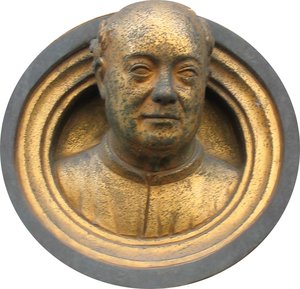
Lorenzo Ghiberti
1378 - 1455 , Italia
Kort om kunstneren
- Artistic Movement Or Style: Renaissance tidlig
- Artists Or Movements Influenced By This Artist:
- Donatello
- Masolino
- Artists Who Influenced This Artist:
- Bartolo di Michele
- Gherardo Starnina
- Date Of Birth: 1378
- Date Of Death: 1455
- Full Name: Lorenzo Ghiberti
- Nationality: Italiensk
- Notable Artworks:
- Porta del Paradiso
- Døde menn
- Abraham og Isak
- Place Of Birth: Florence, Italia
Relaterte artikler

Lorenzo Lotto: Unveiling the Enigma of a Venetian Master's Portraits
Explore the captivating world of Lorenzo Lotto, a Venetian Renaissance master renowned for his psychologically insightful portraits & enigmatic symbolism. Discover his life, style, and rediscovered legacy with OriginalUniqueArt.

Galleria degli Uffizi: Topp 25 Kunstverk for Din Vegg – Historie & Inspirasjon
Opplev renessansens storhet! Utforsk de 25 mest ikoniske kunstverkene i Galleria degli Uffizi, Firenze – fra Botticelli til Leonardo da Vinci. Historier, teknikker & inspirasjon for ditt hjem. Finn museumskvalitets reproduksjoner på OriginalUniqueArt.com.
Gian Lorenzo Bernini: Sculpting Baroque Emotion & the Roman Imagination
Explore the life & revolutionary art of Gian Lorenzo Bernini, the master sculptor of the Baroque era. Discover his iconic works like David and Ecstasy of Saint Teresa – a journey into Roman artistic genius.
Cultivating Paradise: A Historical & Artistic Exploration of Gardens in Painting
Explore the rich history of gardens in painting! Discover masterpieces from Renaissance to Impressionism & beyond. Learn about symbolism, artists like Monet & Klimt, and find your perfect artwork at OriginalUniqueArt.

Fra Angelicos 25 Mesterverk: Kunst, Historie og Skjønnhet for Ditt Hjem
Oppdag 25 mesterverk av Fra Angelico – renessansekunstens englemaler! Lær historien bak ikoniske fresker og altertavler. Finn inspirasjon til hjemmedekorasjon & kjøp eksklusive reproduksjoner på OriginalUniqueArt.com.