- Forsiden

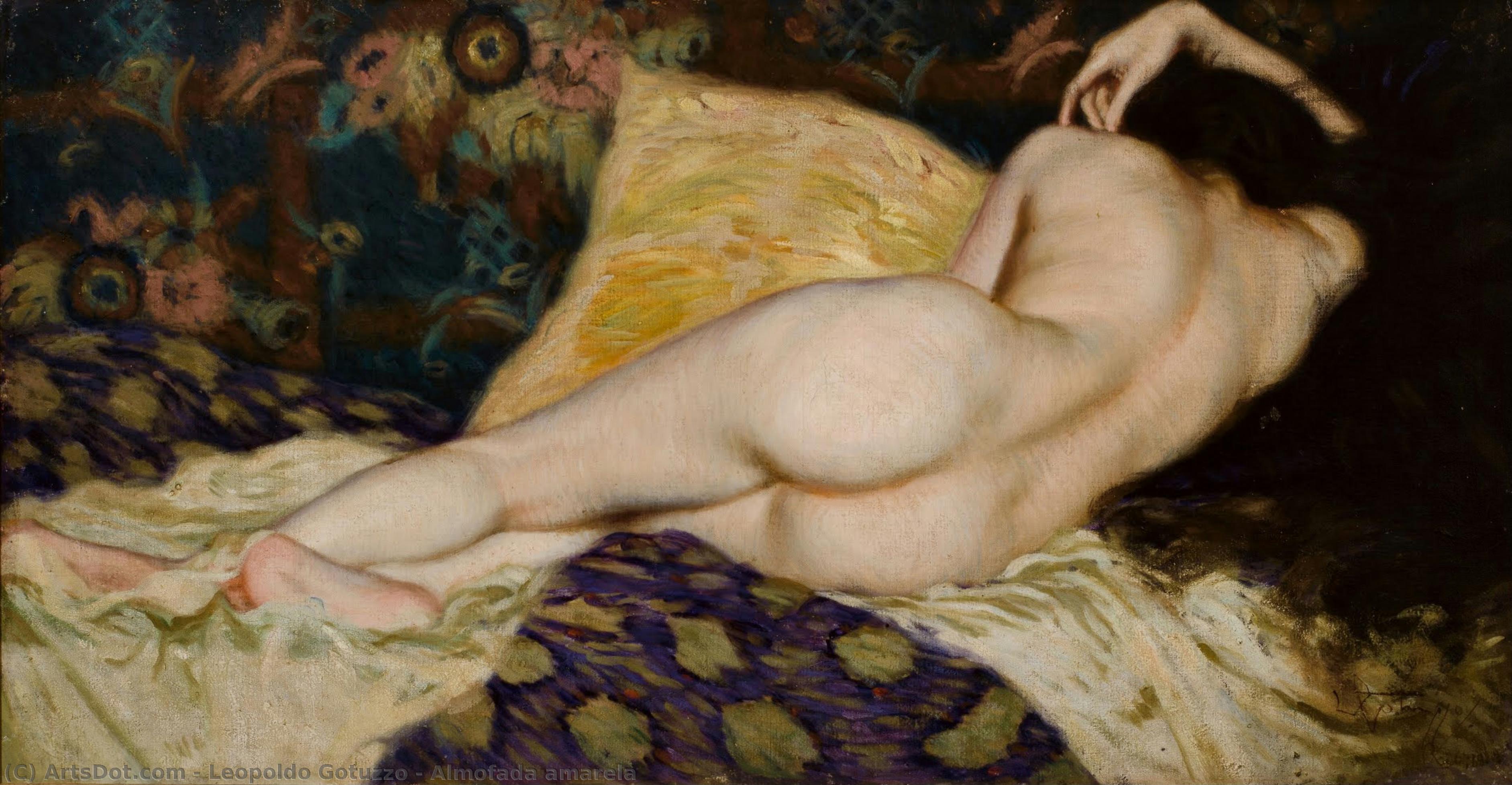
- Reproduksjon av oljemaleri
- leopoldo gotuzzo
- Almofada amarela
 Preview
 Bestill trykk Kjøp digitalt bilde
 Send
Send
 Del med andre
 Vis detaljer
 Legg til i favoritter

 Last ned bildet
 Liknende objekter
 Røntgenundersøkelse
 Lysbildefremvisning
Almofada amarela
 1923
1923 60.0 x 115.0 cm
 Iberê Camargo Foundation
 Vis hele teksten
Håndlaget oljereproduksjon
Håndmalt olje på lerret i din valgte størrelse og ramme, laget på bestilling av våre kunstnere.




































Velg mellom våre forhåndsdefinerte størrelser som bevarer kunstverkets opprinnelige proporsjoner.

Du kan angi egne mål for å tilpasse en spesifikk ramme eller plass. Dersom den valgte størrelsen ikke samsvarer med originalbildets proporsjoner, vil vi enten beskjære kunstverket eller utvide maleriet med ytterligere håndmalte elementer. En digital mockup vil bli sendt til din godkjenning før produksjonen starter.
Vennligst merk at forhåndsvisningen på skjermen ikke gjenspeiler den faktiske beskjæringen eller utvidelsen. Kun mockuppen vil vise den endelige komposisjonen nøyaktig.
Selv om tilpassede størrelser er tilgjengelige, anbefaler vi å velge et mål fra den forhåndsdefinerte listen for å bevare de originale proporsjonene.
Etter bestilling vil OriginalUniqueArt.com-teamet sende e-post til kunden for instruksjoner og sende et utkast (mockup) som forhåndsvisning.
Verdensomspennende levering () på 3–4 uker i stedet for standard 5 uker. (23 July). Ingen kompromisser med kvaliteten.

Gratis ekspressfrakt over hele verden

Lerretsduk av høykvalitets lin

Full forsikring under transport

Garanti for refusjon av toll og importavgifter

Garantert korrekt fargegjengivelse

60 dagers returrett (kun ved feil)

100% pengene tilbake-garanti

Rabatt ved flere kjøp
 Glassalternativet er kun tilgjengelig i størrelser under 110 cm

Almofada amarela
Teknikk for reproduksjon
Størrelse på reproduksjon
-


Endelig pris
-
Om kunstneren
Early Life and Artistic Foundations
Marcel Duchamp, a figure of profound influence on the trajectory of modern art, was born Henri-Robert-Marcel Duchamp in Blainville, Normandy, France, on July 28, 1887. His family background—his father a notary and his older brothers both accomplished artists—provided an unusual confluence of creative heritage. Jacques Villon, the elder brother, established himself as a painter and printmaker, while Raymond Duchamp-Villon pursued sculpture. This artistic lineage instilled in Marcel a deep appreciation for visual expression from a young age, though he initially resisted embracing a conventional artistic path. He studied at the Académie Julian in Paris between 1904 and 1905, absorbing the techniques of traditional painting but quickly recognizing their limitations. Duchamp’s early work demonstrated an engagement with contemporary trends—he was influenced by Post-Impressionism, particularly Cézanne's emphasis on geometric forms and the vibrant colors of Fauvism—yet he sought a more personal and intellectual approach to art. Crucially, his encounter with Arthur Wesley Dow in 1911 proved transformative. Dow’s philosophy, advocating for abstraction as a means of expressing inner feelings rather than merely replicating external reality, liberated Duchamp from the constraints of representational painting and paved the way for his radical innovations.The Rise of Cubism and Early Innovations
Following Dow's guidance, Duchamp embarked on a period of intense experimentation, producing highly abstract charcoal drawings that explored fragmented forms and spatial relationships. These works, largely unseen during his lifetime, reveal a nascent artistic language characterized by dynamism and a deliberate rejection of traditional perspective. His breakthrough came in 1912 with *Nude Descending a Staircase, No. 2*, a large-scale painting exhibited at the Salon des Indépendants in Paris. The work’s fragmented depiction of a female nude moving down a staircase caused considerable controversy and ridicule, as it defied conventional notions of beauty and representation. Despite this initial rejection, *Nude Descending a Staircase* established Duchamp's reputation as a provocateur and signaled his departure from traditional painting techniques. He continued to refine his Cubist style in the following years, incorporating elements of Futurism’s emphasis on movement and dynamism into his compositions—as evidenced by works like *Nu Torse* (1912). However, Duchamp's artistic trajectory shifted dramatically with the introduction of his “readymades” in 1913.The Readymade Revolution
Duchamp’s most revolutionary contribution to art lies in the concept of the readymade—a pre-existing object designated as a work of art by the artist's selection and presentation. His first readymade, *Bicycle Wheel* (1913), consisted of a bicycle wheel mounted on a wooden stool, transforming an ordinary industrial artifact into a conceptual artwork. This act challenged the very definition of art—it questioned the role of skill, craftsmanship, and aesthetic beauty in determining artistic value. The subsequent readymade, *Fountain* (1917)—a porcelain urinal signed “R. Mutt”—caused a monumental scandal when it was submitted to an exhibition of the Society of Independent Artists in New York City. The work’s blatant disregard for conventional notions of art and its satirical commentary on the art world sparked intense debate and cemented Duchamp's position as a radical innovator. He continued to explore the possibilities of readymades throughout his career, utilizing everyday objects—snow shovels, bottles, bricks—to create works that invited viewers to reconsider their perceptions of art and its relationship to the mundane.Surrealism, New York, and Conceptual Art
During the 1920s, Duchamp became involved with the Surrealist movement, collaborating with Man Ray on *New York Dada*, a publication dedicated to exploring the possibilities of Dada in America. He spent several years living and working in New York City, where he continued his experiments with chance operations and explored new artistic mediums, including film. His monumental work, *The Bride Stripped Bare by Her Bachelors, Even (The Large Glass)*, undertaken between 1915 and 1923, represents a culmination of his intellectual and artistic explorations—a complex and enigmatic allegory that reflects his fascination with sexuality, desire, and the subconscious. Following World War II, Duchamp returned to New York and continued to develop his conceptual approach to art, culminating in *Etant donnés* (1966), a three-dimensional reconstruction of *The Bride Stripped Bare by Her Bachelors, Even*. Marcel Duchamp’s legacy extends far beyond the specific artworks he created. He fundamentally altered the way artists think about their practice, shifting the focus from technical skill to conceptual ideas and challenging traditional notions of beauty and value.Historical Significance and Lasting Influence
Marcel Duchamp died in Neuilly-sur-Seine, France, on October 2, 1968, leaving behind a body of work that continues to provoke, challenge, and inspire artists today. His concept of the readymade is considered one of the most influential developments in modern art, paving the way for Conceptual Art and other avant-garde movements. Duchamp’s emphasis on intellectual rigor, his willingness to question established conventions, and his embrace of chance operations have profoundly shaped the course of artistic practice. He remains a pivotal figure in the history of art, whose radical ideas continue to resonate with artists and audiences alike. His work serves as a constant reminder that art is not simply about aesthetics but also about ideas, concepts, and the very nature of creativity itself.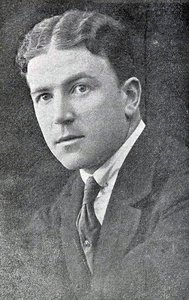
leopoldo gotuzzo
1887 - 1983 , Brazil
Kort om kunstneren
- Artistic Movement Or Style:
- Cubism
- Dada
- Surrealism
- Artists Or Movements Influenced By This Artist:
- Johnston
- Pollock
- Artists Who Influenced This Artist:
- Cézanne
- Matisse
- Villon
- Dow
- Date Of Birth: July 28, 1887
- Date Of Death: October 2, 1968
- Full Name: Henri-Robert-Marcel Duchamp
- Nationality: French American
- Notable Artworks:
- Nude Descending a Staircase (No. 2)
- Fountain
- Etant donnés
- Place Of Birth: Blainville, Normandy

