
 Forhåndsvisning
 Send
Send Del
Del
 Vis detaljer
 Utskriftsvennlig guide

 Last ned bilde
 Liknende objekter
 Røntgenundersøkelse
 Lysbildefremvisning
 Spørsmål og svar
 Statistikk
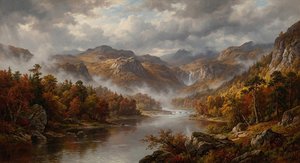
The Conway

- 41.0 x 66.0 cm

 Vis hele teksten
Giclée / Kunsttrykk
Giclée- eller lerretsprint av museumskvalitet med rask produksjon og fleksible valgmuligheter for etterbehandling. ( Kjøp håndmalt maleri Bytt til digitalt bilde)




































Velg mellom våre forhåndsdefinerte størrelser som bevarer kunstverkets opprinnelige proporsjoner.

Skriv inn ønsket bredde og høyde for å tilpasse trykket til din ramme eller vegg. Et trykk kan kun beskjæres, aldri skaleres opp utover motivets opprinnelige størrelse, noe som betyr at et format med andre proporsjoner vil føre til tap av deler av bildet. Vi sender deg en digital mockup for godkjenning før vi starter trykkeprosessen. Bildet som vises på denne siden viser ikke den faktiske beskjæringen — det er kun mockuppen som viser dette.
Verdensomspennende levering () på 2 uker i stedet for standard 4/5 uker. (13 November)

Gratis ekspressfrakt over hele verden

Lerretsduk av lin av høy kvalitet

Full transportforsikring

Garanti for refusjon av toll og importavgifter

Garantert fargegjengivelse

100 dagers returrett ved fabrikasjonsfeil

100% pengene tilbake-garanti

Rabatt ved flere kjøp
 Glassalternativet er kun tilgjengelig i størrelser under 110 cm

The Conway
Giclée / Kunsttrykk
Størrelse på reproduksjon
-


Totalpris for valgte alternativer
Nkr 770
Om kunstneren
A Life Painted in the English Countryside: Leopold Rivers (1852–1905)
Leopold Rivers, born in London in 1852 and passing away in 1905, was a British landscape painter who dedicated his life to capturing the serene beauty of the English countryside. While not a household name like some of his contemporaries, Rivers carved out a significant niche for himself with evocative depictions of moors, hills, and rural life that resonate with a quiet Romantic sensibility. His work offers a glimpse into a Victorian England increasingly fascinated by its own pastoral heritage, a world poised on the brink of dramatic change yet still holding onto timeless traditions. Rivers’s paintings weren't grand statements about societal upheaval; rather, they were intimate portraits of place, imbued with a delicate luminosity and a palpable sense of tranquility.Early Life and Artistic Foundations
Leopold Rivers benefited from a strong artistic lineage. He was the son of William Joseph Rivers, himself a respected landscape painter, and received his initial training under his father’s guidance. This familial connection undoubtedly shaped Leopold's early aesthetic sensibilities and provided him with a solid foundation in technique. While details about his formal education remain scarce, it is clear that he absorbed the principles of Romantic Landscape painting prevalent during the mid-19th century. The influence of artists like John Constable and J.M.W. Turner, with their emphasis on atmospheric effects and emotional response to nature, can be subtly detected in his early works. He became a member of the Royal Academy, exhibiting paintings there throughout his career, which speaks to his recognition within the established art world.Themes and Techniques: A Palette of Peace
Rivers’s oeuvre is characterized by its consistent focus on rural England. He frequently depicted scenes from areas like Suffolk, Berkshire, and Wales, favoring landscapes that evoked a sense of peaceful isolation. Moorland paintings are particularly prominent in his body of work, often featuring sheep grazing amidst rolling hills under expansive skies. His technique is marked by a muted palette – soft greens, browns, ochres, and grays dominate his canvases, creating an atmosphere of gentle harmony. He skillfully employed Luminism techniques to capture the subtle nuances of light and shadow, lending depth and realism to his scenes. A notable characteristic found in some of his paintings, such as “The Conway,” is a symbolic use of rectangular overlays within the composition, adding a layer of visual interest and perhaps hinting at an underlying structure or order within nature itself. His work doesn’t shout for attention; it whispers, inviting viewers to immerse themselves in the quiet beauty of the English countryside.Development and Artistic Style
Throughout his career, Rivers remained largely faithful to the Romantic Landscape tradition. He didn't embrace radical experimentation or venture into abstract forms. Instead, he refined his technique, honing his ability to capture atmospheric effects and evoke emotional responses through subtle shifts in color and tone. His paintings demonstrate a keen observation of nature combined with a poetic sensibility. While influenced by earlier masters, Rivers developed a distinctive style characterized by its balanced compositions, muted palette, and symbolic use of form. He wasn’t interested in dramatic narratives or historical events; his focus was on the inherent beauty of the natural world and the emotional connection it fostered within the viewer.Legacy and Historical Significance
Although not widely celebrated during his lifetime, Leopold Rivers's work has experienced a resurgence in interest in recent years. His paintings offer valuable insights into Victorian England’s evolving relationship with its landscape – a period marked by both industrial expansion and a growing appreciation for rural traditions. His evocative depictions of moors, hills, and countryside provide a poignant reminder of a world that was rapidly disappearing. Today, his works are appreciated for their quiet beauty, technical skill, and ability to transport viewers to the serene landscapes of 19th-century England. His paintings serve as enduring testaments to the power of art to capture not just what we see, but how we feel about the places we inhabit.
Leopold Rivers
1852 - 1905
Kort om kunstneren
- Artistic Movement Or Style: Romantic Landscape Painting
- Artists Or Movements Influenced By This Artist: ['Royal Academy']
- Artists Who Influenced This Artist: ['William Joseph Rivers']
- Date Of Birth: 1852
- Date Of Death: 1905
- Full Name: Leopold Rivers
- Nationality: British
- Notable Artworks: ['Evening at Beccles, Suffolk']
- Place Of Birth: London
Relaterte artikler

Romantiske landskap: Topp 10 mesterverk for hjemmet – Kunst fra OriginalUniqueArt.com
Oppdag de 10 mest ikoniske romantiske landskapsmaleriene! Fra Caspar David Friedrich til Turner – utforsk kunsthistorien, stemningen og fargepalettene. Finn museumskvalitets reproduksjoner på OriginalUniqueArt.com.

The Hudson River School: A Definitive Guide to America's Romantic Landscape Tradition
Explore the profound legacy of the Hudson River School. Discover how masters like Thomas Cole captured the American sublime through Romanticism and Luminism. A definitive guide for art historians and collectors seeking to understand America's wild beauty.
Hudson River School: Topp 10 Malerverk som Definerte en Epoke – Kunst og Dekorasjon
Opplev Hudson River School! Utforsk 10 ikoniske malerier av Thomas Cole, Frederic Church og andre mestere. Lær om romantikkens landskapskunst og finn inspirasjon til din interiørdesign på OriginalUniqueArt.com – museumskvalitet reproduksjoner online.
The Sublime Landscape: Exploring the Hudson River School Movement
Explore the captivating world of the Hudson River School! Discover the history, artists, and defining characteristics of this iconic American art movement. Learn about Romanticism's influence & find inspiration for your collection.
Robert Spencer: Luminism, Narrative & the American Landscape Tradition
Explore the captivating world of Luminism & the Hudson River School with our expert analysis. Discover the history, artists, and enduring beauty of 19th-century American landscape painting. Find museum-quality reproductions at OriginalUniqueArt.