Se i rommet
 Del som digitalt kort
 Del
Del
 Detaljer
 Studentguide

 Last ned
 Liknende objekter
 Røntgen
 Lysbildefremvisning
 Besøksstatistikk
Studies of embryos
 Akryl på papir
- Renaissance Humanism
 1509
1509- Tidlig middelalder
 305.0 x 220.0 cm
 Royal Library i Windsor
 Les mer
Giclée / Kunsttrykk
Giclée- eller lerretsprint av museumskvalitet med rask produksjon og fleksible valgmuligheter for etterbehandling. ( Bestill håndmalt reproduksjon Gå til digitalt bilde)




P118B Nkr10

P118H Nkr10

P118W Nkr10

P438Z Nkr10

P508JH Nkr12

P508YH Nkr12

P805H Nkr10

P805Z Nkr10

P919BZ Nkr10

P919G Nkr10

P919XJ Nkr10

P959ZH Nkr10

P968JZ Nkr12

W106C Nkr8

W218G Nkr10

W218JH Nkr8

W218Y Nkr10

W307PJ Nkr10

W316G Nkr10

W316PJ Nkr8

W316Y Nkr10

W398PJ Nkr8

W4111J Nkr10

W500HY Nkr15

W500JH Nkr15

W692G Nkr12

W849H Nkr8

W940BG Nkr15

W953PJ Nkr8




Velg mellom våre forhåndsdefinerte størrelser som bevarer kunstverkets opprinnelige proporsjoner.

Skriv inn bredden og høyden du trenger, slik at den passer til din ramme eller vegg. Et trykk kan kun beskjæres, aldri gjøres større enn bildet, så et format med en annen form vil miste en del av motivet. Vi sender deg en digital mockup for godkjenning før vi trykker noe som helst. Bildet som vises på denne siden viser ikke den faktiske beskjæringen — det er kun mockuppen som gjør det.
Verdensomspennende levering () på 2 uker i stedet for standard 4/5 uker. (25 October)

Gratis ekspressfrakt over hele verden

Lerretsduk av høykvalitets lin

Full transportforsikring

Garanti for refusjon av toll og importavgifter

Garantert fargeekthet

100 dagers returrett ved fabrikasjonsfeil

100% pengene tilbake-garanti

Mengderabatt
 Glassalternativet er kun tilgjengelig i størrelser under 110 cm

Studies of embryos
Giclée / Kunsttrykk
Format på reproduksjon
-


Totalpris
Nkr 760
Leonardo da Vinci’s Embryological Studies: A Window into Renaissance Anatomy and the Soul
Leonardo da Vinci's "Studies of Embryos," housed within the Royal Library in Windsor, isn’t merely a scientific illustration; it’s a profoundly intimate meditation on life’s genesis. Completed around 1509, this remarkable wash-on-paper work transcends the boundaries of art and science, offering an unparalleled glimpse into the mind of a true Renaissance polymath – a man obsessed with understanding not just how things *looked*, but how they *became*. The painting's unassuming size—305 x 220 cm—belies the monumental significance contained within its delicate lines and subtle washes. It’s a testament to Leonardo’s relentless pursuit of knowledge, driven by an almost spiritual curiosity about the miraculous process of human development.
The composition itself is deceptively simple yet remarkably complex. At its heart lies a central image: a fetal form nestled within a shell-like container – a deliberate choice that immediately evokes notions of protection, vulnerability, and nascent potential. Surrounding this focal point are numerous smaller drawings, meticulously arranged, depicting various stages of embryonic development. These aren’t static representations; they're dynamic sequences illustrating the astonishing transformations occurring within the womb. Notice how Leonardo doesn’t shy away from anatomical detail – the delicate bones, the burgeoning organs, the subtle shifts in form – yet he renders them with a remarkable sensitivity and reverence, suggesting an almost loving regard for this fragile life.
The Anatomical Precision of a Visionary
What truly distinguishes these studies is Leonardo’s unparalleled anatomical understanding. He wasn't simply copying existing knowledge; he was actively engaged in observation and experimentation. The painting reflects his deep engagement with the field, informed by his own clandestine dissections – a practice considered highly controversial at the time. Crucially, these weren’t sterile academic exercises. Leonardo’s meticulous annotations, visible alongside the drawings, reveal a mind grappling with profound questions about the mechanics of life and death. The work is deeply rooted in the anatomical knowledge of the era, yet it surpasses it through Leonardo's unique perspective.
The influence of Marcantonio della Torre, an anatomist who died in Pisa in 1511, is particularly evident. Leonardo had studied the works of Della Torre and incorporated his findings into these drawings, demonstrating a collaborative spirit within the scientific community of the time. However, Leonardo’s own observations went far beyond mere transcription; he challenged established theories and proposed innovative interpretations based on his direct investigations. The meticulous detail—the careful shading, the precise rendering of musculature—is indicative of a man driven by an almost obsessive need for accuracy, reflecting the core principles of Renaissance humanism.
Symbolism and the Human Condition
Beyond its scientific value, “Studies of Embryos” is rich in symbolic meaning. The shell itself represents protection, nurturing, and the cyclical nature of life – a potent metaphor for the womb as the cradle of humanity. The careful arrangement of the smaller drawings around the central figure can be interpreted as a visual representation of time’s passage, charting the journey from conception to birth. Leonardo wasn't simply documenting biological processes; he was exploring fundamental questions about human existence—our origins, our potential, and our ultimate destiny.
Interestingly, the painting’s creation coincided with a period of intense intellectual ferment in Europe. The Renaissance witnessed a renewed interest in classical learning, coupled with a burgeoning spirit of scientific inquiry. Leonardo's work embodies this synthesis – a harmonious blend of art and science that sought to understand the world through observation, reason, and imagination. His relentless pursuit of knowledge, his willingness to challenge established dogma, and his profound sensitivity to the beauty and complexity of life continue to inspire artists and scientists alike.
A Legacy of Innovation
Leonardo da Vinci’s “Studies of Embryos” stands as a pivotal work in the history of art and science. It represents a radical departure from traditional artistic conventions, demonstrating a commitment to anatomical accuracy and scientific observation that was unprecedented at the time. His meticulous drawings laid the groundwork for future studies in embryology, profoundly influencing generations of scientists and artists. The painting’s enduring appeal lies not only in its technical brilliance but also in its profound exploration of the human condition—a testament to Leonardo's genius as a visionary artist and a relentless seeker of knowledge.
Spørsmål og svar
Hvilken stemning uttrykker "Studies of embryos" av Leonardo Da Vinci innenfor Renaissance Humanism?
Den Ettertenksomt følelsen i "Studies of embryos" ledsager dens Renaissance Humanism-stil.
Hvordan finner jeg kunstverk som ligner på "Studies of embryos" av Leonardo Da Vinci?
Verker som ligner på "Studies of embryos" er oppført på verkets Lignende verk-side.
Fra hvilket land kommer Renaissance Humanism-verket "Studies of embryos"?
"Studies of embryos" ble skapt av Leonardo Da Vinci, født i Italia, innenfor Renaissance Humanism-bevegelsen. Kunstnerens opprinnelse knytter verket til Renaissance Humanism slik det praktiseres av kunstnere fra Italia.
Kunstnerbiografi
Leonardo da Vincis liv og ettermæle.
Leonardo di ser Piero da Vinci, født i 1452 nær den toskanske landsbyen Vinci, står utvilsomt som den mest universelt anerkjente skikkelsen fra renessansen – et ekte polygen som med sin umettelige nysgjerrighet beveget seg på tvers av disipliner og etterlot et uutslettelig preg på kunst, vitenskap og ingeniørkunst. Selve navnet hans har blitt synonymt med genialitet, et vitnesbyrd om hans ekstraordinære bredde i talent og visjonære tenkning. Leonardo ble født utenfor ekteskap av Piero da Vinci, en notarius, og Caterina, en bondekvinne, og hans tidlige liv var ukonvensjonente, men det ga ham tilgang til både den praktiske verden og en dyp forståelse for naturen som skulle forme hans kunstneriske visjon. Han mottok en grunnleggende utdanning i lesing, skriving og aritmetikk, men det var lærlingtiden under Andrea del Verrocchio i Firenze som virkelig tente hans kreative gnist. I Verrocchios verksted lærte ikke Leonardo bare å male eller skulpturere; han ble fordypet i en verden av teknisk ferdighet, der han mestret metallarbeid, snekring, tegning og de intrikate detaljene i den kunstneriske skapelsen – et fundament som han senere skulle bygge sin mangefasetterte genialitet på. Selv i denne formative perioden svirret ryktene om hans eksepsjonelle talent, og historier forteller at Verrocchio selv la ned penselen etter å ha vært vitne til Leonardos overlegne evner.
Milanesiske innovasjoner og kunstnerisk blomstring
I 1482 påbegynte Leonardo et nytt kapittel da han trådte inn i tjenesten til Ludovico Sforza, hertugen av Milano. Dette var ikke bare en kunstnerisk stilling; Leonardo fungerte som militæringeniør, arkitekt, skulptør og designer for hoffet – et bevis på hans mangfoldige ferdigheter. Han utformet innovative festningsverk, designet forseggjorte scenografier og skisserte til og med planer for fantastiske maskiner. Det var imidlertid i denne perioden han begynte arbeidet på et av sine mest ikoniske mesterverk: Det siste måltid. Malt som en freske i refektoriet i klosteret Santa Maria delle Grazie, transcenderer verket ren representasjon; det er en dyp utforskning av menneskelige følelser og psykologisk drama, som fanger det nøyaktige øyeblikket Kristus kunngjør sitt svik. Komposisjonen, som var banebrytende for sin tid, og den mesterlige bruken av perspektiv, skulle prege vestlig kunst i århundrer fremover. Selv om mange skulpturelle prosjekter forble ufullstendige under hans milanesiske periode, fortsatte Leonardos oppfinnsomme ånd å blomstre og la grunnlaget for fremtidige vitenskapelige oppdagelser.
Returen til Firenze og jakten på perfeksjon
Etter den franske invasjonen av Milano i 1499, vendte Leonardo tilbake til Firenze, en by som befant seg på toppen av sin kunstneriske utvikling. Selv om han fullførte færre verk i denne perioden, var deres innvirkning enorm. Det var her han begynte arbeidet med det som skulle bli verdens kanskje mest berømte maleri: Mona Lisa (La Gioconda). Motivets gåtefulle smil og fengslende blikk har fascinert betraktere i generasjoner, mens Leonardos revolusjonerende sfumato-teknikk – den subtile overgangen mellom lys og skygge for å skape uklare konturer og atmosfærisk perspektiv – bidro betydelig til maleriets eteriske kvalitet. Denne perioden var også preget av en kontinuerlig foredling av hans anatomiske studier, drevet av et urokkelig ønske om å forstå menneskekroppen med vitenskapelig presisjon. Han dissekerte lik og dokumenterte muskler, bein og organer med nitid nøyaktighet i en serie utrolig detaljerte tegninger som lå århundrer forut for sin tid.
Et ettermæle hinsides kunsten: Vitenskap, oppfinnelser og varig innflytelse
Leonardos senere år var preget av reiser mellom Firenze, Milano og Roma, hvor han alltid ble ettertraktet for sin ekspertise, men ofte etterlot prosjekter ufullstendige – kanskje en refleksjon av hans rastløse intellekt og de enorme omfangene av hans interesser. I 1516 takket han ja til en invitasjon fra kong Frans I om å leve og arbeide ved Château du Clos Lucé nær Amboise i Frankrike, hvor han tilbrakte sine siste år. Han døde der i 1519 og etterlot seg en enorm arv som strekker seg langt utover kunstens domene. Hans notatbøker avslører banebrytende arbeid innen anatomi, optikk, hydraulikk, geologi og kartografi – og han konseptualiserte oppfinnelser som lå århundrer forut for sin tid, inkludert flyvemaskiner, stridsvogner og avanserte våpen. Leonardo da Vincis innvirkning på kunsthistorien er uoppnåelig stor. Han hevet kunstnerens status fra dyktig håndverker til intellektuell skikkelse, og demonstrerte at kunstnerisk skapelse kunne næres av vitenskapelig undersøkelse og en dyp forståelse av den naturlige verden. Hans malerier hylles for sin realisme, psykologiske dybde og innovative teknikker. Han forblir et symbol på menneskelig nysgjerrighet, kreativitet og den utrettelige jakten på kunnskap – en sann legemliggjøring av renessansens ånd, hvis arv fortsetter å inspirere med ærefrykt og fascinasjon flere århundrer etter hans død.
Viktige bragder og varig betydning
- Maleri: Mona Lisa, Det siste måltid, Madonnan i klippene, Bebudelsen
- Tegning og skissering: Omfattende anatomiske studier, ingeniørdesign (flyvemaskiner, våpen), botaniske illustrasjoner
- Vitenskap og ingeniørkunst: Banebrytende arbeid innen anatomi, optikk, hydraulikk, geologi og kartografi. Konseptualiserte oppfinnelser som lå århundrer forut for sin tid.
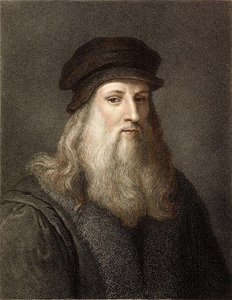
Leonardo Da Vinci
1452 - 1519 , Italia
Kort om kunstneren
- Artistic Movement Or Style: Høyrenessansen
- Artists Or Movements Influenced By This Artist: ['Renessansekunst']
- Artists Who Influenced This Artist: ['Andrea del Verrocchio']
- Date Of Birth: 15. april 1452
- Date Of Death: 2. mai 1519
- Full Name: Leonardo di ser Piero da Vinci
- Nationality: Italiensk
- Notable Artworks:
- Mona Lisa
- Nattverden
- Vitruviansk mann
- Place Of Birth: Vinci, Italia
Relaterte artikler
Leonardo da Vinci: A Renaissance Master’s Synthesis of Art, Science & Human Observation – Reinterpreted for the Collector
Explore Leonardo da Vinci’s timeless masterpieces with OriginalUniqueArt. Discover insights into his art, science, and legacy – trusted expertise for discerning collectors seeking authentic reproductions & investment opportunities.
Renessansens Menneskesyn: 10 Kunstverk som Definerte Epoken | OriginalUniqueArt
Opplev renessansens menneskesyn gjennom 10 ikoniske kunstverk! Leonardo da Vinci, Michelangelo & Botticelli. Historier, teknikker og tidløs skjønnhet. Finn museumskvalitets reproduksjoner på OriginalUniqueArt.com.

Louvrens 25 Mesterverk: Kunsthistorie til Ditt Hjem | OriginalUniqueArt
Opplev Louvrens 25 mest ikoniske kunstverk! Fra Mona Lisa til Venus de Milo – lær historien bak mesterklassikere og finn inspirasjon for ditt hjem. Eksklusive reproduksjoner av høy kvalitet på OriginalUniqueArt.com.
Galleria degli Uffizi: Topp 25 Kunstverk for Din Vegg – Historie & Inspirasjon
Opplev renessansens storhet! Utforsk de 25 mest ikoniske kunstverkene i Galleria degli Uffizi, Firenze – fra Botticelli til Leonardo da Vinci. Historier, teknikker & inspirasjon for ditt hjem. Finn museumskvalitets reproduksjoner på OriginalUniqueArt.com.
Leonardo da Vincis 25 Mesterverk: Kunst, Historie og Inspirasjon for Ditt Hjem
Oppdag Leonardo da Vincis 25 mest ikoniske kunstverk! Fordyp deg i renessansens mesterverk – fra Mona Lisa til Nattverden. Historie, teknikk og inspirasjon for ditt hjem. Finn museumskvalitets reproduksjoner på OriginalUniqueArt.com.