

 Se i rommet
 Del som digitalt kort
 Del
Del
 Detaljer
 Studentguide

 Last ned
 Liknende objekter
 Røntgen
 Lysbildefremvisning
 Besøksstatistikk
Untitled\n\nUntitled
 Ink
Ink- WallArt
- Constructivism
 1939
1939- Modern
 50.0 x 40.0 cm
 Museum of Fine Arts
 Les mer
Giclée / Kunsttrykk
Giclée- eller lerretsprint av museumskvalitet med rask produksjon og fleksible valgmuligheter for etterbehandling. ( Bestill håndmalt reproduksjon Gå til digitalt bilde)




P118B Nkr10

P118H Nkr10

P118W Nkr10

P438Z Nkr10

P508JH Nkr12

P508YH Nkr12

P805H Nkr10

P805Z Nkr10

P919BZ Nkr10

P919G Nkr10

P919XJ Nkr10

P959ZH Nkr10

P968JZ Nkr12

W106C Nkr8

W218G Nkr10

W218JH Nkr8

W218Y Nkr10

W307PJ Nkr10

W316G Nkr10

W316PJ Nkr8

W316Y Nkr10

W398PJ Nkr8

W4111J Nkr10

W500HY Nkr15

W500JH Nkr15

W692G Nkr12

W849H Nkr8

W940BG Nkr15

W953PJ Nkr8




Velg mellom våre forhåndsdefinerte størrelser som bevarer kunstverkets opprinnelige proporsjoner.

Skriv inn bredden og høyden du trenger, slik at den passer til din ramme eller vegg. Et trykk kan kun beskjæres, aldri gjøres større enn bildet, så et format med en annen form vil miste en del av motivet. Vi sender deg en digital mockup for godkjenning før vi trykker noe som helst. Bildet som vises på denne siden viser ikke den faktiske beskjæringen — det er kun mockuppen som gjør det.
Verdensomspennende levering () på 2 uker i stedet for standard 4/5 uker. (22 October)

Gratis ekspressfrakt over hele verden

Lerretsduk av høykvalitets lin

Full transportforsikring

Garanti for refusjon av toll og importavgifter

Garantert fargeekthet

100 dagers returrett ved fabrikasjonsfeil

100% pengene tilbake-garanti

Mengderabatt
 Glassalternativet er kun tilgjengelig i størrelser under 110 cm

Untitled\n\nUntitled
Giclée / Kunsttrykk
Format på reproduksjon
-


Totalpris
Nkr 755
A Symphony of Geometry: The Visionary Abstraction of László Moholy-Nagy
In the quiet, monochromatic depths of László Moholy-Nagy’s 1939 masterpiece, “Untitled,” one finds a profound dialogue between order and energy. This work is not merely an arrangement of shapes; it is a rhythmic composition that captures the very heartbeat of the Constructivist movement. At its core, the painting presents a commanding central circle, a celestial focal point around which smaller, orbiting forms dance in a delicate, cosmic ballet. A bold diagonal line slices through the canvas, acting as a dynamic catalyst that disrupts any sense of static stillness, injecting a surge of kinetic vitality into the composition. This interplay of intersecting lines and concentric circles creates a sense of spatial ambiguity, inviting the viewer to lose themselves in a world where gravity is replaced by pure geometric logic.
The brilliance of this piece lies in its chromatic minimalism. By eschewing the distraction of vibrant color, Moholy-Nagy directs our gaze toward the subtle nuances of light, shadow, and texture. The palette is a sophisticated study in grayscale, where varying shades of black, white, and silver create a sense of depth and atmospheric weight. This monochromatic approach allows the structural elements—the sharp edges of the lines and the soft curves of the circles—to resonate with greater clarity. For the discerning collector or interior designer, this restraint offers an unparalleled versatility; the artwork possesses a timeless elegance that can anchor a modern minimalist gallery or provide a sophisticated, intellectual focal point within a contemporary living space.
The Bauhaus Legacy and the Spirit of Modernity
To understand “Untitled,” one must look to the radical spirit of the Bauhaus school, where Moholy-Nagy served as a pivotal figure. This artwork embodies the era's revolutionary pursuit of integrating fine art with industrial design and technological progress. The painting reflects a period when artists sought to strip away the ornamental excesses of the past to find truth in fundamental forms. Every line and shape feels intentional, echoing the precision of an architect or the clarity of a typographer. There is an inherent sense of industrial optimism within these shapes—a belief that through rational organization and geometric harmony, one could reflect the structured beauty of the modern, machine-driven age.
Beyond its historical significance, the emotional impact of the work is deeply evocative. While the subject matter is purely abstract, it stirs a sense of profound equilibrium and cosmic order. The repetition of circular motifs can be seen as a symbol of continuity and the cyclical nature of existence, while the intersecting lines suggest the complex connections that bind our world together. For those seeking to bring a piece of art history into their homes, this reproduction offers more than just decoration; it provides an invitation to contemplate the intersection of human intellect and mathematical beauty. It is a work that does not demand attention through noise, but commands it through a silent, powerful, and enduring grace.
Spørsmål og svar
Hvilken fase av László Moholy-Nagy sin karriere tilhører "Untitled\n\nUntitled" (1939)?
"Untitled\n\nUntitled", skapt i 1939, tilhører Modern i László Moholy-Nagy sin karriere.
Hvilken atmosfære ville en reproduksjon av "Untitled\n\nUntitled" av László Moholy-Nagy tilføre et rom?
Den Modern atmosfæren i "Untitled\n\nUntitled" av László Moholy-Nagy passer perfekt til det anbefalte rommet: et Living Room.
Hvilke proporsjoner har "Untitled\n\nUntitled" av László Moholy-Nagy, og hva er målene?
Formatet på "Untitled\n\nUntitled" er Portrait, og originalen måler 50 x 40 cm. Begge deler er nyttige når man planlegger en reproduksjon.
Kunstnerbiografi
László Moholy-Nagy: En Pioner innen Moderne Kunst og Bauhaus
László Moholy-Nagy, født i 1895 i Bacs-Kajala, var en dypt innflytelsesrik ungarsk maler, fotograf, skulptør og designer. Han er best kjent for sine betydelige bidrag til Bauhaus-skolen og sin banebrydende arbeid innen konstruktivisme, typografi, fotografi og kinetisk kunst. Hans kunstneriske filosofi sentrert rundt å integrere teknologi og industri inn i kunsten, og han argumenterte for en ny visjon av kreativitet som omfavnet den moderne verden. Moholy-Nagy var et produkt av sin tid, preget av de store kulturelle endringene og politiske turbulensene i det første halve av 20. århundre.Tidlig Liv og Påvirkninger
Moholy-Nagys barndom ble tilbrakt i Bacsborsód, Ungarn, som sønn av en landgodseier. Hans familie var av jødisk bakgrunn, og han hadde en fetter som den berømte dirigenten Sir Georg Solti. Etter at hans far forlot familien, ble han vokst opp av sin tante, Guszti bácsi, en advokat. Denne tidlige omsorgen la grunnlaget for hans interesse for kunst og utdanning. Han studerte lov i Budapest, men ble raskt fascinert av den voksende avantgarde-bevegelsen som blomstret i Europa. Han deltok på "Ma"-tidsskriftet, et aktivistisk blad som fremmet radikale ideer, og ble eksponert for konstruktivisme og suprematisme gjennom tidsskrifter som "Jelenkor". Disse bevegelsene, med vekt på geometrisk abstraksjon og industrielle materialer, hadde en enorm innflytelse på hans kunstneriske utvikling. Robert Berény, en ungarsk fauvistkunstner, var en viktig mentor i de tidlige årene.Bauhaus-årene og "Ny Syn"
I 1923 ble Moholy-Nagy med i Bauhaus-skolen i Weimar, hvor han først underviste i den innledende kursen sammen med Josef Albers og senere erstattet Johannes Itten som leder av metallverkstaden. Hans ankomst markerte et skifte bort fra ekspresjonismen mot en mer konstruktivistisk og designorientert tilnærming, noe som stemte overens med skolens opprinnelige mål. Han introduserte ideen om "Ny Syn" (Neues Sehen), som argumenterte for at kameraet kunne avsløre aspekter av virkeligheten som var usynlige for det menneskelige øye. Dette konseptet lå til grunn for hans eksperimentelle fotografering og kunstneriske arbeid. Han utforsket nye måter å kombinere lys, form og bevegelse på, og forsøkte å skape en ny visuell språk. Moholy-Nagy var en ivrig utforsker av materialer og teknologi. Han brukte metall, plexiglass og elektrisk belysning i sine skulpturer og design, noe som gjenspeilte hans tro på at kunst og teknologi kunne utfylle hverandre. Han eksperimenterte med fotogrammer – bilder laget ved å plassere objekter direkte på lysfølsomt papir uten et kamera – og utviklet en unik tilnærming til fotografi.Kinetisk Kunst og Innovasjoner
En av Moholy-Nagys mest kjente bidrag er "Lichtrequisit einer elektrischen bühne" (Light-Space Modulator), som ble ferdigstilt i 1930. Denne kinetiske skulpturen brukte bevegelige deler og projisert lys for å skape dynamiske mønstre på omkringliggende overflater, noe som anses som en forgjenger for både kinetisk kunst og lyskunst. Han var også en pioner innen teaterscenografi og reklame design, og demonstrerte sin evne til å kombinere estetikk og funksjonalitet. Moholy-Nagy var en sterk forkjemper for utdanning og formidling av kunsten. Som lærer ved Bauhaus og senere ved New Bauhaus i Chicago, påvirket han generasjoner av kunstnere og designere. Hans visjon om å integrere teknologi og kunst fortsatte å inspirere kunstnere og fotografer til å utforske nye måter å se og representere verden på.Historisk Betydning
László Moholy-Nagy står som en sentral figur i 20. århundrets moderne kunst, og han brot mellom maleri, skulptur, fotografi og industriell design. Hans bidrag til Bauhaus-skolen var avgjørende for å forme dens læreplan og estetikk, og hans innflytelse spres over hele verden. Han argumenterte for at kunsten kunne være en kraft for sosial transformasjon, og han så på teknologi som et middel til å oppnå dette målet. Hans konsept om "Ny Syn" fortsetter å inspirere kunstnere og fotografer til å utforske mulighetene for persepsjon og representasjon gjennom innovative teknikker. Moholy-Nagy er en pioner innen moderne abstraksjon, og hans arbeid har satt et varig preg på kunstverdenen.
László Moholy-Nagy
1895 - 1946 , Ungarn
Kort om kunstneren
- Artistic Movement Or Style: Konstruktivisme, Bauhaus
- Artists Or Movements Influenced By This Artist: ['Bauhaus']
- Artists Who Influenced This Artist: ['Berény']
- Date Of Birth: 1895
- Date Of Death: 1946
- Full Name: László Moholy-Nagy
- Nationality: Ungarsk
- Notable Artworks:
- Lichtrequisit
- Flower
- Storm
- Place Of Birth: Bacs-Kajala, Ungarn
Relaterte artikler

Topp 10 mesterverk fra abstrakt ekspresjonisme – Kunst for ditt hjem | OriginalUniqueArt.no
Oppdag de 10 mest ikoniske verkene fra abstrakt ekspresjonisme! Lær historien bak Jackson Pollock, Mark Rothko og andre mestere. Finn kunsttrykk av høy kvalitet for ditt hjem på OriginalUniqueArt.com – museumskvalitet & inspirasjon.

Svart Kunst: Topp 10 Maler som Definerer Skyggenes Skjønnhet | OriginalUniqueArt.no
Utforsk 10 ikoniske malerier dominert av svart – fra Rembrandts skygger til Munchs ekspresjonisme. Oppdag historiene bak mesterverkene og finn kunsttrykk for ditt hjem på OriginalUniqueArt.no. Utforsk hele samlingen online!

Kandinskys 25 Mesterverk: En Reise i Abstrakt Kunst og Fargeharmoni | OriginalUniqueArt.no
Utforsk Wassily Kandinskys 25 mest ikoniske malerier! Oppdag historien bak abstrakt kunst, ekspresjonisme og fargeharmoni. Finn inspirasjon til interiøret – museumskvalitet reproduksjoner på OriginalUniqueArt.com.
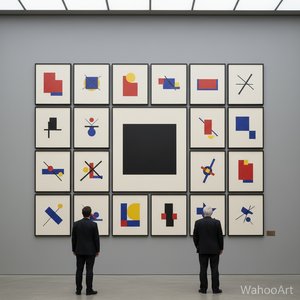
Kazimir Malevich' Top 25 Kunstverk: En Suprematistisk Reise for Din Vegg
Oppdag Kazimir Malevich' 25 mest ikoniske kunstverk! Fordyp deg i Suprematismens verden, fra det banebrytende 'Svart Kvadrat' til subtile fargepaletter. Finn din perfekte maleri reproduksjon og interiørinspirasjon på OriginalUniqueArt.com.

De 10 mest ikoniske malerier dominert av hvitt – Kunsthistorie og interiørinspirasjon
Utforsk de 10 mest ikoniske maleriene dominert av hvitt – fra Monet til Van Gogh. Lær historien bak disse mesterverkene og finn inspirasjon for ditt hjem. Museumskvalitet kunsttrykk på OriginalUniqueArt.com! Oppdag hele samlingen online.