Bestill maleri Kjøp digitalt bilde
 Send
Send
 Del med andre
 Vis detaljer
 Legg til i favoritter

 Last ned bildet
 Liknende objekter
 Røntgenundersøkelse
 Lysbildefremvisning
Pilot
 Acrylic On Canvas
- WallArt
- Cubism
 1913
1913- Modern
 13.0 x 10.0 cm
 Vis hele teksten
Giclée / Kunsttrykk
Giclée- eller lerretsprint av museumskvalitet med rask produksjon og fleksible valgmuligheter for etterbehandling.




P118B $10

P118H $10

P118W $10

P438Z $10

P508JH $12

P508YH $12

P805H $10

P805Z $10

P919BZ $10

P919G $10

P919XJ $10

P959ZH $10

P968JZ $12

W106C $8

W218G $10

W218JH $8

W218Y $10

W307PJ $10

W316G $10

W316PJ $8

W316Y $10

W398PJ $8

W4111J $10

W500HY $15

W500JH $15

W692G $12

W849H $8

W940BG $15

W953PJ $8




Velg mellom våre forhåndsdefinerte størrelser som bevarer kunstverkets opprinnelige proporsjoner.

Du kan oppgi egne mål for å tilpasse en spesifikk ramme eller et bestemt område. Dersom den valgte størrelsen ikke samsvarer med det originale bildets proporsjoner, vil vi enten beskjære kunstverket eller utvide bildet med en speilet eller ensfarget kant. En digital mockup vil bli sendt til din godkjenning før produksjonen starter.
Vennligst merk at forhåndsvisningen på skjermen ikke gjenspeiler den faktiske beskjæringen eller utvidelsen. Kun mockuppen vil vise den endelige komposisjonen nøyaktig.
Selv om tilpassede størrelser er tilgjengelige, anbefaler vi å velge et mål fra den forhåndsdefinerte listen for å bevare de originale proporsjonene.
Verdensomspennende levering () på 2 uker i stedet for standard 4/5 uker. (19 July)

Gratis ekspressfrakt over hele verden

Lerretsduk av høykvalitets lin

Full forsikring under transport

Garanti for refusjon av toll og importavgifter

Garantert korrekt fargegjengivelse

60 dagers returrett (kun ved feil)

100% pengene tilbake-garanti

Rabatt ved flere kjøp
 Glassalternativet er kun tilgjengelig i størrelser under 110 cm

Pilot
Giclée / Kunsttrykk
Størrelse på reproduksjon
-


Endelig pris
-
Beskrivelse av samleobjektet
A Glimpse into the Dawn of Abstraction: Kazimir Malevich’s ‘Pilot’ (1913)
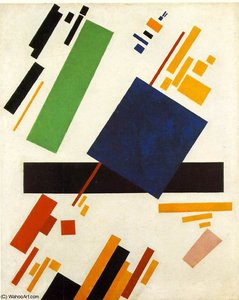
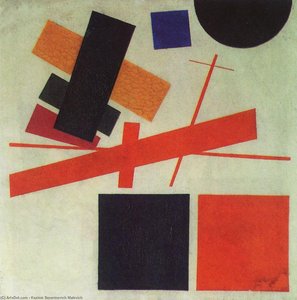
‘Pilot’ by Kazimir Malevich is not a depiction *of* something, but rather an exploration of seeing itself – a pivotal moment in art history where representation began to yield to pure feeling and geometric form. Executed in 1913, this small-scale (13 x 10 cm) work on paper serves as a crucial stepping stone towards Malevich’s groundbreaking Suprematist movement.Deconstructing Reality: Style & Technique
The artwork is a masterclass in analytical Cubism, pushing the boundaries of the style toward complete abstraction. Malevich meticulously renders a dynamic composition using graphite – likely pencil or charcoal – achieving remarkable textural depth through varying line weights and shading. The arrangement of triangles, circles, and rectangles isn’t arbitrary; they overlap and intersect, creating a fragmented spatial ambiguity that challenges traditional perspective. The precision of the lines and the deliberate use of negative space are hallmarks of Malevich's rigorous approach to form. This is not about *showing* an object, but about dissecting visual experience into its fundamental components.Historical Context: From Cubism to Suprematism
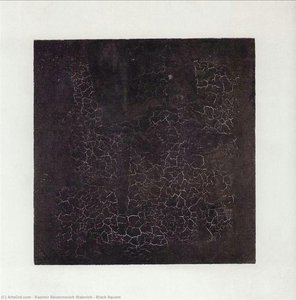
Born in Ukraine, Kazimir Malevich (1878-1935) absorbed a diverse range of influences – from folk art to Impressionism and Fauvism – before encountering Cubism during a transformative trip to Paris in 1912. However, he quickly moved beyond simply adopting existing styles. ‘Pilot’ represents this transitional phase; it demonstrates his engagement with Cubist principles but already hints at the radical simplification that would define Suprematism. Suprematism, which Malevich formally launched in 1915, sought to liberate art from any reference to the visible world, focusing instead on pure geometric shapes and their emotional resonance. This work is a vital precursor to iconic pieces like ‘Black Square’.Symbolism & Emotional Impact
While seemingly devoid of subject matter, ‘Pilot’ isn't entirely without meaning. The title itself suggests movement and exploration – perhaps alluding to the artist’s own journey toward new artistic territories. The fragmented forms can be interpreted as representing the breakdown of traditional ways of seeing, a rejection of representational accuracy in favor of a more intuitive, spiritual approach to art. The work evokes a sense of intellectual complexity and quiet contemplation. It's not an artwork designed to offer easy answers but rather to provoke questions about the nature of perception and the possibilities of abstract expression.Collecting & Interior Design
‘Pilot’ is a significant piece for collectors interested in early 20th-century avant-garde art and the development of abstraction. Its monochrome palette and geometric composition make it surprisingly versatile for interior design.- It complements modern and minimalist spaces, adding a touch of historical depth.
- Its small size makes it ideal for intimate settings or as part of a curated gallery wall.
- A high-quality reproduction captures the textural nuances and dynamic energy of the original, bringing a piece of art history into your home or office.
Om kunstneren
Kazimir Malevich: A Pioneer of Abstract Art
Kazimir Severinovich Malevich (1878-1935) stands as a monumental figure in the history of art, recognized globally for his groundbreaking contribution to Suprematism – an artistic movement that fundamentally reshaped perceptions of visual expression. Born in Kyiv Oblast, Ukraine, Malevich’s formative years were steeped in Ukrainian folklore and rural traditions, shaping his initial artistic sensibilities before he embarked on a transformative journey toward Moscow and engagement with the burgeoning avant-garde currents of Europe. Early Artistic Explorations: Before establishing Suprematism, Malevich honed his skills across diverse styles—Impressionism, Symbolism, Fauvism, and Cubism—demonstrating an intellectual curiosity that propelled him beyond conventional artistic boundaries. A pivotal visit to Paris in 1912 served as a catalyst, exposing him to the revolutionary ideas circulating within European art circles and solidifying his desire for innovation. He meticulously studied the works of Cézanne, Picasso, Matisse, and Kandinsky—artists who challenged traditional representation and championed expressive color palettes. The Birth of Suprematism: Around 1915, Malevich decisively rejected representational imagery altogether, initiating Suprematism – a movement predicated on “the supremacy of pure feeling” in art. Rejecting any illusionistic depiction of the external world, Suprematists prioritized fundamental geometric forms—squares, circles, and rectangles—as vehicles for conveying emotion and intellect. This radical stance stemmed from Malevich’s conviction that art should transcend subjective experience and communicate universal truths through abstract symbols. He famously declared: “Art must be disinterested.” Iconic Works & Theoretical Contributions: Malevich's oeuvre cemented his legacy with masterpieces like *Black Square* (1915), arguably the most influential painting of the era, which embodies the movement’s core tenets—simplicity, geometric purity, and uncompromising conceptual rigor. Similarly, *White on White* (1918) – a series exploring the essence of form and color—became synonymous with Suprematism's quest for absolute abstraction. Beyond his visual creations, Malevich penned seminal treatises on art theory, articulating the philosophical underpinnings of Suprematism and advocating for an artistic consciousness liberated from illusionistic conventions. His writings profoundly impacted subsequent generations of artists and thinkers alike. Political Context & Later Career: The political landscape of Russia during Malevich’s lifetime dramatically altered his trajectory. Initially lauded as a visionary innovator by Vladimir Lenin and the Bolshevik government, he faced increasing scrutiny and repression under Stalin—a period marked by censorship and artistic persecution. Despite these challenges, Malevich persisted in his artistic practice and teaching, striving to synthesize his abstract principles with figurative representations while maintaining unwavering fidelity to his core aesthetic convictions. Legacy & Enduring Influence: Kazimir Malevich’s impact on 20th-century art remains undeniable. His uncompromising pursuit of pure abstraction paved the way for movements like Minimalism and Constructivism—influencing artists globally who embraced geometric forms and conceptual rigor as tools for artistic expression. He stands as a testament to the transformative power of artistic vision and continues to inspire contemplation about the fundamental nature of visual language, securing his place among the most significant figures in modern art history.
Kazimir Malevich
1878 - 1935 , Ukraina
Kort om kunstneren
- Artistic Movement Or Style: Suprematisme, Abstrakt kunst
- Artists Or Movements Influenced By This Artist:
- Minimalisme
- Konstruktivisme
- El Lissitzky
- Artists Who Influenced This Artist:
- Impressionisme
- Fauvisme
- Cubisme
- Date Of Birth: 1878
- Date Of Death: 1935
- Full Name: Kazimir Severinovich Malevich
- Nationality: Ukrainsk/Russisk
- Notable Artworks:
- Svart sirkel
- Komposisjon
- White on White
- Place Of Birth: Kyiv, Ukraina
Relaterte artikler

Geometrisk Abstraksjon: Topp 10 Mesterverk for Kunstelskere – OriginalUniqueArt.com
Utforsk de 10 mest innflytelsesrike verkene innen geometrisk abstraksjon! Oppdag historiene bak Mondrian, Kandinsky og Malevich. Finn inspirasjon til interiøret med OriginalUniqueArt.coms eksklusive reproduksjoner – museumskvalitet for ditt hjem. Utforsk samlingen online!

Beyond Form & Color: Geometric Abstraction's Evolution in 20th/21st Century Art
Explore the evolution of geometric abstraction from Cubism to contemporary art. Discover key artists like Malevich & Mondrian, investment insights, and expert collecting advice at OriginalUniqueArt.
Kazimir Malevich' Top 25 Kunstverk: En Suprematistisk Reise for Din Vegg
Oppdag Kazimir Malevich' 25 mest ikoniske kunstverk! Fordyp deg i Suprematismens verden, fra det banebrytende 'Svart Kvadrat' til subtile fargepaletter. Finn din perfekte maleri reproduksjon og interiørinspirasjon på OriginalUniqueArt.com.
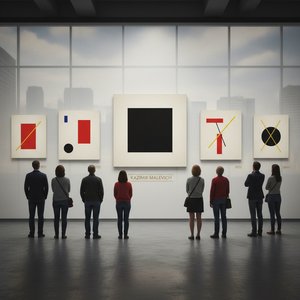
Kazimir Malevich: Pioneering Suprematism & the Quest for Non-Objective Art
Explore the revolutionary art of Kazimir Malevich & his groundbreaking Suprematism movement. Discover the origins, core principles, and lasting impact of this pivotal force in modern abstract painting.

Nyansenes Harmoni: Svart, Hvitt og Grå Abstraksjoner i Interiørdesign – En Guide for Hotelldesignere
Utforsk kraften i monokrom interiørdesign! Denne guiden for hotelldesignere dykker ned i ekspresjonisme, tekstur og lyssetting for å skape elegante rom. Få ekspertråd og inspirasjon.