
 Forhåndsvisning
 Send
Send Del
Del
 Vis detaljer
 Utskriftsvennlig guide

 Last ned bilde
 Liknende objekter
 Røntgenundersøkelse
 Lysbildefremvisning
 Spørsmål og svar
 Statistikk
Demon


 Vis hele teksten
Giclée / Kunsttrykk
Giclée- eller lerretsprint av museumskvalitet med rask produksjon og fleksible valgmuligheter for etterbehandling. ( Kjøp håndmalt maleri Bytt til digitalt bilde)




P118B Nkr10

P118H Nkr10

P118W Nkr10

P438Z Nkr10

P508JH Nkr12

P508YH Nkr12

P805H Nkr10

P805Z Nkr10

P919BZ Nkr10

P919G Nkr10

P919XJ Nkr10

P959ZH Nkr10

P968JZ Nkr12

W106C Nkr8

W218G Nkr10

W218JH Nkr8

W218Y Nkr10

W307PJ Nkr10

W316G Nkr10

W316PJ Nkr8

W316Y Nkr10

W398PJ Nkr8

W4111J Nkr10

W500HY Nkr15

W500JH Nkr15

W692G Nkr12

W849H Nkr8

W940BG Nkr15

W953PJ Nkr8




Velg mellom våre forhåndsdefinerte størrelser som bevarer kunstverkets opprinnelige proporsjoner.

Skriv inn ønsket bredde og høyde for å tilpasse trykket til din ramme eller vegg. Et trykk kan kun beskjæres, aldri skaleres opp utover motivets opprinnelige størrelse, noe som betyr at et format med andre proporsjoner vil føre til tap av deler av bildet. Vi sender deg en digital mockup for godkjenning før vi starter trykkeprosessen. Bildet som vises på denne siden viser ikke den faktiske beskjæringen — det er kun mockuppen som viser dette.
Verdensomspennende levering () på 2 uker i stedet for standard 4/5 uker. (5 November)

Gratis ekspressfrakt over hele verden

Lerretsduk av lin av høy kvalitet

Full transportforsikring

Garanti for refusjon av toll og importavgifter

Garantert fargegjengivelse

100 dagers returrett ved fabrikasjonsfeil

100% pengene tilbake-garanti

Rabatt ved flere kjøp
 Glassalternativet er kun tilgjengelig i størrelser under 110 cm

Demon
Giclée / Kunsttrykk
Størrelse på reproduksjon
-


Totalpris for valgte alternativer
Nkr 774
A Stark Vision of the Unseen: Kazimir Malevich's 'Demon'
Kazimir Malevich’s 1914 painting, “Demon,” is not merely a depiction of a monstrous figure; it’s a visceral exploration of primal fear and the unsettling power of suggestion. Rendered in a deceptively simple style—bold black outlines against a bleached-white backdrop—the artwork immediately commands attention with its raw intensity. This isn't the polished, idealized representation of art history; instead, we encounter a world stripped bare to its essential elements, echoing the nascent principles of Suprematism and hinting at the anxieties simmering beneath the surface of early 20th-century Europe.
The composition is dominated by the central demon itself. Its elongated form, with disproportionately large head, pointed ears, and a gaping mouth, evokes a sense of grotesque power. Malevich’s deliberate use of thick black lines doesn't simply define the figure; they pulsate with energy, creating an immediate and unsettling visual impact. The simplification of features—the vacant eyes, the sharp angles—heightens the feeling of otherworldliness, as if we are glimpsing a being from beyond our comprehension. Crucially, the painting’s stark palette – primarily black and off-white – amplifies this effect, creating an atmosphere of profound isolation and dread.
The Language of Symbols: Cyrillic Text and Spiritual Weight
What initially appears as a minimalist composition is profoundly enriched by the dense field of Cyrillic text that dominates the right side of the canvas. This isn’t mere decoration; it's integral to understanding the artwork’s meaning. While the exact translation remains debated, scholars believe this incantation or narrative likely served as a key to unlocking the demon’s nature and purpose within Malevich’s artistic vision. The inclusion of text adds layers of mystery, suggesting a connection between the visual image and a deeper spiritual or occult context – reflecting the prevalent interest in mysticism and the supernatural during that period.
The choice of Cyrillic script is particularly significant given Malevich's Ukrainian heritage and the painting’s creation during a time of shifting national identities. It subtly connects the artwork to Eastern European folklore and traditions, hinting at ancient beliefs surrounding demons and spirits. The text acts as a conduit, inviting the viewer to actively participate in deciphering the demon’s story – transforming the image from a static representation into an interactive experience.
Roots in Expressionism and the Dawn of Suprematism
“Demon” sits at a fascinating crossroads within art history. While undeniably influenced by the raw emotionality of Expressionism—evident in its distorted forms and unsettling subject matter—it also anticipates the revolutionary principles of Suprematism, which Malevich would later fully develop. The painting’s emphasis on pure form, reduced to its essential elements, foreshadows his later explorations of geometric abstraction. Malevich's early exposure to folk art, combined with a desire for modern expression, formed the foundation of his unique style. This piece demonstrates that journey—a deliberate move away from representational forms towards a purely abstract and spiritual realm.
Considering Malevich’s biography – born in Kyiv Oblast, Ukraine – adds another layer of complexity to the work. The painting can be viewed as a reflection on the anxieties and uncertainties of a nation undergoing rapid change and grappling with its identity. The demon, therefore, becomes not just a supernatural entity but also a symbol of internal conflict and the darker aspects of human nature.
A Legacy of Shadow and Form
“Demon” is more than simply a depiction of a frightening figure; it’s a profound meditation on fear, spirituality, and the power of visual language. Reproductions of this artwork offer a unique opportunity to experience Malevich's groundbreaking vision – a stark reminder that art can be both unsettling and deeply evocative. Its enduring appeal lies in its ability to tap into our primal anxieties while simultaneously pushing the boundaries of artistic expression.
Spørsmål og svar
Hvilken stemning formidler "Demon" av Kazimir Malevich?
"Demon" er forbundet med en Mysterious følelse. Den emosjonelle tonen beskriver inntrykket verket gir.
Hvor stor er kontrasten i "Demon" av Kazimir Malevich?
Lys-mørke-kontrasten i "Demon" er registrert som Statement. Kontrast beskriver hvor sterkt lyse og mørke områder skiller seg fra hverandre.
Er fargene i "Demon" av Kazimir Malevich mettede eller dempede?
Fargene i "Demon" av Kazimir Malevich har en Muted metning. Metning beskriver hvor levende eller dempede fargene er.
Om kunstneren
Kazimir Malevich: En pioner innen abstrakt kunst
Tidlig liv og påvirkninger
- Født i Kyiv-regionen i Ukraina i 1878 inn i en polsk familie, ble Kazimir Severinovich Malevichs tidlige år formet av det ukrainske kulturlandskapet og dets rike folkekultur.
- Hans oppvekst ga ham en dyp verdsettelse for tradisjonelle kunstneriske uttrykk, noe som senere skulle prege hans verk på en subtil måtermåte.
- Den formelle utdannelsen startet i Kyiv, men Malevich søkte raskt bredere kunstneriske horisonter ved å bevege seg mot Moskva, hvor han til slutt ble en del av de fremvoksende avantgarde-bevegelsene i Europa.
- Viktige påvirkninger: Tidlig eksponering for folkekunst, kombinert med et ønske om moderne uttrykk, la selve fundamentet for hans unike stil.
Kunstnerisk utvikling og sentrale bevegelser
- I begynnelsen utforsket Malevich ulike stiler, inkludert impresjonisme, symbolisme, fauvisme og kubisme. En avgjørende reise til Paris i 1912 eksponerte ham for de nyeste utviklingene innen europeisk kunst.
- Han beveget seg gradvis bort fra representative former, i søken etter et rent kunstnerisk språk basert på geometriske former og farge.
- Dette førte til utviklingen av suprematisme rundt 1915 – en abstrakt bevegelse fokusert på «det rene følelsens overlegenhet» i kunsten.
- Suprematismen forkastet ethvert forsøk på å avbilde objekter fra den synlige verden, og prioriterte i stedet grunnleggende geometriske former som kvadrater, sirkler og rektangler.
Store bragder og bemerkelsesverdige verk
- Svart kvadrat (1915): Hans kanskje mest berømte verk, som representerer et radikalt brudd med tradisjonell kunst og regnes som et grunnleggende stykke innen abstrakt maleri.
- Hvit på hvit (1918): En serie som utforsker formens og fargens renhet, med hvite geometriske former mot en hvit bakgrunn – noe som presset abstraksjonen til dens ytterste grenser.
- Stroyuschiysya dom [Hus under konstruksjon] (1916): Et tidlig eksempel på suprematisme som viser hans unike perspektiv på ukrainsk kultur gjennom abstrakte former.
- Han skrev også omfattende om kunstteori, hvor han artikulerte de filosofiske prinsippene bak suprematismen og argumenterte for en ny kunstnerisk bevissthet.
Historisk betydning og ettermæle
- Malevichs arbeid hadde en dyp innvirkning på utviklingen av det 20. århundrets abstrakte kunst, og påvirket bevegelser som minimalisme og konstruktivisme.
- Han utfordret konvensjonelle forestillinger om representasjon og banet vei for ikke-objektiv kunst.
- Hans ideer om ren følelse og geometrisk abstraksjon fortsetter å resonnere hos kunstnere den dag i dag.
- Til tross for politisk forfølgelse under Stalin – hvor han først ble støttet, men deretter undertrykt – holdt Malevich ut i sin kunstneriske praksiv og undervisning.
- Innflytelse på senere kunstnere: Han påvirket direkte kunstnere som El Lissitzky og formet indirekte utallige andre gjennom suprematismens varige arv.
Siste år og død
- I sine senere år vendte Malevich tilbake til figurativt maleri, i et forsøk på å syntetisere sine abstrakte prinsipper med representative former.
- Han fortsatte å undervise og skrive om kunst helt frem til sin død i Leningrad (nå St. Petersburg) i 1935.
- Hans arbeid forble relativt ukjent i flere tiår etter hans død, men opplevde en renessanse i andre halvdel av det 20. århundre, noe som sementerte hans plass som en av de viktigste skikkelsene i moderne kunsthistorie.

Kazimir Malevich
1878 - 1935 , Ukraina
Kort om kunstneren
- Artistic Movement Or Style: Suprematisme, Abstrakt kunst
- Artists Or Movements Influenced By This Artist:
- Minimalisme
- Konstruktivisme
- El Lissitzky
- Artists Who Influenced This Artist:
- Impressionisme
- Fauvisme
- Cubisme
- Date Of Birth: 1878
- Date Of Death: 1935
- Full Name: Kazimir Severinovich Malevich
- Nationality: Ukrainsk/Russisk
- Notable Artworks:
- Svart sirkel
- Komposisjon
- White on White
- Place Of Birth: Kyiv, Ukraina
Relaterte artikler

Kazimir Malevich' Top 25 Kunstverk: En Suprematistisk Reise for Din Vegg
Oppdag Kazimir Malevich' 25 mest ikoniske kunstverk! Fordyp deg i Suprematismens verden, fra det banebrytende 'Svart Kvadrat' til subtile fargepaletter. Finn din perfekte maleri reproduksjon og interiørinspirasjon på OriginalUniqueArt.com.

Geometrisk Abstraksjon: Topp 10 Mesterverk for Kunstelskere – OriginalUniqueArt.com
Utforsk de 10 mest innflytelsesrike verkene innen geometrisk abstraksjon! Oppdag historiene bak Mondrian, Kandinsky og Malevich. Finn inspirasjon til interiøret med OriginalUniqueArt.coms eksklusive reproduksjoner – museumskvalitet for ditt hjem. Utforsk samlingen online!

Kandinskys 25 Mesterverk: En Reise i Abstrakt Kunst og Fargeharmoni | OriginalUniqueArt.no
Utforsk Wassily Kandinskys 25 mest ikoniske malerier! Oppdag historien bak abstrakt kunst, ekspresjonisme og fargeharmoni. Finn inspirasjon til interiøret – museumskvalitet reproduksjoner på OriginalUniqueArt.com.

Topp 10 mesterverk fra abstrakt ekspresjonisme – Kunst for ditt hjem | OriginalUniqueArt.no
Oppdag de 10 mest ikoniske verkene fra abstrakt ekspresjonisme! Lær historien bak Jackson Pollock, Mark Rothko og andre mestere. Finn kunsttrykk av høy kvalitet for ditt hjem på OriginalUniqueArt.com – museumskvalitet & inspirasjon.
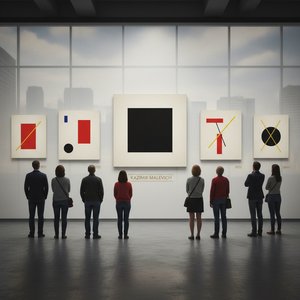
Kazimir Malevich: Pioneering Suprematism & the Quest for Non-Objective Art
Explore the revolutionary art of Kazimir Malevich & his groundbreaking Suprematism movement. Discover the origins, core principles, and lasting impact of this pivotal force in modern abstract painting.


