
 Forhåndsvisning
 Send
Send Del
Del
 Vis detaljer
 Utskriftsvennlig guide

 Last ned bilde
 Liknende objekter
 Røntgenundersøkelse
 Lysbildefremvisning
 Spørsmål og svar
 Statistikk
Päsesick-Kaskutäu

- 23.0 x 30.0 cm


 Vis hele teksten
Giclée / Kunsttrykk
Giclée- eller lerretsprint av museumskvalitet med rask produksjon og fleksible valgmuligheter for etterbehandling. ( Kjøp håndmalt maleri Bytt til digitalt bilde)




P118B Nkr10

P118H Nkr10

P118W Nkr10

P438Z Nkr10

P508JH Nkr12

P508YH Nkr12

P805H Nkr10

P805Z Nkr10

P919BZ Nkr10

P919G Nkr10

P919XJ Nkr10

P959ZH Nkr10

P968JZ Nkr12

W106C Nkr8

W218G Nkr10

W218JH Nkr8

W218Y Nkr10

W307PJ Nkr10

W316G Nkr10

W316PJ Nkr8

W316Y Nkr10

W398PJ Nkr8

W4111J Nkr10

W500HY Nkr15

W500JH Nkr15

W692G Nkr12

W849H Nkr8

W940BG Nkr15

W953PJ Nkr8




Velg mellom våre forhåndsdefinerte størrelser som bevarer kunstverkets opprinnelige proporsjoner.

Skriv inn ønsket bredde og høyde for å tilpasse trykket til din ramme eller vegg. Et trykk kan kun beskjæres, aldri skaleres opp utover motivets opprinnelige størrelse, noe som betyr at et format med andre proporsjoner vil føre til tap av deler av bildet. Vi sender deg en digital mockup for godkjenning før vi starter trykkeprosessen. Bildet som vises på denne siden viser ikke den faktiske beskjæringen — det er kun mockuppen som viser dette.
Verdensomspennende levering () på 2 uker i stedet for standard 4/5 uker. (8 November)

Gratis ekspressfrakt over hele verden

Lerretsduk av lin av høy kvalitet

Full transportforsikring

Garanti for refusjon av toll og importavgifter

Garantert fargegjengivelse

100 dagers returrett ved fabrikasjonsfeil

100% pengene tilbake-garanti

Rabatt ved flere kjøp
 Glassalternativet er kun tilgjengelig i størrelser under 110 cm

Päsesick-Kaskutäu
Giclée / Kunsttrykk
Størrelse på reproduksjon
-


Totalpris for valgte alternativer
Nkr 775
The Enigmatic Figure of Päsesick-Kaskutäu
Karl Bodmer’s “Päsesick-Kaskutäu” isn't merely a portrait; it’s a meticulously rendered snapshot of a fleeting moment in the vast, untamed landscape of 19th-century North America. Painted in 1833 during Prince Maximilian zu Wied-Neuwied’s expedition along the Missouri River, the image captures an Assiniboine man – identified as Päsesick-Kaskutäu – standing atop a windswept hill, rifle in hand, against a dramatic backdrop of towering mountains. The painting immediately draws the viewer into a scene brimming with both stoic resilience and quiet contemplation. Bodmer’s skill lies not just in his technical proficiency but in his ability to imbue this single figure with an almost palpable sense of history and cultural significance.
A Chronicle of the Maximilian Expedition
The context surrounding “Päsesick-Kaskutäu” is crucial to understanding its profound impact. Prince Maximilian’s expedition, a grand undertaking funded by the German aristocracy, aimed to document the natural history and indigenous cultures of the American West. Bodmer was tasked with visually recording this journey, creating a series of watercolors, drawings, and later, lithographs that would serve as a lasting testament to the era. The painting reflects the meticulous approach of the expedition – every detail, from the man’s weathered clothing to the rugged terrain, is rendered with painstaking accuracy. It's important to note that Bodmer wasn’t simply an observer; he was actively engaged in building relationships with the Native American tribes they encountered, fostering a degree of trust and respect that allowed him to capture authentic representations of their lives.
The title itself, “Päsesick-Kaskutäu,” offers a tantalizing glimpse into the complexities of communication between cultures. It’s likely a name given by the Assiniboine people, reflecting their own linguistic and cultural framework – a reminder that Bodmer's work is not just a European interpretation but a dialogue across vastly different worlds.
Technique and Artistic Style
Bodmer’s artistic style is characterized by a remarkable blend of realism and Romanticism. His watercolors, executed on paper, possess a luminous quality, capturing the play of light and shadow with exquisite sensitivity. The use of graphite adds depth and texture to the landscape, emphasizing its scale and grandeur. The composition is carefully balanced, drawing the eye towards the central figure while simultaneously immersing the viewer in the vastness of the surrounding wilderness. Notice the subtle details – the folds of the man’s clothing, the glint of sunlight on his rifle, the intricate patterns of the mountains – all contribute to a sense of immediacy and realism.
The painting's palette is restrained yet evocative, dominated by earthy tones—ochres, browns, and grays—that mirror the colors of the landscape. This muted color scheme reinforces the feeling of ruggedness and timelessness, suggesting that this scene could have unfolded centuries ago.
Symbolism and Emotional Resonance
“Päsesick-Kaskutäu” transcends a simple portrait; it embodies themes of exploration, cultural encounter, and the enduring spirit of the American West. The man’s posture – upright, alert, yet seemingly contemplative—suggests both resilience and wisdom. He is not merely a hunter or warrior but a representative of his people, standing as a silent witness to the changing landscape. The painting invites us to reflect on the complexities of westward expansion, the impact of European contact on indigenous cultures, and the enduring beauty of the natural world. It’s a poignant reminder of a pivotal moment in American history—a moment captured with remarkable artistry and lasting significance.
Spørsmål og svar
Hvor kan jeg laste ned "Päsesick-Kaskutäu" av Karl Bodmer?
Nedlasting er tilgjengelig for "Päsesick-Kaskutäu": kunstverkets Last ned digitalt bilde-side tilbyr nedlasting av et digitalt bilde i høy oppløsning.
Hvilken palett og hvilken dominerende farge definerer "Päsesick-Kaskutäu"?
Fargeidentiteten til "Päsesick-Kaskutäu" av Karl Bodmer: en Neutrals-palett, dominert av Putty (#e6e2d4).
Hvordan kan jeg forhåndsvise en reproduksjon av "Päsesick-Kaskutäu" av Karl Bodmer?
En forhåndsvisning av "Päsesick-Kaskutäu" av Karl Bodmer er tilgjengelig på kunstverkets Se kunstverket i et rom-side.
Om kunstneren
A Swiss Eye on the American West: The Life and Art of Karl Bodmer
Johann Carl Bodmer, a name perhaps less familiar than some of his contemporaries, nevertheless holds a unique place in art history – as a chronicler of the vanishing world of the North American Plains. Born in Zurich, Switzerland, in 1809, Bodmer’s life was inextricably linked to adventure and observation, culminating in an extraordinary artistic legacy that continues to resonate today. His early years were steeped in the traditions of his family; his uncle, Johann Jakob Meier, a respected engraver, provided him with a foundational education in draftsmanship, instilling within him a meticulous eye for detail and a profound understanding of visual representation. Initially gaining recognition for his picturesque views of the Rhine and Moselle valleys – meticulously etched and published as popular tourist prints – Bodmer’s talent quickly caught the attention of Prince Maximilian zu Wied-Neuwied, a German aristocrat driven by both scientific curiosity and a romantic fascination with the unexplored West. This encounter would irrevocably alter the course of Bodmer's career, propelling him on an expedition that would forever link his name to the dramatic landscapes and indigenous cultures of the American frontier.Journey to the Missouri: Documenting a Vanishing World
In 1832, Bodmer joined Prince Maximilian on a daring expedition up the Missouri River – a journey undertaken with the ambitious goal of documenting the Native American tribes and landscapes of the American West. This was not merely an artistic commission; it represented a significant scientific endeavor, and Bodmer’s role extended far beyond that of a simple illustrator. He became a visual chronicler, tasked with capturing the essence of a world rapidly transforming under the pressures of westward expansion. For two years, he meticulously recorded his observations in over 400 drawings and watercolors, depicting everything from sweeping vistas of rolling plains to intimate portraits of individuals belonging to tribes such as the Mandan, Hidatsa, Sioux, and Blackfeet. His work stands apart for its remarkable accuracy and sensitivity – a testament to his ability to observe not just with his eyes but also with an understanding of cultural context. He didn’t simply portray these people as exotic subjects; he sought to understand their lives, customs, and beliefs, striving to represent them with respect and dignity. The harsh realities of frontier life – disease, conflict, and the inevitable disruption caused by European encroachment – are subtly woven into his artistic record, lending a poignant weight to his visual documentation. Päsesick-Kaskutäu, a delicate watercolor capturing the likeness of a young Hidatsa man, exemplifies Bodmer’s ability to convey both physical detail and psychological depth—a subtle awareness of the individual within the larger cultural context.Artistic Style and Influences: Romanticism Meets Ethnography
Bodmer's artistic style is deeply rooted in the Romantic tradition – characterized by an emphasis on emotion, individualism, and a profound reverence for nature. However, his work transcends mere aesthetic beauty; it’s infused with a keen ethnographic sensibility. He wasn’t simply painting landscapes or portraits—he was creating visual documents of cultures facing imminent transformation. His compositions often feature carefully observed details of clothing, tools, and ceremonial objects – providing invaluable insights into the material culture of these tribes. The influence of earlier landscape painters like Caspar David Friedrich is evident in his dramatic skies and evocative use of light and shadow, while his portraiture reveals a sensitivity to human expression reminiscent of artists such as Jean-Auguste-Dominique Ingres. The combination of Romantic aesthetics with ethnographic precision makes Bodmer’s work truly unique – a testament to his ability to synthesize diverse artistic influences into a singular, compelling vision. He skillfully balanced artistic license with scientific accuracy, creating images that are both visually arresting and historically significant.The Expedition and its Legacy
The expedition up the Missouri River was fraught with challenges—from treacherous river currents and harsh weather conditions to encounters with hostile tribes. The winter spent at Fort Clark, enduring a brutal cold and facing the threat of attack by Blackfeet warriors, proved particularly difficult. Despite these hardships, Bodmer continued his work diligently, producing an astonishing number of drawings and watercolors that offer unparalleled glimpses into the lives of the Plains Indians. It’s important to note that Bodmer's work was initially met with limited acclaim; the lavishly illustrated book produced after the expedition – *Travels in the Interior of North America* – failed to achieve commercial success, largely due to its high price and the prevailing skepticism towards ethnographic representations at the time. Nevertheless, Bodmer’s artistic legacy endured, and his images gradually gained recognition as invaluable historical documents—testaments to a culture on the brink of disappearing.A Lasting Impact
Today, Karl Bodmer's paintings and watercolors are celebrated not only for their aesthetic beauty but also for their historical significance. Museums around the world – including the Joslyn Art Museum in Omaha and collections in Switzerland – proudly display his work, ensuring that his legacy endures as a vital record of the North American Plains and its indigenous peoples. His images offer a poignant reminder of a vanishing way of life—a testament to the power of art to document, preserve, and illuminate the human experience. Bodmer’s meticulous attention to detail and artistic skill continue to inspire artists and scholars alike, solidifying his place as one of the most important chroniclers of the American West.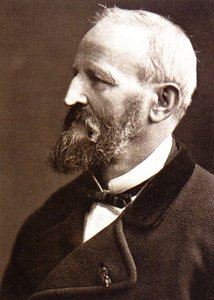
Karl Bodmer
1809 - 1893 , Sveits
Kort om kunstneren
- Artistic Movement Or Style: Romantikk
- Artists Or Movements Influenced By This Artist: ['Jean-Auguste-Dominique Ingres']
- Artists Who Influenced This Artist: ['Caspar David Friedrich']
- Date Of Birth: 1809
- Date Of Death: 1893
- Full Name: Karl Bodmer
- Nationality: Sveitsisk
- Notable Artworks:
- Päsesick-Kaskutäu
- Island av Schwanau
- Place Of Birth: Zürich, Sveits
Relaterte artikler
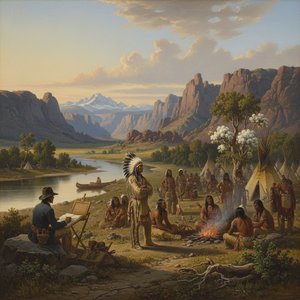
Karl Bodmer: Capturing Indigenous Life & Landscapes of the American West
Explore the captivating art of Karl Bodmer, whose detailed paintings documented Indigenous life along the Missouri River in the 19th century. Discover his legacy and lasting impact on Western art history.

Ephemeral Visions: Exploring the Artistic Legacy & Nuances of Watercolor Painting
Explore the captivating world of watercolor painting! Discover its rich history, essential techniques, influential artists & collecting tips from art experts. A comprehensive guide for enthusiasts.

De 10 mest ikoniske akvarellmesterverkene som revolusjonerte kunsten | OriginalUniqueArt.no
Oppdag de 10 mest legendariske akvarellmesterverkene av kunstnere som Turner, Monet & Goya. Lær om historien bak ikoniske malerier og finn inspirasjon til interiørdesign. Museumskvalitet reproduksjoner på OriginalUniqueArt.no – utforsk samlingen online!

Ephemeral Visions: Exploring the History & Emotional Resonance of Watercolor Painting
Explore the captivating history of watercolor painting, from ancient techniques to modern masters like Kandinsky & Blake. Discover essential artists, collecting tips & the emotional power of this luminous medium. Expert insights for art enthusiasts.

Ephemeral Visions: Exploring the Artistic Legacy & Contemporary Practice of Watercolor Painting
Explore the captivating world of watercolor painting! Discover its rich history, essential techniques, influential artists & collecting tips. A comprehensive guide for art enthusiasts from OriginalUniqueArt.