- Forsiden

- Trykk på lerret
- jules alexandre grun
- Albert Besnard

 Forhåndsvisning
 Send
Send Del med andre
 Vis detaljer

 Last ned bildet
 Liknende objekter
 Røntgenundersøkelse
 Lysbildefremvisning
Albert Besnard

 Vis hele teksten
Giclée / Kunsttrykk
Giclée- eller lerretsprint av museumskvalitet med rask produksjon og fleksible valgmuligheter for etterbehandling. ( Bytt til håndmalt maleri Bytt til bilde)




































Velg mellom våre forhåndsdefinerte størrelser som bevarer kunstverkets opprinnelige proporsjoner.

Du kan oppgi egne mål for å tilpasse en spesifikk ramme eller et bestemt område. Dersom den valgte størrelsen ikke samsvarer med det originale bildets proporsjoner, vil vi enten beskjære kunstverket eller utvide bildet med en speilet eller ensfarget kant. En digital mockup vil bli sendt til din godkjenning før produksjonen starter.
Vennligst merk at forhåndsvisningen på skjermen ikke gjenspeiler den faktiske beskjæringen eller utvidelsen. Kun mockuppen vil vise den endelige komposisjonen nøyaktig.
Selv om tilpassede størrelser er tilgjengelige, anbefaler vi å velge et mål fra den forhåndsdefinerte listen for å bevare de originale proporsjonene.
Verdensomspennende levering () på 2 uker i stedet for standard 4/5 uker. (4 August)

Gratis ekspressfrakt over hele verden

Lerretsduk av høykvalitets lin

Full forsikring under transport

Garanti for refusjon av toll og importavgifter

Garantert korrekt fargegjengivelse

60 dagers returrett (kun ved feil)

100% pengene tilbake-garanti

Rabatt ved flere kjøp
 Glassalternativet er kun tilgjengelig i størrelser under 110 cm

Albert Besnard
Giclée / Kunsttrykk
Størrelse på reproduksjon
-


Endelig pris
$ 80
Om kunstneren
Jules-Alexandre Grün: A Parisian Master of Poster Art and Belle Époque Scenes
Jules-Alexandre Grün (1868-1938), a name perhaps less familiar than his contemporary Jules Chéret, nevertheless stands as a significant figure in late 19th and early 20th-century French art. Born in Paris amidst the vibrant energy of the Belle Époque, Grün’s career was defined by a remarkable versatility – he excelled not only as a painter but also as a celebrated poster artist and illustrator, capturing the essence of Parisian life with a distinctive blend of Impressionistic color and meticulous detail.
Grün's artistic journey began under the tutelage of Jean-Baptiste Lavastre, a renowned theatrical decorator for the Paris Opera, and Antoine Guillemet, a landscape painter known for his evocative depictions of the French countryside. These early influences instilled in him a deep appreciation for composition, color theory, and observation – skills that would later inform his prolific output. He initially focused on still life painting, developing a keen eye for texture and light, but it was his work at a large printing company in Paris, under the direction of Jules Chéret, that truly propelled him to prominence. This collaboration fostered a competitive yet mutually stimulating environment, pushing both artists to refine their techniques and explore new avenues of artistic expression.
The Rise of a Poster Icon
Grün’s fame rests largely on his posters – a medium he embraced with unparalleled skill and imagination. These weren't merely advertisements; they were miniature works of art, bursting with color, movement, and a palpable sense of Parisian atmosphere. He frequently depicted scenes from cabarets like the Chat Noir, capturing their boisterous energy and exotic clientele. His posters for the “Chemins de Fer de l’Ouest” (1901), a stunning image of a stylish woman gazing out the window of a train, exemplifies this talent perfectly – it's a captivating blend of realism and romanticism.
The competition with Chéret was fierce, each artist constantly striving to create more visually arresting and innovative designs. Grün’s posters were characterized by their dynamic compositions, often featuring multiple figures engaged in lively activities. He skillfully employed bold colors, intricate details, and a sense of immediacy that drew viewers into the depicted scenes. His work reflected the spirit of the Belle Époque – a time of optimism, technological advancement, and artistic experimentation.
A Painter’s Palette: Still Lifes and Parisian Scenes
While Grün is best known for his posters, he was also a capable painter, producing a series of still lifes and scenes of Parisian life. Works like “Nature morte à la bassine de cuivre et poissons” (1908) demonstrate his mastery of light and shadow, as well as his ability to render the textures of everyday objects with remarkable precision. These paintings offer a glimpse into Grün’s artistic sensibilities – a quiet observation of beauty in the mundane, infused with an Impressionistic sensibility.
His depictions of Parisian streets, cafes, and theaters were particularly noteworthy. He captured the energy and diversity of the city, portraying its inhabitants with sensitivity and humor. Grün's ability to convey atmosphere and emotion through his brushstrokes cemented his place as a key figure in the development of modern illustration.
Legacy and Recognition
Jules-Alexandre Grün’s contribution to French art is often overlooked, yet his influence can be seen in the work of countless poster artists who followed. His innovative use of color, composition, and subject matter helped to shape the visual language of advertising and illustration during a pivotal period in history. Today, his posters and paintings are treasured for their beauty, charm, and historical significance – offering a vibrant window into the world of Belle Époque Paris.
His work is featured in collections such as the Alexandre Gallery in New York City, showcasing his enduring appeal to art enthusiasts worldwide. Grün’s legacy continues to inspire artists and designers seeking to capture the spirit of a bygone era with their own unique artistic vision.

jules alexandre grun
1868 - 1938 , France
Kort om kunstneren
- Artistic Movement Or Style: Post-Impressionism
- Artists Or Movements Influenced By This Artist: ['Jules Chéret']
- Artists Who Influenced This Artist:
- Jean-Baptiste Lavastre
- Antoine Guillemet
- Date Of Birth: May 25, 1868
- Date Of Death: February 15, 1938
- Full Name: Jules-Alexandre Grün
- Nationality: French
- Notable Artworks:
- The Dinner Party
- Chemins de fer de l’Ouest
- Place Of Birth: Paris, France
Relaterte artikler
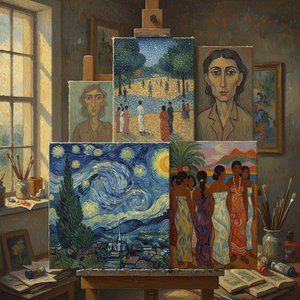
Beyond Impressionism: Exploring the Emotional Depth of Post-Impressionist Painting
Explore the profound emotional depth & innovative techniques of Post-Impressionism with OriginalUniqueArt. Discover Cézanne, Van Gogh, Gauguin & more – and their lasting impact on modern art.

Postimpresjonismens 10 Mesterverk: Kunst som Forandret Verden – OriginalUniqueArt.no
Oppdag postimpresjonismens 10 mest ikoniske mesterverk! Van Gogh, Monet, Cézanne og Gauguin – lær historien bak disse fargerike maleriene. Finn museumskvalitets kunsttrykk & inspirasjon til ditt hjem på OriginalUniqueArt.com.

Echoes of 1875: Art, Culture & the Belle Époque's Pivotal Moment
Explore the art & culture of 1875 Paris – a pivotal year for Impressionism & the Belle Époque. Discover Degas, Béraud, Stewart & more with OriginalUniqueArt's expert insights.
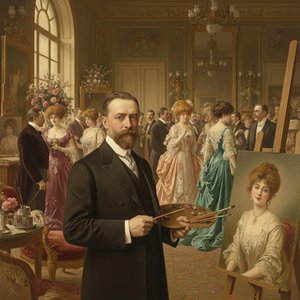
Jacques-Émile Blanche: Capturing Belle Époque Society & the Cult of Personality
Explore the captivating portraits of Jacques-Émile Blanche, a master Impressionist who captured the essence of Belle Époque society in Paris and London. Discover his unique style & lasting legacy.
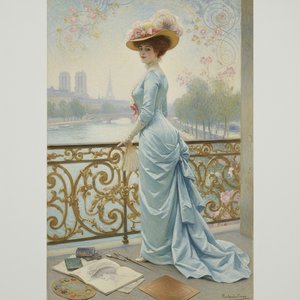
Paul César Helleu: Capturing Belle Époque Elegance & Artistic Innovation
Explore the captivating world of Paul César Helleu, master portraitist of the Belle Époque. Discover his innovative techniques, iconic works like 'Portrait of Margaret Kelly,' and investment potential with OriginalUniqueArt.

