

 Se i rommet
 Del som digitalt kort
 Del
Del
 Detaljer
 Studentguide

 Last ned
 Liknende objekter
 Røntgen
 Lysbildefremvisning
 Besøksstatistikk
The Open Window


 Les mer
Håndlaget oljereproduksjon
Håndmalt olje på lerret i din valgte størrelse og ramme, laget på bestilling av våre kunstnere. ( Bytt til trykkversjon Gå til digitalt bilde)




P118B Nkr10

P118H Nkr10

P118W Nkr10

P438Z Nkr10

P508JH Nkr12

P508YH Nkr12

P805H Nkr10

P805Z Nkr10

P919BZ Nkr10

P919G Nkr10

P919XJ Nkr10

P959ZH Nkr10

P968JZ Nkr12

W106C Nkr8

W218G Nkr10

W218JH Nkr8

W218Y Nkr10

W307PJ Nkr10

W316G Nkr10

W316PJ Nkr8

W316Y Nkr10

W398PJ Nkr8

W4111J Nkr10

W500HY Nkr15

W500JH Nkr15

W692G Nkr12

W849H Nkr8

W940BG Nkr15

W953PJ Nkr8




Velg mellom våre forhåndsdefinerte størrelser som bevarer kunstverkets opprinnelige proporsjoner.

Skriv inn bredden og høyden du trenger, slik at den passer til din ramme eller vegg. Dette er håndmalt, så for en størrelse med en annen form kan kunstneren male litt mer rundt bildet, eller beskjære det noe — du velger selv. Vi sender deg en digital mockup for godkjenning før maleriet påbegynnes. Bildet som vises på denne siden viser ikke det faktiske resultatet — kun mockuppen gjør det.
Etter bestilling vil OriginalUniqueArt.com-teamet sende e-post til kunden for instruksjoner og sende et utkast (mockup) som forhåndsvisning.
Verdensomspennende levering () på 3–4 uker i stedet for standard 5 uker. (21 October). Ingen kompromisser med kvaliteten.

Gratis ekspressfrakt over hele verden

Lerretsduk av høykvalitets lin

Full transportforsikring

Garanti for refusjon av toll og importavgifter

Garantert fargeekthet

100 dagers returrett ved fabrikasjonsfeil

100% pengene tilbake-garanti

Mengderabatt
 Glassalternativet er kun tilgjengelig i størrelser under 110 cm

The Open Window
Reproduksjonsmetode
Format på reproduksjon
-


Totalpris
Nkr 2832
A Portal Between Worlds: The Visionary Geometry of Juan Gris
In the quiet intersection of interior intimacy and Mediterranean expanse lies The Open Window, a 1921 masterpiece by the Spanish virtuoso Juan Gris. This work serves as more than a mere depiction of a seaside view; it is a profound meditation on the boundary between the known and the infinite. As the viewer gazes through the structured frame of the window, they are invited into a space where the analytical rigor of Cubism meets the sun-dasting warmth of the French coast. The composition masterfully balances the heavy, tactile presence of a still life in the foreground—featuring bottles, bowls, and scattered books—with the ethereal, light-filled promise of the ocean beyond. It is a painting that breathes, offering a rhythmic pulse between the stillness of a room and the movement of the tides.
Gris, often celebrated as the "third musketeer" of Cubism alongside Picasso and Braque, brought a unique, mathematical precision to the movement. Unlike the more fragmented deconstructions of his contemporaries, Gris utilized a method of synthetic reconstruction. In The Open Window, we see this technique at its zenith; he does not merely break objects apart but builds them back up through a sophisticated interplay of geometric planes and light. The artist uses sharp contrasts of shade to create a three-dimensional depth that pulls the eye from the tangible objects on the table toward the distant horizon. This structural integrity makes the piece particularly captivating for collectors who appreciate art that possesses both intellectual complexity and visual stability.
The Harmony of Interiority and Light
The historical context of this work is deeply intertwined with Gris’s personal journey and his relationship with the landscape of Southern France. Following his time in Collioure, where he was influenced by the vibrant color palettes of Matisse, Gris developed a signature way of treating the "open window" motif. In this 1921 composition, he achieves a rare clarity, separating the interior world—characterized by the musicality and intellectual weight of books and instruments—from the exterior world of nature. This separation creates a beautiful tension; the indoor setting feels like a sanctuary of thought, while the view through the window acts as an escape into the boundless Mediterranean light.
For the discerning interior designer or art enthusiast, this painting offers an unparalleled emotional resonance. It embodies a sense of tranquil contemplation and sophisticated leisure. The presence of everyday objects arranged with such deliberate grace suggests a life lived with intention and aesthetic awareness. Whether placed in a sunlit study to enhance a sense of scholarly calm or in a modern living space to provide a focal point of structural elegance, a high-quality reproduction of this work brings an atmosphere of timelessness and prestige. It is an invitation to pause, to look through the frame, and to find beauty in the structured harmony of our surroundings.
Spørsmål og svar
Hvor gammel var Juan Gris da "The Open Window" ble skapt i 1921?
Juan Gris laget "The Open Window" i en alder av 34. Kunstneren ble født i 1887, og verket er datert 1921.
Hvor kan jeg kjøpe et trykk av "The Open Window" av Juan Gris?
"The Open Window" er tilgjengelig som et kunsttrykk på bomullslerret eller arkivbestandig lerretspapir. Bestillinger legges inn på siden for Kunsttrykk i høy kvalitet, i den størrelsen du selv velger.
Hvor kan jeg kjøpe en håndmalt reproduksjon av "The Open Window" av Juan Gris?
Håndmalte kopier av "The Open Window" av Juan Gris selges på denne nettsiden: en håndmalt oljereproduksjon på linlerret, bestilt fra dens Håndmalt reproduksjon-side.
Kunstnerbiografi
A Spanish Visionary of Cubism: The Life and Art of Juan Gris
José Victoriano González-Pérez, born in Madrid in 1887, embarked on a remarkable artistic journey that would cement his place as one of the most significant figures of early 20th-century art. Initially pursuing an engineering degree at the School of Arts and Sciences, a keen analytical mind hinted at a future far removed from blueprints and calculations. Even during these formative years, a creative spark ignited – contributions to local periodicals showcased a burgeoning talent for visual observation. It was in 1905 that he adopted the evocative pseudonym Juan Gris, a name resonating with newfound identity and purpose as he began his formal studies in painting under José Moreno Carbonero. This pivotal shift marked the beginning of his dedicated pursuit of artistic innovation.Parisian Awakening and the Embrace of Cubism
The year 1906 witnessed a transformative relocation to Paris, a city then brimming with an unparalleled energy of artistic expression. Gris immersed himself completely in this vibrant milieu, forging enduring friendships with luminaries such as Henri Matisse, Georges Braque, and Fernand Léger. Initially engaged in satirical illustration for publications like *L'Assiette au Beurre*, he honed his observational skills and developed a sharp wit – a foundation that would later inform the conceptual depth of his art. However, the profound influence of Pablo Picasso proved particularly compelling. Around 1910, Gris began to dedicate himself wholeheartedly to painting, deliberately moving away from caricature and embracing the burgeoning language of Cubism. This wasn’t mere imitation; it was a deliberate quest to distill the essence of form and space, seeking a new visual order – a radical departure from traditional representation.The Geometry of Perception: Style and Key Works
Juan Gris's artistic output is characterized by an extraordinary clarity and intellectual rigor. He didn't simply deconstruct objects; he meticulously reconstructed them, emphasizing geometric forms and a carefully considered palette. This approach led to what became known as his “crystal period,” exemplified in masterpieces such as *Still Life Before an Open Window* (1912) and *Place Ravignan* (1915). These works showcase a remarkable interplay of planes and angles, creating a sense of depth and solidity while simultaneously challenging conventional notions of perspective. The use of muted colors and fragmented forms created a unique visual experience, inviting the viewer to actively engage with the artwork. After 1913, Gris wholeheartedly embraced Synthetic Cubism, pioneering the innovative technique of *papier collé* – collage – incorporating real-world materials like newspaper clippings and textured papers into his compositions. This added another layer of complexity and tactility to his work, blurring the boundaries between painting and sculpture. Notable examples include *Guitar in front of the sea* (1925), a testament to his simplified forms and adherence to cubist principles, and *Homage à Pablo Picasso* (1912), which signaled his growing recognition within the avant-garde art world.Influences and Development
Gris’s artistic development was profoundly shaped by a confluence of influences. Initially captivated by Picasso's revolutionary approach, he quickly absorbed the core tenets of Cubism – fragmentation, multiple perspectives, and the rejection of traditional representation. However, Gris possessed a unique sensibility that distinguished his work from that of his contemporaries. He wasn’t merely replicating Picasso’s techniques; he was developing his own distinct style, characterized by an exceptional clarity and structural precision. The intellectual rigor of mathematicians like Henri Poincaré also exerted a subtle but significant influence on his approach to composition, leading him to seek geometric solutions for representing complex forms. Furthermore, his close friendships with artists like Matisse fostered a deep appreciation for color and harmony, which he skillfully integrated into his Cubist paintings.Legacy and Lasting Influence
Juan Gris’s contribution to Cubism extends far beyond mere stylistic innovation; he brought a unique intellectual depth and structural clarity to the movement. He moved past the analytical phase, towards a more organized and synthetic approach, emphasizing order and precision. His work profoundly influenced the Purist style championed by Amédée Ozenfant and Charles Edouard Jeanneret (Le Corbusier), advocating for a return to classical principles of form and composition. Gris’s emphasis on geometric forms, harmonious color palettes, and the integration of everyday objects into his art established him as a pivotal figure in 20th-century art. His legacy continues to inspire artists today, demonstrating the enduring power of Cubism and the visionary genius of Juan Gris – a Spanish master who reshaped our understanding of perception and representation.
Juan Gris
1887 - 1927 , Spania
Kort om kunstneren
- Artistic Movement Or Style: Kubisme, Kubisme syntetisk
- Artists Or Movements Influenced By This Artist:
- Purisme
- Amédée Ozenfant
- Artists Who Influenced This Artist:
- Pablo Picasso
- Henri Matisse
- Georges Braque
- Date Of Birth: 23 mars 1887
- Date Of Death: 11 mai 1927
- Full Name: José Victoriano González-Pérez
- Nationality: Spansk
- Notable Artworks:
- Still Life Before an Open Window
- Place Ravignan
- Guitar ved havet
- Place Of Birth: Madrid, Spania
Relaterte artikler

Henri Matisse' Mesterverk: Topp 25 Kunstverk for Din Vegg – OriginalUniqueArt.no
Utforsk 25 ikoniske malerier av Henri Matisse! Oppdag historien bak fauvismens fargerike mesterverk, fra 'The Dance' til 'Red Studio'. Finn kunsttrykk og reproduksjoner i museumskvalitet for din interiørdesign på OriginalUniqueArt.com.

Romantiske landskap: Topp 10 mesterverk for hjemmet – Kunst fra OriginalUniqueArt.com
Oppdag de 10 mest ikoniske romantiske landskapsmaleriene! Fra Caspar David Friedrich til Turner – utforsk kunsthistorien, stemningen og fargepalettene. Finn museumskvalitets reproduksjoner på OriginalUniqueArt.com.
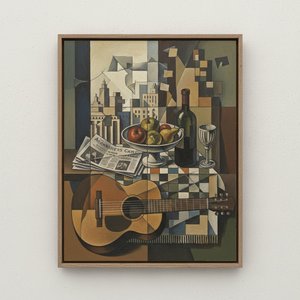
Juan Gris: Cubist Deconstruction & Synthesis – A Comprehensive Exploration
Explore the revolutionary art of Juan Gris – a master of Cubism. Discover his unique approach to deconstruction, vibrant Synthetic Cubist works, and lasting influence on modern art. Expert analysis for collectors.
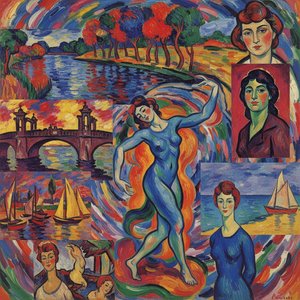
Fauvismens 10 Mesterverk: Kunst som Definerte en Epoke | OriginalUniqueArt.no
Oppdag fauvismens 10 mest ikoniske malerier! Lær historien bak Matisse, Derain og andre ekspresjonistiske mestere. Finn kunsttrykk av høy kvalitet & inspirasjon til ditt hjem på OriginalUniqueArt.com.

Paul Cézannes 25 Mesterverk: En Kunstnerisk Reise for Ditt Hjem
Utforsk Paul Cézannes 25 mest ikoniske malerier! Oppdag historien bak impresjonismens mesterverk, fra stilleben til landskap. Finn kunsttrykk av høy kvalitet og interiørinspirasjon på OriginalUniqueArt.com.


