Text size

() ·

A painting made for you, by hand

Seated Woman

Håndlaget oljereproduksjon

Håndmalt olje på lerret i din valgte størrelse og ramme, laget på bestilling av våre kunstnere. ( Bytt til trykk Bytt til digitalt bilde)

Beskrivelse av objektet

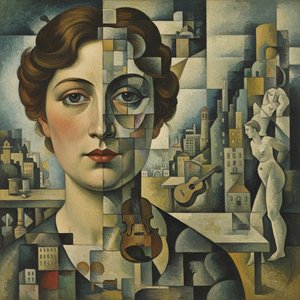
Explore Juan Gris's 'Seated Woman,' a captivating Cubist portrait from 1917. Witness the interplay of form, color, and emotion in this iconic masterpiece by the Spanish visionary.

Om kunstneren

Oppdag Juan Gris (1887-1927), den spanske kubistiske mesteren! Utforsk hans geometriske stil, syntetisk kubisme og varig innflytelse på moderne kunst. Se kunstverk nå.

from ·

Chapter 1

How large should it be?

Slide to change the size; the picture on the left shows the frame at its real width. The proportions of the original are kept.

Standardformat
skreddersydd
CM
INCH

Velg mellom våre forhåndsdefinerte størrelser som bevarer kunstverkets opprinnelige proporsjoner.

bredde
høyde

Skriv inn ønsket bredde og høyde for å tilpasse bildet til din ramme eller vegg. Siden dette er håndmalt, kan kunstneren male litt mer rundt motivet eller beskjære det noe dersom du velger et annet format — valget er ditt. Vi sender deg en digital mockup til godkjenning før maleriet påbegynnes. Bildet som vises på denne siden representerer ikke det faktiske resultatet — kun mockuppen viser det endelige uttrykket.

Chapter 2

How should it arrive?

Choose the edges of the stretched canvas

Choose your frame

Corner sample of the WhiteWrap canvas edge finish, stretched on massivt tre bars
White Nkr1
Corner sample of the BlurSideWrap canvas edge finish, stretched on massivt tre bars
Blurside Nkr1
Corner sample of the ExtendedWrap canvas edge finish, stretched on massivt tre bars
Extended Nkr1
Corner sample of the P118B picture frame: støpt polystyren, 5 cm wide and 3 cm thick
P118B Nkr10
Corner sample of the P118H picture frame: støpt polystyren, 5 cm wide and 3 cm thick
P118H Nkr10
Corner sample of the P118W picture frame: støpt polystyren, 5 cm wide and 3 cm thick
P118W Nkr10
Corner sample of the P438Z picture frame: støpt polystyren, 5.5 cm wide and 3.5 cm thick
P438Z Nkr10
Corner sample of the P508JH picture frame: støpt polystyren, 7 cm wide and 3.5 cm thick
P508JH Nkr12
Corner sample of the P508YH picture frame: støpt polystyren, 7 cm wide and 3.5 cm thick
P508YH Nkr12
Corner sample of the P805H picture frame: støpt polystyren, 5 cm wide and 3.5 cm thick
P805H Nkr10
Corner sample of the P805Z picture frame: støpt polystyren, 5 cm wide and 3.5 cm thick
P805Z Nkr10
Corner sample of the P919BZ picture frame: støpt polystyren, 7 cm wide and 3.5 cm thick
P919BZ Nkr10
Corner sample of the P919G picture frame: støpt polystyren, 7 cm wide and 3.5 cm thick
P919G Nkr10
Corner sample of the P919XJ picture frame: støpt polystyren, 7 cm wide and 3.5 cm thick
P919XJ Nkr10
Corner sample of the P959ZH picture frame: støpt polystyren, 5 cm wide and 3 cm thick
P959ZH Nkr10
Corner sample of the P968JZ picture frame: støpt polystyren, 6 cm wide and 4 cm thick
P968JZ Nkr12
Corner sample of the W106C picture frame: massivt tre, 5 cm wide and 3 cm thick
W106C Nkr8
Corner sample of the W218G picture frame: massivt tre, 5 cm wide and 3 cm thick
W218G Nkr10
Corner sample of the W218JH picture frame: massivt tre, 5 cm wide and 3 cm thick
W218JH Nkr8
Corner sample of the W218Y picture frame: massivt tre, 5 cm wide and 3 cm thick
W218Y Nkr10
Corner sample of the W307PJ picture frame: massivt tre, 6 cm wide and 3 cm thick
W307PJ Nkr10
Corner sample of the W316G picture frame: massivt tre, 6 cm wide and 3 cm thick
W316G Nkr10
Corner sample of the W316PJ picture frame: massivt tre, 6 cm wide and 3 cm thick
W316PJ Nkr8
Corner sample of the W316Y picture frame: massivt tre, 6 cm wide and 3 cm thick
W316Y Nkr10
Corner sample of the W398PJ picture frame: massivt tre, 5 cm wide and 3 cm thick
W398PJ Nkr8
Corner sample of the W4111J picture frame: massivt tre, 6.5 cm wide and 3.5 cm thick
W4111J Nkr10
Corner sample of the W500HY picture frame: massivt tre, 7 cm wide and 5 cm thick
W500HY Nkr15
Corner sample of the W500JH picture frame: massivt tre, 7 cm wide and 5 cm thick
W500JH Nkr15
Corner sample of the W692G picture frame: massivt tre, 8 cm wide and 4 cm thick
W692G Nkr12
Corner sample of the W849H picture frame: massivt tre, 5 cm wide and 3 cm thick
W849H Nkr8
Corner sample of the W940BG picture frame: massivt tre, 7.5 cm wide and 4.5 cm thick
W940BG Nkr15
Corner sample of the W953PJ picture frame: massivt tre, 6 cm wide and 3.5 cm thick
W953PJ Nkr8
Corner sample of the H24-GOLD picture frame: utskåret tre med gesso, 10 cm wide and 6 cm thick
H24-GOLD Nkr30
Corner sample of the H24-SILVER picture frame: utskåret tre med gesso, 10 cm wide and 6 cm thick
H24-SILVER Nkr30
Corner sample of the H36-GOLD picture frame: utskåret tre med gesso, 15 cm wide and 6.5 cm thick
H36-GOLD Nkr45
Corner sample of the H36-SILVER picture frame: utskåret tre med gesso, 15 cm wide and 6.5 cm thick
H36-SILVER Nkr45

Moulding: . Overall size with the frame: .

Chapter 3

Who paints it, and should anything change?

Examples of what can be changed: Replace face with customer photo; Add pet (e.g., replace cat with dog); Include hidden message in background; Change background landscape or elements.
After order, OriginalUniqueArt.com team will email client for instructions and provide a mockup preview

Verdensomspennende levering () på 3–4 uker i stedet for standard 5 uker. (1 November). Ingen kompromisser med kvaliteten.

Chapter 4

The finishing touches

A nameplate, as in a museum?

Detaljer om gravert bronseplate

This elegant plaque features the artist's name and the title of the artwork, finely engraved for a timeless presentation.

It is made from bronze with a refined, elegant finish. The text is precisely laser-engraved for a sharp and permanent result. Measuring 9x2 cm, the plaque is compact yet easy to read. It's built to be durable and scratch-resistant, offering a professional, museum-quality look. Mounting is simple thanks to the included adhesive backing.

Detaljer om gjennomsiktig akrylplate

The plaque includes essential engraved details such as the artist's name, the title of the artwork, the date it was created, the type of media used-like oil on canvas or watercolor-a brief description of the piece, and a QR code that links to the complete artwork information.

It is crafted from clear acrylic, offering a sleek, modern appearance. The text is UV-engraved in black to ensure strong visual contrast. With a size of 10x15 cm, it ensures optimal readability. It comes equipped with two metal hooks for secure wall mounting. The plaque is designed to be weather-resistant, making it suitable for various environments, and it includes interactive features that work seamlessly with smartphone scanning.

Detaljer om plakett i svart akryl

This elegant plaque includes engraved information such as the artist's name, the title of the artwork, the date it was created, the type of media used (like oil on canvas or watercolor), a short description of the artwork, and a QR code for quick access to more information.

The plaque itself is made from refined black acrylic with a premium finish. The text is laser-engraved in white for high contrast and readability. Its size is 10x15 cm, designed to be easy to read. It comes with two metal hooks for professional mounting. The design is sleek and fits any interior style. It is also weather-resistant and durable, with built-in digital integration for mobile compatibility.

A protective varnish?

When do you need it?

Chapter 5

Your painting, as you ordered it

Seated Woman

Trykkmetode

Størrelse på reproduksjon

-

Utvalgte mesterkunstnere

Mer detaljrikdom, finesse og ekstra produksjonstid

-

Innramming av reproduksjon

-

-

For kunstverk eller reproduksjoner som er større enn 105 cm (ca. 41 tommer) på noen side, vil rammen bli sendt som et sett som må monteres. Denne metoden sikrer trygg levering og forhindrer skader under transport.

Krever profesjonell montering – dette er ikke et DIY-produkt.
Settet må monteres og lerretet strammes av en erfaren profesjonell rammelegger, ved bruk av trelim (følger ikke med), en lerretstang og klemmer for å holde rammelisten vinkelrett mens limet tørker. Feilaktig montering eller ujevn stramming av lerretet kan påføre kunstverket permanente skader og er ikke dekket av vår garanti.

  • Alle massive trelister er inkludert, presist tilpasset i størrelse.

  • Monteres med de medfølgende skruene, samt trelim til hjørnene, som ikke er inkludert og må anskaffes av din rammehandler.

  • Profesjonelt verktøy er nødvendig og er ikke inkludert: en lerretstang (strammer) og klemmer for å holde rammene vinkelrette mens limet tørker.

Viktig:
Hjørnene krever trelim, listene må holdes på plass med tvinger til limet er helt tørt, og stramming av lerretet på den ferdige rammen krever en lerretstang. Ingen av disse produktene er inkludert i settet. Vennligst sørg for tilgang til en erfaren profesjonell rammehandler før du bestiller denne størrelsen.

Navneskilt

-

-

Beskyttende ferniss

Blank lakk (forsterker farger, beskytter mot lys og fuktighet)

-

Tilpass mitt kunstverk

Eksempler på hva som kan endres: Erstatt ansikt med bilde av kunden; Legg til kjæledyr (f.eks. bytt ut katt med hund); Inkluder en skjult melding i bakgrunnen; Endre bakgrunnslandskap eller elementer.

-

Ekspresslevering

Verdensomspennende levering () på 3–4 uker i stedet for standard 5 uker. (1 November). Ingen kompromisser med kvaliteten.

-

Ekspresslevering

Verdensomspennende levering til innen 5 uker. (8 November).

Inkludert frakt

Totalpris for valgte alternativer

Nkr 2887

Totalpris Nkr 2887

Glassalternativet er kun tilgjengelig i størrelser under 110 cm

Included with every order

  • Gratis ekspressfrakt over hele verden
  • Lerretsduk av lin av høy kvalitet
  • Full transportforsikring
  • Garanti for refusjon av toll og importavgifter
  • Garantert fargegjengivelse
  • 100 dagers returrett ved fabrikasjonsfeil
  • 100% pengene tilbake-garanti
  • Rabatt ved flere kjøp

A Fragmented Portrait of Modernity: Exploring Juan Gris’s “Seated Woman”

Juan Gris's "Seated Woman," painted in 1917, isn’t merely a portrait; it’s a carefully constructed meditation on form, space, and the burgeoning anxieties of early 20th-century Europe. This work, rendered in oil on panel with a striking palette of blues, yellows, and blacks, embodies the heart of Cubism's analytical phase – a period where artists sought to dismantle traditional representation and reveal the underlying geometric structures of reality. Gris, deeply influenced by Picasso and Braque, moved beyond simply depicting an individual; he aimed to capture the essence of the subject through a fractured, multi-faceted approach that challenges our perception of what constitutes a recognizable image.

The painting depicts a woman seated in a chair, her hands resting before her face – a pose simultaneously vulnerable and enigmatic. However, it’s crucial to understand that this isn't a realistic portrayal. Gris employs a deliberate distortion of form, breaking the figure into interlocking planes and angles. The chair itself is not rendered as a solid object but rather as a collection of geometric shapes, mirroring the fragmentation of the woman’s image. This technique, central to Cubism, suggests that our understanding of reality is inherently subjective and constructed through individual perception. Notice how the blue tones dominate, creating a sense of depth and receding space, while the yellows introduce warmth and highlight specific areas of the figure – perhaps drawing attention to her face or hands.

The Language of Analytical Cubism

“Seated Woman” is a prime example of Analytical Cubism, a phase characterized by its meticulous deconstruction of objects. Gris’s approach involved meticulously dissecting his subjects into their component parts – lines, angles, and planes – and then reassembling them on the canvas in a way that presented multiple viewpoints simultaneously. This wasn't about creating an illusion of depth; rather, it was about revealing the underlying structure of form. The painting feels almost architectural in its precision, as if the woman has been carefully constructed from geometric blocks. The use of black is particularly significant here – not merely for contrast but to define and delineate the fragmented shapes, adding a layer of intellectual rigor to the composition.

Furthermore, Gris’s choice of color is deliberate. The muted palette—primarily blues, yellows, and blacks—reflects the atmosphere of introspection and uncertainty prevalent during this period. It's a far cry from the vibrant hues often associated with later Cubist works. Instead, it evokes a sense of quiet contemplation, inviting the viewer to engage in a more cerebral appreciation of the artwork.

A Figure Rooted in Early 20th-Century Context

To fully appreciate “Seated Woman,” it’s essential to consider its historical context. Painted in 1917, the work emerged during a time of profound social and artistic upheaval. The rise of industrialization, urbanization, and scientific advancements were challenging traditional notions of reality and identity. Cubism, with its radical departure from representational art, mirrored this broader cultural shift – questioning established conventions and exploring new ways of perceiving the world. Juan Gris’s work reflects a desire to capture not just the appearance of things but also their underlying structure and the way they interact within space.

Juan Gris himself was a pivotal figure in the development of Cubism, initially working as an engineer before dedicating himself fully to art. His meticulous approach, combined with his deep understanding of mathematics and geometry, allowed him to create works that are both intellectually stimulating and visually arresting. “Seated Woman” stands as a testament to his innovative spirit and his profound impact on the course of modern art.

Symbolism and Emotional Resonance

While seemingly abstract, "Seated Woman" is rich in symbolic potential. The woman’s posture – hands covering her face – suggests introspection, perhaps even melancholy or uncertainty. The fragmented nature of her form reflects the fragmentation of experience in a rapidly changing world. The painting doesn't offer easy answers; instead, it invites viewers to contemplate the complexities of human existence and the challenges of navigating an increasingly abstract reality. It’s a work that resonates with a sense of quiet contemplation and intellectual curiosity – a timeless reminder of the power of art to provoke thought and evoke emotion.

Spørsmål og svar

Hvilken følelse formidler "Seated Woman" av Juan Gris?

"Seated Woman" er forbundet med en Melancholic følelse. Den emosjonelle tonen beskriver inntrykket verket gir.

Hvordan forenes kunstretning og epoke i "Seated Woman" av Juan Gris?

"Seated Woman" tilhører Cubism-retningen, og kunstneren virket i Moderne tid-epoken.

Hvilken bruk og hvilket rom anbefales for "Seated Woman" av Juan Gris?

"Seated Woman" av Juan Gris anbefales til Statement, ideelt sett i en Living Room. Bruksområde og rom gir veiledning for hvor en reproduksjon passer inn.

More about this painting

Forhåndsvisning Se i AR Bytt til trykk Bytt til digitalt bilde Send
Vis detaljer Utskriftsvennlig guide Legg til i favoritter Last ned bilde Liknende objekter Røntgenundersøkelse Lysbildefremvisning Q&A Statistikk

In numbers

  • 1917the year it was painted
  • 29frames to choose from
  • standard sizes, in its own proportions
  • 5weeks to paint and deliver it
Juan Gris

Juan Gris

1887 - 1927, Spania

Quick facts about Juan Gris

  • Artistic Movement Or Style: Kubisme, Kubisme syntetisk
  • Artists Or Movements Influenced By This Artist:
    • Purisme
    • Amédée Ozenfant
  • Artists Who Influenced This Artist:
    • Pablo Picasso
    • Henri Matisse
    • Georges Braque
  • Date Of Birth: 23 mars 1887
  • Date Of Death: 11 mai 1927
  • Full Name: José Victoriano González-Pérez
  • Nationality: Spansk
  • Notable Artworks:
    • Still Life Before an Open Window
    • Place Ravignan
    • Guitar ved havet
  • Place Of Birth: Madrid, Spania

Om kunstneren

A Spanish Visionary of Cubism: The Life and Art of Juan Gris

José Victoriano González-Pérez, born in Madrid in 1887, embarked on a remarkable artistic journey that would cement his place as one of the most significant figures of early 20th-century art. Initially pursuing an engineering degree at the School of Arts and Sciences, a keen analytical mind hinted at a future far removed from blueprints and calculations. Even during these formative years, a creative spark ignited – contributions to local periodicals showcased a burgeoning talent for visual observation. It was in 1905 that he adopted the evocative pseudonym Juan Gris, a name resonating with newfound identity and purpose as he began his formal studies in painting under José Moreno Carbonero. This pivotal shift marked the beginning of his dedicated pursuit of artistic innovation.

Parisian Awakening and the Embrace of Cubism

The year 1906 witnessed a transformative relocation to Paris, a city then brimming with an unparalleled energy of artistic expression. Gris immersed himself completely in this vibrant milieu, forging enduring friendships with luminaries such as Henri Matisse, Georges Braque, and Fernand Léger. Initially engaged in satirical illustration for publications like *L'Assiette au Beurre*, he honed his observational skills and developed a sharp wit – a foundation that would later inform the conceptual depth of his art. However, the profound influence of Pablo Picasso proved particularly compelling. Around 1910, Gris began to dedicate himself wholeheartedly to painting, deliberately moving away from caricature and embracing the burgeoning language of Cubism. This wasn’t mere imitation; it was a deliberate quest to distill the essence of form and space, seeking a new visual order – a radical departure from traditional representation.

The Geometry of Perception: Style and Key Works

Juan Gris's artistic output is characterized by an extraordinary clarity and intellectual rigor. He didn't simply deconstruct objects; he meticulously reconstructed them, emphasizing geometric forms and a carefully considered palette. This approach led to what became known as his “crystal period,” exemplified in masterpieces such as *Still Life Before an Open Window* (1912) and *Place Ravignan* (1915). These works showcase a remarkable interplay of planes and angles, creating a sense of depth and solidity while simultaneously challenging conventional notions of perspective. The use of muted colors and fragmented forms created a unique visual experience, inviting the viewer to actively engage with the artwork. After 1913, Gris wholeheartedly embraced Synthetic Cubism, pioneering the innovative technique of *papier collé* – collage – incorporating real-world materials like newspaper clippings and textured papers into his compositions. This added another layer of complexity and tactility to his work, blurring the boundaries between painting and sculpture. Notable examples include *Guitar in front of the sea* (1925), a testament to his simplified forms and adherence to cubist principles, and *Homage à Pablo Picasso* (1912), which signaled his growing recognition within the avant-garde art world.

Influences and Development

Gris’s artistic development was profoundly shaped by a confluence of influences. Initially captivated by Picasso's revolutionary approach, he quickly absorbed the core tenets of Cubism – fragmentation, multiple perspectives, and the rejection of traditional representation. However, Gris possessed a unique sensibility that distinguished his work from that of his contemporaries. He wasn’t merely replicating Picasso’s techniques; he was developing his own distinct style, characterized by an exceptional clarity and structural precision. The intellectual rigor of mathematicians like Henri Poincaré also exerted a subtle but significant influence on his approach to composition, leading him to seek geometric solutions for representing complex forms. Furthermore, his close friendships with artists like Matisse fostered a deep appreciation for color and harmony, which he skillfully integrated into his Cubist paintings.

Legacy and Lasting Influence

Juan Gris’s contribution to Cubism extends far beyond mere stylistic innovation; he brought a unique intellectual depth and structural clarity to the movement. He moved past the analytical phase, towards a more organized and synthetic approach, emphasizing order and precision. His work profoundly influenced the Purist style championed by Amédée Ozenfant and Charles Edouard Jeanneret (Le Corbusier), advocating for a return to classical principles of form and composition. Gris’s emphasis on geometric forms, harmonious color palettes, and the integration of everyday objects into his art established him as a pivotal figure in 20th-century art. His legacy continues to inspire artists today, demonstrating the enduring power of Cubism and the visionary genius of Juan Gris – a Spanish master who reshaped our understanding of perception and representation.

Kort om verket

  • Location: Thyssen-Bornemisza, Madrid
  • Title: Seated Woman
  • Artistic style: Analytical Cubism
  • Artist: Juan Gris
  • Subject or theme: Portraiture

Kunnequiz om kunst

Det er kun ett riktig svar på hvert spørsmål.

Spørsmål 1:
What artistic movement is Juan Gris most closely associated with?
Spørsmål 2:
The painting 'Seated Woman' by Juan Gris primarily utilizes which color palette?
Spørsmål 3:
According to the provided text, in what year was Juan Gris born?
Spørsmål 4:
What is the primary style of painting evident in 'Seated Woman' by Juan Gris?
Spørsmål 5:
The description mentions that the woman in 'Seated Woman' is wearing earrings. What does this detail suggest about the painting’s intent?