- Forsiden

- Reproduksjon av oljemaleri
- Juan Gris
- Harlequin

 Bestill trykk Kjøp digitalt bilde
 Send
Send
 Del med andre
 Vis detaljer
 Legg til i favoritter

 Last ned bildet
 Liknende objekter
 Røntgenundersøkelse
 Lysbildefremvisning
Harlequin


 Vis hele teksten
Håndlaget oljereproduksjon
Håndmalt olje på lerret i din valgte størrelse og ramme, laget på bestilling av våre kunstnere.




































Velg mellom våre forhåndsdefinerte størrelser som bevarer kunstverkets opprinnelige proporsjoner.

Du kan angi egne mål for å tilpasse en spesifikk ramme eller plass. Dersom den valgte størrelsen ikke samsvarer med originalbildets proporsjoner, vil vi enten beskjære kunstverket eller utvide maleriet med ytterligere håndmalte elementer. En digital mockup vil bli sendt til din godkjenning før produksjonen starter.
Vennligst merk at forhåndsvisningen på skjermen ikke gjenspeiler den faktiske beskjæringen eller utvidelsen. Kun mockuppen vil vise den endelige komposisjonen nøyaktig.
Selv om tilpassede størrelser er tilgjengelige, anbefaler vi å velge et mål fra den forhåndsdefinerte listen for å bevare de originale proporsjonene.
Etter bestilling vil OriginalUniqueArt.com-teamet sende e-post til kunden for instruksjoner og sende et utkast (mockup) som forhåndsvisning.
Verdensomspennende levering () på 3–4 uker i stedet for standard 5 uker. (22 July). Ingen kompromisser med kvaliteten.

Gratis ekspressfrakt over hele verden

Lerretsduk av høykvalitets lin

Full forsikring under transport

Garanti for refusjon av toll og importavgifter

Garantert korrekt fargegjengivelse

60 dagers returrett (kun ved feil)

100% pengene tilbake-garanti

Rabatt ved flere kjøp
 Glassalternativet er kun tilgjengelig i størrelser under 110 cm

Harlequin
Teknikk for reproduksjon
Størrelse på reproduksjon
-


Endelig pris
-
Beskrivelse av kunstverket
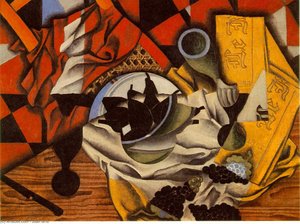
Juan Gris’ “Harlequin”: A Fragmented Portrait of Modern Anxiety
Juan Gris’ “Harlequin,” completed in 1918, stands as a cornerstone of Cubist art and embodies the anxieties inherent within the burgeoning modernist movement. More than just a depiction of a theatrical character—a nod to the enduring traditions of Commedia dell’arte—the sculpture delves into profound questions about perception, representation, and the disintegration of traditional artistic conventions.
The Visual Language of Fragmentation
Gris’ masterful manipulation of geometric forms is immediately striking. The figure isn't rendered in a conventional manner; instead, it’s constructed from interlocking planes—primarily rectangular blocks—that overlap and intersect to suggest volume without resorting to realistic shading. This technique, pioneered by Picasso and Cézanne before him, deliberately rejects illusionistic depth, prioritizing intellectual analysis over visual accuracy. Lines are crisp and angular, defining the edges of these planes with unwavering precision – a characteristic that reflects the Cubist preoccupation with dissecting objects into their constituent parts.
Color Palette and Texture: Earthy Restraint
The color palette is deliberately muted, dominated by shades of grey, brown, and green. These earthy tones contribute to an atmosphere of solemn contemplation and subtly convey a sense of isolation. Hints of blue and gold appear sparingly, adding visual interest without disrupting the overall tonal harmony. The surface texture appears smooth due to photographic reproduction; however, Gris’ original bronze sculpture would have possessed a matte finish—a deliberate choice that reinforces the artwork's textural ambiguity.
Historical Context: Embracing Uncertainty
"Harlequin with a Guitar" emerged during a period of intense intellectual ferment in Europe. The aftermath of World War I instilled a pervasive feeling of disillusionment and uncertainty, prompting artists to question established norms and explore new modes of expression. Cubism responded directly to this zeitgeist by rejecting academic idealism and embracing the fragmented perspective—a visual metaphor for the fractured realities experienced during the postwar era. As noted in Wikipedia, “Like many European artists before them, Cubists often depicted Harlequin, a stock character in the Italian commedia dell’arte…”
Symbolic Resonance: Beyond Representation
The sculpture's symbolism transcends mere visual depiction. The figure embodies the Cubist ethos of dismantling preconceived notions and challenging viewers to reconsider their understanding of form and space. It evokes a feeling of alienation—a characteristic theme within modernist art—and invites contemplation on the complexities of human experience. Gris’ deliberate abstraction serves as a powerful reminder that art can communicate emotion and intellect without relying solely on visual realism.
Recommended Reproduction
A high-quality reproduction of “Harlequin” captures the essence of Gris’ groundbreaking vision. Offered by The Metropolitan Museum of Art and National Gallery of Art, this artwork exemplifies the enduring appeal of Cubist art—its intellectual rigor combined with its evocative aesthetic qualities. Explore the beauty and depth of this iconic piece.
Om kunstneren
A Spanish Visionary of Cubism: The Life and Art of Juan Gris
José Victoriano González-Pérez, born in Madrid in 1887, embarked on a remarkable artistic journey that would cement his place as one of the most significant figures of early 20th-century art. Initially pursuing an engineering degree at the School of Arts and Sciences, a keen analytical mind hinted at a future far removed from blueprints and calculations. Even during these formative years, a creative spark ignited – contributions to local periodicals showcased a burgeoning talent for visual observation. It was in 1905 that he adopted the evocative pseudonym Juan Gris, a name resonating with newfound identity and purpose as he began his formal studies in painting under José Moreno Carbonero. This pivotal shift marked the beginning of his dedicated pursuit of artistic innovation.Parisian Awakening and the Embrace of Cubism
The year 1906 witnessed a transformative relocation to Paris, a city then brimming with an unparalleled energy of artistic expression. Gris immersed himself completely in this vibrant milieu, forging enduring friendships with luminaries such as Henri Matisse, Georges Braque, and Fernand Léger. Initially engaged in satirical illustration for publications like *L'Assiette au Beurre*, he honed his observational skills and developed a sharp wit – a foundation that would later inform the conceptual depth of his art. However, the profound influence of Pablo Picasso proved particularly compelling. Around 1910, Gris began to dedicate himself wholeheartedly to painting, deliberately moving away from caricature and embracing the burgeoning language of Cubism. This wasn’t mere imitation; it was a deliberate quest to distill the essence of form and space, seeking a new visual order – a radical departure from traditional representation.The Geometry of Perception: Style and Key Works
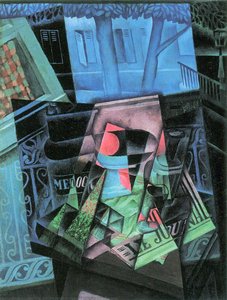
Juan Gris's artistic output is characterized by an extraordinary clarity and intellectual rigor. He didn't simply deconstruct objects; he meticulously reconstructed them, emphasizing geometric forms and a carefully considered palette. This approach led to what became known as his “crystal period,” exemplified in masterpieces such as *Still Life Before an Open Window* (1912) and *Place Ravignan* (1915). These works showcase a remarkable interplay of planes and angles, creating a sense of depth and solidity while simultaneously challenging conventional notions of perspective. The use of muted colors and fragmented forms created a unique visual experience, inviting the viewer to actively engage with the artwork. After 1913, Gris wholeheartedly embraced Synthetic Cubism, pioneering the innovative technique of *papier collé* – collage – incorporating real-world materials like newspaper clippings and textured papers into his compositions. This added another layer of complexity and tactility to his work, blurring the boundaries between painting and sculpture. Notable examples include *Guitar in front of the sea* (1925), a testament to his simplified forms and adherence to cubist principles, and *Homage à Pablo Picasso* (1912), which signaled his growing recognition within the avant-garde art world.Influences and Development
Gris’s artistic development was profoundly shaped by a confluence of influences. Initially captivated by Picasso's revolutionary approach, he quickly absorbed the core tenets of Cubism – fragmentation, multiple perspectives, and the rejection of traditional representation. However, Gris possessed a unique sensibility that distinguished his work from that of his contemporaries. He wasn’t merely replicating Picasso’s techniques; he was developing his own distinct style, characterized by an exceptional clarity and structural precision. The intellectual rigor of mathematicians like Henri Poincaré also exerted a subtle but significant influence on his approach to composition, leading him to seek geometric solutions for representing complex forms. Furthermore, his close friendships with artists like Matisse fostered a deep appreciation for color and harmony, which he skillfully integrated into his Cubist paintings.Legacy and Lasting Influence
Juan Gris’s contribution to Cubism extends far beyond mere stylistic innovation; he brought a unique intellectual depth and structural clarity to the movement. He moved past the analytical phase, towards a more organized and synthetic approach, emphasizing order and precision. His work profoundly influenced the Purist style championed by Amédée Ozenfant and Charles Edouard Jeanneret (Le Corbusier), advocating for a return to classical principles of form and composition. Gris’s emphasis on geometric forms, harmonious color palettes, and the integration of everyday objects into his art established him as a pivotal figure in 20th-century art. His legacy continues to inspire artists today, demonstrating the enduring power of Cubism and the visionary genius of Juan Gris – a Spanish master who reshaped our understanding of perception and representation.
Juan Gris
1887 - 1927 , Spania
Kort om kunstneren
- Artistic Movement Or Style: Kubisme, Kubisme syntetisk
- Artists Or Movements Influenced By This Artist:
- Purisme
- Amédée Ozenfant
- Artists Who Influenced This Artist:
- Pablo Picasso
- Henri Matisse
- Georges Braque
- Date Of Birth: 23 mars 1887
- Date Of Death: 11 mai 1927
- Full Name: José Victoriano González-Pérez
- Nationality: Spansk
- Notable Artworks:
- Still Life Before an Open Window
- Place Ravignan
- Guitar ved havet
- Place Of Birth: Madrid, Spania
Relaterte artikler
Kubismens 10 Mesterverk: Kunst som Forandret Verden – OriginalUniqueArt.no
Utforsk kubismens 10 mest ikoniske mesterverk! Lær historien bak Picasso, Braque og andre legender. Finn inspirasjon til interiørdesign & kjøp museumskvalitets reproduksjoner på OriginalUniqueArt.no – din kilde for abstrakt kunst.

Fragmenterte Perspektiver, Forente Rom: Integrering av Kubistisk Inspirert Kunst i Moderne Villa Design – En Guide til Estetisk Innovasjon og Juridiske Betraktninger
Utforsk hvordan kubistisk kunst revolusjonerer villaarkitektur! Ekspertguide til romdesign, juridiske aspekter, bærekraft og kunstvalg. Inspirasjon for luksuriøse hjem.
Kubismens Mesterverk: Topp 10 Verk som Definerte En Kunstbevegelse | OriginalUniqueArt
Utforsk kubismens revolusjonerende verden! Oppdag topp 10 mesterverk av Picasso, Braque og andre. Lær om kunsthistorien bak maleriene & finn inspirasjon til interiøret på OriginalUniqueArt.com.
Pop Artens 10 Mesterverk: Kunst, Historie og Inspirasjon for Ditt Hjem
Utforsk pop artens 10 mest ikoniske mesterverk! Lær historien bak Andy Warhol, Roy Lichtenstein og andre legender. Finn inspirasjon til hjemmedekor og kjøp museumskvalitets kunsttrykk på OriginalUniqueArt.com.
Kubismens Portretter: Topp 10 Mesterverk for Kunstelskere – OriginalUniqueArt.com
Utforsk kubismens revolusjonerende portretter! Oppdag Picasso, Braque og Gris’ mesterverk. Lær om stilhistorien og finn inspirasjon til interiørdesign med museumskvalitets reproduksjoner på OriginalUniqueArt.com.