
 Forhåndsvisning
 Send
Send Del
Del
 Vis detaljer
 Utskriftsvennlig guide

 Last ned bilde
 Liknende objekter
 Røntgenundersøkelse
 Lysbildefremvisning
 Q&A
Q&A Statistikk
Pietà

- 161.0 x 144.0 cm


 Vis hele teksten
Giclée / Kunsttrykk
Giclée- eller lerretsprint av museumskvalitet med rask produksjon og fleksible valgmuligheter for etterbehandling. ( Kjøp håndmalt maleri Bytt til digitalt bilde)




P118B Nkr10

P118H Nkr10

P118W Nkr10

P438Z Nkr10

P508JH Nkr12

P508YH Nkr12

P805H Nkr10

P805Z Nkr10

P919BZ Nkr10

P919G Nkr10

P919XJ Nkr10

P959ZH Nkr10

P968JZ Nkr12

W106C Nkr8

W218G Nkr10

W218JH Nkr8

W218Y Nkr10

W307PJ Nkr10

W316G Nkr10

W316PJ Nkr8

W316Y Nkr10

W398PJ Nkr8

W4111J Nkr10

W500HY Nkr15

W500JH Nkr15

W692G Nkr12

W849H Nkr8

W940BG Nkr15

W953PJ Nkr8




Velg mellom våre forhåndsdefinerte størrelser som bevarer kunstverkets opprinnelige proporsjoner.

Skriv inn ønsket bredde og høyde for å tilpasse trykket til din ramme eller vegg. Et trykk kan kun beskjæres, aldri skaleres opp utover motivets opprinnelige størrelse, noe som betyr at et format med andre proporsjoner vil føre til tap av deler av bildet. Vi sender deg en digital mockup for godkjenning før vi starter trykkeprosessen. Bildet som vises på denne siden viser ikke den faktiske beskjæringen — det er kun mockuppen som viser dette.
Verdensomspennende levering () på 2 uker i stedet for standard 4/5 uker. (1 November)

Gratis ekspressfrakt over hele verden

Lerretsduk av lin av høy kvalitet

Full transportforsikring

Garanti for refusjon av toll og importavgifter

Garantert fargegjengivelse

100 dagers returrett ved fabrikasjonsfeil

100% pengene tilbake-garanti

Rabatt ved flere kjøp
 Glassalternativet er kun tilgjengelig i størrelser under 110 cm

Pietà
Giclée / Kunsttrykk
Størrelse på reproduksjon
-


Totalpris for valgte alternativer
Nkr 770
The Heart of Sorrow: An Exploration of Valdés Leal’s Pietà
Juan de Valdés Leal's 1657 “Pietà” is not merely a depiction of grief; it’s an immersion into the profound sorrow and spiritual weight of Christian iconography. Born in Seville during the height of the Spanish Baroque, Leal was deeply influenced by the traditions of theatrical sculpture, particularly the evocative “pasos”—elaborate processions featuring religious figures rendered with intense emotion—a practice common in Spain. This painting transcends simple representation, aiming instead to evoke a visceral response from the viewer, mirroring the agony of Mary Magdalene cradling the lifeless body of Christ.
The subject itself – the Pietà – has resonated through Western art for centuries. It’s a timeless image: the Virgin Mary, serene yet heartbroken, holding her son after his crucifixion. Leal masterfully captures this essence, moving beyond the idealized beauty often associated with depictions of the Madonna. Instead, we see a woman marked by sorrow, her expression a complex blend of grief and acceptance. The composition is deliberately tight, drawing our focus entirely to the central figures – a deliberate choice that intensifies the emotional impact. The diagonal line created by Christ’s body, sloping from left to right, guides the eye through the scene, mirroring the descent into despair.
Baroque Drama: Technique and Composition
Leal's mastery lies in his skillful deployment of Baroque techniques. The painting is dominated by *chiaroscuro*, a dramatic contrast between light and dark that sculpts the figures and imbues the scene with an almost theatrical quality. Light focuses intensely on Mary Magdalene and Christ’s body, casting deep shadows around them – these aren't merely stylistic choices; they symbolize the darkness of sin and suffering. The artist employs impasto—thickly applied paint—to create a richly textured surface, adding depth and physicality to the figures. Brushstrokes are bold and expressive, conveying movement and emotion with every mark.
The flattened perspective, characteristic of Baroque art, prioritizes emotional impact over strict realism. Leal doesn’t strive for photographic accuracy; instead, he uses color and form to create a heightened sense of drama and immediacy. The muted palette—primarily dark browns, reds, and blues—contributes to the somber atmosphere, reinforcing the theme of loss and mourning. The use of strong lines further emphasizes the dynamism of the scene, preventing it from feeling static or lifeless.
Symbolism and Spiritual Resonance
Beyond its visual power, the “Pietà” is rich in symbolism. The image directly references Christian iconography, but Leal imbues it with a distinctly Spanish sensibility. The gruesome details of Christ’s suffering—a hallmark of Spanish religious art—are not presented gratuitously; they serve to heighten the spiritual fervor and underscore the sacrifice made for humanity's salvation. Mary Magdalene’s posture – cradling the body with unwavering devotion – represents faith, loyalty, and acceptance of God’s will.
The scene as a whole speaks to universal themes of grief, loss, and redemption. It invites contemplation on mortality, suffering, and the enduring power of love and compassion. Leal's “Pietà” is more than just a religious painting; it’s a profound meditation on the human condition, rendered with breathtaking skill and emotional intensity.
Spørsmål og svar
Hvordan beskrives stemningen i "Pietà" av Juan de Valdés Leal?
Den overordnede stemningen i "Pietà" av Juan de Valdés Leal er Dramatic. Stemningen beskriver verkets generelle atmosfære.
Hvor stor er kontrasten i "Pietà" av Juan de Valdés Leal?
"Pietà" av Juan de Valdés Leal viser en Gentle kontrast mellom de lyse og mørke partiene.
Hvilken palett og hvilken dominerende farge definerer "Pietà"?
"Pietà" av Juan de Valdés Leal bruker en Earthy-palett, med Gray (#938366) som den dominerende fargen.
Om kunstneren
tidlig liv og opplæring
juan de valdés leal, en anerkjent spansk maler og etser, ble født 4. mai 1622 i Sevilla, Spania. Han utviklet seg til å bli både maler, skulptør og arkitekt, noe som vitnet om hans enorme allsidighet i kunstverdenen. I tjueårene studerte han under antonio del castillo i Córdoba, hvor han foredlet sine ferdigheter i barokkens glansperiode.bemerkelsesverdige verk og samarbeid
valdés leals mest betydningsfulle verker inkluderer:- historien om profeten elias for karmelittordenen
- st. andrews martyrium for kirken san francesco i córdoba
- korsets triumf for la caridad i seville disse verkene demonstrerer hans evne til å fange dystre og dramatiske motiver, der han ofte utforsket temaer som vanitas, forgjengelighet og dødelighet. Hans samarbeid med bartolomé esteban murillo, en medkunstner med en mer fredfull og seren stil, førte til grunnleggelsen av kunstakademiet i Sevilla i 1656.
personlig liv og ettermæle
valdés leal giftet seg med isabella carasquilla, som også var maler, i 1647. Paret fikk fem barn, hvorav flere selv ble kunstnere, inkludert lucas, maria og laura. Valdés leal gikk bort 15. oktober 1690 i Sevilla, og etterlot seg en uutslettelig arv i kunsthistorien.utforsk hans kunstverk hos OriginalUniqueArt.com
for å oppdage flere av valdés leals verk, besøk https://OriginalUniqueArt.com/@/juan de valdés leal, hvor du kan finne:- 165 kunstverk av juan de valdés leal
- kopier av museumskvalitet av hans malerier
- barokk kunststil, karakteristisk for epoken wikipedia: juan de valdés leal
oppdag mer hos OriginalUniqueArt.com
- museo de bellas artes de asturias (spania): utforsk museets samling, som inneholder europeisk kunst fra det 12. til det tidlige 20. århundre.
- museo de bellas artes i seville, spania: lær om museets historie, samling og besøksinformasjon. opplev kunstens verden med OriginalUniqueArt.com

Juan de Valdés Leal
1622 - 1690 , Spania
Kort om kunstneren
- Artistic Movement Or Style: Barroko
- Artists Who Influenced This Artist:
- Antonio del Castillo
- Francisco Herrera el Viejo
- Date Of Birth: 4 mai 1622
- Full Name: Juan de Nisa Valdés Leal
- Nationality: Spansk
- Notable Artworks:
- Historia del profeta Elías
- Martirio de San Andrés
- Triumphos de la Cruz
- Place Of Birth: Sevilla, Spanien
Relaterte artikler

Barokkens drama: Å bringe prakt og følelser inn i moderne interiører
Oppdag barokkens praktfulle drama! Lær om stilens historie, kjennetegn og hvordan du kan integrere den i ditt hjem med s eksklusive kunstutvalg.

Om oss
Oppdag vår historie! Vi bringer kunst av verdensklasse inn i livet ditt gjennom ekspertutvalg, skreddersydde kreasjoner og gratis forhåndsvisninger. Godkjent av privatpersoner og bedrifter siden år 2000.
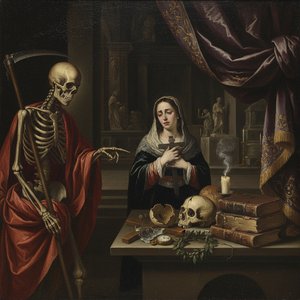
Juan de Valdés Leal: Baroque Realism, Memento Mori & Theatricality of Spanish Grief
Explore the powerful Baroque realism of Juan de Valdés Leal (1622-1690). Discover his somber masterpieces, iconic 'In Ictu Oculi', and profound explorations of mortality. Museum-quality reproductions available at OriginalUniqueArt.

Goyas 25 Mesterverk: En Reise Gjennom Spansk Kunsthistorie | OriginalUniqueArt.no
Utforsk Francisco Goyas 25 mest ikoniske malerier! Oppdag historiene bak mesterverkene, fra portretter til de mørke etsninge. Finn kunsttrykk av høy kvalitet og inspirasjon for din innredning på OriginalUniqueArt.no – ditt hjem fortjener tidløs spansk kunst.

The Dramatic Flourish: Exploring the Baroque Movement's Enduring Legacy in Art History
Explore the dramatic world of Baroque art! Discover iconic artists like Caravaggio & Rubens, defining techniques, and its lasting impact on art history. Expert insights for collectors & enthusiasts at OriginalUniqueArt.
