
 Forhåndsvisning
 Send
Send Del med andre
 Vis detaljer

 Last ned bildet
 Liknende objekter
 Røntgenundersøkelse
 Lysbildefremvisning
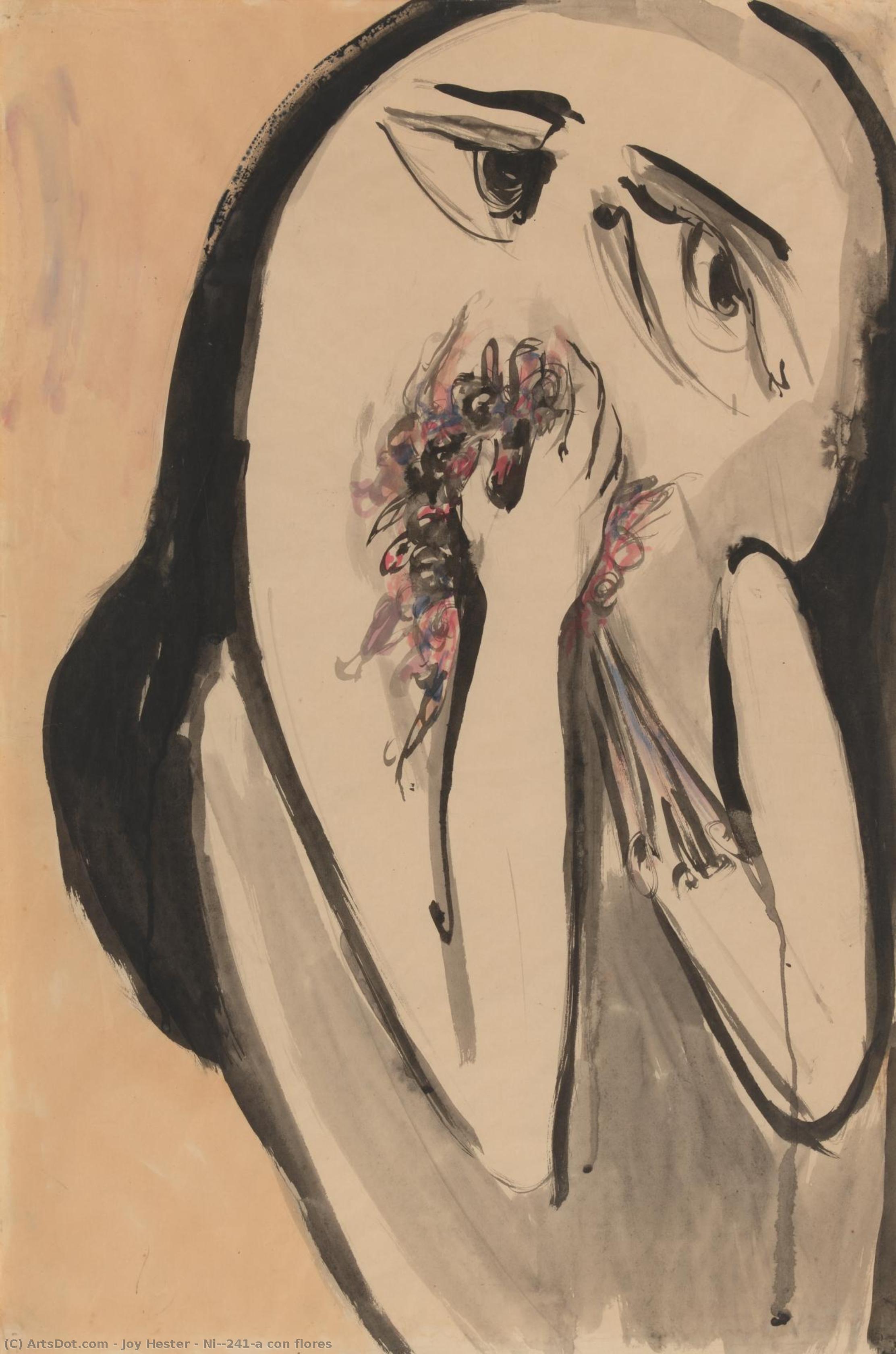
Niña con flores
 Watercolor
- WallArt
- Expressionism
 1956
1956- Modern
 76.0 x 50.0 cm
 Nasjonalgalleri i Melbourne
 Vis hele teksten
Giclée / Kunsttrykk
Giclée- eller lerretsprint av museumskvalitet med rask produksjon og fleksible valgmuligheter for etterbehandling. ( Kjøp håndlaget maleri Kjøp bilde)




P118B $10

P118H $10

P118W $10

P438Z $10

P508JH $12

P508YH $12

P805H $10

P805Z $10

P919BZ $10

P919G $10

P919XJ $10

P959ZH $10

P968JZ $12

W106C $8

W218G $10

W218JH $8

W218Y $10

W307PJ $10

W316G $10

W316PJ $8

W316Y $10

W398PJ $8

W4111J $10

W500HY $15

W500JH $15

W692G $12

W849H $8

W940BG $15

W953PJ $8




Velg mellom våre forhåndsdefinerte størrelser som bevarer kunstverkets opprinnelige proporsjoner.

Du kan oppgi egne mål for å tilpasse en spesifikk ramme eller et bestemt område. Dersom den valgte størrelsen ikke samsvarer med det originale bildets proporsjoner, vil vi enten beskjære kunstverket eller utvide bildet med en speilet eller ensfarget kant. En digital mockup vil bli sendt til din godkjenning før produksjonen starter.
Vennligst merk at forhåndsvisningen på skjermen ikke gjenspeiler den faktiske beskjæringen eller utvidelsen. Kun mockuppen vil vise den endelige komposisjonen nøyaktig.
Selv om tilpassede størrelser er tilgjengelige, anbefaler vi å velge et mål fra den forhåndsdefinerte listen for å bevare de originale proporsjonene.
Verdensomspennende levering () på 2 uker i stedet for standard 4/5 uker. (14 August)

Gratis ekspressfrakt over hele verden

Lerretsduk av høykvalitets lin

Full forsikring under transport

Garanti for refusjon av toll og importavgifter

Garantert korrekt fargegjengivelse

60 dagers returrett (kun ved feil)

100% pengene tilbake-garanti

Rabatt ved flere kjøp
 Glassalternativet er kun tilgjengelig i størrelser under 110 cm

Niña con flores
Giclée / Kunsttrykk
Størrelse på reproduksjon
-


Endelig pris
$ 80
Beskrivelse av samleobjektet
A Portrait of Sorrow and Resilience: Exploring Joy St Clair Hester’s “Niña con Flores”
Joy St Clair Hester's "Niña con Flores" (Girl with Flowers), created in 1956, is not merely a portrait; it’s a deeply resonant exploration of grief, memory, and the enduring strength of the human spirit. This arresting work, rendered primarily in evocative ink washes and punctuated by flashes of vibrant red and pink, immediately draws the viewer into a world steeped in melancholic beauty. Hester, a pivotal figure within Australia's burgeoning Modernist movement, masterfully employs a restrained yet intensely expressive style, characteristic of her engagement with the Heide Circle and the Angry Penguins.
The subject herself remains partially obscured, veiled by a dark, amorphous shape that suggests concealment or perhaps the lingering shadow of loss. Her face, though fragmented, is dominated by an arresting gaze – large, sorrowful eyes that seem to hold both vulnerability and a quiet defiance. This deliberate ambiguity invites speculation about her story, prompting us to project our own experiences of sadness and remembrance onto the canvas. The use of predominantly dark shades—charcoal greys, deep blacks—creates a sense of profound stillness, while strategically placed bursts of color – particularly the passionate reds and pinks of the blossoms erupting from her mouth – inject moments of startling intensity and symbolic weight.
Technique and Materials: A Dance of Ink and Wash
Hester’s technique is both delicate and assertive. The work is executed primarily in watercolor and ink wash on paper, a combination that lends itself beautifully to the creation of layered textures and subtle tonal shifts. Loose brushstrokes contribute to an atmosphere of immediacy and emotional rawness, while careful shading establishes depth and form. Notice how she utilizes broken washes—allowing the colors to bleed into one another—to create a sense of fluidity and movement within the composition. The deliberate lack of precise detail emphasizes the emotional impact over realistic representation; lines are used expressively to define features rather than as literal depictions.
The choice of ink, particularly black ink, is crucial to Hester’s signature style. It allows for a remarkable control—the ability to build up layers of dark tones with incredible precision, creating both dramatic contrasts and subtle gradations of value. The blossoms themselves are rendered with a surprising degree of detail, their vibrant hues acting as potent symbols within the broader context of the piece. The overall effect is one of controlled chaos – a visual representation of the turbulent emotions that lie beneath the surface.
Symbolism: Flowers, Grief, and Remembrance
The most striking element of “Niña con Flores” is undoubtedly the profusion of flowers emerging from the woman’s mouth. This imagery transcends mere botanical detail; it's a potent symbol of grief, loss, and perhaps even remembrance. The blossoms can be interpreted as representing the bittersweet nature of memory—beautiful yet tinged with sadness. They also suggest a connection to nature, offering a glimmer of hope amidst the prevailing darkness. The veil-like shape obscuring her face further reinforces this theme of concealment and unspoken sorrow.
Considering Hester’s own life – marked by the early loss of her father and later battling Hodgkin's disease – it is not surprising that her work frequently grapples with themes of mortality and resilience. “Niña con Flores” can be seen as a deeply personal meditation on these experiences, transformed into a universal expression of human vulnerability and enduring strength. The image resonates with the broader artistic tradition of exploring psychological states through symbolic imagery.
Historical Context: A Voice in the Australian Modernist Movement
Joy St Clair Hester’s work emerged during a pivotal period in Australian art history – the mid-20th century, when artists were actively seeking to forge a distinctly national identity. She was a key member of both the Heide Circle and the Angry Penguins, groups that challenged established artistic conventions and pushed the boundaries of modernism. Her association with these influential circles provided her with access to a vibrant intellectual and artistic community, but also exposed her work to critical scrutiny. Despite facing challenges in gaining widespread recognition during her lifetime, Hester’s legacy has steadily grown over time, cementing her place as one of Australia's most important Modernist artists.
Resources for further exploration include the National Gallery of Victoria’s collection (where “Niña con Flores” is held), online archives dedicated to Joy St Clair Hester, and scholarly articles examining her work within the context of Australian art history. WikiArt offers a valuable visual resource: https://www.wikiart.org/en/joy-hester/nina-con-flores-1956
Om kunstneren
Joy St Clair Hester (1920-1960): Australian Modernist renowned for emotionally charged ink drawings exploring love, loss, & the human psyche. A key figure of the Angry Penguins/Heide Circle.
Joy St Clair Hester, a pivotal figure in Australian Modernism, lived a life marked by both artistic fervor and personal hardship. Born in Elwood, Australia, in 1920, her early years were shadowed by the loss of her father, an event that would subtly yet profoundly influence the emotional depth of her later work. From her formative studies at St Michael’s Grammar School and Brighton Technical School, Hester demonstrated a clear artistic inclination, culminating in recognition at the National Gallery School in Melbourne where she won the Drawing Head from Life prize in 1938. This early success signaled not just technical skill but an emerging ability to capture the essence of human form—a talent that would become her signature. It was also during this period that Hester began to break free from traditional artistic constraints, seeking a more expressive and personal visual language.Early Life and Artistic Training
Joy St Clair Hester’s childhood in Elwood instilled within her a sensitivity to observation and emotion – qualities that would permeate her entire artistic career. Following the untimely death of her father at the age of twelve, she embarked on her formal education journey, attending St Michael's Grammar School from 1933 to 1937 and subsequently pursuing Commercial Art for a year at Brighton Technical School. Her dedication to honing her craft culminated in acceptance into the National Gallery School in Melbourne in 1938 where she excelled in drawing from life, securing the prestigious Drawing Head Prize—a testament to her burgeoning talent and unwavering commitment to artistic excellence. This formative experience established a foundation for her distinctive style, characterized by meticulous detail combined with profound psychological insight.The Heide Circle and Angry Penguins: Embracing Radical Experimentation
Hester’s artistic trajectory took its most decisive turn in 1938 with her encounter with Albert Tucker—a relationship that blossomed into both romantic companionship and a collaborative partnership. This connection propelled her into the orbit of Sunday Reed, a champion of Australian art who fostered an environment ripe for artistic innovation. Together they formed the Heide Circle alongside Sidney Nolan, Arthur Boyd, and Charles Blackman – artists united by a shared desire to challenge established conventions and forge new paths in visual expression. The Heide Circle’s ethos encouraged experimentation and dialogue, fostering a spirit of intellectual curiosity that profoundly shaped Hester's artistic vision. Simultaneously, she became a founding member of the Contemporary Art Society (CAS) and bravely stood alone as the sole female participant in the groundbreaking Angry Penguins movement—a bold assertion against prevailing societal norms and an embodiment of modernist ideals. Her work within this group powerfully conveyed its rebellious spirit and unwavering commitment to pushing boundaries.A Distinctive Style: From Observation to Emotion
Hester’s artistic development was characterized by a remarkable shift away from conventional techniques toward bolder forms and more expressive lines. Initially influenced by traditional art training, she swiftly embraced a style rooted in observation and imbued with intense emotion. The 1940s witnessed her exploration of everyday life—street scenes and factory workers rendered with increasing sensitivity to human experience. However, it was her decisive decision to abandon oil painting in favor of watercolor and inks that truly cemented her artistic identity. This choice allowed for unparalleled fluidity and immediacy – perfectly suited to conveying the complexities of psychological states. Her lines became charged with emotion, often dark and sinuous—creating images that were both haunting and compelling. The shadow of World War II permeated this period, fueling her artistic impulse and prompting her to confront existential questions through visual representation. This era marked the genesis of Hester’s signature style – a raw, intensely personal expressionism conveyed through the evocative power of ink.Themes of Mortality, Love, and Loss: Exploring the Human Psyche
Joy St Clair Hester is perhaps best remembered for her series *Face,* *Sleep,* and *Love* (1948–49)—a profound meditation on human emotion and relationships. These works transcend mere portraiture; they delve into the depths of psychological experience with unflinching honesty—revealing a remarkable sensitivity to inner life. Recurring motifs – faces rendered with arresting detail, symbolic floral elements – reappear throughout her oeuvre, serving as visual anchors for her explorations of emotional landscapes. The awareness of mortality—deeply rooted in personal tragedy—became a central theme in her art—influenced by the early loss of her father and later confronted by Hodgkin’s disease—she channeled these experiences into powerful artistic statements. Her subsequent creations—including *The Lovers* (1956–58)—continued this trajectory—portraying love not as idealized romance but as a fragile and often painful reality. Hester's art stands as a testament to her ability to transform personal suffering into universal expressions of the human condition – securing her place among Australia’s most influential modernist artists. ## Legacy and Enduring Influence Despite facing obstacles in achieving widespread recognition during her lifetime, Joy St Clair Hester’s artistic legacy continues to inspire contemporary artists—particularly those drawn to expressionism and psychological exploration. Her bold use of line, masterful technique, and unwavering commitment to portraying the human psyche solidified her position as a pioneer of Australian Modern Art. Hester's enduring influence can be seen in the work of subsequent generations of artists who embrace vulnerability and strive to capture the essence of human experience—ensuring that her artistic vision remains relevant and resonant for years to come.
Joy St Clair Hester
1920 - 1960 , Australia
Kort om kunstneren
- Artistic Movement Or Style: Expressionism og Modernism
- Artists Or Movements Influenced By This Artist:
- Angry Penguins
- Heide Circle
- Artists Who Influenced This Artist:
- Ailsa O'Connor
- Danila Vassilieff
- Date Of Birth: August 21, 1920
- Date Of Death: December 4, 1960
- Full Name: Joy St Clair Hester
- Nationality: Australiansk
- Notable Artworks:
- Face serien
- Love serien
- The Lovers
- Place Of Birth: Elsternwick, Australia
Relaterte artikler
Topp 10 Kunstverk som Våkner Gleden: Malerier for Ditt Hjem
Opplev gleden gjennom kunsten! Utforsk topp 10 malerier av Van Gogh, Monet & Klimt som vekker positive følelser. Interiørdesign-tips og museumskvalitets reproduksjoner på OriginalUniqueArt.com. Finn din favoritt!

Surrealist Expressionism: A Visual Journey Through Dream Logic and Raw Emotion
Dive into the visceral world of Surrealist Expressionism. Explore how dream logic meets raw emotion through a visual journey of iconic techniques, post-war history, and bold aesthetics to transform your modern space with high-impact, unforgettable art.
Surrealist Dreamscapes: A Curated Journey Through the Subconscious Majesty of Surrealism
Embark on a sophisticated journey through Surrealist dreamscapes. Explore the profound symbolism of masters like Dalí and discover how to curate breathtaking, museum-quality surrealist art for your private collection with expert guidance.
Surrealismens 10 Mesterverk: Kunst som utfordrer virkeligheten – OriginalUniqueArt.no
Utforsk surrealismens 10 mest ikoniske malerier! Oppdag Salvador Dalí, René Magritte og andre mestere. Lær om drømmekunst, teknikker & historien bak disse tidløse verkene. Finn museumskvalitets kunsttrykk for ditt hjem på OriginalUniqueArt.com.

El Grecos 25 Mesterverk: Kunst, Historie og Inspirasjon for Ditt Hjem
Utforsk El Grecos 25 mest ikoniske malerier! Oppdag historien bak spansk renessanses mesterverk, fra 'Gravleggelsen av grev Orgaz' til dramatiske portretter. Finn kunsttrykk og reproduksjoner for ditt hjem på OriginalUniqueArt.com.

