

 Forhåndsvisning
 Send
Send Del med andre
 Vis detaljer

 Last ned bildet
 Liknende objekter
 Røntgenundersøkelse
 Lysbildefremvisning
 Statistikk
Mr. Oldham and his Friends
 Acrylic On Canvas
- WallArt
- Rococo Period
 1750
1750 105.0 x 130.0 cm
 Tate Britain
 Vis hele teksten
Håndlaget oljereproduksjon
Håndmalt olje på lerret i din valgte størrelse og ramme, laget på bestilling av våre kunstnere. ( Bytt til trykk Bytt til digitalt bilde)




P118B $10

P118H $10

P118W $10

P438Z $10

P508JH $12

P508YH $12

P805H $10

P805Z $10

P919BZ $10

P919G $10

P919XJ $10

P959ZH $10

P968JZ $12

W106C $8

W218G $10

W218JH $8

W218Y $10

W307PJ $10

W316G $10

W316PJ $8

W316Y $10

W398PJ $8

W4111J $10

W500HY $15

W500JH $15

W692G $12

W849H $8

W940BG $15

W953PJ $8




Velg mellom våre forhåndsdefinerte størrelser som bevarer kunstverkets opprinnelige proporsjoner.

Du kan angi egne mål for å tilpasse en spesifikk ramme eller plass. Dersom den valgte størrelsen ikke samsvarer med originalbildets proporsjoner, vil vi enten beskjære kunstverket eller utvide maleriet med ytterligere håndmalte elementer. En digital mockup vil bli sendt til din godkjenning før produksjonen starter.
Vennligst merk at forhåndsvisningen på skjermen ikke gjenspeiler den faktiske beskjæringen eller utvidelsen. Kun mockuppen vil vise den endelige komposisjonen nøyaktig.
Selv om tilpassede størrelser er tilgjengelige, anbefaler vi å velge et mål fra den forhåndsdefinerte listen for å bevare de originale proporsjonene.
Etter bestilling vil OriginalUniqueArt.com-teamet sende e-post til kunden for instruksjoner og sende et utkast (mockup) som forhåndsvisning.
Verdensomspennende levering () på 3–4 uker i stedet for standard 5 uker. (13 September). Ingen kompromisser med kvaliteten.

Gratis ekspressfrakt over hele verden

Lerretsduk av høykvalitets lin

Full forsikring under transport

Garanti for refusjon av toll og importavgifter

Garantert korrekt fargegjengivelse

100 dagers returrett (kun ved mangler)

100% pengene tilbake-garanti

Rabatt ved flere kjøp
 Glassalternativet er kun tilgjengelig i størrelser under 110 cm

Mr. Oldham and his Friends
Teknikk for reproduksjon
Størrelse på reproduksjon
-


Endelig pris
$ 300
A Portrait of Georgian Camaraderie: Joseph Highmore’s Mr. Oldham and His Friends
Joseph Highmore's “Mr. Oldham and his Friends,” painted in 1750, stands as a quintessential example of Rococo portraiture—a genre that flourished during the reign of George II, capturing not just likeness but also an atmosphere of refined leisure and intellectual discourse.
The painting depicts four men seated around a mahogany table laden with wine glasses. Their expressions convey relaxed conviviality; one man wears a hat perched atop his head, adding a subtle element of aristocratic elegance to the composition. The artist’s meticulous attention to detail extends beyond mere representation—notice the careful rendering of fabrics and textures, indicative of Highmore's mastery of oil paint technique.
Highmore skillfully employed chiaroscuro – dramatic contrasts between light and shadow – to sculpt the figures and imbue them with depth. This technique, borrowed from Baroque painters like Rembrandt, elevates the scene beyond a simple depiction of individuals; it suggests an inner life, hinting at conversations and shared experiences unseen by the viewer.
Beyond its aesthetic beauty, “Mr. Oldham and His Friends” speaks to the broader cultural values of Georgian England. The gathering represents a celebration of friendship, intellectual curiosity, and social refinement—values prized within the aristocratic circles of the time. The inclusion of wine symbolizes indulgence and pleasure, reflecting the opulent tastes of the era.
Furthermore, scholars believe Highmore’s depiction subtly underscores the importance of patronage – the support provided by wealthy individuals like Oldham – in fostering artistic creativity. This painting exemplifies how art served as a conduit for social status and cultural prestige.
- Artist: Joseph Highmore
- Year Painted: 1750
- Medium: Oil on Canvas
- Size: 105 x 130 cm
- Style: Rococo
Reproductions of “Mr. Oldham and His Friends” offer a captivating glimpse into Georgian society, allowing collectors and interior designers alike to appreciate Highmore’s artistic legacy and the enduring appeal of this evocative portrait.
Om kunstneren
A Life Dedicated to Likeness and Narrative
Joseph Highmore, born in London in 1692, emerged as a pivotal figure within the evolving landscape of 18th-century English art. His journey began amidst familial expectations geared towards a legal career—a path he ultimately abandoned at seventeen to wholeheartedly pursue his artistic inclinations. This decisive turn led him to the studios of Sir Godfrey Kneller and anatomy lectures delivered by William Cheselden, foundational experiences that shaped his technical skill and profound understanding of the human form. Initially influenced by the grand Baroque tradition exemplified by Kneller, Highmore’s style would gradually embrace the more delicate aesthetics of the Rococo period, a shift reflective of broader cultural currents sweeping across Europe. He wasn't merely a painter; he was a keen observer of society, and his canvases became mirrors reflecting the lives, manners, and moral concerns of Georgian England.From Royal Patrons to Middle-Class Commissions
Highmore’s early career benefited from patronage within royal circles, particularly during the 1730s and 40s. This afforded him opportunities to portray prominent figures like King George II and, famously, General James Wolfe—portraits that demonstrate not only his technical prowess but also a remarkable ability to capture character and presence. The meticulous attention to detail characteristic of Highmore’s technique – achieved through painstaking anatomical studies and masterful use of chiaroscuro – exemplifies the Baroque influence he initially absorbed from Kneller's Academy. However, Highmore’s artistic vision swiftly adapted to the burgeoning tastes of the Georgian era, securing commissions from a growing middle class eager for depictions that celebrated domestic life and social status. Consider his depiction of Mr Matthew Bell, where Highmore skillfully captures the sitter’s dignified composure—a hallmark of Rococo realism—demonstrating an understanding of psychological nuance rarely found in earlier artistic traditions. Mr Matthew Bell exemplifies this stylistic evolution, showcasing a refined elegance that speaks to the values of the time.A Journey Through Europe: Influences and Artistic Exploration
A formative journey through the Netherlands and France between 1732 and 1734 further broadened Highmore’s artistic horizons, exposing him to the monumental works of Rubens and van Dyck—masters whose stylistic innovations profoundly impacted his own approach to painting. The grandeur and dynamism of Rubens's canvases instilled in Highmore a desire for dramatic composition and expressive handling of light, while van Dyck’s portraits championed naturalism and psychological insight. These encounters fueled his artistic experimentation and solidified his commitment to capturing the human form with unparalleled accuracy—a pursuit that would define his oeuvre throughout his career. The influence of these masters is palpable in Highmore's compositions, where he strives for a harmonious balance between formal elegance and emotional resonance.Illuminating Virtue: ‘Pamela’ and Beyond
Perhaps Highmore’s most enduring legacy resides in his contribution to the popular novel *Pamela, or Virtue Rewarded* by Samuel Richardson. In 1744, he undertook the ambitious task of illustrating twelve scenes from the book—a project that transcended mere decorative embellishment and served as a deliberate interpretation of Richardson's moral narrative. These engravings, executed collaboratively with Benoist and Louis Truchy, achieved widespread dissemination, effectively introducing Richardson’s story to a vast readership and establishing Highmore as an instrumental figure in shaping literary taste during the Rococo period. The careful consideration given to each illustration—reflecting Highmore’s meticulous attention to detail and his profound understanding of human psychology—underscores his artistic sensitivity and intellectual engagement with contemporary cultural trends. Anthony Highmore, his son, continued this tradition of artistic exploration, demonstrating a similar dedication to capturing the essence of human experience through visual mediums.A Legacy of Realism and Refinement
Highmore’s artistic practice extended beyond portraiture and illustration; he pursued historical painting with considerable fervor—most notably donating Hagar and Ishmael to the Foundling Hospital in 1762. This poignant depiction captures a moment from biblical narrative, imbued with symbolic significance and executed with masterful technique—a testament to Highmore’s artistic versatility and his commitment to addressing social concerns through art. His meticulous rendering of drapery and flesh tones exemplifies the stylistic refinements characteristic of the Rococo period, demonstrating an unwavering pursuit of aesthetic excellence. Joseph Edward Southall (1861-1944), a descendant of Highmore, carried on this tradition of artistic craftsmanship, furthering Highmore’s legacy as a master of tonal painting and a champion of Arts & Crafts ideals. He passed away in 1780, aged eighty-seven, leaving behind a body of work that continues to inspire admiration for its beauty and intellectual depth—a testament to the enduring power of Highmore's artistic vision.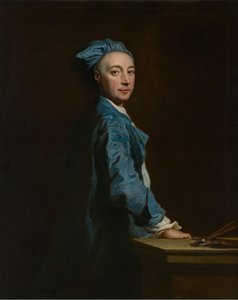
Joseph Highmore
1692 - 1780 , Storbritannia
Kort om kunstneren
- Artistic Movement Or Style: Rococo
- Artists Who Influenced This Artist:
- Kneller
- Rubens
- van Dyck
- Date Of Birth: 1692
- Date Of Death: 1780
- Full Name: Joseph Highmore
- Nationality: Britisk
- Notable Artworks:
- Pamela illustrasjoner
- Mr Matthew Bell
- Hagar og Ishmael
- Place Of Birth: London, UK
Relaterte artikler

The Allure of Elegance in Art: A Historical & Aesthetic Exploration of Refinement & Grace
Explore the exquisite world of Rococo art! Discover its history, masters (Watteau, Boucher & more), and defining elegance. Expert insights for collectors seeking museum-quality reproductions & custom portraits.

Rokokkoens Mesterverk: Topp 10 Kunstverk som Definerte en Epoke | OriginalUniqueArt.no
Oppdag Rokokkoens 10 mest ikoniske mesterverk! Lær om Boucher, Fragonard og Watteau – kunsthistorie, pastellfarger & elegante interiører. Finn museumskvalitets reproduksjoner på OriginalUniqueArt.no.

The Rococo Aesthetic: Opulence, Rebellion & the Pursuit of Pleasure in 18th-Century Art
Explore the opulent world of Rococo art! Discover its origins, key artists like Watteau & Boucher, and lasting influence on design. Expert insights for collectors & enthusiasts.
Vinens Palett: En Kuratorisk Veiledning til Kunstvalg i Vinkjellere og Smakerom – Forbedring av Oenologisk Opplevelse Gjennom Landskap, Symbolikk og Interiørharmoni
Lær hvordan du skaper et unikt smakerom med kunst! Ekspertveiledning om landskap, symbolikk og interiørharmoni for å fremheve vinens smaksopplevelse. Inspirasjon & tips.

Joseph Highmore: Moral Tales & Domestic Genre in 18th-Century British Art
Explore the captivating world of Joseph Highmore, a leading British Rococo painter. Discover his elegant portraits, insightful 'Pamela' illustrations & contributions to 18th-century art history. Learn more at OriginalUniqueArt.