
 Forhåndsvisning
 Send
Send Del med andre
 Vis detaljer

 Last ned bildet
 Liknende objekter
 Røntgenundersøkelse
 Lysbildefremvisning
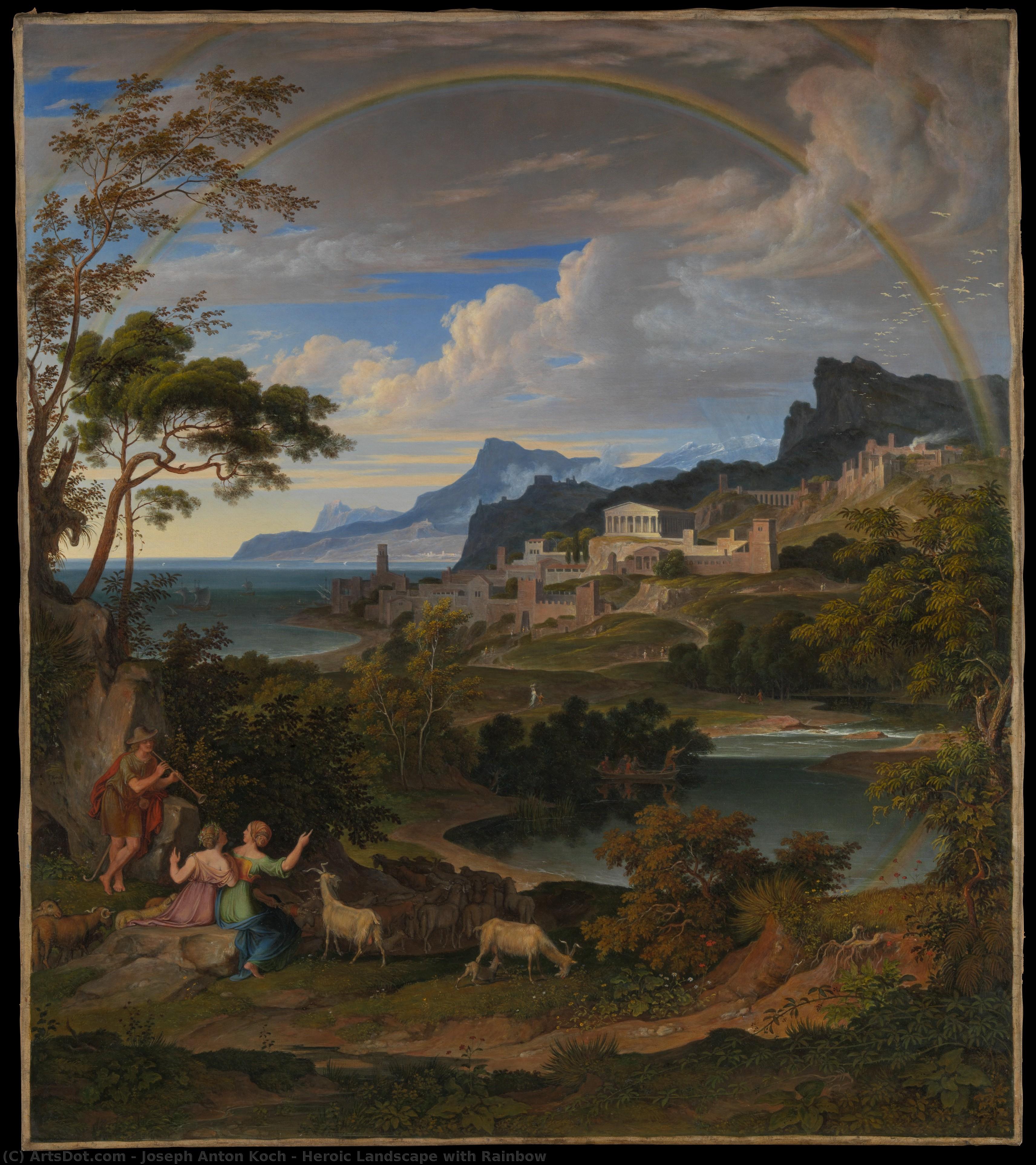
Heroic Landscape with Rainbow
 Oil On Canvas
- WallArt
- Neoclassicism and Romanticism
 1824
1824 109.0 x 96.0 cm
 Metropolitan Museum of Art
 Vis hele teksten
Kjøp et høyoppløselig, forbedret digitalt bilde som er langt bedre enn forhåndsvisningen på nettet.
Hver fil er omhyggelig klargjort av våre egne spesialister ved hjelp av avanserte verktøy og profesjonell manuell retusjering. Vi sørger for at hvert bilde har eksepsjonell klarhet, presis fargegjengivelse og fine detaljer.
Den endelige filen leveres via e-post innen 72 timer, optimalisert for umiddelbar bruk i profesjonelle, redaksjonelle og trykte miljøer. Dette er den samme kvaliteten som benyttes av ledende designstudioer, utgivere og gallerier.
Digitalt bilde
Last ned en høyoppløselig fil for personlig bruk, utskrift og kreative prosjekter. ( Kjøp trykk Kjøp håndlaget maleri)
Inkludert i alle bestillinger av digitale bilder
Ekspert digital levering, garantert
Når du velger OriginalUniqueArt.com, får du ikke bare et bilde – du mottar et profesjonelt forbedret digitalt kunstverk, skapt med presisjon og med en garantert tilfredshetsgaranti. Her er alt som automatisk følger med din bestilling:

Rask digital levering
Din høyoppløselige digitale bildefil sendes til din e-post innen 72 timer etter bestilling – klar til umiddelbar bruk.

KI-forbedret digital fil
Ditt kunstverk blir profesjonelt optimalisert ved hjelp av avanserte AI-verktøy og manuell redigering, noe som sikrer maksimal detaljrikdom, klarhet og fargegjengivelse.

Gratis livslang nyutlevering
Har du ved et uhell slettet eller mistet filen din? Ingen bekymring – vi sender den på nytt når som helst, helt gratis.

Ingen importavgifter – noen gang
Nyt ditt kunstverk umiddelbart uten toll, avgifter eller leveringskostnader – digitale nedlastinger er alltid avgiftsfrie.

Garantert fargenøyaktighet
Vi sikrer at ditt digitale bilde gjenspeiler de originale fargene så nøyaktig som mulig ved hjelp av profesjonelle verktøy og fargehåndtering.

60 dagers tilfredshetsgaranti
Hvis du ikke er fornøyd med ditt digitale bilde, vil vi revidere det eller refundere 100% innen 60 dager – uten spørsmål.

100% Penggaranti
Ikke fornøyd? Få full refusjon innen 60 dager etter at du har mottatt din digitale fil – uten spørsmål.

Rabatt ved storkjøp
Kjøp 3 bilder, spar 10% - Kjøp 5, spar 15% - Kjøp 10+, spar 20%. Ideelt for kreative prosjekter, gallerier og byråer.
Beskrivelse av samlerobjektet
The Sublime Echoes of Arcadia: Joseph Anton Koch’s “Heroic Landscape with Rainbow”
Joseph Anton Koch's "Heroic Landscape with Rainbow," painted in 1824, isn’t merely a depiction of a mountain vista; it’s an immersive experience, a carefully constructed dialogue between the grandeur of nature and the aspirations of the Romantic spirit. Born in the Austrian Alps, Koch possessed an innate understanding of the rugged beauty of his homeland – a landscape he would later translate onto canvas with remarkable precision and emotional depth. This particular painting represents the culmination of years of artistic exploration, evolving from earlier, more literal interpretations of classical landscapes to a powerfully subjective vision that anticipates the burgeoning Romantic movement.
Koch’s style is deeply rooted in the Neoclassical tradition inherited from artists like Claude Lorrain and Nicolas Poussin. However, he deliberately subverts these established conventions, injecting a palpable sense of drama and emotional intensity. The composition itself is meticulously balanced – the towering peaks of the Alps dominate the left side, anchoring the scene with their imposing solidity, while the gently sloping valley unfolds to the right, inviting the viewer into its embrace. The use of atmospheric perspective—the subtle blurring of distant features—creates a convincing sense of depth and scale, drawing us into this vast, almost overwhelming, natural world.
A Symphony of Light and Color
Koch’s masterful handling of color is central to the painting's impact. He employs a rich palette of blues, greens, and browns to capture the varied hues of the mountains and valleys, punctuated by the vibrant bursts of the rainbow arching across the sky. The light, particularly, is exquisitely rendered—a diffused, almost ethereal glow that imbues the scene with an otherworldly quality. Notice how Koch uses highlights to accentuate the textures of the rocks and foliage, creating a tactile sense of realism while simultaneously maintaining a dreamlike atmosphere. The rainbow itself isn’t simply a decorative element; it's a symbol of hope, promise, and the divine order underlying the chaos of nature – a recurring motif in Romantic art.
Echoes of Mythology and the Sublime
Koch’s choice to depict a landscape reminiscent of ancient Greece—hence the title “Greek Landscape”—is significant. This reference taps into the Romantic fascination with classical mythology, suggesting that the natural world is imbued with timeless beauty and spiritual significance. The scene evokes images of Arcadia, the idyllic realm of shepherds and poets in Greek legend – a place of unspoiled nature and harmonious existence. The figures scattered across the rocks—a small group observing the rainbow—add to this sense of human connection with the sublime, suggesting that even amidst the vastness of nature, there is room for contemplation and wonder.
A Legacy of Romantic Vision
“Heroic Landscape with Rainbow” stands as a pivotal work in Koch’s artistic development. It represents a decisive shift away from purely imitative landscape painting towards a more personal and expressive style—a hallmark of the Romantic era. Koch's influence extended far beyond his own lifetime, inspiring generations of German landscape painters who sought to capture the emotional power of nature. The painting’s enduring appeal lies in its ability to transport us to another time and place, reminding us of the beauty, mystery, and profound significance of the natural world. It is a testament to Koch's skill as an artist and his deep understanding of the human spirit.
Om kunstneren
The Architect of the Heroic Landscape
Joseph Anton Koch stands as a singular figure in Austrian art history—a painter who deftly navigated the shifting currents of Neoclassicism into the burgeoning fervor of German Romanticism. Born in 1768 in Elbigenalp, Austria, his early life was marked by a pastoral simplicity that would profoundly shape his artistic vision; tending cattle in his youth instilled in him an intimate appreciation for the natural world, a connection that later manifested in his monumental depictions of earth and sky. A fortuitous recommendation from Bishop Umgelder secured him a prestigious academic education at Stuttgart’s Karlsschule, a rigorous military academy where discipline and intellectual pursuit converged. However, Koch's youthful spirit rebelled against such constraints, leading to a brief but formative wanderlust through France and Switzerland before he finally established himself in the artistic crucible of Rome in 1795.
In the heart of Italy, Koch found kinship with fellow painter Asmus Jacob Carstens, adopting a style often referred to as the heroic aesthetic. This approach initially mirrored Carstens’ literal interpretations of mythological narratives, characterized by a certain sculptural clarity and formal rigor. Koch demonstrated his technical prowess not only through paint but also through the meticulous art of printmaking, notably etching the pages of Carrend's Les Argonautes. This period of his life was defined by a mastery of detail and a command over line that would serve as the foundation for his later, more expansive compositions.
A Visionary Evolution: From Myth to Mountain
As his career progressed, Koch underwent a profound artistic evolution, transitioning from the structured narratives of Neoclassicism toward the sweeping grandeur of landscape painting. He began to reimagine classical ideals through the lens of the Austrian Alps and the Italian countryside, producing works that felt both timeless and intensely visceral. Influenced by the monumental compositions of masters like Nicolas Poussin and Claude Lorrain, Koch developed a unique way of organizing space, where dramatic lighting and vast, rugged terrains created a sense of awe. His landscapes were never merely topographical records; they were emotional journeys through heroic scenery.
His ability to blend the classical with the romantic is perhaps best seen in his treatment of light and atmosphere. In works such as Heroic Landscape with Rainbow, he utilizes a Baroque sensibility to introduce dramatic weather elements that punctuate the stillness of the mountains. This technique allowed him to bridge two eras: the ordered, rational world of the Enlightenment and the emotive, untamed spirit of Romanticism. Even when depicting serene scenes, such as the Monastery of San Francesco di Civitella in the Sabine Mountains, there remains an underlying sense of the sublime—a realization of nature's immense power and scale.
Legacy and Historical Significance
The later years of Koch's life were marked by both movement and resilience. Facing financial hardships exacerbated by Napoleon’s invasions, he relocated to Vienna in 1812. In this new setting, he flourished under the patronage of influential intellectuals like Friedrich Schlegel and became a central figure in the Germanic artistic tradition. His work during this period began to reflect a shift toward harsher, more dramatic elements, further cementing his role as a pioneer of the landscape genre.
The historical significance of Joseph Anton Koch lies in his ability to transform the landscape from a secondary, decorative element into a primary vehicle for philosophical and emotional expression. His contributions can be summarized through several key artistic pillars:
- Synthesis of Styles: He successfully merged the formal discipline of Neoclassicism with the emotional depth of German Romanticism.
- The Heroic Aesthetic: He redefined landscape painting by introducing a sense of monumental scale and dramatic, "heroic" compositions.
- Technical Mastery: His skill spanned from the delicate precision of etching to the sweeping, atmospheric brushwork required for vast mountain vistas.
- Cultural Bridge: He acted as a vital link between the classical traditions of Rome and the emerging nationalistic landscape movements in Austria and Germany.
Today, Koch is remembered not just as an Austrian painter, but as a visionary who taught viewers to look upon the mountains and see within them the very soul of the sublime.

Joseph Anton Koch
1768 - 1839 , Austria
Kort om kunstneren
- Artistic Movement Or Style: Neoclassicism & Romanticism
- Artists Or Movements Influenced By This Artist: ['Romantic painting']
- Artists Who Influenced This Artist: ['Asmus Jacob Carstens']
- Date Of Birth: 1768
- Date Of Death: 1839
- Full Name: Joseph Anton Koch
- Nationality: Austrian
- Notable Artworks:
- The Upland near Bern
- Landscape with Abraham and the Three Angels in the Valley of Mambre
- Heroic Landscape with Rainbow
- Place Of Birth: Elbigenalp, Austria

