- Forsiden

- Digitalt bildeoppslag
- jörg ratgeb
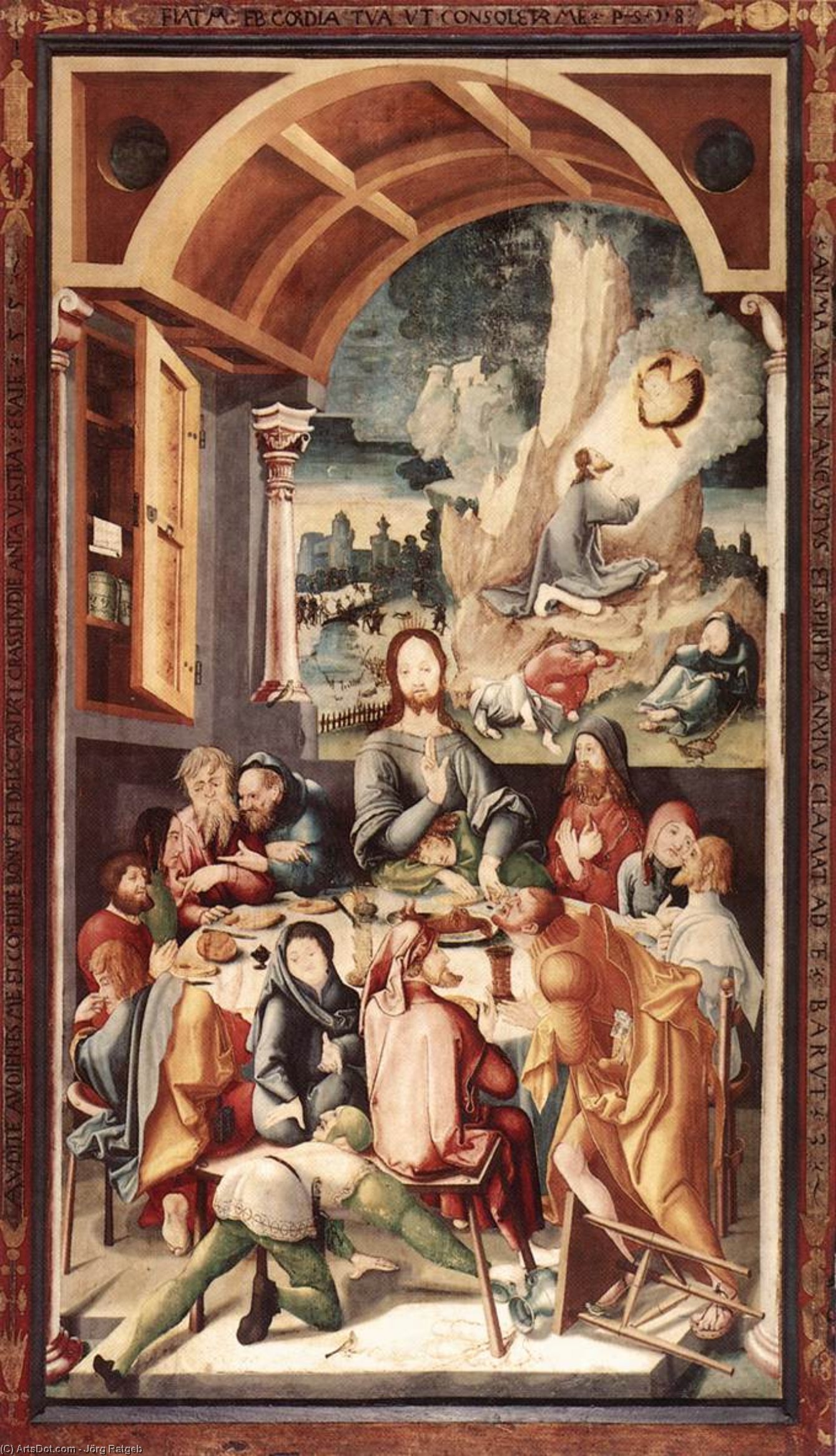
- Last Supper
 Bestill trykk Bestill maleri
 Send
Send
 Del med andre
 Vis detaljer
 Legg til i favoritter

 Last ned bildet
 Liknende objekter
 Røntgenundersøkelse
 Lysbildefremvisning
Last Supper


 Vis hele teksten
Kjøp et høyoppløselig, forbedret digitalt bilde som er langt bedre enn forhåndsvisningen på nettet.
Hver fil er omhyggelig klargjort av våre egne spesialister ved hjelp av avanserte verktøy og profesjonell manuell retusjering. Vi sørger for at hvert bilde har eksepsjonell klarhet, presis fargegjengivelse og fine detaljer.
Den endelige filen leveres via e-post innen 72 timer, optimalisert for umiddelbar bruk i profesjonelle, redaksjonelle og trykte miljøer. Dette er den samme kvaliteten som benyttes av ledende designstudioer, utgivere og gallerier.
Digitalt bilde
Last ned en høyoppløselig fil for personlig bruk, utskrift og kreative prosjekter.
Inkludert i alle bestillinger av digitale bilder
Ekspert digital levering, garantert
Når du velger OriginalUniqueArt.com, får du ikke bare et bilde – du mottar et profesjonelt forbedret digitalt kunstverk, skapt med presisjon og med en garantert tilfredshetsgaranti. Her er alt som automatisk følger med din bestilling:

Rask digital levering
Din høyoppløselige digitale bildefil sendes til din e-post innen 72 timer etter bestilling – klar til umiddelbar bruk.

KI-forbedret digital fil
Ditt kunstverk blir profesjonelt optimalisert ved hjelp av avanserte AI-verktøy og manuell redigering, noe som sikrer maksimal detaljrikdom, klarhet og fargegjengivelse.

Gratis livslang nyutlevering
Har du ved et uhell slettet eller mistet filen din? Ingen bekymring – vi sender den på nytt når som helst, helt gratis.

Ingen importavgifter – noen gang
Nyt ditt kunstverk umiddelbart uten toll, avgifter eller leveringskostnader – digitale nedlastinger er alltid avgiftsfrie.

Garantert fargenøyaktighet
Vi sikrer at ditt digitale bilde gjenspeiler de originale fargene så nøyaktig som mulig ved hjelp av profesjonelle verktøy og fargehåndtering.

60 dagers tilfredshetsgaranti
Hvis du ikke er fornøyd med ditt digitale bilde, vil vi revidere det eller refundere 100% innen 60 dager – uten spørsmål.

100% Penggaranti
Ikke fornøyd? Få full refusjon innen 60 dager etter at du har mottatt din digitale fil – uten spørsmål.

Rabatt ved storkjøp
Kjøp 3 bilder, spar 10% - Kjøp 5, spar 15% - Kjøp 10+, spar 20%. Ideelt for kreative prosjekter, gallerier og byråer.
Om kunstneren
Alessandro di Mariano Filipepi: The Genesis of a Titan
Tiziano Vecellio, better known as Titian, stands as one of the most pivotal figures in the history of Western art – a master whose influence resonated through centuries and continues to inspire artists today. Born around 1488/90 in Pieve di Cadore, a small town nestled in the foothills of the Dolomites near Belluno in northeastern Italy, Titian’s early life was steeped in the traditions of the Veneto region. His father, Gregorio Vecellio, was a woodcarver and craftsman, while his mother, Lucia Pighetti, came from a family of textile weavers – a lineage that would subtly inform Titian's later fascination with texture and surface. Unlike many artists of his time who entered the workshop of established masters, Titian’s artistic journey began with a somewhat unconventional apprenticeship under Domenico Pistrucci, a painter associated with the court of Andrea Mantegna in Padua. This early exposure to Mantegna’s meticulous detail and classical influences proved crucial, laying the groundwork for Titian's own sophisticated technique. However, it was his subsequent time spent working alongside Giorgione in Venice that truly shaped his artistic vision – a period marked by experimentation with color, light, and atmospheric perspective, elements that would become hallmarks of his distinctive style. Titian’s early works demonstrate a clear debt to Mantegna, yet they quickly evolved into something uniquely Venetian, characterized by a vibrant palette and a loose, painterly approach that prioritized capturing the essence of a scene over strict adherence to academic rules.The Venetian Renaissance: A Crucible for Artistic Innovation
Titian's arrival in Venice coincided with a period of extraordinary artistic ferment – the height of the Venetian Renaissance. Unlike the more restrained and formal style prevalent in Florence, Venetian painting embraced bold colors, dramatic lighting, and a sensual approach to depicting the human form. Giorgione’s influence was particularly profound, demonstrating a masterful use of color and an interest in capturing fleeting moments of beauty and emotion. Titian quickly absorbed these lessons, developing his own distinctive voice within this vibrant artistic milieu. He wasn't merely a follower; he actively challenged conventions, pushing the boundaries of what was considered acceptable in painting at the time. His early works, such as *Landscape with a Goat* and *Two Satyrs in a Landscape*, reveal a fascination with capturing the beauty of nature – not just its physical form but also its atmosphere and mood. These paintings are characterized by loose brushwork, subtle color variations, and an emphasis on creating a sense of depth and space. Crucially, Titian’s work was deeply intertwined with the cultural life of Venice, serving as court painter to prominent families like the Mocenigo and Doria families, and later becoming a favored artist of the Habsburg emperors.The Evolution of a Master: From Early Landscapes to Grand Portraits
Titian's artistic development spanned several distinct phases, each reflecting his evolving interests and techniques. His early years were dominated by landscapes – atmospheric scenes that showcased his mastery of color and light. However, as he matured, Titian increasingly turned to portraiture, establishing himself as one of the greatest portrait painters of his era. His portraits are remarkable not only for their technical skill but also for their psychological depth. He possessed a rare ability to capture the character and personality of his subjects, conveying their status, wealth, and inner lives with subtle gestures and expressions. The Emperor Charles V portrait is a prime example – a monumental work that embodies Titian’s ambition and mastery of color and composition. Throughout his long career, Titian continued to experiment with different genres, producing mythological scenes, religious altarpieces, and even genre paintings depicting everyday life. His style remained remarkably consistent, characterized by a loose brushwork, vibrant colors, and a sensual approach to form. Even as he aged, Titian’s work retained its freshness and vitality, demonstrating his extraordinary talent and dedication to the craft of painting.Major Works and Lasting Influence
Titian's oeuvre is vast and diverse, encompassing a remarkable range of subjects and styles. Among his most celebrated works are *The Birth of Venus*, *Sacred and Profane Love*, *Bacchus and Ariadne*, and numerous altarpieces for Venetian churches. *The Birth of Venus*, painted around 1546-48, is arguably his most iconic work – a sensuous depiction of the goddess Venus emerging from a seashell, embodying both classical beauty and Renaissance ideals. *Sacred and Profane Love*, completed in 1514-15, explores the duality of human experience through a complex allegorical composition. His altarpieces, such as the *Assumption of the Virgin* for Santa Maria Gloriosa dei Frari, demonstrate his ability to create monumental works that combine religious symbolism with dramatic color and dynamic movement. Titian’s influence on subsequent generations of artists was profound. His use of color, his loose brushwork, and his sensual approach to form inspired painters such as Rubens, Rembrandt, and Turner. His emphasis on capturing the essence of a scene rather than slavishly copying reality paved the way for later developments in painting – particularly the rise of Romanticism.A Legacy Forged in Color
Titian died in Venice in 1576 at the age of 87/88, leaving behind a legacy that continues to captivate and inspire. His paintings are housed in major museums around the world, including the National Gallery in London, the Prado Museum in Madrid, and the Galleria dell’Accademia in Venice. More than just a painter, Titian was a pioneer – a master of color, light, and composition who fundamentally altered the course of Western art history. His work stands as a testament to the power of artistic vision and the enduring beauty of the Venetian Renaissance. He remains not only one of the greatest painters of all time but also a symbol of Venice itself – a city renowned for its wealth, its culture, and its unparalleled contribution to the world of art.
jörg ratgeb
1485 - 1526 , Germany
Kort om kunstneren
- Artistic Movement Or Style: Venetian School
- Artists Or Movements Influenced By This Artist:
- Tintoretto
- Veronese
- Artists Who Influenced This Artist:
- Giorgione
- Giovanni Bellini
- Date Of Birth: c. 1488/90
- Date Of Death: 27 August 1576
- Full Name: Tiziano Vecellio
- Nationality: Venetian
- Notable Artworks:
- Venus of Urbino
- Bacchus and Ariadne
- Place Of Birth: Pieve di Cadore, Belluno

