
 Se i rommet
 Del som digitalt kort
 Del
Del
 Detaljer
 Studentguide

 Last ned
 Liknende objekter
 Røntgen
 Lysbildefremvisning
 Besøksstatistikk
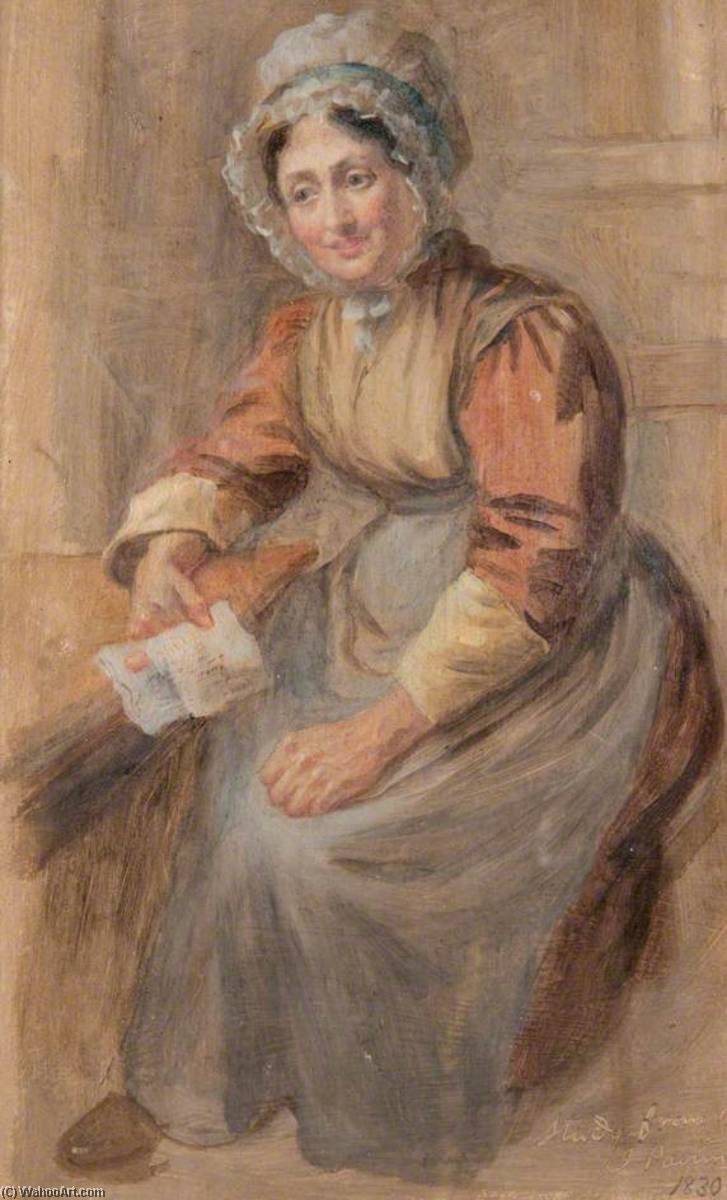
Female Study
 27.0 x 17.0 cm
 Moat Park Heritage Centre
 Les mer
Giclée / Kunsttrykk
Giclée- eller lerretsprint av museumskvalitet med rask produksjon og fleksible valgmuligheter for etterbehandling. ( Bestill håndmalt reproduksjon Gå til digitalt bilde)




































Velg mellom våre forhåndsdefinerte størrelser som bevarer kunstverkets opprinnelige proporsjoner.

Skriv inn bredden og høyden du trenger, slik at den passer til din ramme eller vegg. Et trykk kan kun beskjæres, aldri gjøres større enn bildet, så et format med en annen form vil miste en del av motivet. Vi sender deg en digital mockup for godkjenning før vi trykker noe som helst. Bildet som vises på denne siden viser ikke den faktiske beskjæringen — det er kun mockuppen som gjør det.
Verdensomspennende levering () på 2 uker i stedet for standard 4/5 uker. (26 October)

Gratis ekspressfrakt over hele verden

Lerretsduk av høykvalitets lin

Full transportforsikring

Garanti for refusjon av toll og importavgifter

Garantert fargeekthet

100 dagers returrett ved fabrikasjonsfeil

100% pengene tilbake-garanti

Mengderabatt
 Glassalternativet er kun tilgjengelig i størrelser under 110 cm

Female Study
Giclée / Kunsttrykk
Format på reproduksjon
-


Totalpris
Nkr 761
Kunstnerbiografi
A Pioneer of Romantic Landscape Painting
John Pairman (1788–1843) stands as a significant figure in the burgeoning landscape movement of early 19th-century Britain, yet his artistic legacy extends far beyond mere topographical representation. Born in Edinburgh, Scotland, Pairman’s formative years coincided with the rise of Romanticism—a cultural aesthetic prioritizing emotion and imagination over rational observation—influencing profoundly his artistic vision.
- Early Life & Training: Pairman received a formal education at Rugby School and subsequently pursued studies at Edinburgh University, honing skills in drawing and painting. His initial training focused on classical portraiture, establishing him as a respected artist within the Scottish art scene.
- Influences: He absorbed inspiration from artists like Joshua Reynolds and Thomas Gainsborough, masters of idealized portraiture who championed naturalism and psychological insight. However, Pairman’s artistic sensibilities were decisively shaped by the Romantic fervor sweeping across Europe, particularly the landscapes of Caspar David Friedrich.
The Landscape Artist: Capturing Emotion Through Terrain
Pairman distinguished himself from his contemporaries through a remarkable dedication to landscape painting—a genre increasingly favored by artists seeking to express profound feelings and spiritual contemplation. Unlike many painters who adhered to strict academic conventions, Pairman embraced loose brushwork and vibrant color palettes, prioritizing atmospheric effects over precise detail.
- Notable Landscapes: Among his most celebrated works are depictions of Scottish Highlands—particularly Dumfries Moor—where he skillfully conveyed the grandeur and melancholy beauty of the natural world. His canvases resonate with a palpable sense of solitude and introspection, reflecting the Romantic preoccupation with sublime experience.
- Technique & Style: Pairman’s technique involved layering paint thickly onto canvas—a characteristic “impasto” style—creating textured surfaces that captured the dynamism of light and shadow. This approach allowed him to imbue his landscapes with emotional intensity, mirroring the Romantic impulse to transcend mere visual representation.
Portraiture: Dignified Representation of Character
Alongside his landscape paintings, Pairman produced a substantial body of portrait commissions—primarily depicting prominent figures from Scottish society. His portraits are notable for their sensitivity and psychological accuracy, capturing not only physical likeness but also the inner life of his subjects.
- Lord Jeffrey: Perhaps his most iconic portrait is that of Lord Jeffrey Ramsay—a celebrated Scottish statesman and philosopher—which exemplifies Pairman’s mastery of tonal gradation and expressive brushwork. The painting captures Jeffrey's gaze with remarkable subtlety, conveying both intellect and melancholy.
- Social Context: Pairman’s portraits reflected the social conventions of Victorian Britain, portraying individuals within their familial and professional contexts. However, he consistently prioritized artistic integrity over mere adherence to societal expectations, demonstrating a humanist concern for capturing human dignity and emotion.
Legacy & Recognition
John Pairman’s contribution to Scottish art history is undeniable—he remains one of the foremost landscape painters of his era. His works continue to inspire admiration for their expressive power and technical virtuosity, securing his place as a pivotal figure in the Romantic movement.

John Pairman
1788 - 1843
Kort om kunstneren
- Artistic Movement Or Style: Romanticism
- Artists Or Movements Influenced By This Artist: ['Hudson Lowe']
- Artists Who Influenced This Artist:
- Sir Joshua Reynolds
- Thomas Gainsborough
- Date Of Birth: 1788
- Date Of Death: 1843
- Full Name: John Pairman
- Nationality: Scottish
- Notable Artworks:
- A Cottage Interior
- John Wesley’s House
- Place Of Birth: Edinburgh