
 Forhåndsvisning
 Send
Send Del
Del
 Vis detaljer
 Utskriftsvennlig guide

 Last ned bilde
 Liknende objekter
 Røntgenundersøkelse
 Lysbildefremvisning
 Spørsmål og svar
 Statistikk
Figure and Mountains (verso)

- 57.0 x 126.0 cm

 Vis hele teksten
Kunstverket som vises på denne siden er beskyttet av opphavsretten, noe som betyr at vi ikke har juridisk tillatelse til å lage eller selge identiske reproduksjoner. Denne beskyttelsen håndheves i henhold til internasjonale avtaler som for eksempel Bernerkonvensjonen og av nasjonale lover, inkludert de som er fastsatt i Amerikansk lov om opphavsrett – Tittel 17.
Denne metoden er i fullt samsvar med opphavsrettslige regler, da den ikke innebærer kopiering eller duplisering av det beskyttede kunstverket. I stedet er det snakk om en kreativ nytolkning – et nytt maleri som er inspirert av originalen, men ikke identisk med den.
Giclée / Kunsttrykk
Giclée- eller lerretsprint av museumskvalitet med rask produksjon og fleksible valgmuligheter for etterbehandling. ( Kjøp håndmalt maleri Bytt til digitalt bilde)




































Velg mellom våre forhåndsdefinerte størrelser som bevarer kunstverkets opprinnelige proporsjoner.

Skriv inn ønsket bredde og høyde for å tilpasse trykket til din ramme eller vegg. Et trykk kan kun beskjæres, aldri skaleres opp utover motivets opprinnelige størrelse, noe som betyr at et format med andre proporsjoner vil føre til tap av deler av bildet. Vi sender deg en digital mockup for godkjenning før vi starter trykkeprosessen. Bildet som vises på denne siden viser ikke den faktiske beskjæringen — det er kun mockuppen som viser dette.
Verdensomspennende levering () på 2 uker i stedet for standard 4/5 uker. (6 November)

Gratis ekspressfrakt over hele verden

Lerretsduk av lin av høy kvalitet

Full transportforsikring

Garanti for refusjon av toll og importavgifter

Garantert fargegjengivelse

100 dagers returrett ved fabrikasjonsfeil

100% pengene tilbake-garanti

Rabatt ved flere kjøp
 Glassalternativet er kun tilgjengelig i størrelser under 110 cm

Figure and Mountains (verso)
Giclée / Kunsttrykk
Størrelse på reproduksjon
-


Totalpris for valgte alternativer
Nkr 776
A Moment of Contemplation: Exploring John Kyffin Williams' "Figure and Mountains (verso)"
John Kyffin Williams’ “Figure and Mountains (verso)” offers a captivating glimpse into the soul of Wales, rendered through an intensely personal and expressive lens. This diptych exemplifies Williams’ signature style – a powerful blend of observation and emotion that solidified his reputation as the defining Welsh landscape painter of the 20th century. More than just a depiction of scenery, it's an exploration of humanity's relationship with nature, solitude, and introspection.
Impressionistic Technique & Atmospheric Depth
The artwork is executed in a distinctly impressionistic style, prioritizing the *feeling* of the Welsh landscape over photographic realism. Williams masterfully employs thick impasto brushstrokes – applying paint directly to the canvas with a palette knife – creating a tactile surface that reflects light and adds remarkable visual texture. Notice how lines are largely absent; instead, shapes are defined by the interplay of color and texture. The cool palette of blues, greens, and greys dominates, evoking the often-misty atmosphere characteristic of the Welsh mountains. Warmer tones of yellow and brown punctuate the foreground vegetation, providing a subtle contrast that draws the eye. The diffused lighting and soft shadows further enhance the atmospheric quality, creating a sense of depth through variations in color intensity – a technique known as atmospheric perspective.
Subject & Symbolism: Humanity Within Vastness
The composition is striking in its simplicity: a central mountain range receding into the distance, with a solitary figure positioned near the bottom left corner of each panel. The low horizon line emphasizes the monumental scale and grandeur of the mountains, dwarfing the human presence. This deliberate juxtaposition speaks to profound themes. The small figure against the backdrop of imposing mountains can be interpreted as symbolizing humanity's relationship with nature – a sense of awe, vulnerability, or even insignificance in the face of natural power. The solitary setting amplifies this feeling, suggesting introspection and quiet reflection. It invites viewers to contemplate their own place within the vastness of the world.
Historical Context & Williams’ Unique Vision
Williams' work is deeply rooted in his Welsh heritage. Born in Llangefni, Anglesey, he developed a profound connection with the landscape throughout his life. Interestingly, his artistic journey began after a bout of polio encephalitis and subsequent epilepsy – conditions he himself considered "my greatest fortune" as they led him to pursue art at the suggestion of his doctor. His experiences shaped his unique perspective, allowing him to translate the raw beauty and emotional weight of Wales onto canvas with unparalleled intensity. While influenced by impressionism, Williams forged a distinct style that captured the essence of Welsh identity and landscape in a way no other artist had before.
Emotional Resonance & Lasting Impact
“Figure and Mountains (verso)” is more than just a beautiful painting; it's an emotional experience. The artwork evokes feelings of tranquility, solitude, and a deep connection to the natural world. The textured surface and evocative color palette create a sense of immediacy, drawing viewers into the scene and inviting them to share in the artist’s contemplation. Owning a reproduction of this piece allows you to bring a touch of Welsh heritage and profound emotional depth into your home or office.
Spørsmål og svar
Kan jeg bruke utvidet virkelighet (AR) for å se "Figure and Mountains (verso)" av Kyffin Williams i mitt eget rom?
"Figure and Mountains (verso)" av Kyffin Williams kan forhåndsvises på din egen vegg via kunstverkets Se i AR-side ved bruk av utvidet virkelighet (AR) på en kompatibel enhet.
Kan jeg undersøke "Figure and Mountains (verso)" mer detaljert?
"Figure and Mountains (verso)" kan undersøkes lag for lag på verkets Røntgenstråling-side, en interaktiv visning inspirert av en konservators lysbord med elleve optiske lag av bildet.
Hva er formatet på "Figure and Mountains (verso)"?
"Figure and Mountains (verso)" av Kyffin Williams er en Panoramic komposisjon. Det er lurt å sjekke proporsjonene før du velger trykkstørrelse.
Om kunstneren
A Defining Voice of Welsh Landscape
Sir John “Kyffin” Williams, a name synonymous with the very spirit of Wales, stands as a monumental figure in 20th-century British art. More than just a painter, he was a cultural ambassador, a storyteller who translated the rugged beauty and emotional depth of his homeland onto canvas with unparalleled skill. Born in Llangefni, Anglesey, in 1918, Williams’s life journey was as textured and compelling as the impasto surfaces that became his signature. His connection to Wales wasn't merely geographical; it was woven into the fabric of his being, a heritage both cherished and complicated by a mother who seemingly distanced herself from Welsh language and culture. This early tension perhaps fueled a lifelong dedication to visually capturing and celebrating the land she subtly discouraged him from embracing.From Military Service to Artistic Awakening
Williams’s path to becoming Wales' foremost artist wasn’t straightforward. Educated at Moreton Hall School and Shrewsbury, his life took an unexpected turn with a bout of polio encephalitis that led to epilepsy. Ironically, this health challenge proved pivotal. Advised by doctors to pursue art as therapy, he discovered a profound connection within himself—a creative impulse ignited by the emotional resonance found in the works of Piero della Francesca. This encounter sparked a lifelong devotion to artistic expression. A brief stint in the 6th Battalion Royal Welch Fusiliers was cut short due to his medical condition, but it wasn’t a detour; rather, it freed him to enroll at London's Slade School of Fine Art during its wartime relocation to Oxford. There, he honed his skills and earned the prestigious Slade Portrait Prize, laying the foundation for a remarkable career.A Life Dedicated to Teaching and Exploration
For many years, Williams balanced his artistic pursuits with a dedicated teaching career, serving as senior art master at Highgate School in London from 1944 until 1973. He nurtured generations of young artists, among them Sir Martin Gilbert, Anthony Green, Patrick Procktor, John Tavener and John Rutter—a testament to his influence and mentorship. However, it was a Winston Churchill Fellowship in 1968 that dramatically altered his artistic trajectory. This opportunity allowed him to travel to Y Wladfa, the Welsh settlement in Patagonia, an experience that profoundly impacted his palette and subject matter. The vast landscapes of Patagonia, so different yet echoing the spirit of Wales, infused his work with a new vibrancy and emotional intensity. He documented this journey not only through paintings but also in his engagingly anecdotal book, “Across the Straits.”Technique, Themes, and Lasting Legacy
Kyffin Williams developed a distinctive technique characterized by thick oil paint applied with a palette knife—a method that created textured surfaces and bold impasto effects. This wasn’t merely a stylistic choice; it was a way to convey the ruggedness of the Welsh countryside, the weight of its history, and the emotional resonance of its landscapes. His subjects were broad, encompassing evocative depictions of Wales, striking scenes from Patagonia, and atmospheric studies of Venice. But it was his portrayal of Wales—its farms, mountains, and people—that truly defined him. He captured not just what he saw but *how* it felt to be Welsh, imbuing his paintings with a sense of place and belonging. His work often featured muted tones and subtle shifts in light, reflecting the changeable weather conditions prevalent in his beloved homeland. Throughout his career, Williams received numerous accolades, including an OBE in 1982 and a KBE in 1999 for services to the arts in Wales. The establishment of the Kyffin Williams Drawing Prize in 2009 further cemented his legacy by supporting emerging talent. Today, Oriel Ynys Môn on Anglesey houses a permanent exhibition dedicated to his work, ensuring that future generations can experience the power and beauty of his vision. Sir John Kyffin Williams wasn’t simply a painter; he was Wales' visual poet, a master who captured the soul of a nation with every brushstroke. His paintings continue to inspire awe and appreciation for the enduring spirit of the Welsh landscape and its people—a legacy that will undoubtedly endure for centuries to come.Key Influences
Williams’s artistic journey was shaped by several key influences. The early impact of Piero della Francesca, with his masterful use of light and shadow, provided a foundational aesthetic. The Slade School of Art instilled in him a rigorous approach to technique and composition. However, it was the landscapes of Wales itself—the dramatic coastline, the rolling hills, and the intimate details of rural life—that ultimately served as his primary inspiration. The works of Constable and Turner also resonated with him, demonstrating the power of landscape painting to evoke emotion and capture the essence of a place. Furthermore, his personal experiences – including his childhood in Anglesey and his time spent in Patagonia – deeply informed his artistic vision.Notable Works
Among Williams’s most celebrated paintings are “Storm Approaching” (1963), a dramatic depiction of a Welsh coastal storm; "View from Pwllfanogl" (1970), capturing the serene beauty of his home village; and “Girl Guide 1” (1958), a poignant portrait of a young girl. These works, along with many others, demonstrate his ability to convey both the grandeur and intimacy of the Welsh landscape. His paintings are held in public and private collections throughout Wales and beyond, testament to their enduring appeal.Legacy and Recognition
Sir John Kyffin Williams’s contribution to British art is undeniable. He is remembered as a master of landscape painting who captured the spirit of Wales with remarkable sensitivity and skill. His distinctive technique, his evocative subject matter, and his unwavering dedication to his craft have secured his place among the most important artists of the 20th century. The Kyffin Williams Drawing Prize continues to support young Welsh artists, ensuring that his legacy lives on through future generations.
Kyffin Williams
1918 - 2006 , Storbritannia
Kort om kunstneren
- Artistic Movement Or Style: Malerie landskap
- Artists Or Movements Influenced By This Artist: ['Kunstnere fra Wales']
- Artists Who Influenced This Artist: ['Piero della Francesca']
- Date Of Birth: 9 mai 1918
- Date Of Death: 1 sept 2006
- Full Name: John Kyffin Williams
- Nationality: Walisisk
- Notable Artworks:
- Storm Approaching
- View from Pwllfanogl
- Place Of Birth: Llangefni, UK
Relaterte artikler

Paul Cézannes 25 Mesterverk: En Kunstnerisk Reise for Ditt Hjem
Utforsk Paul Cézannes 25 mest ikoniske malerier! Oppdag historien bak impresjonismens mesterverk, fra stilleben til landskap. Finn kunsttrykk av høy kvalitet og interiørinspirasjon på OriginalUniqueArt.com.

John Singer Sargent's 25 Masterpieces: Portraits & Beyond | OriginalUniqueArt
Explore 25 iconic John Singer Sargent paintings – from dazzling portraits to Impressionist landscapes. Discover the stories behind Madame X, El Jaleo & more! Find museum-quality art reproductions and elevate your home decor with OriginalUniqueArt.com.

Romantiske landskap: Topp 10 mesterverk for hjemmet – Kunst fra OriginalUniqueArt.com
Oppdag de 10 mest ikoniske romantiske landskapsmaleriene! Fra Caspar David Friedrich til Turner – utforsk kunsthistorien, stemningen og fargepalettene. Finn museumskvalitets reproduksjoner på OriginalUniqueArt.com.

John Constable: Topp 25 Maler – Engelsk Landskapskunst i Ditt Hjem
Opplev John Constables 25 mest ikoniske malerier! Fordyp deg i engelsk romantikk, landskapskunst og atmosfæriske scener. Finn museumskvalitets reproduksjoner & interiørinspirasjon på OriginalUniqueArt.com. Utforsk samlingen online!
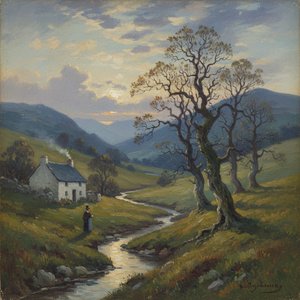
Penry Williams: Evoking Welsh Nostalgia Through Impressionistic Landscapes
Explore the captivating world of Penry Williams (1802-1885), a Welsh artist renowned for his evocative Impressionistic landscapes and scenes of Italy. Discover his life, style & legacy with OriginalUniqueArt.


