Romanticism · 1800
Self Portrait (John Hoppner, 1800)
John Hoppner (1758–1810) har laget Self Portrait. Den er fra 1800. Det tilhører Romanticism-bevegelsen. Den er laget i Oil. Mål: 77 × 64 cm
- 1800
- Oil
- 77 × 64 cm

 Forhåndsvisning

 Håndmalt oljemaleri
 Send
 Del
 Faktablad


 Last ned bilde
 Liknende objekter
 Røntgenundersøkelse
 Lysbildefremvisning
 Spørsmål og svar

 Statistikk
Self Portrait, kort fortalt
- Tittel
- Self Portrait
- Kunstner
- John Hoppner (1758–1810)
- Kunstner født i
- Whitechapel, Storbritannia
- Dato
- 1800
- Medium
- Oil
- Dimensjoner
- 77 × 64 cm
- Bevegelse
- Romanticism
- Periode
- 19th Century
- Motiv
- man, red clothing, white collar, wig, mustache, black background
Hva forestiller Self Portrait?
Identification of the Self Portrait
The painting titled Self Portrait is a work by the English portrait painter John Hoppner. This specific piece dates to about 1800. The subject of the canvas is the artist himself, presented in a composition that focuses on his likeness and attire.
John Hoppner was born in Whitechapel, London, in 1758. His career was established within the circles of high-society portraiture in the United Kingdom. This work represents a moment in his professional life during the early nineteenth century, a period when he was a prominent figure in the British art scene.
Visual Composition and Subject Matter
The painting depicts a man positioned against a solid black background. He is dressed in red clothing featuring a white collar, and his attire includes a suit and a tie. His hands are clasped together in front of him. He wears a wig and has a mustache. The subject's gaze is directed toward the viewer, establishing a direct visual connection. His facial expression is serious and contemplative.
The composition utilizes a dark, undifferentiated backdrop to isolate the figure. This lack of environmental detail focuses the viewer's attention entirely on the subject's face and torso. The light falls upon the man's features and the textures of his clothing, specifically the white collar and the red fabric of his suit. The arrangement of the body, with hands joined, creates a centralized and stable silhouette within the frame.
The Artistic Style of John Hoppner
Hoppner was widely regarded as a fine colourist, utilizing a masterful control of pigment to define his subjects. His technical approach was characterized by breadth and freedom, avoiding a tight or overly precious touch. Instead, he employed a loose, fluid application of paint, often using a full brush to achieve a sense of spontaneity. This method allowed him to move beyond mere imitation, imbuing his portraits with a specific vitality. He frequently used chiaroscuro to sculpt forms, pulling figures forward from dim backgrounds through the dramatic interplay of light and shadow. This technique proved particularly effective when rendering the texture of fine hair or the heavy folds of academic robes.
His style balanced naturalism with a certain aristocratic grace. This aesthetic was heavily influenced by Joshua Reynolds, particularly in the way his paintings carry a faint reflection of Reynolds's charm regarding the handling of light and the soft, painterly atmosphere that envelops his sitters. While his early works were thinly painted with a certain delicacy that allowed for subtle gradations, his later pieces embraced bolder, more expressive strokes. This evolution enhanced the lifelike quality of poses and expressions while maintaining a compositional simplicity that avoided affectation.
Notable Works by the Artist
Among the various subjects captured by the artist, the portrait of Mrs. Jordan as Viola in 'Twelfth Night' remains a significant example of his ability to depict character. This work is held by English Heritage in London, United Kingdom. His engagement with the social elite is further evidenced by his portrait of George, Prince of Wales, which was part of a suite of royal portraits. This specific commission helped establish his presence within the courtly circles of the era.
In 1803, the artist published a series of portraits of ladies, a venture that coincided with his broader literary interests. His technical contributions also extended to collaborative efforts, such as his work on the portrait of Charlotte, Countess Talbot, which was painted by Thomas Gainsborough in 1788. In this instance, the artist provided the background for the composition.
The Artist's Professional Career
The formal training of the artist began in 1775 when he entered the Royal Academy. His technical development within the institution was marked by specific recognition for his observational and compositional skills. In 1778, he was awarded a silver medal for drawing from life. Four years later, in 1782, he received the Academy's gold medal for historical painting, an honor earned through his work on the subject of King Lear.
His professional standing increased through high-level appointments and institutional responsibilities. In 1793, he was appointed Portrait Painter to the Prince of Wales. This position secured a steady stream of royal commissions and placed him within the inner circles of the British court. His influence within the Academy continued through his administrative service, as he held the position of Keeper of the Royal Academy from 1797 until his death in 1810.
Høyoppløselige bilder av Self Portrait

Fritlig eiendom: kunstneren døde i 1810.
Andre størrelser, beskjæringer og sitering →John Hoppner, Self Portrait (1800). Felleseie
Spørsmål om Self Portrait, besvart
I hvilket år ble "Self Portrait" av John Hoppner skapt?
"Self Portrait" av John Hoppner ble skapt i 1800.
Hvilken teknikk er brukt i "Self Portrait" av John Hoppner?
John Hoppner brukte Oil-teknikken i "Self Portrait". Teknikken definerer det materielle uttrykket til det originale verket.
Hva er målene på det originale verket "Self Portrait"?
Det originale verket "Self Portrait" av John Hoppner måler 77 x 64 cm.
Hva forestiller "Self Portrait"?
Temaene i "Self Portrait" av John Hoppner inkluderer man, red clothing, white collar, wig, mustache, black background. Sammen oppsummerer de verkets motiv.
Er "Self Portrait" av John Hoppner i det frie domene?
Opphavsrettslig status for "Self Portrait" av John Hoppner: verket er fritt tilgjengelig – opphavsretten har utløpt. Dette avgjør om det er tillatt å lage frie reproduksjoner av bildet.
Hvilken kunstner kan "Self Portrait" tilskrives?
"Self Portrait" tilskrives John Hoppner.
Hvilken stilart tilhører "Self Portrait"?
Kunstretningen knyttet til "Self Portrait" av John Hoppner er Romanticism. Denne klassifiseringen plasserer verket sammen med relaterte kunstnere og kunstverk.
Hvilken fase av John Hoppner sin kunstneriske utvikling representerer "Self Portrait"?
I John Hoppner sin karriere tilhører "Self Portrait" Mature Period. Denne perioden gjør det mulig å sammenligne verket med kunstnerens øvrige arbeider.
Hvor gammel var John Hoppner da "Self Portrait" ble skapt i 1800?
John Hoppner laget "Self Portrait" i en alder av 42. Kunstneren ble født i 1758, og verket er datert 1800.
Om kunstneren, John Hoppner

1758–1810, Storbritannia
John Hoppner
Tidlig liv, familie og utdanning John Hoppner ble født i Whitechapel, London, i 1758 til tyske foreldre. Hans mor innehadde en stilling som en av de tyske tjenestepikene ved det kongelige slottet, en tilknytning som plasserte familien i umiddelbar nærhet til hoffet helt fra begynnelsen av. Dette tidlige miljøet formet hans livsløp, selv om hans første vei var rettet mot musikken snarere enn det visuelle. Som ung gutt tjenestegjorde han som kormaker i den kongelige kapellet, en rolle som krevde stor disiplin, men som til slutt ikke maktet å holde på interessen hans i møte med hans sterke dragning mot kunsten.
Også av John Hoppner
 Francis Rawdon-Hastings (1754-1826), 2nd Earl of Moira and 1st Marquess of Hastings1793
 Edward, Duke of Kent (1767-1820)1797
 Mrs. Richard Bache (Sarah Franklin, 1743–1808)1793
 Major Thomas Pechell (1753–1826)1799
Essays om Self Portrait
 British Neoclassical paintersBritish Neoclassical painters like Joshua Reynolds, George Romney, and Thomas Lawrence define an era. Find museum-quality reproductions on …
 17th century British paintersMasterpieces by William Dobson and Mary Beale define 17th century British art. Explore the full collection online at OriginalUniqueArt.com.
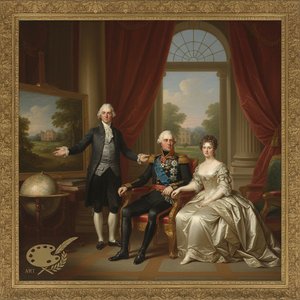 John Hoppner: Portraiture, Patronage & British Identity in the Late Georgian EraExplore the life & work of John Hoppner, a leading Georgian portraitist. Discover his vibrant style, influential patrons, and lasting impac…