
 Forhåndsvisning
 Send
Send Del
Del
 Vis detaljer
 Utskriftsvennlig guide

 Last ned bilde
 Liknende objekter
 Røntgenundersøkelse
 Lysbildefremvisning
 Spørsmål og svar
 Statistikk
Moonlight on the Canal


 Vis hele teksten
Giclée / Kunsttrykk
Giclée- eller lerretsprint av museumskvalitet med rask produksjon og fleksible valgmuligheter for etterbehandling. ( Kjøp håndmalt maleri Bytt til digitalt bilde)




P118B Nkr10

P118H Nkr10

P118W Nkr10

P438Z Nkr10

P508JH Nkr12

P508YH Nkr12

P805H Nkr10

P805Z Nkr10

P919BZ Nkr10

P919G Nkr10

P919XJ Nkr10

P959ZH Nkr10

P968JZ Nkr12

W106C Nkr8

W218G Nkr10

W218JH Nkr8

W218Y Nkr10

W307PJ Nkr10

W316G Nkr10

W316PJ Nkr8

W316Y Nkr10

W398PJ Nkr8

W4111J Nkr10

W500HY Nkr15

W500JH Nkr15

W692G Nkr12

W849H Nkr8

W940BG Nkr15

W953PJ Nkr8




Velg mellom våre forhåndsdefinerte størrelser som bevarer kunstverkets opprinnelige proporsjoner.

Skriv inn ønsket bredde og høyde for å tilpasse trykket til din ramme eller vegg. Et trykk kan kun beskjæres, aldri skaleres opp utover motivets opprinnelige størrelse, noe som betyr at et format med andre proporsjoner vil føre til tap av deler av bildet. Vi sender deg en digital mockup for godkjenning før vi starter trykkeprosessen. Bildet som vises på denne siden viser ikke den faktiske beskjæringen — det er kun mockuppen som viser dette.
Verdensomspennende levering () på 2 uker i stedet for standard 4/5 uker. (8 November)

Gratis ekspressfrakt over hele verden

Lerretsduk av lin av høy kvalitet

Full transportforsikring

Garanti for refusjon av toll og importavgifter

Garantert fargegjengivelse

100 dagers returrett ved fabrikasjonsfeil

100% pengene tilbake-garanti

Rabatt ved flere kjøp
 Glassalternativet er kun tilgjengelig i størrelser under 110 cm

Moonlight on the Canal
Giclée / Kunsttrykk
Størrelse på reproduksjon
-


Totalpris for valgte alternativer
Nkr 775
A Nocturnal Symphony of Light and Shadow
In the quietude of Moonlight on the Canal, we are invited into a world where the boundaries between reality and dream begin to dissolve. This evocative masterpiece by Johan Barthold Jongkind captures a nocturnal scene of a canal bathed in the ethereal glow of a luminous moon. The composition is a masterclass in atmospheric tension, dominated by a profound interplay of light and shadow that creates a hazy, almost mystical effect. As the eye wanders through the landscape, it encounters a sense of deep tranquility and stillness, as if the entire world has paused to breathe in the cool night air. In the foreground, a solitary figure sits near the water's edge, a silent observer lost in contemplation, while a small boat rests nearby, adding to the scene's profound sense of repose.
The middle ground is anchored by a prominent windmill, positioned centrally to act as a focal point that bridges the intimate foreground with the receding distance. Beyond this landmark, trees and buildings line the canal, their forms gradually fading into a soft, indistinct background where a large, radiant moon illuminates the sky. The color palette is intentionally cool, utilizing deep blues and grays to establish a foundation of nocturnal calm, yet it is punctuated by subtle, warm whispers of yellow and orange reflected in the water and caught within the architecture. This delicate contrast prevents the coolness from becoming somber, instead imbuing the work with a gentle, flickering vitality.
The Dawn of Impressionistic Vision
Technically, Moonlight on the Canal serves as a breathtaking precursor to the Impressionist movement. Jongkind employs a loose, suggestive use of line rather than rigid precision, allowing shapes to remain organic and blurred—a choice that perfectly mirrors the indistinct nature of a moonlit night. The technique involves oil paint applied in relatively thin layers, which allows for the seamless blending and subtle gradations of color essential for capturing light's diffusion. Through the use of atmospheric perspective, distant objects appear paler and less defined, creating a sense of depth that feels felt rather than measured. This approach prioritizes the subjective experience of atmosphere over precise spatial representation, a philosophy that would later define the works of his protégé, Claude Monet.
Beyond its visual beauty, the painting is rich with symbolic resonance. The windmill stands as a silent sentinel, potentially representing the steady march of industry or progress, while the solitary figure serves as a poignant symbol of solitude and introspection. For the collector or interior designer, this piece offers more than mere decoration; it provides an emotional anchor for a space. Whether placed in a quiet study or a grand living area, the artwork’s ability to evoke a sense of peace and timelessness makes it a captivating centerpiece. It is an invitation to slow down, to observe the fleeting beauty of a moment, and to find solace in the soft, silvered light of a moonlit canal.
Spørsmål og svar
Hvilken teknikk er brukt i "Moonlight on the Canal" av Johan Barthold Jongkind?
"Moonlight on the Canal" av Johan Barthold Jongkind er utført i Oil On Canvas. Reproduksjonene har som mål å gjengi utseendet til denne teknikken.
Kan "Moonlight on the Canal" av Johan Barthold Jongkind, som er en del av samlingen til The Baltimore Museum of Art, reproduseres lovlig?
Originalen av "Moonlight on the Canal" befinner seg hos The Baltimore Museum of Art, og verket er fritt tilgjengelig – opphavsretten har utløpt.
Kan jeg bruke utvidet virkelighet (AR) for å se "Moonlight on the Canal" av Johan Barthold Jongkind i mitt eget rom?
"Moonlight on the Canal" har en forhåndsvisning med utvidet virkelighet: Se i AR-siden til kunstverket viser det i ditt eget rom på en kompatibel enhet.
Om kunstneren
Johan Barthold Jongkind: En Forerunner of Light
Johan Barthold Jongkind, en navn kanskje mindre umiddelbart kjent enn de til Monet eller Renoir, okkuperer en sentral posisjon i historien om impresjonismen. Født 3. juni 1819 i Lattrop, en liten by i Nederland, var Jongkinds kunstneriske reise preget av både dyp talent og personlig kamp. Hans tidlige liv utfoldet seg midt i de rolige landskapene i Overijssel-provinsen, et område som dypt påvirket hans livslange fascinasjon for vann, lys og atmosfære. Selv om han opprinnelig ble ansatt som kontorist, førte hans iboende kunstneriske innlevelse ham til Haag i 1837, hvor han begynte formell utdannelse under Andreas Schelfhout, en respektert landskapsmaler dypt forankret i den nederlandske tradisjonen. Dette grunnlaget var avgjørende, og la Jongkind tilegne seg en nøyaktig observasjon av naturen og en mestersk craft som senere ble infundert med en distinkt moderne følelse. Det var en periode med læring av de grunnleggende elementene, men også en periode med voksende ambisjon, som drev ham til å søke videre kunstnerisk utvikling i det pulserende franske kunstmiljøet.Parisian Encounters and Artistic Development
Overgangen til Paris i 1846 ble transformativ. Jongkind gikk inn i studioene til Eugène Isabey og François-Édouard Picot, og fordypte seg i det franske kunstmiljøet. Han fikk raskt anerkjennelse, og utstod på Salon allerede i 1848, og mottok ros fra innflytelsesrike kritikere som Charles Baudelaire og Émile Zola. Disse var år med løfte, men preget av en voksende indre uro. Jongkind kjempet med episoder av depresjon og alkoholisme, utfordringer som periodisk forstyrret hans karriere og personlige liv. Til tross for disse vanskelighetene fortsatte han å male produktivt, og fokuserte på scener fra Seinen, det travle parisianerne gater og de atmosfæriske nyansene i det omkringliggende landskapet. Hans arbeid under denne perioden avslører en unik blanding av nederlandsk realisme og fremvoksende fransk romantikk, karakterisert ved livlige penselstrøk og en skarp følelse for lysets effekter. Han malte ikke bare landskap; han fanget deres flyktige stemninger, deres øyeblikkelige skjønnhet. Denne evnen til å formidle atmosfære ble hans signaturstil og en nøkkeleinfluks på de kunstnerne som fulgte etter ham.A Mentor to Monet: The Seeds of Impressionism
Jongkinds tilbakevending til Nederland i 1855 var midlertidig. Han etablerte seg til slutt tilbake i Paris i 1861, hvor hans kunstneriske vei krysset med den av en ung Claude Monet. Denne møtet viste seg å være dypt betydningsfullt for begge kunstnerne. Jongkind ble en mentor for Monet, og delte sin kunnskap om *plein air* maleri – arbeide direkte utendørs fra naturen – og oppmuntret ham til å omfavne en mer spontan og uttrykksfull tilnærming. Monet selv krediterte Jongkind med å gi ham “den definitive utdannelsen” av hans øye, og erkjente i den eldre kunstnerens arbeid en frihet og følsomhet som resonerte dypt med sine egne kunstneriske ambisjoner. Jongkinds innflytelse kan sees i Monets tidlige landskap, spesielt de som skildrer scener langs Seinen, hvor vektleggingen av atmosfære, flyktige effekter av lys og refleksjoner er slående lik. Han lærte ikke bare teknikk; han formidlet en måte å se på verden på, en måte å fange essensen av et øyeblikk i tid.The Dutch Roots and Atmospheric Style
Despite his time in Paris, Jongkind’s artistic roots remained firmly planted in the Netherlands. His early works are deeply influenced by the Dutch tradition of landscape painting, particularly the work of artists like Jacob van Ruisdael, whose moody poetic evocations were already inherently “romantic” in tone. He retained a meticulous attention to detail and a masterful command of color, but he also embraced a looser, more expressive style that was characteristic of the Impressionists. His paintings are often characterized by broken brushstrokes, dramatic skies, and evocative use of color, creating a sense of atmosphere and movement. He wasn’t simply depicting scenes; he was capturing the *feeling* of those scenes – the light, the air, the mood. This distinctive style would become his hallmark, setting him apart from many of his contemporaries.Legacy and Lasting Influence
Though Jongkind never fully achieved the widespread fame enjoyed by some of his contemporaries, his contribution to the development of Impressionism is undeniable. His paintings, often characterized by their loose brushwork, dramatic skies, and evocative use of color, paved the way for a new approach to landscape painting. He demonstrated that capturing the subjective experience of light and atmosphere was as important as accurately representing physical reality. His work can be found in prominent museums such as the Van Gogh Museum in Amsterdam and the Musée d'Orsay in Paris, testaments to his enduring artistic merit.
Johan Barthold Jongkind
1819 - 1891 , Nederland
Kort om kunstneren
- Artistic Movement Or Style: Impressionist forerunner
- Artists Or Movements Influenced By This Artist:
- Monet
- Impressionisme
- Artists Who Influenced This Artist:
- Schelfhout
- Isabey
- Date Of Birth: 3. juni 1819
- Date Of Death: 9. feb. 1891
- Full Name: Johan Barthold Jongkind
- Nationality: Nederlandsk
- Notable Artworks:
- Måne på kanalen
- Seine
- Place Of Birth: Lattrop, Nederland
Relaterte artikler
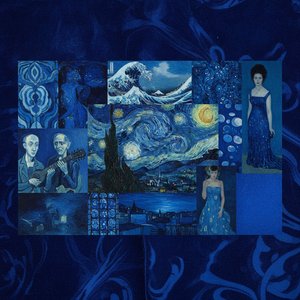
Midnight Blue Magic: 10 Iconic Masterpieces Drenched in Deep Blue Tones
Immerse yourself in the mystery of midnight blue. Explore 10 iconic masterpieces, from Van Gogh to Monet, through their deep indigo tones and timeless stories. Find inspiration for your decor with museum-quality art reproductions. Discover all masterpieces on OriginalUniqueArt.com.

Deep Blue Magic: 10 Iconic Masterpieces Defined by Prussian Blue
Immerse yourself in the depth of Prussian blue. Explore 10 iconic masterpieces, from moody landscapes to Impressionist classics, and learn the stories behind these timeless pigments. Find museum-quality art reproductions for your decor. Discover all masterpieces on OriginalUniqueArt.com.

Deep Blue Magic: 10 Iconic Masterpieces Defined by Prussian Blue
Immerse yourself in the depth of Prussian blue. Explore 10 iconic masterpieces, from Impressionist classics to moody modern gems. Discover the stories behind these timeless pigments and find museum-quality art reproductions for your decor. Explore the full collection on OriginalUniqueArt.com.

Deep Blue Magic: 10 Iconic Masterpieces Defined by Prussian Blue
Immerse yourself in the depth of Prussian blue. Explore 10 iconic masterpieces, from moody landscapes to classic oil paintings, through their stories and techniques. Find museum-quality art reproductions and decor inspiration at OriginalUniqueArt.com. Discover all masterpieces online.

Deep Blue Magic: 10 Iconic Masterpieces Defined by Prussian Blue
Immerse yourself in the depth of Prussian blue. Explore 10 iconic masterpieces, from moody landscapes to classic oil paintings, through their stories and techniques. Find museum-quality art reproductions and decor inspiration. Discover all masterpieces on OriginalUniqueArt.com.