

 Forhåndsvisning
 Send
Send Del med andre
 Vis detaljer

 Last ned bildet
 Liknende objekter
 Røntgenundersøkelse
 Lysbildefremvisning
The Post-Chaise
 Vis hele teksten
Giclée / Kunsttrykk
Giclée- eller lerretsprint av museumskvalitet med rask produksjon og fleksible valgmuligheter for etterbehandling. ( Kjøp håndlaget maleri Kjøp bilde)




































Velg mellom våre forhåndsdefinerte størrelser som bevarer kunstverkets opprinnelige proporsjoner.

Du kan oppgi egne mål for å tilpasse en spesifikk ramme eller et bestemt område. Dersom den valgte størrelsen ikke samsvarer med det originale bildets proporsjoner, vil vi enten beskjære kunstverket eller utvide bildet med en speilet eller ensfarget kant. En digital mockup vil bli sendt til din godkjenning før produksjonen starter.
Vennligst merk at forhåndsvisningen på skjermen ikke gjenspeiler den faktiske beskjæringen eller utvidelsen. Kun mockuppen vil vise den endelige komposisjonen nøyaktig.
Selv om tilpassede størrelser er tilgjengelige, anbefaler vi å velge et mål fra den forhåndsdefinerte listen for å bevare de originale proporsjonene.
Verdensomspennende levering () på 2 uker i stedet for standard 4/5 uker. (24 August)

Gratis ekspressfrakt over hele verden

Lerretsduk av høykvalitets lin

Full forsikring under transport

Garanti for refusjon av toll og importavgifter

Garantert korrekt fargegjengivelse

60 dagers returrett (kun ved feil)

100% pengene tilbake-garanti

Rabatt ved flere kjøp
 Glassalternativet er kun tilgjengelig i størrelser under 110 cm

The Post-Chaise
Giclée / Kunsttrykk
Størrelse på reproduksjon
-


Endelig pris
$ 80
Om kunstneren
The Versatile Vision of Jean Victor Adam
Born into the vibrant artistic pulse of Paris in 1801, Jean Victor Adam emerged as a profound chronicler of a transformative era in French history. As the son of the esteemed engraver Jean Adam, his entry into the world of fine art was less a choice and more a destiny woven from the very ink and pigment of his upbringing. His early years were defined by rigorous discipline at the prestigious École des Beaux-Arts, where between 1814 and 1818, he immersed himself in the classical traditions of the masters. Under the watchful eyes of Charles Meynier and Jean-Baptiste Regnault, Adam absorbed the foundational principles of composition and form, yet his spirit possessed a restless energy that would eventually lead him beyond the rigid confines of Neoclassicism toward a more dynamic, narrative-driven style.
Adam’s artistic evolution is a fascinating study in versatility, moving seamlessly between the grand scale of historical oil painting and the intimate, widespread reach of lithography. In his early career, he gained significant acclaim for his ability to capture the fervor of military life and historical turning points. His works were often commissioned for prestigious institutions, such as the Museum at Versailles, where he depicted monumental events like The Entry of the French into Mainz and The Battle of Montebello. These paintings were not merely records of conflict but were imbued with a sense of movement and drama that resonated with the Romantic sensibilities of his time. He possessed a rare talent for rendering the chaos of battle alongside the quiet, dignified presence of the soldier, creating a tapestry of 19th-century French identity.
A Master of Light and Line
While his historical canvases commanded the halls of museums, it was Adam’s mastery of lithography that allowed his vision to permeate the broader public consciousness. After a period of relative withdrawal from the public eye, he returned in 1846 with a renewed dedication to the lithographic medium, producing works that celebrated the beauty of the natural world and the charm of the French landscape. This phase of his career revealed a more observational, almost lyrical side of his talent. His lithographic albums, such as Views in the Environs of Paris and his detailed studies of animals for the works of Buffon, showcased an exquisite command over line and tonal gradation, proving that he could evoke profound emotion through the subtle interplay of black ink on paper.
The breadth of his subject matter remains one of his most enduring legacies. His oeuvre is characterized by a remarkable range, encompassing:
- Historical Narratives: Grand-scale depictions of military triumphs and political shifts that captured the zeitgeist of France.
- Genre Scenes: Charming and detailed observations of everyday life, from horse fairs to rural landscapes.
- Naturalistic Studies: Meticulous lithographic explorations of fauna and flora, blending scientific accuracy with artistic grace.
- Romantic Allegories: Works that tapped into the emotional depth and mythological themes prevalent in the mid-19th century.
Ultimately, Jean Victor Adam stands as a bridge between the structured academicism of the early century and the expressive freedom of the later Romantic movement. His ability to navigate the complexities of both the monumental and the minute allowed him to leave an indelible mark on French art. Whether through the sweeping brushstrokes of an oil painting or the delicate precision of a lithograph, Adam’s work continues to invite viewers into a world where history, nature, and human emotion converge in a timeless, visual symphony.
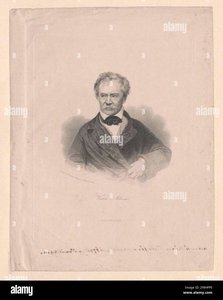
jean victor adam
1801 - 1866 , France
Kort om kunstneren
- Artistic Movement Or Style: Symbolism
- Date Of Birth: January 28, 1801
- Date Of Death: December 30, 1866
- Full Name: Jean Victor Adam
- Nationality: French
- Notable Artworks:
- The Greasy Pole At Meudon Belle Vue
- The Whale At The Museum Of Natural History
- The Assassination of General Kleber
- Place Of Birth: Paris, France

