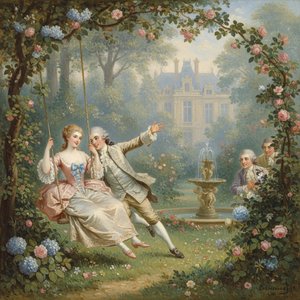
The Competition
Acrylic On Canvas
WallArt
Rococo
1785
34.0 x 43.0 cm
Städelmuseet
Håndlaget oljereproduksjon
Håndmalt olje på lerret i din valgte størrelse og ramme, laget på bestilling av våre kunstnere. ( Kjøp trykk
Kjøp bilde)
P118B $10
P118H $10
P118W $10
P438Z $10
P508JH $12
P508YH $12
P805H $10
P805Z $10
P919BZ $10
P919G $10
P919XJ $10
P959ZH $10
P968JZ $12
W106C $8
W218G $10
W218JH $8
W218Y $10
W307PJ $10
W316G $10
W316PJ $8
W316Y $10
W398PJ $8
W4111J $10
W500HY $15
W500JH $15
W692G $12
W849H $8
W940BG $15
W953PJ $8
Velg mellom våre forhåndsdefinerte størrelser som bevarer kunstverkets opprinnelige proporsjoner.
Du kan angi egne mål for å tilpasse en spesifikk ramme eller plass. Dersom den valgte størrelsen ikke samsvarer med originalbildets proporsjoner, vil vi enten beskjære kunstverket eller utvide maleriet med ytterligere håndmalte elementer. En digital mockup vil bli sendt til din godkjenning før produksjonen starter.
Vennligst merk at forhåndsvisningen på skjermen ikke gjenspeiler den faktiske beskjæringen eller utvidelsen. Kun mockuppen vil vise den endelige komposisjonen nøyaktig.
Selv om tilpassede størrelser er tilgjengelige, anbefaler vi å velge et mål fra den forhåndsdefinerte listen for å bevare de originale proporsjonene.

Etter bestilling vil OriginalUniqueArt.com-teamet sende e-post til kunden for instruksjoner og sende et utkast (mockup) som forhåndsvisning.
Verdensomspennende levering () på 3–4 uker i stedet for standard 5 uker. (19 August). Ingen kompromisser med kvaliteten.
Gratis ekspressfrakt over hele verden
Lerretsduk av høykvalitets lin
Full forsikring under transport
Garanti for refusjon av toll og importavgifter
Garantert korrekt fargegjengivelse
60 dagers returrett (kun ved feil)
100% pengene tilbake-garanti
Rabatt ved flere kjøp
The Competition
Teknikk for reproduksjon
Størrelse på reproduksjon
-
Endelig pris
$ 300
Beskrivelse av kunstverket
A Moment of Shared Intensity: Unveiling Fragonard’s “The Competition”
Jean-Honoré Fragonard's "The Competition," painted around 1780-1785, isn’t merely a depiction of a social gathering; it’s a vibrant snapshot of the burgeoning Rococo era, brimming with playful observation and subtle eroticism. Captured in delicate pastel hues and executed with his signature loose brushwork, the scene unfolds within a richly appointed interior – likely a salon belonging to the influential Duc de Chabot – where a group of elegantly dressed individuals are engaged in a spirited contest. The painting immediately draws the eye, not through dramatic action, but through the palpable sense of shared intensity radiating from each participant. It’s a tableau vivant, frozen in a moment of intellectual and social engagement, hinting at unspoken desires and competitive spirit.
Fragonard masterfully employs light to guide our gaze. A warm, diffused glow illuminates the figures, casting soft shadows that accentuate their postures and expressions. Notice how he uses highlights to draw attention to details – the intricate folds of a gown, the focused concentration on a child’s face, the subtle gestures of amusement or frustration. This careful manipulation of light isn't just aesthetic; it contributes significantly to the painting’s overall atmosphere, creating an illusion of depth and inviting us into this intimate scene.
The Rococo Setting: A World of Pleasure and Intrigue
To fully appreciate “The Competition,” one must understand the context of its creation – the height of the Rococo period. This era, characterized by a rejection of rigid formality in favor of elegance, pleasure, and sensuality, profoundly influenced Fragonard’s artistic style. The setting itself is crucial: the opulent interior, with its richly colored fabrics, ornate furniture, and carefully arranged details, speaks to the wealth and sophistication of the patrons who commissioned such works. The presence of two clocks – one on the wall, the other closer to the foreground – subtly underscores the theme of time and competition, adding a layer of complexity to the scene.
Furthermore, the painting reflects the social dynamics of the time. The gathering is not simply a casual meeting; it’s a carefully orchestrated display of status and wit. The children, engrossed in their reading and writing exercises, represent the next generation being groomed for positions of power and influence. The adults, observing their efforts with amusement and encouragement, embody the values of patronage and social obligation. It's a microcosm of 18th-century French society – a world where appearances mattered, and social interactions were often laden with hidden meanings.

Symbolism and Subtext: A Dance of Desire
While outwardly appearing to be a scene of intellectual pursuit, “The Competition” is rife with subtle symbolism. The children’s engagement in reading and writing can be interpreted as a metaphor for the acquisition of knowledge and social skills – essential tools for navigating the complexities of aristocratic life. However, Fragonard doesn't shy away from hinting at more playful interpretations. The glances exchanged between the figures, the suggestive postures, and the overall atmosphere of flirtation suggest an underlying current of desire and intrigue.
The painting’s title itself is deliberately ambiguous. Is it a genuine competition, or merely a pretext for social interaction and veiled courtship? Fragonard leaves this question open to interpretation, inviting viewers to engage with the scene on multiple levels. The artist's skill lies in his ability to create an image that is both visually appealing and intellectually stimulating – a testament to the enduring power of Rococo art.
A Legacy of Grace: Reproduction and Artistic Appreciation
Reproductions of “The Competition” offer a remarkable opportunity to experience Fragonard’s artistry firsthand. OriginalUniqueArt's hand-painted reproductions capture the delicate brushwork, vibrant colors, and nuanced details of the original painting with exceptional fidelity. Whether displayed in a grand salon or a cozy study, this captivating artwork will undoubtedly serve as a conversation starter and a source of aesthetic pleasure for years to come. Consider commissioning a reproduction – a tangible connection to a pivotal moment in art history.
Om kunstneren
A Life Bathed in Light: The World of Jean-Honoré Fragonard
Jean-Honoré Fragonard’s life unfolded amidst the vibrant, fragrant fields of Grasse, France – a city renowned for its exquisite perfume industry. Born on April 5th, 1732, into a family of glove merchants, his early years were steeped in the traditions of Provençal craftsmanship. However, young Jean-Honoré possessed an artistic spirit that yearned beyond the confines of his family’s trade. He displayed a remarkable talent for drawing from a young age, capturing the beauty of his surroundings with a keen eye and a sensitive hand. This nascent passion led him to seek instruction under the tutelage of Jean-Siméon Chardin, a master of portraying everyday life with subtle grace and observation – an influence that would profoundly shape Fragonard’s early style. Yet, it was within the grand atelier of François Boucher, the celebrated painter to the court of Louis XV, that his true artistic foundations were firmly laid. Boucher's legacy—a celebration of elegant forms, delicate colors, and a playful spirit—became inextricably linked with Fragonard’s own artistic identity. Winning the prestigious Prix de Rome in 1752 was not merely an academic achievement; it represented a pivotal moment – an opportunity to immerse himself in the classical world of Italy for several formative years. This period wasn't simply about replicating ancient masterpieces; it was an awakening—a chance to absorb the vibrancy and sensuality that would later infuse his own unique vision, transforming him from a promising student into a leading figure in the burgeoning Rococo movement.The Rococo Master: A Celebration of Pleasure and Intrigue
Upon returning to Paris, Fragonard swiftly established himself as a dominant force within the Rococo aesthetic—a style that epitomized the spirit of the age. This wasn’t merely about adopting a particular visual style; it was about embodying an entire worldview – one characterized by a celebration of pleasure, intimacy, and the fleeting beauty of life. His paintings weren't intended for grand public display or to adorn imposing state rooms; rather, they were crafted for the private salons of aristocrats seeking works that whispered secrets, hinted at hidden desires, and captured the ephemeral joys of the moment. The Swing (L’Escarpolette), perhaps his most iconic creation, perfectly encapsulates this spirit. The scene—a young woman playfully kicking off her shoe as a bishop pushes her swing, while a hidden lover gazes up from below – is brimming with mischievous energy and veiled eroticism. It's a masterful blend of observation, suggestion, and playful ambiguity, inviting the viewer to participate in the unfolding drama. Other works such as The Bolt and Love Vow continue this exploration of clandestine encounters and the delicate dance between attraction and restraint, revealing Fragonard’s ability to infuse even seemingly simple scenes with layers of meaning and emotional resonance. He wasn't simply depicting romantic gestures; he was capturing the very essence of human desire and the intoxicating allure of the unknown.Beyond the Salon: Experimentation and Evolving Styles
While Fragonard achieved considerable success within the established art world, particularly through commissions from wealthy patrons, he remained a restless innovator—a painter who consistently pushed the boundaries of his craft. He wasn’t content to remain confined by the conventions of the Rococo style; instead, he embraced experimentation and sought new ways to express himself artistically. During his time in Italy, he meticulously copied works by masters like Raphael and Titian, absorbing their techniques and compositional strategies. Upon returning to France, he continued to refine his skills, developing a distinctive brushwork characterized by rapid, loose strokes—a technique that gave his paintings a sense of spontaneity and immediacy. He also explored different genres, venturing into historical painting (though this proved less successful) and producing a series of captivating “figure fantasies”—imaginary portraits featuring archaic costumes and fantastical settings. These works demonstrate his willingness to challenge artistic norms and explore the limits of his imagination. A notable example is *A Young Girl Reading*, which showcases his mastery of light, color, and composition—a testament to his evolving style and technical skill.Notable Works & Collections
- The Swing (L’Escarpolette): Wallace Collection, London – A quintessential example of Rococo exuberance.
- The Bolt: View on OriginalUniqueArt - A captivating scene of domestic intrigue and playful tension.
- Love Vow: Discover more about Fragonard’s works on OriginalUniqueArt – A tender depiction of romantic commitment.
- Young Girl Reading: Featured in artworks databases, showcasing his mastery of portraiture and light.
- Works are also prominently displayed at the Musée du Louvre, Grasse Cathedral, The Metropolitan Museum of Art, and The Frick Collection.
A Legacy Enduring Through Time
The French Revolution brought a dramatic shift in artistic tastes, and Fragonard’s lighthearted, aristocratic style fell out of favor during this tumultuous period. His paintings, once celebrated for their sensuality and wit, were viewed as symbols of the decadent Ancien Régime. Consequently, he retreated to his hometown of Grasse for a time, returning to Paris only after the political turmoil subsided. Despite facing challenges and relative obscurity, Fragonard’s influence continued to resonate through subsequent generations of artists. His emphasis on color, light, and sensuality paved the way for Impressionism, while his playful spirit and rejection of academic constraints inspired a more liberated approach to artmaking. Today, Fragonard’s works are celebrated in museums around the world—from the Louvre in Paris to the National Gallery of Art in Washington D.C.—testament to the enduring appeal of his captivating vision. His paintings continue to captivate audiences with their beauty, wit, and timeless charm, reminding us of a time when life was meant to be savored, and pleasure was considered an art form itself.Jean-Honoré Fragonard
1732 - 1806 , Frankrike
Kort om kunstneren
- Artistic Movement Or Style: Rococò
- Artists Or Movements Influenced By This Artist: ['Senere kunstnere']
- Artists Who Influenced This Artist:
- Chardin
- Boucher
- Date Of Birth: 5. april 1732
- Date Of Death: 22. august 1806
- Full Name: Jean-Honoré Fragonard
- Nationality: Fransk
- Notable Artworks:
- Svingen
- Bolt
- Kjærlighetens løfte
- Place Of Birth: Grasse, Frankrike

Glassalternativet er kun tilgjengelig i størrelser under 110 cm