
 Forhåndsvisning
 Send
Send Del
Del
 Vis detaljer
 Utskriftsvennlig guide

 Last ned bilde
 Liknende objekter
 Røntgenundersøkelse
 Lysbildefremvisning
 Q&A
Q&A Statistikk
Rest on the Flight


 Vis hele teksten
Giclée / Kunsttrykk
Giclée- eller lerretsprint av museumskvalitet med rask produksjon og fleksible valgmuligheter for etterbehandling. ( Kjøp håndmalt maleri Bytt til digitalt bilde)




P118B Nkr10

P118H Nkr10

P118W Nkr10

P438Z Nkr10

P508JH Nkr12

P508YH Nkr12

P805H Nkr10

P805Z Nkr10

P919BZ Nkr10

P919G Nkr10

P919XJ Nkr10

P959ZH Nkr10

P968JZ Nkr12

W106C Nkr8

W218G Nkr10

W218JH Nkr8

W218Y Nkr10

W307PJ Nkr10

W316G Nkr10

W316PJ Nkr8

W316Y Nkr10

W398PJ Nkr8

W4111J Nkr10

W500HY Nkr15

W500JH Nkr15

W692G Nkr12

W849H Nkr8

W940BG Nkr15

W953PJ Nkr8




Velg mellom våre forhåndsdefinerte størrelser som bevarer kunstverkets opprinnelige proporsjoner.

Skriv inn ønsket bredde og høyde for å tilpasse trykket til din ramme eller vegg. Et trykk kan kun beskjæres, aldri skaleres opp utover motivets opprinnelige størrelse, noe som betyr at et format med andre proporsjoner vil føre til tap av deler av bildet. Vi sender deg en digital mockup for godkjenning før vi starter trykkeprosessen. Bildet som vises på denne siden viser ikke den faktiske beskjæringen — det er kun mockuppen som viser dette.
Verdensomspennende levering () på 2 uker i stedet for standard 4/5 uker. (2 November)

Gratis ekspressfrakt over hele verden

Lerretsduk av lin av høy kvalitet

Full transportforsikring

Garanti for refusjon av toll og importavgifter

Garantert fargegjengivelse

100 dagers returrett ved fabrikasjonsfeil

100% pengene tilbake-garanti

Rabatt ved flere kjøp
 Glassalternativet er kun tilgjengelig i størrelser under 110 cm

Rest on the Flight
Giclée / Kunsttrykk
Størrelse på reproduksjon
-


Totalpris for valgte alternativer
Nkr 770
A Vision of Rococo Serenity
In the soft, luminous glow of Jean-Honoré Fragonard’s “Rest on the Flight into Egypt,” we are invited into a world where the boundaries between the divine and the earthly dissolve into a dreamlike haze. Created around 1774, this masterpiece serves as a breathtaking window into the heart of the Rococo era—a period defined by its pursuit of grace, elegance, and an almost ethereal lightness of being. The painting captures a moment of profound stillness amidst a journey of great significance; it is a scene that breathes with the quiet intimacy of a family finding sanctuary. As the eye wanders through the lush, verdant surroundings, one feels the gentle pulse of a world where even the most sacred narratives are draped in the velvet textures of aristocratic leisure and romantic idealism.
The composition is a masterclass in balanced harmony, guiding the viewer through a narrative that is as much about emotion as it is about biblical history. At the center of this pastoral sanctuary, the Holy Family reclines upon opulent cushions, their forms bathed in a soft, diffused light that seems to emanate from within the landscape itself. The presence of a young boy, playfully interacting with a bird amidst the flowering shrubs, injects a sense of innocent vitality into the scene, reminding us of the fleeting beauty of youth and nature. This interplay between the monumental weight of the flight into Egypt and the delicate, momentary joy of a child creates a poignant tension, transforming a religious subject into a universal celebration of peace and familial tenderness.
The Mastery of Light and Brushwork
To behold a Fragonard is to witness the dance of the brush in its most liberated form. The artist’s technique is characterized by an extraordinary fluidity, where every stroke feels spontaneous yet remains meticulously placed to achieve a sense of atmospheric depth. He employs the hallmark of the Rococo style—loose, expressive brushwork—to create an effect that is almost impressionistic in its ability to capture light and movement. There is a palpable texture to the foliage and the heavy drapery, achieved through a sophisticated layering of pastel hues. Pale pinks, soft blues, and luminous greens blend seamlessly, creating a palette that feels both airy and rich, perfect for evoking the sensory delights of a summer afternoon.
For the discerning collector or interior designer, this painting offers more than mere decoration; it provides an emotional anchor for a space. The subtle interplay of light and shadow within the garden pavilion creates a sense of three-dimensional intimacy that can transform a room into a sanctuary of calm. Whether placed in a grand salon or a quiet study, the artwork’s ability to evoke nostalgia and tranquility makes it a timeless choice. It is a piece that invites long periods of contemplation, rewarding the viewer with new details—the shimmer of a leaf, the softness of a cheek, or the delicate flutter of a bird—each time they encounter its enchanting, sun-drenched world.
Spørsmål og svar
Hvilken periode i Jean-Honoré Fragonard sin karriere tilhører "Rest on the Flight"?
I Jean-Honoré Fragonard sin karriere tilhører "Rest on the Flight" Mature Period. Denne perioden gjør det mulig å sammenligne verket med kunstnerens øvrige arbeider.
Hvor mange ser på "Rest on the Flight"?
Statistikk for "Rest on the Flight" av Jean-Honoré Fragonard finnes på verkets Besøksstatistikk-side: månedlige visninger av verket, visninger av kunstnerens andre verk, samt en oversikt over nylige besøkende fordelt på land og språk.
Er fargene i "Rest on the Flight" sterke eller dempede?
"Rest on the Flight" av Jean-Honoré Fragonard er gjengitt med en Muted metning og en Monochromatic intensitet.
Om kunstneren
A Life Bathed in Light: The World of Jean-Honoré Fragonard
Jean-Honoré Fragonard’s life unfolded amidst the vibrant, fragrant fields of Grasse, France – a city renowned for its exquisite perfume industry. Born on April 5th, 1732, into a family of glove merchants, his early years were steeped in the traditions of Provençal craftsmanship. However, young Jean-Honoré possessed an artistic spirit that yearned beyond the confines of his family’s trade. He displayed a remarkable talent for drawing from a young age, capturing the beauty of his surroundings with a keen eye and a sensitive hand. This nascent passion led him to seek instruction under the tutelage of Jean-Siméon Chardin, a master of portraying everyday life with subtle grace and observation – an influence that would profoundly shape Fragonard’s early style. Yet, it was within the grand atelier of François Boucher, the celebrated painter to the court of Louis XV, that his true artistic foundations were firmly laid. Boucher's legacy—a celebration of elegant forms, delicate colors, and a playful spirit—became inextricably linked with Fragonard’s own artistic identity. Winning the prestigious Prix de Rome in 1752 was not merely an academic achievement; it represented a pivotal moment – an opportunity to immerse himself in the classical world of Italy for several formative years. This period wasn't simply about replicating ancient masterpieces; it was an awakening—a chance to absorb the vibrancy and sensuality that would later infuse his own unique vision, transforming him from a promising student into a leading figure in the burgeoning Rococo movement.The Rococo Master: A Celebration of Pleasure and Intrigue
Upon returning to Paris, Fragonard swiftly established himself as a dominant force within the Rococo aesthetic—a style that epitomized the spirit of the age. This wasn’t merely about adopting a particular visual style; it was about embodying an entire worldview – one characterized by a celebration of pleasure, intimacy, and the fleeting beauty of life. His paintings weren't intended for grand public display or to adorn imposing state rooms; rather, they were crafted for the private salons of aristocrats seeking works that whispered secrets, hinted at hidden desires, and captured the ephemeral joys of the moment. The Swing (L’Escarpolette), perhaps his most iconic creation, perfectly encapsulates this spirit. The scene—a young woman playfully kicking off her shoe as a bishop pushes her swing, while a hidden lover gazes up from below – is brimming with mischievous energy and veiled eroticism. It's a masterful blend of observation, suggestion, and playful ambiguity, inviting the viewer to participate in the unfolding drama. Other works such as The Bolt and Love Vow continue this exploration of clandestine encounters and the delicate dance between attraction and restraint, revealing Fragonard’s ability to infuse even seemingly simple scenes with layers of meaning and emotional resonance. He wasn't simply depicting romantic gestures; he was capturing the very essence of human desire and the intoxicating allure of the unknown.Beyond the Salon: Experimentation and Evolving Styles
While Fragonard achieved considerable success within the established art world, particularly through commissions from wealthy patrons, he remained a restless innovator—a painter who consistently pushed the boundaries of his craft. He wasn’t content to remain confined by the conventions of the Rococo style; instead, he embraced experimentation and sought new ways to express himself artistically. During his time in Italy, he meticulously copied works by masters like Raphael and Titian, absorbing their techniques and compositional strategies. Upon returning to France, he continued to refine his skills, developing a distinctive brushwork characterized by rapid, loose strokes—a technique that gave his paintings a sense of spontaneity and immediacy. He also explored different genres, venturing into historical painting (though this proved less successful) and producing a series of captivating “figure fantasies”—imaginary portraits featuring archaic costumes and fantastical settings. These works demonstrate his willingness to challenge artistic norms and explore the limits of his imagination. A notable example is *A Young Girl Reading*, which showcases his mastery of light, color, and composition—a testament to his evolving style and technical skill.Notable Works & Collections
- The Swing (L’Escarpolette): Wallace Collection, London – A quintessential example of Rococo exuberance.
- The Bolt: View on OriginalUniqueArt - A captivating scene of domestic intrigue and playful tension.
- Love Vow: Discover more about Fragonard’s works on OriginalUniqueArt – A tender depiction of romantic commitment.
- Young Girl Reading: Featured in artworks databases, showcasing his mastery of portraiture and light.
- Works are also prominently displayed at the Musée du Louvre, Grasse Cathedral, The Metropolitan Museum of Art, and The Frick Collection.
A Legacy Enduring Through Time
The French Revolution brought a dramatic shift in artistic tastes, and Fragonard’s lighthearted, aristocratic style fell out of favor during this tumultuous period. His paintings, once celebrated for their sensuality and wit, were viewed as symbols of the decadent Ancien Régime. Consequently, he retreated to his hometown of Grasse for a time, returning to Paris only after the political turmoil subsided. Despite facing challenges and relative obscurity, Fragonard’s influence continued to resonate through subsequent generations of artists. His emphasis on color, light, and sensuality paved the way for Impressionism, while his playful spirit and rejection of academic constraints inspired a more liberated approach to artmaking. Today, Fragonard’s works are celebrated in museums around the world—from the Louvre in Paris to the National Gallery of Art in Washington D.C.—testament to the enduring appeal of his captivating vision. His paintings continue to captivate audiences with their beauty, wit, and timeless charm, reminding us of a time when life was meant to be savored, and pleasure was considered an art form itself.
Jean-Honoré Fragonard
1732 - 1806 , Frankrike
Kort om kunstneren
- Artistic Movement Or Style: Rococò
- Artists Or Movements Influenced By This Artist: ['Senere kunstnere']
- Artists Who Influenced This Artist:
- Chardin
- Boucher
- Date Of Birth: 5. april 1732
- Date Of Death: 22. august 1806
- Full Name: Jean-Honoré Fragonard
- Nationality: Fransk
- Notable Artworks:
- Svingen
- Bolt
- Kjærlighetens løfte
- Place Of Birth: Grasse, Frankrike
Relaterte artikler

The Elegance of Rococo: A Journey Through Pastel Dreams and Ornate Splendor
Embark on an elegant journey through the Rococo era. Discover the delicate beauty of pastel masterpieces, the intricate artistry of 18th-century French masters, and how this era of ornate splendor continues to inspire timeless luxury in fine art collecting.
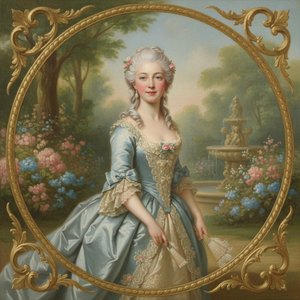
The Elegance of Rococo Portraiture: A Journey Through Grace, Soft Light, and Pastel Dreams
Discover the exquisite world of Rococo portraiture. Explore the delicate beauty of 18th-century French art, from pastel light to graceful asymmetry, and learn how to bring this era of elegance into your home through masterfully hand-painted oil reproductions.
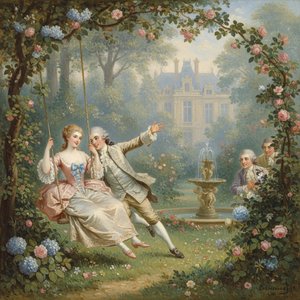
The Rococo Reverie of Fragonard: Love, Leisure & Pleasure in 18th-Century France
Explore the captivating world of Jean-Honoré Fragonard! Discover his Rococo masterpieces, intimate portraits & the allure of 18th-century French art. Learn about 'The Progress of Love' and more at OriginalUniqueArt.

The Rococo Aesthetic: Opulence, Rebellion & the Pursuit of Pleasure in 18th-Century Art
Explore the opulent world of Rococo art! Discover its origins, key artists like Watteau & Boucher, and lasting influence on design. Expert insights for collectors & enthusiasts.

Rokokkoens Mesterverk: Topp 10 Kunstverk som Definerte en Epoke | OriginalUniqueArt.no
Oppdag Rokokkoens 10 mest ikoniske mesterverk! Lær om Boucher, Fragonard og Watteau – kunsthistorie, pastellfarger & elegante interiører. Finn museumskvalitets reproduksjoner på OriginalUniqueArt.no.


