
 Forhåndsvisning
 Send
Send Del
Del
 Vis detaljer
 Utskriftsvennlig guide

 Last ned bilde
 Liknende objekter
 Røntgenundersøkelse
 Lysbildefremvisning
 Spørsmål og svar
 Statistikk
Summer Scene (Bathers)

 Vis hele teksten
Giclée / Kunsttrykk
Giclée- eller lerretsprint av museumskvalitet med rask produksjon og fleksible valgmuligheter for etterbehandling. ( Kjøp håndmalt maleri Bytt til digitalt bilde)




P118B Nkr10

P118H Nkr10

P118W Nkr10

P438Z Nkr10

P508JH Nkr12

P508YH Nkr12

P805H Nkr10

P805Z Nkr10

P919BZ Nkr10

P919G Nkr10

P919XJ Nkr10

P959ZH Nkr10

P968JZ Nkr12

W106C Nkr8

W218G Nkr10

W218JH Nkr8

W218Y Nkr10

W307PJ Nkr10

W316G Nkr10

W316PJ Nkr8

W316Y Nkr10

W398PJ Nkr8

W4111J Nkr10

W500HY Nkr15

W500JH Nkr15

W692G Nkr12

W849H Nkr8

W940BG Nkr15

W953PJ Nkr8




Velg mellom våre forhåndsdefinerte størrelser som bevarer kunstverkets opprinnelige proporsjoner.

Skriv inn ønsket bredde og høyde for å tilpasse trykket til din ramme eller vegg. Et trykk kan kun beskjæres, aldri skaleres opp utover motivets opprinnelige størrelse, noe som betyr at et format med andre proporsjoner vil føre til tap av deler av bildet. Vi sender deg en digital mockup for godkjenning før vi starter trykkeprosessen. Bildet som vises på denne siden viser ikke den faktiske beskjæringen — det er kun mockuppen som viser dette.
Verdensomspennende levering () på 2 uker i stedet for standard 4/5 uker. (5 November)

Gratis ekspressfrakt over hele verden

Lerretsduk av lin av høy kvalitet

Full transportforsikring

Garanti for refusjon av toll og importavgifter

Garantert fargegjengivelse

100 dagers returrett ved fabrikasjonsfeil

100% pengene tilbake-garanti

Rabatt ved flere kjøp
 Glassalternativet er kun tilgjengelig i størrelser under 110 cm

Summer Scene (Bathers)
Giclée / Kunsttrykk
Størrelse på reproduksjon
-


Totalpris for valgte alternativer
Nkr 774
A Moment of Provençal Bliss: Jean Frédéric Bazille’s "Summer Scene (Bathers)"
Jean Frédéric Bazille's “Summer Scene (Bathers)” captures a quintessential moment of leisure and joy, transporting the viewer to the sun-drenched landscapes of Provence. Painted in 1873, just months before his untimely death at the age of thirty-two, this work represents a pivotal point in Bazille’s artistic development and exemplifies the burgeoning Impressionist style that would soon revolutionize the art world. The scene unfolds with remarkable realism – yet imbued with an ethereal quality characteristic of the movement – depicting a group of individuals enjoying a carefree afternoon by the water's edge. It is a painting brimming with light, color, and a palpable sense of serenity.
Subject Matter and Composition
- The central focus is undeniably the group of bathers, both men and women, engaged in various activities – swimming, sunbathing, and simply relaxing.
- Bazille masterfully employs a pyramidal composition, drawing the eye upwards from the figures at the bottom to the shaded umbrella providing respite above.
- The inclusion of details like the scattered chairs and the carefully placed umbrella adds to the sense of domestic tranquility and reinforces the theme of an idyllic summer day.
Impressionist Technique and Color Palette
Bazille’s technique is a hallmark of Impressionism, prioritizing the immediate sensation of light and color over meticulous detail. He utilizes broken brushstrokes – short, choppy strokes of pure pigment – to capture the shimmering reflections on the water and the dappled sunlight filtering through the trees. The palette is dominated by vibrant greens, blues, and yellows, creating a luminous effect that evokes the warmth of the Provençal sun. Note the subtle gradations in color, particularly in the rendering of the figures’ skin tones, which contribute to the painting's overall sense of realism.
Historical Context and Artistic Influences
"Summer Scene (Bathers)" was created during a period of immense artistic experimentation. Bazille was deeply influenced by the works of Gustave Courbet, whose commitment to depicting everyday life with honesty and naturalism paved the way for Impressionist innovation. However, unlike Courbet’s often stark realism, Bazille infused his paintings with a delicate lyricism and an emphasis on capturing fleeting moments of beauty. The painting reflects the broader artistic trends of the time – a move away from academic conventions towards a more subjective and expressive approach to art.
Symbolism and Emotional Impact
Beyond its technical brilliance, “Summer Scene (Bathers)” resonates with profound emotional depth. The scene evokes a sense of nostalgia for simpler times, a longing for connection with nature, and the joy of shared experiences. The figures’ relaxed postures and expressions suggest a state of blissful contentment. Bazille's ability to capture this intangible quality – the feeling of warmth, light, and tranquility – is what elevates this painting beyond mere representation and transforms it into a timeless meditation on the beauty of life.
Spørsmål og svar
Hvilken stemning uttrykker "Summer Scene (Bathers)" av Jean Frédéric Bazille innenfor Impressionist Movement?
"Summer Scene (Bathers)" har en Romantic emosjonell tone innenfor Impressionist Movement-retningen.
Hvilken bruk og hvilket rom anbefales for "Summer Scene (Bathers)" av Jean Frédéric Bazille?
"Summer Scene (Bathers)" anbefales til Statement, og det anbefalte rommet er et Living Room.
Hvor stor er kontrasten i "Summer Scene (Bathers)" av Jean Frédéric Bazille?
Lys-mørke-kontrasten i "Summer Scene (Bathers)" er registrert som Bold. Kontrast beskriver hvor sterkt lyse og mørke områder skiller seg fra hverandre.
Om kunstneren
The Brief Radiance of Jean Frédéric Bazille
Jean Frédéric Bazille’s story is one of immense promise tragically cut short, a fleeting yet significant contribution to the burgeoning Impressionist movement. Born in Montpellier, France, on December 6, 1841, into a prosperous Protestant family involved in wine production, Bazille initially seemed destined for a life far removed from the world of art. His parents, while supportive, insisted he pursue medical studies alongside his artistic inclinations – a compromise reflecting the societal expectations of the time and their desire for his financial security. This duality would shape his early years, dividing his attention between anatomical dissection and the captivating allure of color and light. However, it was within the vibrant atmosphere of Paris, where he relocated in 1862 to continue his medical training, that Bazille’s artistic path truly began to unfold.Forging a Path Amongst Giants
Paris proved to be a crucible for young Bazille. He quickly fell in with a circle of artists who would become synonymous with Impressionism: Claude Monet, Pierre-Auguste Renoir, and Alfred Sisley. Studying under Charles Gleyre provided him with formal training, but it was the shared passion and radical ideas exchanged amongst these friends that truly ignited his artistic vision. Bazille’s financial stability – a fortunate contrast to the often precarious existence of his companions – allowed him to generously support them, offering studio space and materials. This generosity wasn't merely practical; it stemmed from a deep camaraderie and belief in their collective potential. He became a vital hub for this emerging group, fostering an environment of experimentation and mutual encouragement. His early works, like *The Pink Dress* (c. 1864), already demonstrate a keen eye for capturing fleeting moments and the effects of light – hallmarks that would define Impressionism. He wasn’t simply mimicking established styles; he was actively participating in the creation of something entirely new. Bazille's work often depicted scenes of Parisian life, infused with an intimate understanding of his friends and their shared experiences.A Style Defined by Light and Friendship
Bazille's artistic style, though developing rapidly, possessed a unique character within the broader Impressionist aesthetic. While sharing their fascination with *plein air* painting – working outdoors to directly capture the nuances of natural light – his compositions often exhibited a more structured quality than Monet’s or Renoir’s. He frequently combined figure painting with landscape, placing his subjects thoughtfully within their environment, as seen in masterpieces like *Family Reunion* (1867-1868). This work is not merely a depiction of familial gathering; it's an exploration of light filtering through the trees, animating the scene and imbuing it with a sense of warmth and intimacy. His paintings weren’t just about *what* he saw, but *how* he saw it – the emotional resonance evoked by color, form, and light. He was deeply influenced by Eugène Delacroix, whose vibrant use of color resonated with his own artistic sensibilities, yet he moved beyond academic conventions to embrace a more modern sensibility. Bazille’s palette often featured rich, warm tones, reflecting the southern French landscapes that held such significance for him.A Life Interrupted: Legacy and Remembrance
The blossoming career of Jean Frédéric Bazille was brutally interrupted by the Franco-Prussian War in 1870. Driven by a sense of patriotic duty, he joined a Zouave regiment just months after the conflict erupted. Tragically, he was killed in action on November 28, 1870, at the young age of 28, near Beaune-la-Rolande. His death sent shockwaves through the artistic community, robbing them of a talented friend and generous benefactor. His premature demise meant his work remained relatively unknown for many years. However, in recent decades, Bazille’s contributions have been increasingly recognized and celebrated. Today, his paintings are held in prestigious museums like the Musée d'Orsay in Paris, and reproductions allow art lovers worldwide to experience the beauty and innovation of his vision. Bazille’s legacy extends beyond his artistic output; he embodies the spirit of youthful idealism, unwavering dedication, and the power of friendship that defined the early days of Impressionism. He remains a poignant reminder of the potential lost, yet also a testament to the enduring impact of a brief but brilliant career.Family Background and Early Influences
Born into a prominent Protestant family in Montpellier, Bazille’s upbringing was markedly different from many of his artistic peers. His parents, Gaston Bazille (a respected agronomist and senator) and Camille Vialars (descended from a wealthy Toulouse family), instilled in him a strong sense of responsibility and a deep appreciation for the arts. This privileged background provided him with financial stability, allowing him to pursue both medicine and painting without the constant worry of poverty that plagued many artists of the time. The family’s connection to the cultural life of Montpellier – including its museum and artistic society – undoubtedly shaped his early exposure to art and influenced his aesthetic sensibilities. His ancestry included goldsmiths and merchants, reflecting a history of entrepreneurialism and craftsmanship that may have subtly informed his approach to painting.Key Works and Artistic Development
Bazille’s oeuvre, though limited in size due to his tragically short life, showcases a remarkable evolution in style. Early works like *The Pink Dress* demonstrate his nascent talent for capturing fleeting moments and experimenting with color and light – hallmarks of the Impressionist movement. However, it was in *Family Reunion* (1867-1868) that he truly established his unique voice, blending figure painting with landscape to create a harmonious composition imbued with warmth and intimacy. This work exemplifies his ability to capture not just the visual appearance of a scene but also its emotional atmosphere. Other notable paintings include *Studio in Rue de Furstenberg* (c. 1867), which offers a glimpse into the social life of Parisian artists, and *Bathers (Summer Scene)* (c. 1869), showcasing his interest in depicting figures within natural settings. Throughout his career, Bazille consistently sought to integrate modern compositional strategies – such as unusual cropping and dynamic perspectives – with traditional painting techniques.A Tragic End and Lasting Impact
Bazille’s promising artistic career was abruptly cut short by the Franco-Prussian War. Driven by a sense of patriotic duty, he enlisted in the army just months before the conflict erupted and perished in action on November 28, 1870. His untimely death robbed the art world of a talented and visionary artist, but his legacy has endured through the recognition of his paintings and the inspiration he provided to later generations of Impressionists. Today, Bazille is increasingly appreciated as a key figure in the development of modern painting, celebrated for his innovative approach to composition, his masterful use of color, and his profound understanding of light and atmosphere. His story serves as a poignant reminder of the fragility of artistic genius and the enduring power of friendship and dedication.
Jean Frédéric Bazille
1841 - 1870 , Frankrike
Kort om kunstneren
- Artistic Movement Or Style: Impressionisme
- Artists Or Movements Influenced By This Artist: ['Impressionisme']
- Artists Who Influenced This Artist: ['Delacroix']
- Date Of Birth: 6 desember 1841
- Date Of Death: 28 november 1870
- Full Name: Jean Frédéric Bazille
- Nationality: Fransk
- Notable Artworks:
- The Pink Dress
- Family Reunion
- Place Of Birth: Montpellier, Frankrike
Relaterte artikler
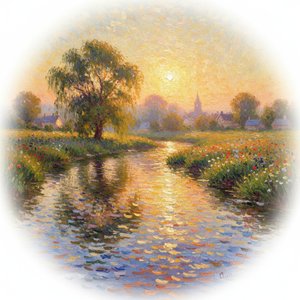
Capturing Light: A Masterclass in the Ethereal Beauty of Impressionistic Landscapes
Explore the ethereal beauty of Impressionist landscapes. Discover how masters like Monet captured fleeting light through color and texture, and learn to curate these timeless, luminous masterpieces for your home collection.

Impressionismens landskapskunst: Topp 10 mesterverk som definerte en epoke | OriginalUniqueArt.no
Opplev impressionismens magi! Utforsk 10 ikoniske landskapsmalerier av Monet, Renoir og Van Gogh. Lær om kunsthistorien bak mesterverkene & finn din perfekte veggkunst på OriginalUniqueArt.com – museumskvalitet for ditt hjem.

Impresjonistiske landskap: 10 mesterverk som definerte en kunstbevegelse | OriginalUniqueArt.no
Opplev impresjonismens magi! Utforsk 10 ikoniske landskapsmalerier av Monet, Renoir og Degas. Lær historien bak mesterverkene & finn din perfekte kunsttrykk på OriginalUniqueArt.com.

Romantiske landskap: Topp 10 mesterverk for hjemmet – Kunst fra OriginalUniqueArt.com
Oppdag de 10 mest ikoniske romantiske landskapsmaleriene! Fra Caspar David Friedrich til Turner – utforsk kunsthistorien, stemningen og fargepalettene. Finn museumskvalitets reproduksjoner på OriginalUniqueArt.com.

Evocations of Place: A Historical Journey Through Landscape Art
Explore the rich history of landscape art with OriginalUniqueArt. Discover renowned artists, movements like Impressionism & Romanticism, and expert guidance for collecting timeless pieces. Find your perfect serene escape today!

