
 Forhåndsvisning
 Send
Send Del
Del
 Vis detaljer
 Utskriftsvennlig guide

 Last ned bilde
 Liknende objekter
 Røntgenundersøkelse
 Lysbildefremvisning
 Q&A
Q&A Statistikk
Small head

- 22.0 x 27.0 cm


 Vis hele teksten
Kunstverket som vises på denne siden er beskyttet av opphavsretten, noe som betyr at vi ikke har juridisk tillatelse til å lage eller selge identiske reproduksjoner. Denne beskyttelsen håndheves i henhold til internasjonale avtaler som for eksempel Bernerkonvensjonen og av nasjonale lover, inkludert de som er fastsatt i Amerikansk lov om opphavsrett – Tittel 17.
Denne metoden er i fullt samsvar med opphavsrettslige regler, da den ikke innebærer kopiering eller duplisering av det beskyttede kunstverket. I stedet er det snakk om en kreativ nytolkning – et nytt maleri som er inspirert av originalen, men ikke identisk med den.
Giclée / Kunsttrykk
Giclée- eller lerretsprint av museumskvalitet med rask produksjon og fleksible valgmuligheter for etterbehandling. ( Kjøp håndmalt maleri Bytt til digitalt bilde)




































Velg mellom våre forhåndsdefinerte størrelser som bevarer kunstverkets opprinnelige proporsjoner.

Skriv inn ønsket bredde og høyde for å tilpasse trykket til din ramme eller vegg. Et trykk kan kun beskjæres, aldri skaleres opp utover motivets opprinnelige størrelse, noe som betyr at et format med andre proporsjoner vil føre til tap av deler av bildet. Vi sender deg en digital mockup for godkjenning før vi starter trykkeprosessen. Bildet som vises på denne siden viser ikke den faktiske beskjæringen — det er kun mockuppen som viser dette.
Verdensomspennende levering () på 2 uker i stedet for standard 4/5 uker. (1 November)

Gratis ekspressfrakt over hele verden

Lerretsduk av lin av høy kvalitet

Full transportforsikring

Garanti for refusjon av toll og importavgifter

Garantert fargegjengivelse

100 dagers returrett ved fabrikasjonsfeil

100% pengene tilbake-garanti

Rabatt ved flere kjøp
 Glassalternativet er kun tilgjengelig i størrelser under 110 cm

Small head
Giclée / Kunsttrykk
Størrelse på reproduksjon
-


Totalpris for valgte alternativer
Nkr 770
A Tactile Encounter with Form and Color
In the evocative realm of mid-century abstraction, Jean Fautrier’s Small head stands as a profound testament to the power of texture and the visceral nature of paint. Created in 1956, this intimate work invites the viewer into a sensory dialogue where the boundaries between subject and medium begin to dissolve. At first glance, the eye is drawn to the central figure—a singular, small head that emerges from the canvas with an almost sculptural presence. The piece is characterized by its remarkable impasto technique, where the paint is applied with such density that it mimics the qualities of clay or earth. This tactile approach transforms the two-dimensional surface into a three-dimensional landscape, making the artwork not just something to be seen, but something to be felt through the eyes.
The color palette of this masterpiece is a study in striking contrasts and emotional depth. The head itself is rendered in soft, fleshy pink tones, suggesting a vulnerability and organic life. This delicate hue is set against a backdrop of deep, pulsating reds that envelop the central form. This juxtaposition creates a rhythmic tension; the warmth of the red background pushes the pink subject forward, creating a sense of emergence or perhaps even an emergence from a primal, elemental state. The interplay between these warm tones evokes a feeling of heat and vitality, yet there is an underlying stillness to the composition that commands a quiet, contemplative respect.
The Mastery of Materiality and Emotion
To understand Small head, one must delve into Fautrier’s unique approach to the materiality of art. As a key figure in the post-war European art scene, Fautrier moved away from traditional representation toward a more "informel" style, where the physical substance of the paint carries as much meaning as the image itself. In this work, the texture is not merely a decorative element; it is the very soul of the piece. The rugged, uneven surface captures light and shadow in a way that changes depending on the viewer's perspective, lending the artwork a living, breathing quality. For the collector or interior designer, this provides an unparalleled level of visual interest, as the painting offers new discoveries with every glance.
Beyond its technical brilliance, the piece carries a profound emotional weight. The isolation of the small head within the vast, crimson expanse can be interpreted as a symbol of the individual's existence within the broader, often overwhelming, universe. It speaks to themes of solitude, resilience, and the fundamental essence of being. This duality—the fragility of the pink form against the intensity of the red void—makes it an incredibly evocative piece for any curated space. Whether placed in a minimalist modern gallery or as a bold focal point in a sophisticated residential interior, Small head serves as a conversation starter, bridging the gap between historical abstraction and contemporary emotional resonance.
Spørsmål og svar
Hvilken plassering passer best til formatet på "Small head" av Jean Fautrier?
Med sin Portrait form anbefales en reproduksjon av "Small head" for et Studio Apartment.
Når og med hvilke materialer ble "Small head" laget?
"Small head" ble skapt i 1956 med teknikken Painting. Materiale og dato beskriver hvordan og når originalen ble laget.
Hvordan passer "Small head" inn i Jean Fautrier sin tematikk og stil?
"Small head" er et verk fra Jean Fautrier sin periode innen Tachisme, der de dokumenterte temaene inkluderer tachisme movement influence, abstract expressionist style, textured material focus, post-war european art, exploration of form.
Om kunstneren
The Tactile Soul of Abstraction
Jean Fautrier stands as a monumental figure in the landscape of mid-century abstraction, a painter whose work transcends mere visual representation to become a visceral, sensory experience. Born in Paris, France, his early life was marked by profound personal loss, having lost both his father and grandmother in 1908. This early encounter with fragility perhaps foreshadowed the emotional depth found in his later masterpieces. Seeking new horizons, he moved to London, where he began his formal artistic journey at the Royal Academy of Arts. However, finding the traditional instruction too rigid for his burgeoning spirit, he briefly turned to the Slade School before deciding to embark on the path of a self-taught master, finding far greater inspiration in the evocative works housed within the Tate Gallery.
His artistic evolution is a journey from the structured world of classical training toward the raw, unbridled energy of Tachisme and Art Informel. Fautrier’s work is famously characterized by his invention of haute pâte, or high paste, a technique that replaced traditional oil methods with thick, sculptural constructions. In this approach, the paint is not merely a medium for color but a physical substance—a dense, impasto layer that mimics the qualities of clay or earth. This tactile mastery transforms the canvas into a three-dimensional landscape where the boundaries between subject and material dissolve, inviting the viewer to feel the artwork through their eyes.
Shadows of History and the Human Condition
The historical weight of the twentieth century is deeply embedded in Fautrier’s oeuvre. During the tumultuous years of World War II, Fautrier participated in the French Resistance alongside figures like André Malraux, an experience that profoundly shaped his creative output. His celebrated Otages series serves as a haunting response to the atrocities of the era, utilizing dark, evocative tones to process themes of violence and suffering. In these works, he moved away from traditional representation toward a style where the physical substance of the paint carries the weight of human tragedy.
Beyond the darkness of war, Fautrier’s later works explored a different kind of intensity through light, form, and color. His ability to balance the macabre with the beautiful is evident in his diverse range of subjects:
- The Otages Series: A powerful exploration of duality and emotion, often utilizing black and white palettes to evoke the gravity of wartime experience.
- Nature and Form: Landscapes, nudes, and even animal carcasses were rendered with a focus on organic life and vulnerability.
- Late Abstractions: Works such as Small head demonstrate his mastery of color, using fleshy pinks and pulsating reds to create a sense of emergence from a primal state.
Fautrier’s legacy remains that of a pioneer who challenged the very concept of the unique art object through his Originaux multiples—hand-painted lithographs that blurred the lines between original and reproduction. Through his dedication to the materiality of paint, he ensured that his place in the history of modernism would be defined by an enduring, tactile connection to the human experience.

Jean Fautrier
1898 - 1964 , France
Kort om kunstneren
- Artistic Movement Or Style: Tachisme, Art Informel
- Artists Who Influenced This Artist: ['J. M. W. Turner']
- Full Name: Jean Fautrier
- Nationality: French
- Notable Artworks:
- Small head
- Otages fond noir
- Dépouille
- Place Of Birth: Paris, France
- Date Of Birth: 1898
- Date Of Death: 1964
Relaterte artikler
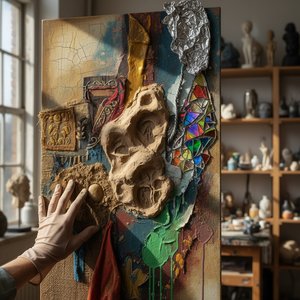
The Tactile Canvas: Exploring Texture as Subject, Materiality & Meaning in Art History
Explore the rich history of texture in art! Discover how artists from Van Gogh to contemporary masters use materiality & technique to create captivating tactile experiences. Deepen your art appreciation with OriginalUniqueArt.
De 10 mest ikoniske malerier dominert av jordfarger – Kunst for hjemmet | OriginalUniqueArt.no
Utforsk de 10 mest ikoniske maleriene dominert av jordfarger! Oppdag Rembrandts mesterverk, Monet’s impresjonisme og Van Goghs stil. Finn kunst til hjemmet & museumskvalitets reproduksjoner på OriginalUniqueArt.no – inspirasjon og tidløs skjønnhet.

Mark Rothkos 25 Mesterverk: Følelser i Farge – Kunst for Ditt Hjem | OriginalUniqueArt.no
Oppdag Mark Rothkos 25 mest ikoniske malerier! Fordyp deg i abstrakt ekspresjonisme, fargefeltmaling og emosjonell kunsthistorie. Finn inspirasjon til ditt hjem med museumskvalitets reproduksjoner på OriginalUniqueArt.com.
Lys Rosa Magi: Topp 10 Malerier som Odefinerer Skjønnhet og Stemning
Oppdag 10 ikoniske malerier dominert av lys rosa toner! Fra Monet til Renoir, utforsk historien og skjønnheten bak disse mesterverkene. Finn kunsttrykk i museumskvalitet for ditt hjem på OriginalUniqueArt.com – inspirasjon og luksusinteriør venter!

Crimson Threads of Narrative: Exploring Symbolism & Representation in Artworks Featuring the Red Dress
Explore the rich symbolism of the red dress in art history! From ancient power displays to iconic portraits like Cézanne’s 'Madame Cezanne', discover the cultural and artistic significance behind this captivating color. Expert analysis & insights.