Text size

() ·

A painting made for you, by hand

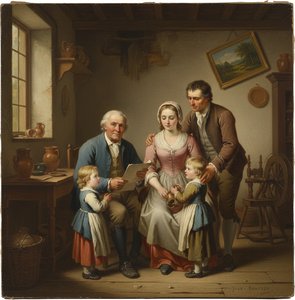
Self-Portrait

Håndlaget oljereproduksjon

Håndmalt olje på lerret i din valgte størrelse og ramme, laget på bestilling av våre kunstnere. ( Bytt til trykk Bytt til digitalt bilde)

Beskrivelse av objektet

Capture the sentimental drama of this 18th-century self-portrait by Jean-Baptiste Greuze; own a piece of French genre mastery today.

Om kunstneren

Jean-Baptiste Greuze (1725–1805): En fransk maler kjent for sine følelsesladde genrebilder og portretter som fanget hverdagsliv og moralske lærdommer i en tid da følelser var i fokus.

from ·

Chapter 1

How large should it be?

Slide to change the size; the picture on the left shows the frame at its real width. The proportions of the original are kept.

Standardformat
skreddersydd
CM
INCH

Velg mellom våre forhåndsdefinerte størrelser som bevarer kunstverkets opprinnelige proporsjoner.

bredde
høyde

Skriv inn ønsket bredde og høyde for å tilpasse bildet til din ramme eller vegg. Siden dette er håndmalt, kan kunstneren male litt mer rundt motivet eller beskjære det noe dersom du velger et annet format — valget er ditt. Vi sender deg en digital mockup til godkjenning før maleriet påbegynnes. Bildet som vises på denne siden representerer ikke det faktiske resultatet — kun mockuppen viser det endelige uttrykket.

Chapter 2

How should it arrive?

Choose the edges of the stretched canvas

Choose your frame

Corner sample of the WhiteWrap canvas edge finish, stretched on massivt tre bars
White Nkr1
Corner sample of the BlurSideWrap canvas edge finish, stretched on massivt tre bars
Blurside Nkr1
Corner sample of the ExtendedWrap canvas edge finish, stretched on massivt tre bars
Extended Nkr1
Corner sample of the P118B picture frame: støpt polystyren, 5 cm wide and 3 cm thick
P118B Nkr10
Corner sample of the P118H picture frame: støpt polystyren, 5 cm wide and 3 cm thick
P118H Nkr10
Corner sample of the P118W picture frame: støpt polystyren, 5 cm wide and 3 cm thick
P118W Nkr10
Corner sample of the P438Z picture frame: støpt polystyren, 5.5 cm wide and 3.5 cm thick
P438Z Nkr10
Corner sample of the P508JH picture frame: støpt polystyren, 7 cm wide and 3.5 cm thick
P508JH Nkr12
Corner sample of the P508YH picture frame: støpt polystyren, 7 cm wide and 3.5 cm thick
P508YH Nkr12
Corner sample of the P805H picture frame: støpt polystyren, 5 cm wide and 3.5 cm thick
P805H Nkr10
Corner sample of the P805Z picture frame: støpt polystyren, 5 cm wide and 3.5 cm thick
P805Z Nkr10
Corner sample of the P919BZ picture frame: støpt polystyren, 7 cm wide and 3.5 cm thick
P919BZ Nkr10
Corner sample of the P919G picture frame: støpt polystyren, 7 cm wide and 3.5 cm thick
P919G Nkr10
Corner sample of the P919XJ picture frame: støpt polystyren, 7 cm wide and 3.5 cm thick
P919XJ Nkr10
Corner sample of the P959ZH picture frame: støpt polystyren, 5 cm wide and 3 cm thick
P959ZH Nkr10
Corner sample of the P968JZ picture frame: støpt polystyren, 6 cm wide and 4 cm thick
P968JZ Nkr12
Corner sample of the W106C picture frame: massivt tre, 5 cm wide and 3 cm thick
W106C Nkr8
Corner sample of the W218G picture frame: massivt tre, 5 cm wide and 3 cm thick
W218G Nkr10
Corner sample of the W218JH picture frame: massivt tre, 5 cm wide and 3 cm thick
W218JH Nkr8
Corner sample of the W218Y picture frame: massivt tre, 5 cm wide and 3 cm thick
W218Y Nkr10
Corner sample of the W307PJ picture frame: massivt tre, 6 cm wide and 3 cm thick
W307PJ Nkr10
Corner sample of the W316G picture frame: massivt tre, 6 cm wide and 3 cm thick
W316G Nkr10
Corner sample of the W316PJ picture frame: massivt tre, 6 cm wide and 3 cm thick
W316PJ Nkr8
Corner sample of the W316Y picture frame: massivt tre, 6 cm wide and 3 cm thick
W316Y Nkr10
Corner sample of the W398PJ picture frame: massivt tre, 5 cm wide and 3 cm thick
W398PJ Nkr8
Corner sample of the W4111J picture frame: massivt tre, 6.5 cm wide and 3.5 cm thick
W4111J Nkr10
Corner sample of the W500HY picture frame: massivt tre, 7 cm wide and 5 cm thick
W500HY Nkr15
Corner sample of the W500JH picture frame: massivt tre, 7 cm wide and 5 cm thick
W500JH Nkr15
Corner sample of the W692G picture frame: massivt tre, 8 cm wide and 4 cm thick
W692G Nkr12
Corner sample of the W849H picture frame: massivt tre, 5 cm wide and 3 cm thick
W849H Nkr8
Corner sample of the W940BG picture frame: massivt tre, 7.5 cm wide and 4.5 cm thick
W940BG Nkr15
Corner sample of the W953PJ picture frame: massivt tre, 6 cm wide and 3.5 cm thick
W953PJ Nkr8
Corner sample of the H24-GOLD picture frame: utskåret tre med gesso, 10 cm wide and 6 cm thick
H24-GOLD Nkr30
Corner sample of the H24-SILVER picture frame: utskåret tre med gesso, 10 cm wide and 6 cm thick
H24-SILVER Nkr30
Corner sample of the H36-GOLD picture frame: utskåret tre med gesso, 15 cm wide and 6.5 cm thick
H36-GOLD Nkr45
Corner sample of the H36-SILVER picture frame: utskåret tre med gesso, 15 cm wide and 6.5 cm thick
H36-SILVER Nkr45

Moulding: . Overall size with the frame: .

Chapter 3

Who paints it, and should anything change?

Examples of what can be changed: Replace face with customer photo; Add pet (e.g., replace cat with dog); Include hidden message in background; Change background landscape or elements.
After order, OriginalUniqueArt.com team will email client for instructions and provide a mockup preview

Verdensomspennende levering () på 3–4 uker i stedet for standard 5 uker. (1 November). Ingen kompromisser med kvaliteten.

Chapter 4

The finishing touches

A nameplate, as in a museum?

Detaljer om gravert bronseplate

This elegant plaque features the artist's name and the title of the artwork, finely engraved for a timeless presentation.

It is made from bronze with a refined, elegant finish. The text is precisely laser-engraved for a sharp and permanent result. Measuring 9x2 cm, the plaque is compact yet easy to read. It's built to be durable and scratch-resistant, offering a professional, museum-quality look. Mounting is simple thanks to the included adhesive backing.

Detaljer om gjennomsiktig akrylplate

The plaque includes essential engraved details such as the artist's name, the title of the artwork, the date it was created, the type of media used-like oil on canvas or watercolor-a brief description of the piece, and a QR code that links to the complete artwork information.

It is crafted from clear acrylic, offering a sleek, modern appearance. The text is UV-engraved in black to ensure strong visual contrast. With a size of 10x15 cm, it ensures optimal readability. It comes equipped with two metal hooks for secure wall mounting. The plaque is designed to be weather-resistant, making it suitable for various environments, and it includes interactive features that work seamlessly with smartphone scanning.

Detaljer om plakett i svart akryl

This elegant plaque includes engraved information such as the artist's name, the title of the artwork, the date it was created, the type of media used (like oil on canvas or watercolor), a short description of the artwork, and a QR code for quick access to more information.

The plaque itself is made from refined black acrylic with a premium finish. The text is laser-engraved in white for high contrast and readability. Its size is 10x15 cm, designed to be easy to read. It comes with two metal hooks for professional mounting. The design is sleek and fits any interior style. It is also weather-resistant and durable, with built-in digital integration for mobile compatibility.

A protective varnish?

When do you need it?

Chapter 5

Your painting, as you ordered it

Self-Portrait

Trykkmetode

Størrelse på reproduksjon

-

Utvalgte mesterkunstnere

Mer detaljrikdom, finesse og ekstra produksjonstid

-

Innramming av reproduksjon

-

-

For kunstverk eller reproduksjoner som er større enn 105 cm (ca. 41 tommer) på noen side, vil rammen bli sendt som et sett som må monteres. Denne metoden sikrer trygg levering og forhindrer skader under transport.

Krever profesjonell montering – dette er ikke et DIY-produkt.
Settet må monteres og lerretet strammes av en erfaren profesjonell rammelegger, ved bruk av trelim (følger ikke med), en lerretstang og klemmer for å holde rammelisten vinkelrett mens limet tørker. Feilaktig montering eller ujevn stramming av lerretet kan påføre kunstverket permanente skader og er ikke dekket av vår garanti.

  • Alle massive trelister er inkludert, presist tilpasset i størrelse.

  • Monteres med de medfølgende skruene, samt trelim til hjørnene, som ikke er inkludert og må anskaffes av din rammehandler.

  • Profesjonelt verktøy er nødvendig og er ikke inkludert: en lerretstang (strammer) og klemmer for å holde rammene vinkelrette mens limet tørker.

Viktig:
Hjørnene krever trelim, listene må holdes på plass med tvinger til limet er helt tørt, og stramming av lerretet på den ferdige rammen krever en lerretstang. Ingen av disse produktene er inkludert i settet. Vennligst sørg for tilgang til en erfaren profesjonell rammehandler før du bestiller denne størrelsen.

Navneskilt

-

-

Beskyttende ferniss

Blank lakk (forsterker farger, beskytter mot lys og fuktighet)

-

Tilpass mitt kunstverk

Eksempler på hva som kan endres: Erstatt ansikt med bilde av kunden; Legg til kjæledyr (f.eks. bytt ut katt med hund); Inkluder en skjult melding i bakgrunnen; Endre bakgrunnslandskap eller elementer.

-

Ekspresslevering

Verdensomspennende levering () på 3–4 uker i stedet for standard 5 uker. (1 November). Ingen kompromisser med kvaliteten.

-

Ekspresslevering

Verdensomspennende levering til innen 5 uker. (8 November).

Inkludert frakt

Totalpris for valgte alternativer

Nkr 2887

Totalpris Nkr 2887

Glassalternativet er kun tilgjengelig i størrelser under 110 cm

Included with every order

  • Gratis ekspressfrakt over hele verden
  • Lerretsduk av lin av høy kvalitet
  • Full transportforsikring
  • Garanti for refusjon av toll og importavgifter
  • Garantert fargegjengivelse
  • 100 dagers returrett ved fabrikasjonsfeil
  • 100% pengene tilbake-garanti
  • Rabatt ved flere kjøp

A Glimpse into Sentimental Life: Analyzing Greuze's Self-Portrait

To stand before this depiction of a man with distinguished white hair, pipe held thoughtfully in his mouth, is to step directly into the emotional landscape of late eighteenth-century France. Jean-Baptiste Greuze, master chronicler of human feeling, has captured not merely a likeness, but a moment imbued with quiet contemplation. The subject gazes out, seemingly connecting with the viewer across the span of two centuries. His attire, suggesting an earlier epoch, anchors him in a time when sentimentality was becoming the dominant current in art. Yet, it is the subtle presence of the two other figures—one flanking the left, another on the right—that enriches the narrative, transforming what might be a simple portrait into a complex tableau of social interaction.

The Artistry of Sentiment and Genre

Greuze’s genius lay in his ability to elevate everyday life—the genre scene—to the level of high art. While academic painters often gravitated toward grand historical epics or mythological grandeur, Greuze found his profound resonance in the intimate dramas of ordinary people. This Self-Portrait, dated around 1780, exemplifies this focus. The technique employed speaks to a mastery of tonal subtlety; observe how the light catches the texture of the brown coat and the wisps of white hair. It is a painting that rewards close inspection, allowing the eye to wander from the direct gaze of the central figure to the muted activities unfolding around him. This careful balance between individual focus and surrounding narrative depth is characteristic of his most compelling works.

Historical Echoes: Life in the Late Enlightenment

The period surrounding 1780 was a time of profound intellectual ferment, one where emotion began to challenge rigid classical structures. Greuze’s work resonated deeply with the burgeoning sentimental taste—a cultural shift that valued empathy, domestic virtue, and relatable human struggle over sheer grandeur. The inclusion of multiple figures suggests a community moment, perhaps a gathering or an informal portrait session. These secondary characters are not mere props; they participate in the atmosphere, grounding the central figure's introspection within a tangible social reality. Owning a reproduction of this piece allows one to bring that historical resonance—that feeling of intimate, observed life—into a modern setting.

Symbolism and Emotional Resonance for the Collector

The pipe itself functions as more than just an accessory; it is a classic symbol of contemplation, reflection, and perhaps even melancholy wisdom. The man seems caught between the outward performance of his composure and the deep thoughts suggested by his posture. For the collector or designer, this painting offers immediate emotional depth. It speaks to the quiet dignity found in aging, in companionship, and in the act of simply observing life unfold. Whether placed above a mantelpiece or within a gallery setting, this artwork does not shout for attention; rather, it invites the viewer into a hushed, thoughtful conversation, making it an exquisite piece for those who appreciate art with a soulful whisper.

Spørsmål og svar

Hvilken teknikk og størrelse har originalen av "Self-Portrait" av Jean-Baptiste Greuze?

Det originale verket "Self-Portrait" av Jean-Baptiste Greuze er et Oil On Canvas med målene 56 x 46 cm. Teknikk og størrelse beskriver det originale objektet.

Hvilke farger preger "Self-Portrait"?

Fargene i "Self-Portrait" utgjør en Earthy palett. Denne klassifiseringen beskriver de dominerende fargefamiliene.

Kan jeg bestille en olje-reproduksjon av "Self-Portrait"?

Du kan bestille en håndmalt reproduksjon av "Self-Portrait" av Jean-Baptiste Greuze direkte på siden for Håndmalt oljereproduksjon: en håndmalt oljereproduksjon på linlerret, laget etter bestilling.

More about this painting

Forhåndsvisning Se i AR Bytt til trykk Bytt til digitalt bilde Send
Vis detaljer Utskriftsvennlig guide Legg til i favoritter Last ned bilde Liknende objekter Røntgenundersøkelse Lysbildefremvisning Q&A Statistikk

In numbers

  • 1780the year it was painted
  • 29frames to choose from
  • standard sizes, in its own proportions
  • 5weeks to paint and deliver it
Jean-Baptiste Greuze

Jean-Baptiste Greuze

1725 - 1805, Frankrike

Quick facts about Jean-Baptiste Greuze

  • Artistic Movement Or Style: Rococo, Genre maleri
  • Artists Who Influenced This Artist: ['Grandon (eller Grondom)']
  • Date Of Birth: 21. august 1725
  • Date Of Death: 4. mars 1805
  • Full Name: Jean-Baptiste Greuze
  • Nationality: Fransk
  • Notable Artworks:
    • Fader forklarer Bibelen
    • Ung jente gråter
    • Savoyard med dukke
  • Place Of Birth: Tournus, Frankrike

Om kunstneren

A Life Etched in Sentiment: The World of Jean-Baptiste Greuze

Jean-Baptiste Greuze, a name synonymous with poignant emotion and moralizing narratives, emerged from the quiet Burgundian town of Tournus in 1725 as one of the most distinctive figures in late eighteenth-century French art. His journey wasn’t one of grand academic pursuits or heroic historical scenes; instead, it was a deeply personal exploration of human feeling, meticulously rendered and imbued with the spirit of the Enlightenment. Initially discouraged from pursuing his artistic inclinations by his father, a roofer, young Greuze found an early mentor in Grandon, a Lyon artist who recognized within him a raw talent deserving cultivation. This formative connection set the stage for a career that would both captivate audiences and ultimately lead to profound disillusionment.

The Rise of a Genre Painter

Greuze’s breakthrough arrived in 1755 with *Le Père de famille expliquant la Bible à ses enfants* (The Father Explaining the Bible to His Children). This painting wasn't merely a depiction of domestic life; it was an embodiment of Enlightenment ideals, portraying familial piety and moral instruction. The scene unfolded within a sparsely furnished room, bathed in carefully chosen light, focusing on a father patiently guiding his children through scripture. The emotional resonance of this work – the tenderness between parent and child, the quiet dignity of faith – immediately resonated with contemporary audiences. Remarkably, it was acquired by Ange-Laurent de La Live de Jully, a discerning collector known for his patronage of emerging artists, catapulting Greuze to immediate fame. He swiftly followed this success with a series of further genre scenes—intimate glimpses into everyday life, each brimming with emotional depth and subtle moral undertones. A pivotal year in his artistic development was 1755, when he embarked on a journey to Italy alongside the Abbé Louis Gougenot. This sojourn, intended to broaden his artistic horizons, proved surprisingly transformative. While he encountered classical masterpieces, Greuze found himself increasingly drawn to the realities of French society—the struggles and triumphs of ordinary people—rather than the idealized world of antiquity. His ability to capture genuine feeling – joy, sorrow, remorse – set him apart from many of his contemporaries, establishing him as a leading figure in the burgeoning Rococo style, albeit one with a distinctly moralizing bent.

Mastering Emotion and Moral Narrative

Greuze’s artistic strength lay not in technical virtuosity or dramatic spectacle, but in his profound understanding of human psychology and his ability to translate that understanding into paint. His paintings are characterized by an intense focus on facial expressions—a subtle furrowed brow, a fleeting tear, a wistful gaze—each conveying a wealth of unspoken emotion. He possessed an extraordinary talent for capturing the nuances of feeling, rendering not just *what* someone was experiencing but *how* they were experiencing it. His compositions were often carefully staged, utilizing dramatic lighting and expressive gestures to heighten emotional impact. Consider *La Jeune Fille qui pleure son oiseau mort* (The Young Girl Weeping for Her Dead Bird), a heartbreaking depiction of grief that transcends mere representation; it’s an invitation to empathize with the girl's profound sorrow. Similarly, *Savoyard with a Dancing Doll* captures the fleeting joy and vulnerability of childhood, showcasing his skill in portraiture while simultaneously hinting at the complexities of human relationships. Denis Diderot, the influential philosopher and art critic of the Enlightenment, became a fervent champion of Greuze’s work, praising his ability to depict “morality in paint.” He saw in Greuze's scenes a reflection of the values he believed essential for a virtuous society.

Key Works & Their Significance

  • Le Père de famille expliquant la Bible à ses enfants (1755): A cornerstone of his early success, embodying Enlightenment ideals of familial piety and setting the tone for much of his subsequent work.
  • La Jeune Fille qui pleure son oiseau mort (c. 1765): Demonstrates Greuze’s mastery of emotional expression and poignant storytelling, capturing a universal experience of loss with heartbreaking detail.
  • Savoyard with a Dancing Doll (c. 1763): Captures the spirit and vulnerability of childhood, showcasing his skill in portraiture and subtly hinting at the complexities of family dynamics.
  • Septimius Severus Reproaching Caracalla (1769): A failed attempt at historical painting that highlighted his strengths lay elsewhere – his ability to convey complex emotions through intimate scenes. It underscored his ambition to be recognized as a history painter, a goal ultimately denied to him by the Academy.
  • The Broken Pitcher (c. 1770s): Represents a shift towards more sensual and morally ambiguous themes in his later work, exploring the consequences of transgression and the complexities of human relationships.

Later Years and Lasting Legacy

Despite achieving considerable success during his lifetime, Greuze’s career took a dramatic turn after he was rejected by the Académie Royale de Peinture et de Sculpture in 1769. His ambition to be recognized as a history painter—the most prestigious category within the Academy—was thwarted, leading to years of frustration and isolation. He withdrew from exhibiting at the Salon for many years, becoming increasingly reclusive and embittered. His later works often explored themes of seduction and moral transgression, sometimes bordering on the overtly sensual – a stark contrast to the innocence he had initially championed. These paintings, while technically proficient, lacked the emotional depth and moral clarity of his earlier masterpieces. Financial difficulties plagued his final years, a poignant reminder of the price of artistic ambition and public disapproval. He died in poverty within the Louvre itself in 1805, a far cry from the celebrated artist he once was. However, Jean-Baptiste Greuze’s influence on French art remains significant. He pioneered a new form of genre painting that focused on contemporary life and explored universal human emotions. His work paved the way for later artists who sought to depict the realities of everyday existence with honesty and sensitivity. He left behind a body of work that continues to captivate viewers with its emotional power, technical brilliance, and enduring relevance—a testament to his unique vision and profound understanding of the human heart.

Kort om verket

  • Notable elements or techniques: Masterful pastel technique
  • Artistic style: Elegant & Subtle
  • Year: 1780
  • Movement: Neoclassical
  • Dimensions: 56 x 46 cm
  • Artist: Jean-Baptiste Greuze

Kunnequiz om kunst

Det er kun ett riktig svar på hvert spørsmål.

Spørsmål 1:
What artistic movement is Jean-Baptiste Greuze primarily associated with?
Spørsmål 2:
The image depicts a man smoking a pipe. What does this detail suggest about the artist's intention?
Spørsmål 3:
Where was Jean-Baptiste Greuze initially trained as an artist?
Spørsmål 4:
What is a key characteristic of Greuze's artistic style?
Spørsmål 5:
The painting includes two other figures. What is their role in the scene?