Se i rommet
 Del som digitalt kort
 Del
Del
 Detaljer
 Studentguide

 Last ned
 Liknende objekter
 Røntgen
 Lysbildefremvisning
 Besøksstatistikk
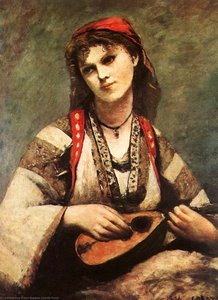
The Gypsies
 Oil On Canvas
- WallArt
- Impressionistic Landscape
 1872
1872- 19th Century
 55.0 x 80.0 cm
 Metropolitan Museum of Art
 Les mer
Giclée / Kunsttrykk
Giclée- eller lerretsprint av museumskvalitet med rask produksjon og fleksible valgmuligheter for etterbehandling. ( Bestill håndmalt reproduksjon Gå til digitalt bilde)




P118B $10

P118H $10

P118W $10

P438Z $10

P508JH $12

P508YH $12

P805H $10

P805Z $10

P919BZ $10

P919G $10

P919XJ $10

P959ZH $10

P968JZ $12

W106C $8

W218G $10

W218JH $8

W218Y $10

W307PJ $10

W316G $10

W316PJ $8

W316Y $10

W398PJ $8

W4111J $10

W500HY $15

W500JH $15

W692G $12

W849H $8

W940BG $15

W953PJ $8




Velg mellom våre forhåndsdefinerte størrelser som bevarer kunstverkets opprinnelige proporsjoner.

Du kan oppgi egne mål for å tilpasse en spesifikk ramme eller et bestemt område. Dersom den valgte størrelsen ikke samsvarer med det originale bildets proporsjoner, vil vi enten beskjære kunstverket eller utvide bildet med en speilet eller ensfarget kant. En digital mockup vil bli sendt til din godkjenning før produksjonen starter.
Vennligst merk at forhåndsvisningen på skjermen ikke gjenspeiler den faktiske beskjæringen eller utvidelsen. Kun mockuppen vil vise den endelige komposisjonen nøyaktig.
Selv om tilpassede størrelser er tilgjengelige, anbefaler vi å velge et mål fra den forhåndsdefinerte listen for å bevare de originale proporsjonene.
Verdensomspennende levering () på 2 uker i stedet for standard 4/5 uker. (25 September)

Gratis ekspressfrakt over hele verden

Lerretsduk av høykvalitets lin

Full transportforsikring

Garanti for refusjon av toll og importavgifter

Garantert fargeekthet

100 dagers returrett ved fabrikasjonsfeil

100% pengene tilbake-garanti

Mengderabatt
 Glassalternativet er kun tilgjengelig i størrelser under 110 cm

The Gypsies
Giclée / Kunsttrykk
Format på reproduksjon
-


Totalpris
$ 80
A Symphony of Light and Pastoral Serenity
In the quietude of a sun-drenched meadow, Jean-Baptiste-Camille Corot’s 1872 masterpiece, "The Gypsies," invites the viewer into a realm where time seems to suspend its forward march. This evocative oil on canvas is far more than a mere landscape; it is a profound meditation on the harmony between humanity and the natural world. As one gazes upon the scene, there is an immediate sense of being transported to a pastoral idyll, where a small group of nomadic figures gathers under the protective canopy of ancient, sprawling trees. The composition breathes with a rhythmic tranquility, capturing a fleeting moment of communal repose that feels both intimately personal and timelessly universal.
Corot, a pivotal figure who bridged the structured elegance of Neoclassicism with the sensory revolution of Impressionism, utilizes his signature sfumato technique to weave a tapestry of atmosphere. The edges of the world are softened, blurred by a delicate, luminous haze that mimics the way light filters through summer foliage. This mastery of light creates a dappled effect across the meadow, where patches of brilliant gold dance against deep, cool shadows. For the discerning collector or interior designer, this interplay of light and texture offers an unparalleled sense of depth, making the painting a dynamic centerpiece capable of breathing life and warmth into any sophisticated space.
The Artistry of Atmosphere and Emotion
Technically, "The Gypsies" showcases Corot’s mature style—a delicate balance of precision and poetic looseness. While his brushwork remains controlled enough to render the sturdy trunks of the trees and the subtle folds of the figures' clothing, there is an unmistakable fluidity in the way he handles the sky and the distant horizon. This approach allows the landscape to feel alive, as if a gentle breeze might stir the leaves at any moment. The artist’s ability to capture the "essence" rather than just the literal form is what elevates this work from a simple genre painting to a poetic experience.
Beyond its visual splendor, the painting carries a deep emotional resonance. There is a palpable sense of camaraderie and peace within the group; the figures are not mere subjects but participants in a shared moment of quiet dignity. This theme of connection—both between people and between man and nature—makes the work particularly poignant for modern audiences seeking solace in an increasingly frenetic world. To possess a reproduction of this work is to invite a permanent sense of calm into one's environment, serving as a window into a more tranquil era of artistic discovery.
A Timeless Legacy for the Modern Collector
As part of the esteemed collection at The Metropolitan Museum of Art, "The Gypsies" stands as a testament to Corot’s enduring legacy as a pioneer of plein air painting. His ability to find the extraordinary within the ordinary—the simple beauty of a shaded grove or a quiet conversation—continues to inspire those who appreciate art that speaks to the soul. For those looking to curate an atmosphere of elegance, sophistication, and historical depth, this painting offers a perfect marriage of classical tradition and atmospheric brilliance.
Kunstnerbiografi
A Life Immersed in Light and Landscape
Jean-Baptiste-Camille Corot, a name that resonates with the tranquil beauty of 19th-century French landscape painting, was born into a comfortable Parisian bourgeois family on July 16, 1796. Though initially steered towards a commercial path, destiny – and perhaps an innate artistic sensibility – intervened. His early years were marked by an unconventional upbringing; entrusted to the care of a nurse in the countryside near L’Isle-Adam until age four, he developed a profound connection with nature that would indelibly shape his artistic vision. This initial immersion in rural tranquility stood in stark contrast to the bustling city life awaiting him, yet it laid the foundation for a lifelong pursuit of capturing the ephemeral qualities of light and atmosphere. His parents, successful milliners, provided financial stability, allowing Corot the freedom to explore his burgeoning passion for painting after an unsuccessful attempt at mercantile pursuits – a rare privilege for aspiring artists of that era. This support was crucial, enabling him to dedicate himself fully to artistic training without the immediate pressures of earning a livelihood.From Academic Foundations to Plein-Air Innovation
Corot’s formal artistic education began with studies under Achille Etna Michallon and later Jean-Victor Bertin, both esteemed landscape painters steeped in the neoclassical tradition. This grounding instilled in him a meticulous approach to composition and form, emphasizing clarity and structure. However, Corot wasn't content merely replicating established styles; he yearned for something more authentic, a way to convey not just *what* he saw, but *how* it felt to be immersed within the landscape. A pivotal moment arrived with his first journey to Italy in 1825. The Roman Campagna, bathed in golden light and steeped in history, ignited his imagination. He spent years sketching and painting en plein air – directly from nature – a practice that was still relatively uncommon at the time. This dedication to direct observation allowed him to capture the subtle nuances of light and shadow, the delicate atmospheric effects that would become hallmarks of his style. He wasn’t simply recording topographical details; he was striving to evoke a mood, a feeling of tranquility and harmony. His early Italian works demonstrate a clarity of form and bright palette influenced by classical ideals, yet already hint at the softer, more evocative approach that would define his mature style. He meticulously studied the masters, copying their work in the Roman galleries, but always filtered these lessons through his own increasingly sensitive perception of nature.A Bridge Between Traditions
Corot’s artistic development wasn't linear; it was a delicate balancing act between tradition and innovation. He exhibited regularly at the Paris Salon, initially gaining recognition for works rooted in neoclassical conventions. However, as he continued to explore plein-air painting, his style began to evolve. He moved away from highly finished, detailed compositions towards looser brushwork and a more muted palette. This shift wasn't a rejection of academic principles entirely; rather, it was an attempt to infuse them with the immediacy and emotional resonance of direct observation. He became a master of tonalism, using subtle variations in value to create depth and atmosphere. His landscapes weren’t about dramatic narratives or grand gestures; they were about quiet contemplation, the beauty of everyday scenes – a forest glade, a sun-dappled meadow, a tranquil riverbank. This approach resonated with a growing audience seeking respite from the rapid industrialization and social upheaval of 19th-century France. He skillfully blended elements of realism with an almost poetic sensibility, creating landscapes that felt both familiar and deeply personal. He wasn’t interested in grand pronouncements or political statements; his art was about finding beauty in the ordinary, elevating the commonplace to a realm of serene contemplation.Legacy and Enduring Influence
Jean-Baptiste-Camille Corot’s influence on subsequent generations of artists is immeasurable. He served as a crucial link between the neoclassical tradition and the emerging Impressionist movement. Artists like Monet, Pissarro, and Sisley deeply admired his ability to capture the fleeting effects of light and atmosphere, and they built upon his innovations in their own groundbreaking work. Corot’s emphasis on direct observation and plein-air painting paved the way for the Impressionists' radical departure from studio-based practices. However, Corot wasn’t simply a precursor to Impressionism; he was a unique and significant artist in his own right. His vast output – encompassing landscapes, portraits, and figure studies – continues to captivate audiences with its serene beauty and emotional depth. His works can be found in major museums around the world, including the Musée des Beaux-Arts in Dunkirk and the Musée Courbet in Ornans, France, as well as the National Gallery in London and the Metropolitan Museum of Art in New York. He died on February 22, 1875, leaving behind a legacy that continues to inspire artists and art lovers alike – a testament to the enduring power of light, landscape, and quiet contemplation. The Repose, Interrupted Reading, and Agostina remain iconic examples of his mastery, showcasing his ability to capture both the physical world and the inner life of his subjects with remarkable sensitivity and grace. His influence extends beyond painting; he fostered a spirit of artistic freedom and encouraged younger artists to find their own voice, solidifying his place as a pivotal figure in the history of art.
Jean-Baptiste-Camille Corot
1796 - 1875 , Frankrike
Kort om kunstneren
- Artistic Movement Or Style: Realisme, Impressjonisme
- Artists Or Movements Influenced By This Artist:
- Monet
- Pissarro
- Sisley
- Artists Who Influenced This Artist:
- Michallon
- Bertin
- Date Of Birth: 16. juli 1796
- Date Of Death: 22. februar 1875
- Full Name: Jean-Baptiste-Camille Corot
- Nationality: Fransk
- Notable Artworks:
- The Repose
- Interrupted Reading
- Agostina
- Place Of Birth: Paris, Frankrike
Relaterte artikler

Idyllic Visions: Exploring the Pastoral Scene in Art History – From Arcadia to Modern Interpretations
Explore the captivating history of pastoral art from classical Arcadia to modern masterpieces. Discover key artists like Millet & Cole at OriginalUniqueArt. Find serene landscape paintings for your home.
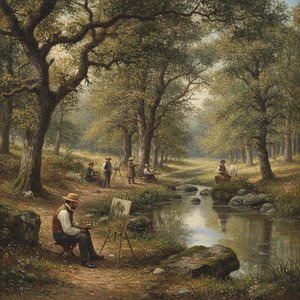
The Barbizon School: The Revolution of Naturalism and the Birth of Plein Air Landscape Painting
Explore the profound impact of the Barbizon School on landscape painting. Discover how masters like Rousseau and Corot revolutionized art through plein air naturalism, moving from academic idealism to the authentic beauty of the French countryside.
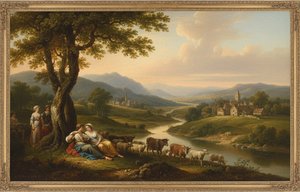
Idyllic Visions: Exploring the Pastoral Tradition in Western Art – Themes, Techniques & Enduring Appeal
Explore the rich history of pastoral art from classical Arcadia to contemporary interpretations. Discover key artists, themes & collecting tips at OriginalUniqueArt.
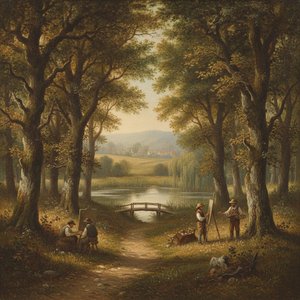
The Barbizon School: Discovering the Masters of Naturalistic Landscape Painting and the Birth of Realism
Explore the revolutionary Barbizon School and its masters, from Corot to Rousseau. Discover how these pioneers of plein air painting redefined landscape art through naturalism. Find museum-quality hand-painted reproductions and expert art insights at OriginalUniqueArt.com.
The Barbizon School: A Professional Guide to Naturalism and Landscape Mastery for Interior Designers
Explore the Barbizon School's mastery of naturalism. An expert guide for hotel designers and procurement managers on sourcing high-quality landscape reproductions to elevate hospitality and corporate interiors with authentic, large-scale fine art solutions.