Meny
Gratis kunstkonsultasjon
Kjøp trykk Kjøp trykkKjøp bilde Kjøp bilde SendSend
Vis detaljerVis detaljer Legg til i favoritter Legg til i favoritter Last ned bildetLast ned bildet Liknende objekterLiknende objekter LysbildefremvisningLysbildefremvisning

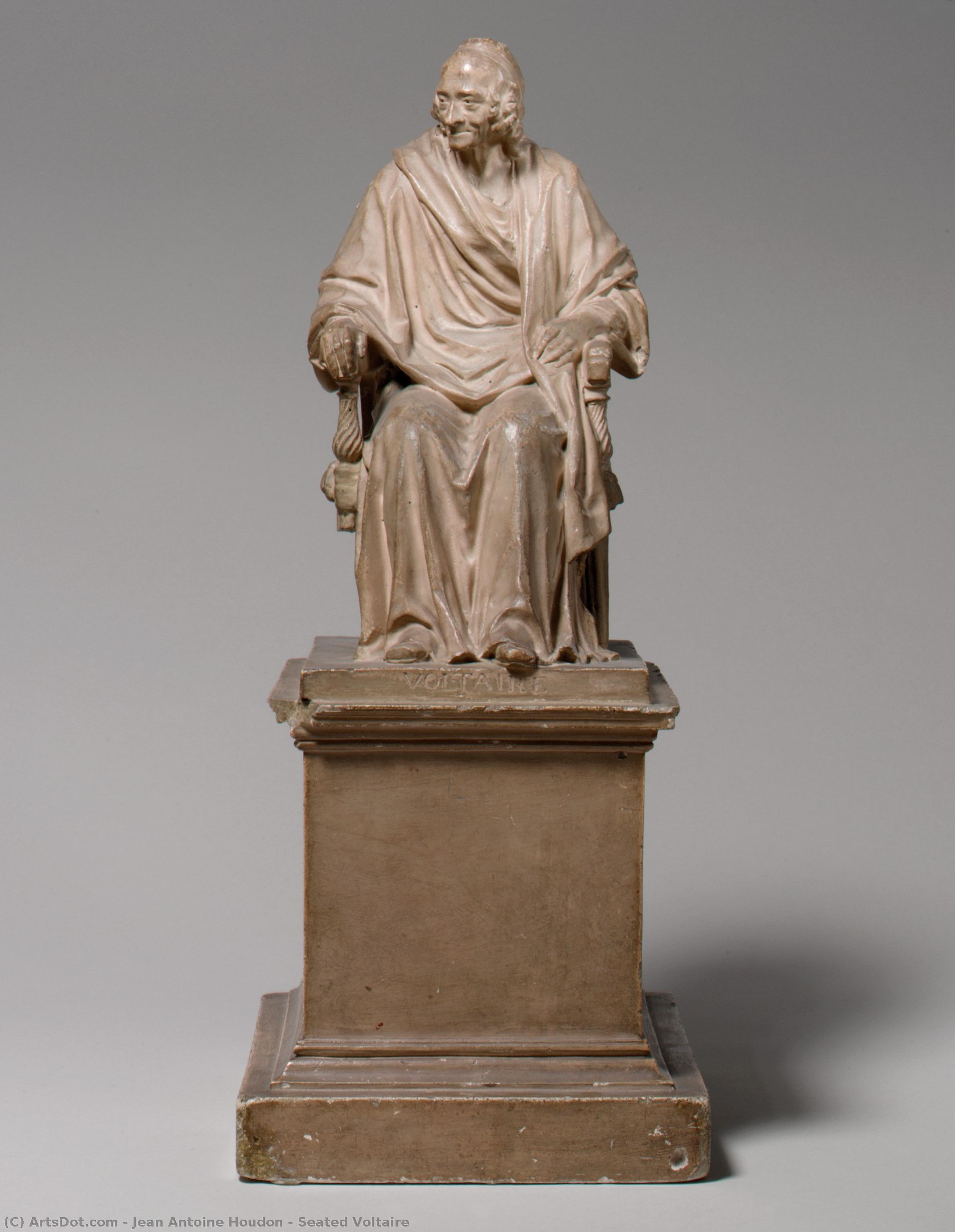
Seated Voltaire

Experience Neoclassical depth with Houdon's Seated Voltaire marble sculpture, capturing Enlightenment wisdom; discover this masterpiece today.

Jean-Antoine Houdon var en fransk skulptør kjent for sine realistiske portretter av opplysningstidens store personligheter som Washington og Voltaire. Hans verk fanger både karakter og intellekt med imponerende dybde.

Håndlaget oljereproduksjon

Håndmalt olje på lerret i din valgte størrelse og ramme, laget på bestilling av våre kunstnere. (Kjøp trykk Kjøp trykkKjøp bilde Kjøp bilde)

Standard
custom
CM
INCH

Velg mellom våre forhåndsdefinerte størrelser som bevarer kunstverkets opprinnelige proporsjoner.

bredde
høyde

Du kan angi egne mål for å tilpasse en spesifikk ramme eller plass. Dersom den valgte størrelsen ikke samsvarer med originalbildets proporsjoner, vil vi enten beskjære kunstverket eller utvide maleriet med ytterligere håndmalte elementer. En digital mockup vil bli sendt til din godkjenning før produksjonen starter.
Vennligst merk at forhåndsvisningen på skjermen ikke gjenspeiler den faktiske beskjæringen eller utvidelsen. Kun mockuppen vil vise den endelige komposisjonen nøyaktig.
Selv om tilpassede størrelser er tilgjengelige, anbefaler vi å velge et mål fra den forhåndsdefinerte listen for å bevare de originale proporsjonene.

Eksempler på hva som kan endres: Erstatt ansikt med bilde av kunden; Legg til kjæledyr (f.eks. bytt ut katt med hund); Inkluder en skjult melding i bakgrunnen; Endre bakgrunnslandskap eller elementer.
Etter bestilling vil OriginalUniqueArt.com-teamet sende e-post til kunden for instruksjoner og sende et utkast (mockup) som forhåndsvisning.

Verdensomspennende levering () på 3–4 uker i stedet for standard 5 uker. (22 August). Ingen kompromisser med kvaliteten.

why_choose_icon
Gratis ekspressfrakt over hele verden
why_choose_icon
Lerretsduk av høykvalitets lin
why_choose_icon
Full forsikring under transport
why_choose_icon
Garanti for refusjon av toll og importavgifter
why_choose_icon
Garantert korrekt fargegjengivelse
why_choose_icon
60 dagers returrett (kun ved feil)
why_choose_icon
100% pengene tilbake-garanti
why_choose_icon
Rabatt ved flere kjøp

Totalpris for bestilling

$ 300

reproduction

Seated Voltaire

Teknikk for reproduksjon

Størrelse på reproduksjon

-

Endelig pris

$ 300

Kort om verket

  • Subject or theme: Philosopher Portrait
  • Movement: Neoclassicism
  • Medium: Marble Sculpture
  • Artist: Jean-Antoine Houdon
  • Influences: Classical Antiquity
  • Artistic style: Classical Elegance
  • Location: Private Collection

Kunstighetsquiz

Det er kun ett riktig svar på hvert spørsmål.

Spørsmål 1:
What artistic movement is Jean-Antoine Houdon’s ‘Seated Voltaire’ primarily associated with?
Spørsmål 2:
The sculpture utilizes what material to achieve its smooth, polished surface?
Spørsmål 3:
What is the dominant color palette of the photograph depicting ‘Seated Voltaire’?
Spørsmål 4:
According to the description, what is a key characteristic of Houdon's sculptural style?
Spørsmål 5:
Based on the information provided, what does ‘Seated Voltaire’ symbolize?

Beskrivelse av kunstverket

A Portrait of Enlightenment: Jean-Antoine Houdon’s “Seated Voltaire”

Jean-Antoine Houdon's "Seated Voltaire," completed in 1778, stands as a testament to the artistic sensibilities of the French Enlightenment—a sculpture that transcends mere likeness and delves into the very essence of its subject. Executed by Houdon’s workshop, this marble masterpiece resides within The Metropolitan Museum of Art’s collection (Accession Number: 201455), offering viewers an unparalleled glimpse into a pivotal moment in intellectual history.

The Sculptor's Vision: Neoclassical Precision

Houdon, born in Versailles in 1741, embodies the transition between Rococo frivolity and the austere grandeur of Neoclassicism. Trained under luminaries like René-Michel Slodtz and Jean-Baptiste Lemoyne, Houdon championed a stylistic approach rooted in classical ideals—specifically those derived from ancient Greece and Rome—rejecting the ornate excesses of his predecessors. He sought to capture not just physical appearance but also psychological depth, mirroring the philosophical pursuits of Voltaire himself. This dedication to realism is evident in every meticulously crafted detail, reflecting Houdon’s unwavering belief that sculpture could convey profound truths about human character.

Material and Technique: Marble's Silent Dialogue

The sculpture utilizes marble—a material chosen for its durability and ability to capture subtle tonal variations—demonstrating Houdon’s mastery of sculptural technique. The carving process involved employing traditional sculpting tools, painstakingly shaping the stone to achieve an astonishing level of accuracy. Notice the smooth, polished surface achieved through meticulous polishing, which subtly enhances the sculpture's luminosity and reveals delicate textural nuances. Lines dominate the composition, defining Voltaire’s facial features with remarkable precision—the contours of his brow furrowed in contemplation, mirroring the complexities of philosophical thought. The chair and pedestal serve as grounding elements, emphasizing Voltaire’s stillness amidst intellectual fervor.

Symbolism Within Form: Enlightenment Embodied

“Seated Voltaire” is more than just a portrait; it's a symbol of the Enlightenment—a movement characterized by reason, skepticism, and an embrace of classical learning. Voltaire’s posture exudes dignity and thoughtfulness, conveying his unwavering commitment to intellectual inquiry and challenging established dogma. The sculpture’s pyramidal composition subtly reinforces this message, referencing ancient architectural forms that symbolized stability and grandeur. Furthermore, the wax seal affixed to the chair—a detail meticulously recorded by observers—represents the Académie Royale de Peinture et de Sculpture, signifying Houdon's adherence to artistic standards of excellence.

Emotional Resonance: A Moment Frozen in Time

The sculpture’s soft lighting contributes to its emotional impact, illuminating Voltaire’s face evenly without harsh shadows and fostering a sense of intimacy with the viewer. Houdon skillfully captures the contemplative gaze of Voltaire—a look that invites reflection on philosophical questions and embodies the spirit of intellectual curiosity. “Seated Voltaire” remains an enduring emblem of Enlightenment ideals, prompting viewers to contemplate the power of reason and the importance of upholding intellectual freedom—a timeless masterpiece preserved for generations to come.

Om kunstneren

A Sculptor of the Enlightenment

Jean-Antoine Houdon, born in Versailles in 1741, stands as a pivotal figure bridging the Rococo and Neoclassical eras—a sculptor whose work embodies the intellectual fervor and evolving aesthetic sensibilities of the eighteenth century. His life unfolded amidst dramatic shifts in French society, from the waning opulence of the monarchy through the revolutionary upheaval and Napoleonic ascendance. Yet, Houdon remained remarkably consistent in his artistic vision: to capture not merely a likeness, but the very essence of his subjects—their intellect, character, and inner lives—in enduring marble and bronze. This dedication stemmed from an early aptitude for sculpture, nurtured by formal training at the Académie Royale de Peinture et de Sculpture beginning in 1752 under esteemed sculptors like René-Michel Slodtz, Jean-Baptiste Lemoyne, and Jean-Baptiste Pigalle. His subsequent enrollment at the École Royale des Élèves Protégés from 1761 to 1764 solidified his foundation, culminating in a triumphant win of the Prix de Rome competition in 1761—an award that granted him invaluable study time with classical art firsthand in Italy, an experience profoundly shaping his aesthetic sensibilities.

The Art of Verisimilitude and Psychological Insight

Houdon’s sculptures are immediately recognizable for their breathtaking realism and meticulous attention to detail. He wasn't content with simply replicating physical features; he sought to penetrate the surface, revealing the personality and intellect within. This commitment to verisimilitude arose from a deep fascination with anatomy—evident in his celebrated *Muscleman Sideview* bronze sculpture—and an unwavering dedication to observation. Unlike many contemporaries who idealized their subjects, Houdon embraced imperfections, believing they contributed to a more truthful and compelling portrayal. He employed innovative techniques, including taking casts directly from life, allowing him to capture remarkable nuance and subtlety that distinguished his work from its rivals. This approach was particularly evident in his portrait busts, which became his signature achievement. These weren’t merely static representations; they were dynamic studies of character, imbued with psychological depth and emotional resonance. Houdon's ability to convey not just *how* someone looked, but *who* they were—their virtues, their passions, their anxieties—placed him among history’s greatest portrait sculptors. He achieved this through subtle nuances in expression, posture, and the rendering of details like the eyes—often carved with a slight concavity to capture the play of light and suggest inner thought. This meticulous attention to detail ensured that his sculptures served as windows into the souls of their subjects, capturing not just appearance but also spirit.

Immortalizing an Era: A Pantheon of Enlightenment Figures

The breadth of Houdon’s clientele reads as a veritable who's who of the Enlightenment. He immortalized some of the most influential thinkers, writers, politicians, and leaders of his time—individuals who championed reason, liberty, and progress during a period of profound intellectual transformation. His terracotta portrait of Denis Diderot captures the philosopher’s intellectual intensity and unconventional spirit with remarkable sensitivity, reflecting his unwavering belief in the power of knowledge to illuminate human experience. Benjamin Franklin, portrayed during his diplomatic mission to France, appears as a man of wisdom and pragmatism, his gaze both shrewd and benevolent—a testament to Houdon's ability to convey not only intellect but also moral character. Jean-Jacques Rousseau, sculpted with characteristic empathy, embodies both the passion and melancholy that defined his philosophy—a poignant portrayal capturing the complexities of human emotion. Perhaps most famously, Houdon sculpted Voltaire—creating multiple versions of the celebrated writer, including a dynamic seated figure for the Comédie-Française that captures his wit and intellectual energy. This masterful depiction exemplifies Houdon’s skill in conveying both intellect and personality simultaneously. Beyond these intellectual giants, Houdon also received commissions from royalty, notably Louis XVI, and rising political figures like Napoleon Bonaparte—demonstrating his prestige within French society during a time of significant upheaval.

Influences and Artistic Development

Houdon's artistic journey began amidst the opulent Rococo style prevalent in Paris at the time of his birth, but he quickly absorbed the lessons of the Baroque masters—particularly Bernini—during his formative years in Rome. This exposure to antiquity profoundly shaped his aesthetic sensibilities, inspiring him to embrace classical ideals of beauty and proportion while simultaneously retaining a distinctive artistic voice. He honed his skills under the tutelage of influential sculptors like Slodtz, Lemoyne, and Pigalle, mastering techniques that would become hallmarks of his style—most notably the innovative method of drilling the pupils of his sculptures’ eyes to intensify their gaze and create an illusion of life-like expression. Houdon's meticulous anatomical studies—evident in *Muscleman Sideview*—underscored his commitment to realism and informed his sculptural practice throughout his career. He skillfully blended classical influences with Baroque dynamism, resulting in a unique artistic style that distinguished him from his contemporaries. His unwavering dedication to observation and experimentation ensured that he remained at the forefront of sculptural innovation for decades.

Legacy and Enduring Influence

Jean-Antoine Houdon’s impact on the world of sculpture is undeniable. He elevated portraiture to an art form capable of profound psychological insight and historical documentation—a feat rarely achieved by his peers. His sculptures remain highly valued today, not only for their artistic merit but also for the invaluable glimpses they provide into the lives and times of the Enlightenment era. Houdon’s ability to capture the essence of his subjects—their intellect, character, and inner life—established him as one of history's greatest portrait sculptors, securing his place in art history and inspiring countless artists who followed. His legacy continues to resonate through generations of sculptors, demonstrating the enduring power of artistic excellence to transcend time and captivate audiences worldwide. Houdon’s work serves as a powerful reminder of the importance of truthfulness, detail, and psychological understanding—qualities that continue to define his place among the titans of sculpture.
Jean-Antoine Houdon

Jean-Antoine Houdon

1741 - 1828 , Frankrike

Kort om kunstneren

  • Artistic Movement Or Style: Neoklassisk Realisme
  • Artists Or Movements Influenced By This Artist: ['Canova']
  • Artists Who Influenced This Artist:
    • Michel Ange Slodtz
    • René-Michel Lemoyne
    • Jean-Baptiste Pigalle
    • Bernini
  • Date Of Birth: 1741
  • Full Name: Jean-Antoine Houdon
  • Nationality: Fransk
  • Notable Artworks:
    • George Washington statue
    • Voltaire
  • Place Of Birth: Versailles, France
Utforsk kunstverk organisert etter temaer, stiler og kjennetegn.




































