
 Forhåndsvisning
 Send
Send Del
Del
 Vis detaljer
 Utskriftsvennlig guide

 Last ned bilde
 Liknende objekter
 Røntgenundersøkelse
 Lysbildefremvisning
 Spørsmål og svar
 Statistikk
Copernicus in the tower at Frombork, or Conversations with God

- 221.0 x 315.0 cm


 Vis hele teksten
Giclée / Kunsttrykk
Giclée- eller lerretsprint av museumskvalitet med rask produksjon og fleksible valgmuligheter for etterbehandling. ( Kjøp håndmalt maleri Bytt til digitalt bilde)




P118B Nkr10

P118H Nkr10

P118W Nkr10

P438Z Nkr10

P508JH Nkr12

P508YH Nkr12

P805H Nkr10

P805Z Nkr10

P919BZ Nkr10

P919G Nkr10

P919XJ Nkr10

P959ZH Nkr10

P968JZ Nkr12

W106C Nkr8

W218G Nkr10

W218JH Nkr8

W218Y Nkr10

W307PJ Nkr10

W316G Nkr10

W316PJ Nkr8

W316Y Nkr10

W398PJ Nkr8

W4111J Nkr10

W500HY Nkr15

W500JH Nkr15

W692G Nkr12

W849H Nkr8

W940BG Nkr15

W953PJ Nkr8




Velg mellom våre forhåndsdefinerte størrelser som bevarer kunstverkets opprinnelige proporsjoner.

Skriv inn ønsket bredde og høyde for å tilpasse trykket til din ramme eller vegg. Et trykk kan kun beskjæres, aldri skaleres opp utover motivets opprinnelige størrelse, noe som betyr at et format med andre proporsjoner vil føre til tap av deler av bildet. Vi sender deg en digital mockup for godkjenning før vi starter trykkeprosessen. Bildet som vises på denne siden viser ikke den faktiske beskjæringen — det er kun mockuppen som viser dette.
Verdensomspennende levering () på 2 uker i stedet for standard 4/5 uker. (8 November)

Gratis ekspressfrakt over hele verden

Lerretsduk av lin av høy kvalitet

Full transportforsikring

Garanti for refusjon av toll og importavgifter

Garantert fargegjengivelse

100 dagers returrett ved fabrikasjonsfeil

100% pengene tilbake-garanti

Rabatt ved flere kjøp
 Glassalternativet er kun tilgjengelig i størrelser under 110 cm

Copernicus in the tower at Frombork, or Conversations with God
Giclée / Kunsttrykk
Størrelse på reproduksjon
-


Totalpris for valgte alternativer
Nkr 775
The Visionary Canvas: Jan Matejko’s “Copernicus in the Tower at Frombork”
Jan Matejko's "Copernicus in the Tower at Frombork, or Conversations with God" isn’t merely a painting; it’s a potent distillation of intellectual fervor and spiritual contemplation. Completed in 1873, this monumental oil on canvas transports us to the heart of Renaissance Poland, capturing a pivotal moment not just in astronomical history but also in the nation's burgeoning sense of self-awareness. The scene unfolds within the austere yet majestic confines of Frombork Cathedral’s tower, a location imbued with both religious significance and scientific curiosity – a perfect embodiment of the painting’s central theme: the harmonious intersection of faith and reason.

A Masterpiece of Romantic Drama
Matejko, a towering figure in 19th-century Polish art, masterfully employs the tenets of Romanticism to elevate this historical subject. The painting pulsates with dramatic lighting – a chiaroscuro effect that sculpts the figures and emphasizes the solemnity of the scene. The deep blues and purples of the night sky contrast sharply with the warm hues of Copernicus’s study, creating a visual tension that mirrors the intellectual struggle he embodies. Notice how Matejko uses loose brushstrokes to convey movement and emotion, imbuing the composition with a sense of dynamism rarely found in earlier historical paintings. The figures are rendered with an almost theatrical intensity, their gestures and expressions conveying profound thought and perhaps even a touch of awe.
The Anatomy of Inquiry: Symbolism and Detail
Beyond its dramatic impact, “Copernicus” is rich in symbolic detail. Nicolaus Copernicus himself, depicted as a man of quiet contemplation, sits at his desk surrounded by the tools of his trade – astronomical instruments, charts, and open books. The globe, prominently displayed, speaks to his revolutionary heliocentric model of the universe, challenging the established geocentric view. A partially visible diagram of the solar system hints at the complex calculations he undertook. The inclusion of a skullcap suggests the weight of religious tradition alongside the pursuit of scientific truth. Even the brick wall in the background serves as a grounding element, anchoring the scene within the physical reality of Frombork and reminding us of the earthly context of this extraordinary intellectual journey.
A Legacy Forged in Faith and Reason
The painting’s creation coincided with the 400th anniversary of Copernicus' birth, a moment of national pride for Poland. Matejko’s decision to portray Copernicus not as a triumphant discoverer but as a man engaged in dialogue with something greater than himself—perhaps even God—resonates deeply within Polish cultural identity. The painting became a symbol of the nation’s intellectual and spiritual heritage, embodying the spirit of inquiry and the courage to challenge established dogma. Its eventual acquisition by the Jagiellonian University – a bastion of learning since the 14th century – underscores its enduring significance as a testament to the power of human intellect and the pursuit of knowledge. Today, this magnificent work continues to inspire contemplation on the relationship between science, faith, and the boundless mysteries of the universe.
Spørsmål og svar
Kan jeg se "Copernicus in the tower at Frombork, or Conversations with God" av Jan Matejko på min egen vegg før jeg kjøper?
Siden for Se i AR av "Copernicus in the tower at Frombork, or Conversations with God" av Jan Matejko bruker utvidet virkelighet (AR) for å vise kunstverket i ditt eget rom på en kompatibel enhet.
Hvem skapte "Copernicus in the tower at Frombork, or Conversations with God" og i hvilket år?
"Copernicus in the tower at Frombork, or Conversations with God" ble skapt av Jan Matejko i 1872.
Hvor kan jeg finne en guide til "Copernicus in the tower at Frombork, or Conversations with God"?
Guiden til "Copernicus in the tower at Frombork, or Conversations with God" er kunstverkets Faktablad for studenter-side – et utskrivbart faktablad som viser kunstverket med bildetekst, kreditering og informasjonstabell (kunstner, datoer, medium, original størrelse, samling).
Om kunstneren
early life and education
Jan Alojzy Matejko, kjent som Jan Matejko, ble født den 24. juni 1838 i den frie byen Kraków i Polen. Hans far, Franciszek Ksawery Matejko, var en tsjekkisk lærer og musiker som først arbeidet for Wodzicki-familien i Kościelniki, før han flyttet til Kraków og giftet seg med Joanna Karolina Rossberg, en halvtsjekker/halvpolsk kvinne. Jan var den niende av elleve barn de hadde sammen. Han vokste opp i en bygning på Florianska Street. Etter sin mors død i 1845 ble han tatt vare på av sin mormor, Anna Zamojska. Ungdommen ble preget av Krakóws revolusjon i 1846 og beleiringen av Kraków i 1848 av østerrikske tropper – hendelser som senere ville inspirere mange av hans kunstneriske temaer. Matejko begynte på St. Annas skole, men sluttet der i 1851 på grunn av dårlige karakterer. Likevel viste han tidlig en eksepsjonell talent for kunst og studerte ved Krakóws kunstakademi fra 1852 til 1858, hvor han spesialiserte seg på historisk maleri under veiledningen av Wojciech Korneli Stattler og Władysław Łuszczkiewicz.artistic career
Matejko sin første store verk, *Tsars Shuyski før Zygmunt III* (1853), markerte hans tidlige suksess. Han begynte å utstille sine historiske malerier ved Kraków Society of Friends of Fine Arts i 1855. Blant hans mest kjente arbeider finnes: *Rejtan* (1866), et stort oljemaleri som skildrer en avgjørende øyeblikk i polsk historie; *Union of Lublin* (1869), et betydningsfullt bilde som viser Matejkos evne til å fange historiske hendelser med stor detalj og følelse; og *Slaget ved Grunwald* (1878), et mesterverk som uttrykker intensiteten i krigsscener på en kraftfull måte. Disse verkene er ikke bare vitnesbyrd om hans tekniske dyktighet, men også hans evne til å formidle polske historiske følelser og nasjonalstolthet. Matejko var kjent for sin evne til å skape store, dramatiske bilder som fanget essensen av viktige øyeblikk i polsk historie.museological contributions and legacy
Matejko brukte det meste av sitt liv i Kraków og ble senere direktør ved Jan Matejko Academy of Fine Arts, tidligere kjent som Kraków Academy of Fine Arts. Han var en inspirerende lærer for mange fremtredende kunstnere, inkludert Maurycy Gottlieb, Jacek Malczewski, Józef Mehoffer og Stanisław Wyspiański. Hans studenter fortsatte hans arv ved å skape sine egne betydningsfulle verk, og bidro til den polske kunstens utvikling. Matejko var en nasjonalfigur i Polen, og ble ansett som landets mest kjente maler – "den nasjonale maleren". Hans bidrag til historisk maleri fortsetter å inspirere kunstnere og kunstinteresserte over hele verden.notable works available on OriginalUniqueArt
OriginalUniqueArt tilbyr en rekke av Matejkos mesterverk, inkludert: *Varna* (romantikk), et bilde som fanger den polske romantiske tradisjonen; *Still Life* (romantikk), et eksempel på hans evne til å skildre hverdagslige gjenstander med en følelse av drama og estetisk appell; og *Union of Lublin* (298 x 512 cm, romantikk, olje på lerretskunst), et monumentalt bilde som gjenskaper et viktig øyeblikk i polsk historie. Disse verkene er tilgjengelige for kjøp og beundring, og gir en mulighet til å eie en del av Matejkos rike kunstneriske arv.references:
discovering the masterpieces of muzeum narodowe krakow, poland (wikipedia.org)
Jan Matejko
1838 - 1893 , Polen
Kort om kunstneren
- Artistic Movement Or Style: Romantikk
- Artists Or Movements Influenced By This Artist: ['Maurycy Gottlieb']
- Artists Who Influenced This Artist:
- Wojciech Korneli Stattler
- Władysław Łuszczkiewicz
- Date Of Birth: 24. juni 1838
- Date Of Death: 1. november 1893
- Full Name: Jan Alojzy Matejko
- Nationality: Polsk
- Notable Artworks:
- Slaget ved Grunwald
- Union av Lublin
- Place Of Birth: Kraków, Polen
Relaterte artikler

The Enduring Legacy of Oil on Canvas: Technique, History & Aesthetic Impact
Explore the rich history & techniques of oil painting – from Renaissance masters to Impressionism. Discover pigments, layering methods, and why this timeless medium endures. Expert insights for artists & art enthusiasts.

Oljemaleriets varige arv: Teknikk, historie og samtidspraksis
Utforsk oljemaleriets fascinerende historie og teknikker! Lær om mestere, materialer og samtidspraksis. Få ekspertråd og inspirasjon for ditt neste kunstprosjekt.

The Enduring Power of Painting: A Historical & Contemporary Exploration of Form and Emotion
Explore the rich history & enduring techniques of oil painting with OriginalUniqueArt. Discover masterpieces, learn about art collecting, and find authentic handmade reproductions crafted by skilled artists.

Oil on Canvas: A Historical & Technical Exploration of a Timeless Artistic Medium
Explore the rich history & enduring techniques of oil painting on canvas. Discover the science behind its longevity, conservation practices, and contemporary relevance. Expert insights for art enthusiasts.
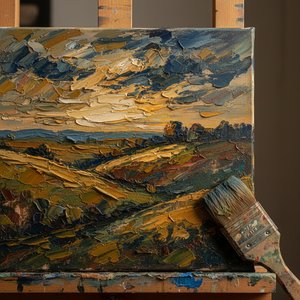
The Timeless Beauty of Oil on Canvas: A Masterclass in Texture, Impasto, and Artistic Mastery
Discover the profound allure of oil on canvas. Explore the mastery of impasto textures, the science of pigment longevity, and expert guides to selecting museum-quality reproductions that elevate your collection with timeless elegance and tactile depth.

