

 Se i rommet
 Del som digitalt kort
 Del
Del
 Detaljer
 Studentguide

 Last ned
 Liknende objekter
 Røntgen
 Lysbildefremvisning
 Besøksstatistikk
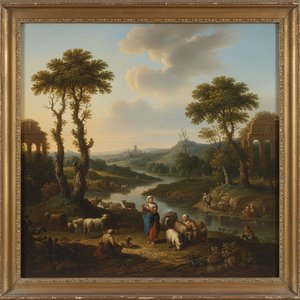
Imaginary Italian Landscape


 Les mer
Håndlaget oljereproduksjon
Håndmalt olje på lerret i din valgte størrelse og ramme, laget på bestilling av våre kunstnere. ( Bytt til trykkversjon Gå til digitalt bilde)




P118B $10

P118H $10

P118W $10

P438Z $10

P508JH $12

P508YH $12

P805H $10

P805Z $10

P919BZ $10

P919G $10

P919XJ $10

P959ZH $10

P968JZ $12

W106C $8

W218G $10

W218JH $8

W218Y $10

W307PJ $10

W316G $10

W316PJ $8

W316Y $10

W398PJ $8

W4111J $10

W500HY $15

W500JH $15

W692G $12

W849H $8

W940BG $15

W953PJ $8




Velg mellom våre forhåndsdefinerte størrelser som bevarer kunstverkets opprinnelige proporsjoner.

Du kan angi egne mål for å tilpasse en spesifikk ramme eller plass. Dersom den valgte størrelsen ikke samsvarer med originalbildets proporsjoner, vil vi enten beskjære kunstverket eller utvide maleriet med ytterligere håndmalte elementer. En digital mockup vil bli sendt til din godkjenning før produksjonen starter.
Vennligst merk at forhåndsvisningen på skjermen ikke gjenspeiler den faktiske beskjæringen eller utvidelsen. Kun mockuppen vil vise den endelige komposisjonen nøyaktig.
Selv om tilpassede størrelser er tilgjengelige, anbefaler vi å velge et mål fra den forhåndsdefinerte listen for å bevare de originale proporsjonene.
Etter bestilling vil OriginalUniqueArt.com-teamet sende e-post til kunden for instruksjoner og sende et utkast (mockup) som forhåndsvisning.
Verdensomspennende levering () på 3–4 uker i stedet for standard 5 uker. (26 September). Ingen kompromisser med kvaliteten.

Gratis ekspressfrakt over hele verden

Lerretsduk av høykvalitets lin

Full transportforsikring

Garanti for refusjon av toll og importavgifter

Garantert fargeekthet

100 dagers returrett ved fabrikasjonsfeil

100% pengene tilbake-garanti

Mengderabatt
 Glassalternativet er kun tilgjengelig i størrelser under 110 cm

Imaginary Italian Landscape
Reproduksjonsmetode
Format på reproduksjon
-


Totalpris
$ 300
Jan Asselijn’s Imaginary Italian Landscape: A Reflection of Faith and Artistic Innovation
The year is 1652. Amsterdam thrives as a center of artistic brilliance, yet Jan Asselijn’s gaze turned south – specifically to Italy – where he embarked on a transformative journey that irrevocably shaped his artistic sensibilities and cemented his place within the pantheon of Dutch Golden Age painters.
Asselijn's work embodies the spirit of the era, capturing not merely visual beauty but also profound emotional resonance. “Imaginary Italian Landscape,” housed in private collections worldwide, exemplifies this characteristic. It’s a scene brimming with life – figures strolling along a waterfront promenade amidst statues and accompanied by dogs, all bathed in the diffused glow of an expansive sky dotted with clouds.
Style and Technique: Embracing Atmospheric Perspective
Unlike the rigid conventions of earlier Baroque landscapes, Asselijn eschewed dramatic chiaroscuro—the stark contrasts between light and dark—favoring instead a technique that prioritizes atmospheric perspective. This masterful approach skillfully renders depth and distance through subtle gradations of color and tonal variation. Notice how blues deepen into indigo as they recede into the background, creating an illusion of vastness and conveying a sense of serenity.
Historical Context: The Huguenot Diaspora and Artistic Renaissance
Asselijn’s artistic development coincided with the turbulent period of Huguenot emigration from France. Forced to flee religious persecution, his family sought refuge in Amsterdam, exposing him to an environment acutely aware of intellectual ferment and artistic revival. This backdrop fueled Asselijn's fascination with Italian landscape painting—a genre that had experienced a resurgence during the Renaissance, championed by artists like Leonardo da Vinci and Raphael.
The influence of these masters is palpable in Asselijn’s composition. The careful placement of statues – symbols of classical ideals – underscores the humanist ethos prevalent at the time. Furthermore, the inclusion of dogs—often interpreted as emblems of loyalty and companionship—adds a layer of narrative complexity to the scene.
Symbolism: Light, Tranquility, and Spiritual Reflection
Beyond its visual splendor, “Imaginary Italian Landscape” speaks volumes about Asselijn’s artistic vision. The dominant use of light – soft, diffused, reminiscent of Florentine skies – symbolizes enlightenment and spiritual contemplation. It invites the viewer to pause and appreciate the beauty of the natural world as a reflection of divine grace.
The tranquil promenade depicted suggests an idealized vision of human existence—a harmonious coexistence with nature underpinned by moral virtue. Asselijn’s ability to convey such profound emotion through meticulous observation and skillful execution distinguishes him as one of the most accomplished landscape painters of his generation.
Kunstnerbiografi
A Life Forged in Landscape: The World of Jan Asselijn
Born Jean Asselin around 1610 in Dieppe, France, Jan Asselijn’s life unfolded against the backdrop of turbulent religious times and a burgeoning artistic revolution. His family, Huguenots fleeing persecution, relocated to Amsterdam in 1621 – a city pulsating with commercial energy and brimming with creative talent during the Dutch Golden Age. This move proved transformative, immersing young Jean into an environment where landscape painting was undergoing a dramatic shift away from traditional representations toward scenes imbued with palpable atmosphere and profound emotion. Initially apprenticed under Jan Martszen the Younger, he honed his skills in battle paintings before discovering his true passion: capturing the splendor of both natural vistas and animal life. The Dutch light – expansive skies and vibrant hues – would become an indelible mark on Asselijn’s artistic vision, though a journey to Italy solidified his aesthetic sensibilities and propelled him toward groundbreaking innovation.The Italianate Embrace & The Bentvueghels
Like many ambitious Northern European painters of the era, Asselijn sought inspiration in Italy, arriving sometime after 1635. He wholeheartedly embraced the *Italianate* style – a genre characterized by sun-drenched landscapes, classical ruins, and pastoral scenes brimming with romanticism. He joined the ranks of the *Bentvueghels*, a peculiar society of Dutch and Flemish artists residing in Rome. These “Birds of a Feather” defied convention, adopting outlandish nicknames and prioritizing direct observation—rejecting studio work altogether. Within this spirited community, Asselijn earned the moniker "Krabbetje" (little crab) due to a congenital deformity affecting his hand – yet he flourished creatively. He absorbed influences from artists like Pieter van Laer (Bamboccio), whose depictions of Roman peasant life and landscapes resonated deeply with Asselijn’s evolving style. This formative period instilled in him the ability to convey emotion, light, and narrative within his canvases—a skill that would define his oeuvre.Mastering Light & Symbolism: Key Works
Upon returning to Amsterdam, Asselijn possessed a refined technique and a distinctive artistic voice. His paintings are distinguished by exceptional clarity of execution and masterful manipulation of light – qualities that swiftly garnered admiration from contemporaries like Rembrandt, who even created etchings portraying Asselijn at work—a gesture perhaps sensitive to the artist’s physical disability. While he produced historical and battle scenes, it was his landscapes and animal studies that truly cemented his reputation. The Threatened Swan, completed around 1640, stands as his most celebrated masterpiece. More than merely a depiction of avian defense, this painting became a potent emblem of Dutch national resilience against external pressures—a visual articulation of anxieties prevalent during the time and interpreted allegorically as representing Johan de Witt, a prominent Dutch statesman. Intriguingly, later owners added symbolic inscriptions to the canvas – “Holland” on one of the eggs and “Enemy of the state” beside the menacing dog—further amplifying its political significance. Other notable works include Cavalry Attack at Sunset, showcasing his initial training in battle painting with dramatic flair, and depictions of rural life like Drovers with Cattle under an Arch of the Colosseum in Rome, which harmoniously blend Italianate landscapes with animal observations—demonstrating Asselijn’s capacity to capture both visual beauty and narrative depth. The Breach of the Saint Anthony’s Dike near Amsterdam exemplifies his ability to portray a moment of national crisis—reflecting the ever-present danger posed by water and necessitating ingenious solutions for Dutch land reclamation.Influence & Legacy: A Lasting Impression
Jan Asselijn's influence extended beyond his prolific output. He was revered by artists like Rembrandt, who produced etchings documenting Asselijn’s artistic process—a gesture perhaps considerate of the artist’s physical impairment. Furthermore, he served as a mentor to Frederik de Moucheron, another accomplished Dutch landscape painter who championed the Italianate style and disseminated its principles widely. Asselijn's innovative approach to light and atmosphere profoundly impacted subsequent generations of painters—laying the groundwork for greater naturalism and emotional resonance in landscape art. His works are now housed in prestigious institutions such as the Rijksmuseum in Amsterdam, ensuring his enduring legacy as a pivotal figure within the Dutch Golden Age—a testament to his artistic brilliance and lasting contribution to European art history.
Jan Asselijn
1610 - 1652 , Frankrike
Kort om kunstneren
- Artistic Movement Or Style: Italianate landskap
- Artists Or Movements Influenced By This Artist: ['Pieter van Laer']
- Artists Who Influenced This Artist:
- Jan Martszen den yngre
- Esaias van de Velde
- Rembrandt
- Date Of Birth: Dieppe, rundt 1610
- Date Of Death: 1652
- Full Name: Jean Asselin
- Nationality: Nederlands
- Notable Artworks:
- Den truet svane
- Hangout i Italia
- Høyrde ved Colosseum
- Place Of Birth: Dieppe, Frankrike
Relaterte artikler

Mastering Light & Land: An Art Historian's Guide to the Dutch Golden Age Landscape
Explore the breathtaking mastery of Dutch Golden Age landscapes. From Italianate light to atmospheric realism, discover the techniques of 17th-century masters and learn how to bring these timeless, museum-quality masterpieces into your home through expert oil reproductions.
Nicolaes Berchem: Dutch Golden Age Pastoralism & the Evolution of Landscape Painting
Explore the captivating world of Nicolaes Berchem, a leading Dutch Golden Age painter. Discover his idyllic landscapes, masterful technique & lasting influence on art history. Learn more at OriginalUniqueArt.

Golden Light & Dutch Skies: The Timeless Magic of Dutch Golden Age Landscapes
Discover the breathtaking beauty of Dutch Golden Age landscapes. Explore the mastery of light, chiaroscuro, and 17th-century realism through an expert art history lens, celebrating the enduring legacy of the Dutch Masters for discerning collectors and art lovers.

Golden Light & Dutch Skies: Bringing the Magic of Dutch Golden Age Landscapes into Your Home
Transform your home with the breathtaking light of Dutch Golden Age landscapes. Discover how hand-painted oil reproductions of masterworks like Ruisdael and Vermeer bring timeless elegance, atmosphere, and soulful texture to modern interiors. Elevate your space with museum-quality art.

De 10 Mesterverkene som Definerte den Nederlandsk Gyldne Tidsalder – Kunst & Interiør
Oppdag de 10 ikoniske mesterverkene fra den nederlandske gullalderen! Lær om Rembrandt, Vermeer og andre store kunstnere. Finn inspirasjon til klassisk interiørdekorasjon og kjøp museumskvalitets reproduksjoner på OriginalUniqueArt.com.
